The most practical vegetable gardens are planned around long-term household food use, not just peak summer harvests. A productive garden includes fresh vegetables, storage crops, and crops that continue supporting meals well beyond the main growing season.
A lot of home gardens look incredibly productive in July and surprisingly empty by October. I think that happens because many gardens are planned around excitement instead of continuity.
People picture tomatoes, cucumbers, and fresh salads during warm weather, but they do not always ask what the garden will still contribute once temperatures cool and grocery dependence returns.
The older food-focused approach to gardening treated this differently. A vegetable garden was expected to support the household across seasons, not just create a short burst of abundance during summer.
Takeaways
- Long-term gardens combine fresh-use crops and storage crops together.
- Different vegetables serve different household purposes across the year.
- Storage value matters almost as much as harvest quantity.
- A balanced garden continues feeding the household after summer production slows.
Fresh Eating Crops Solve Only Part of the Problem
Fresh vegetables matter, obviously.
Tomatoes, lettuce, peas, green beans, and similar crops improve meals immediately during harvest season. They bring freshness into daily cooking and usually taste far better than store produce.
But I would not build an entire garden around crops that only matter during a narrow window of time.
That creates a strange pattern where the garden feels overloaded for several weeks and then contributes very little afterward.
I think many gardeners quietly experience this frustration. The kitchen fills with cucumbers and tomatoes in midsummer, neighbors receive extra produce bags, and then by late fall the garden no longer supports ordinary meals consistently.
A food-focused garden needs another layer of planning beyond immediate harvest excitement.
Storage Crops Change the Time Horizon of the Garden
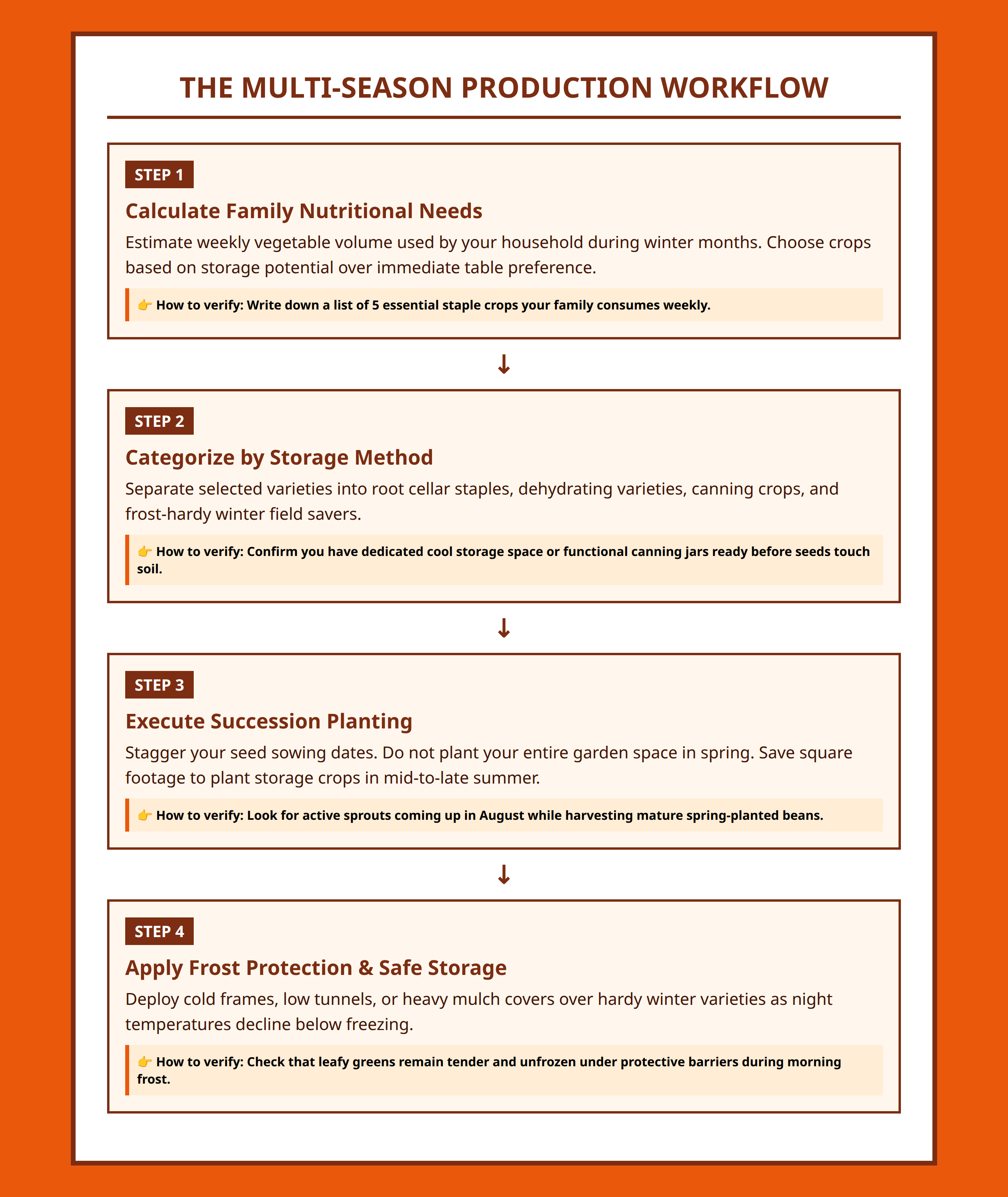
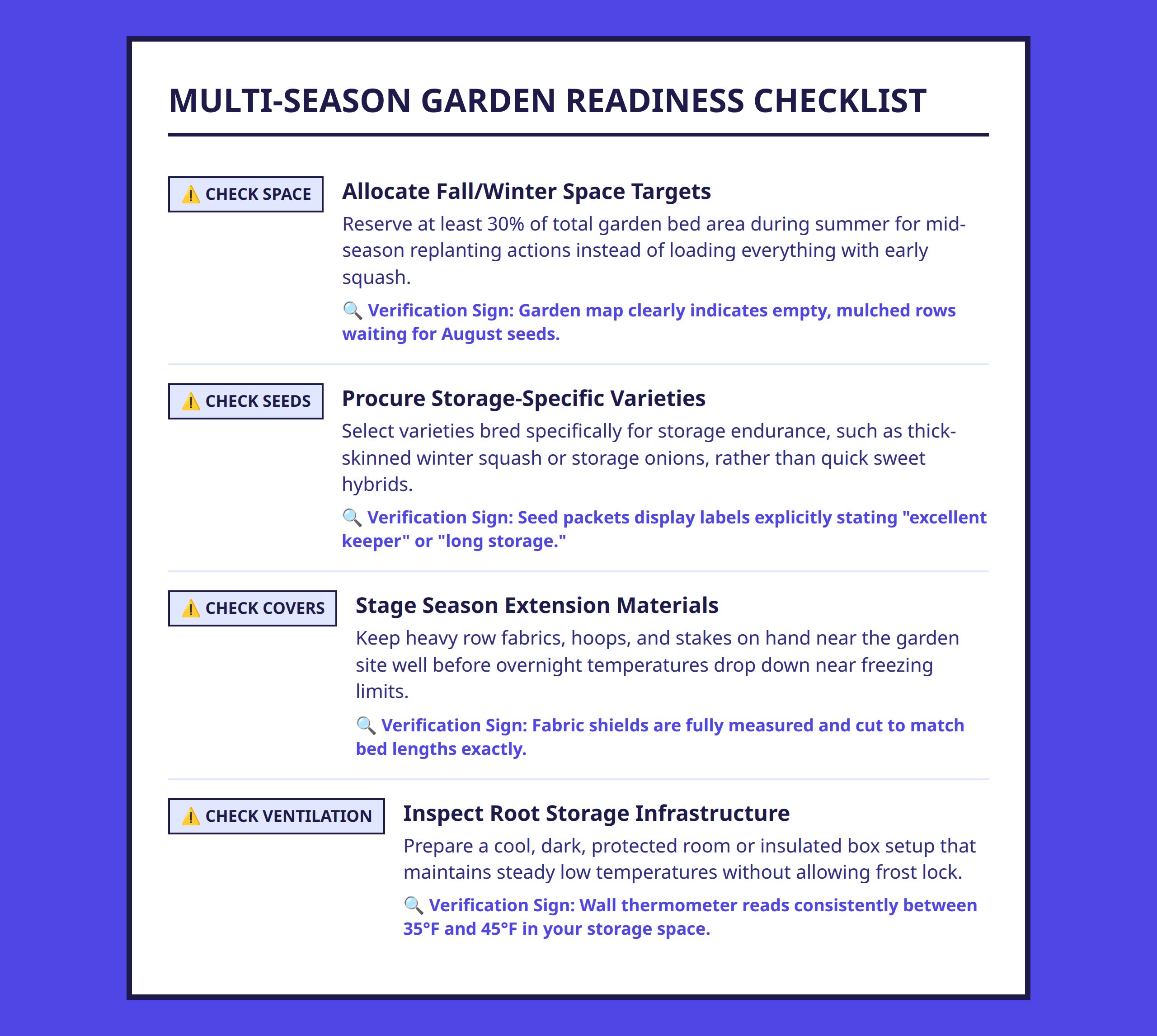
Once storage enters the planning process, the garden starts functioning differently.
Root crops such as potatoes, carrots, beets, and turnips become important not only because they produce food, but because they remain useful long after harvest.
Other vegetables like onions, cabbage, pumpkins, squash, and celery also carry value partly because they extend household food supply into colder months.
I think this is one of the biggest differences between decorative gardening and practical food gardening.
A decorative garden focuses heavily on what looks productive during peak season. A practical food garden asks a harder question: what vegetables will still matter three or four months later?
That question naturally shifts space toward crops with strong storage value.
Even moderate storage capacity changes how the garden supports the household. A shelf of onions, baskets of squash, and stored root vegetables continue contributing to meals quietly after fresh summer crops disappear.
Different Crops Serve Different Seasonal Roles
One reason long-term garden planning works better is that vegetables do not all serve the same purpose.
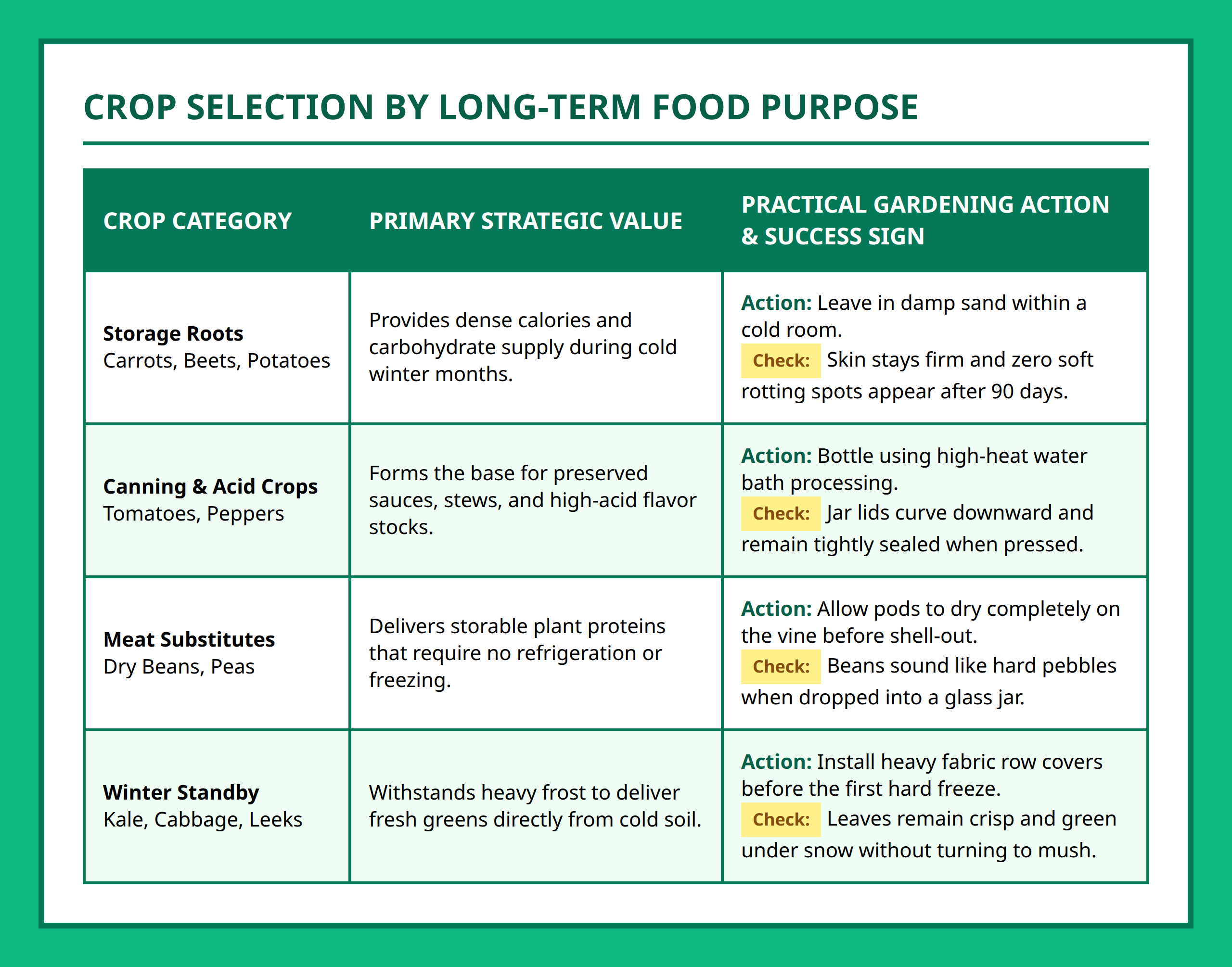
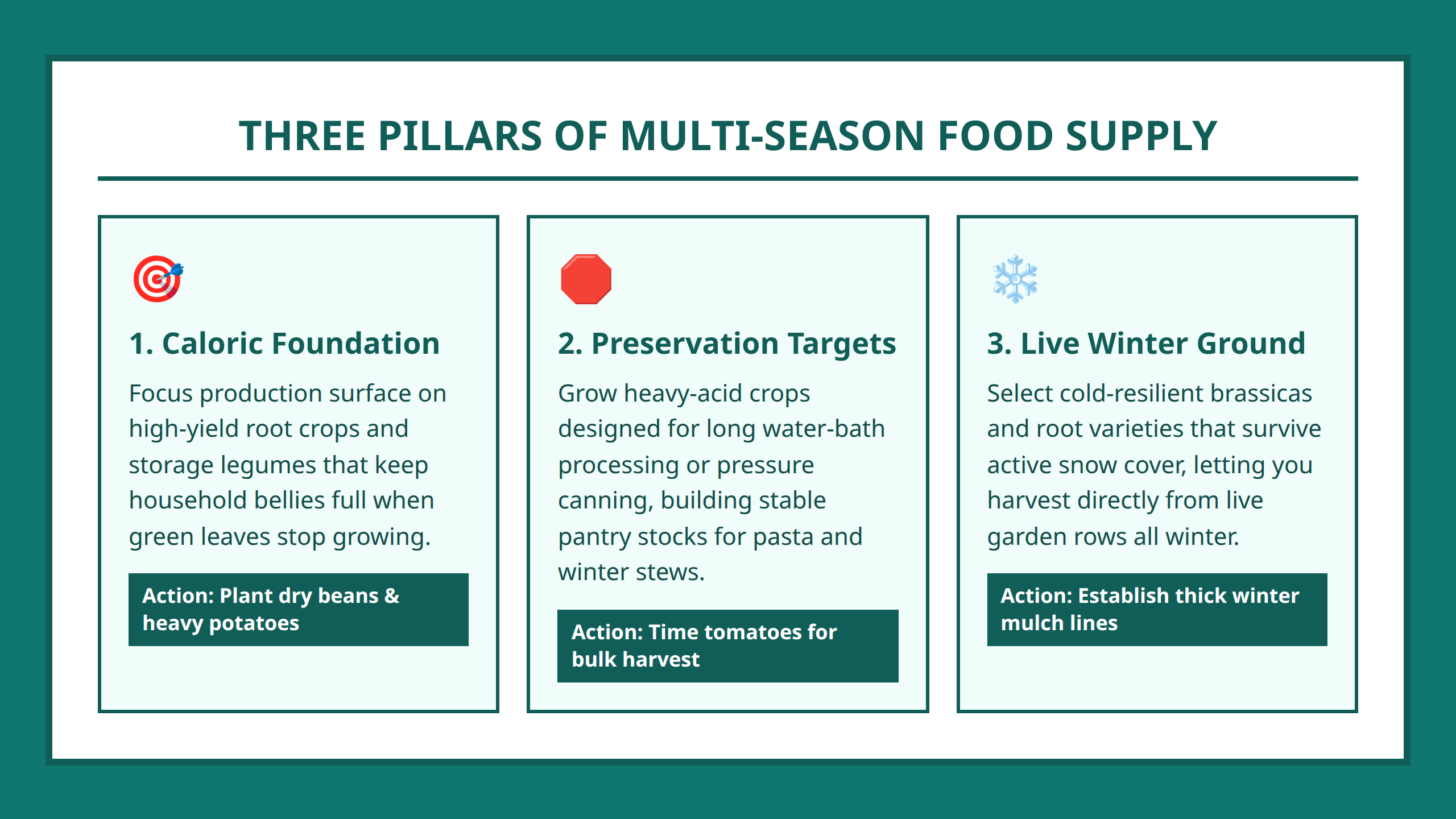
Some vegetables are mainly for immediate fresh eating. Some support preservation or canning. Others help supply food during winter. Certain crops also substitute for foods that might otherwise need to be purchased more often.
I think gardeners make better planning decisions once they start assigning roles to crops instead of viewing every vegetable the same way.
For example:
- lettuce and spinach support fresh seasonal meals
- tomatoes may support both fresh eating and preservation
- beans and peas contribute protein value and longer household usefulness
- potatoes and root crops provide bulk food and storage value
- squash and pumpkins extend food supply into colder seasons
That kind of role-based planning creates a steadier food system instead of a short harvest surge.
A Garden Feels Different When It Supports Daily Cooking
I think this is where practical gardening becomes more satisfying.
When a garden supports everyday cooking repeatedly, the work feels connected to ordinary life instead of isolated harvest events.
A household using stored onions regularly through winter experiences the garden differently than a household that harvested mostly novelty crops during summer.
The same goes for potatoes, carrots, dried beans, cabbage, and other vegetables that continue appearing in meals long after harvest season ends.
I would pay attention to that continuity if I were planning a serious food garden. A crop becomes more valuable when it stays useful across many months instead of creating one brief moment of abundance.
This does not mean fresh summer vegetables lose importance. They still matter enormously. But they work best as part of a larger system that includes storage, preservation, and seasonal transition.
Large Harvests Can Still Leave Food Gaps
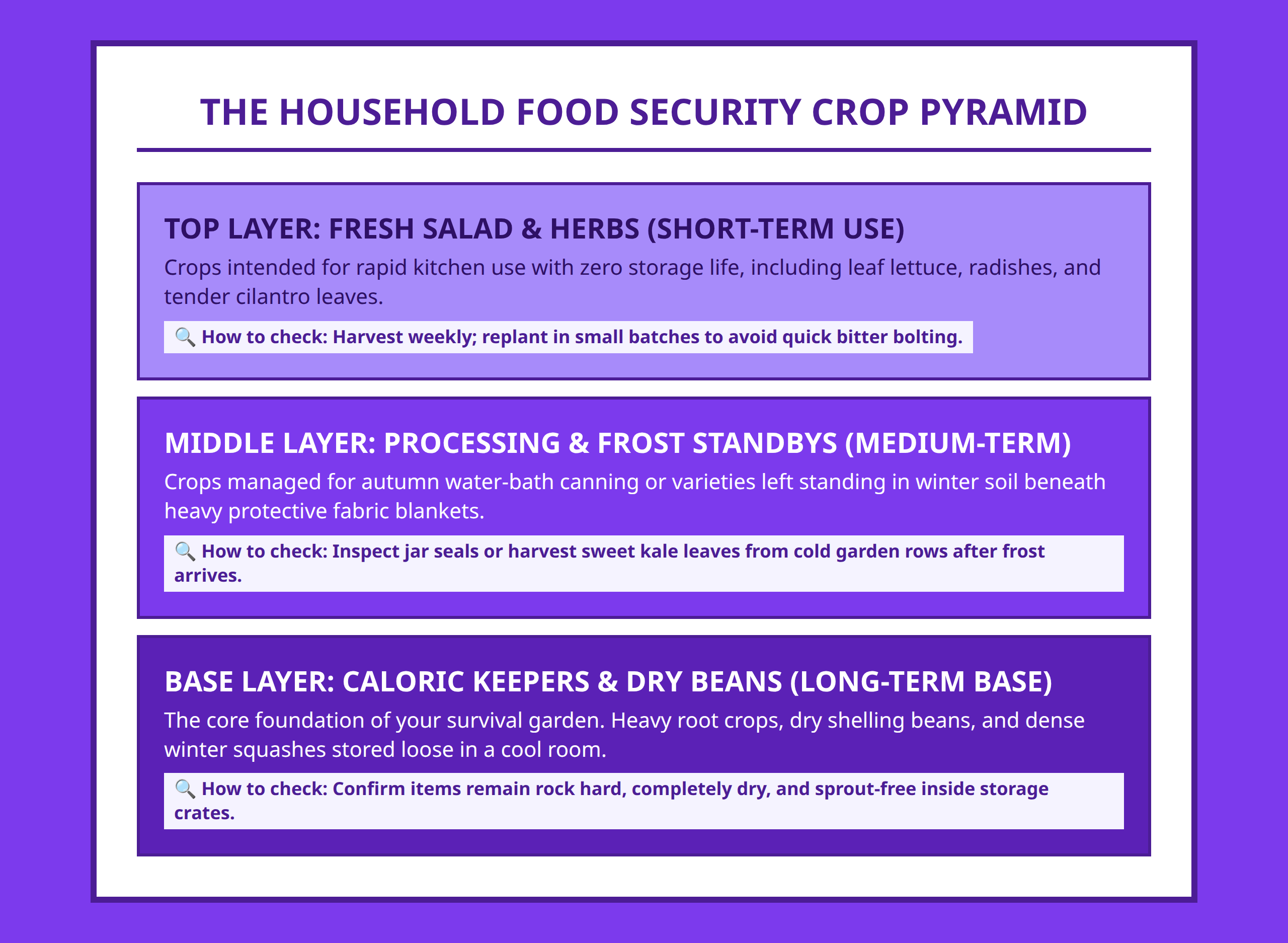
One mistake I notice often is assuming that a productive-looking garden automatically means good long-term food support.
That is not always true.
A garden dominated by watermelons, cucumbers, sweet corn, or other short-window crops may produce heavily while still leaving major gaps once the season changes.
Meanwhile, a quieter-looking garden with onions, cabbage, potatoes, carrots, beans, and squash may continue contributing food steadily for much longer.
I think the difference comes down to continuity.
One garden creates abundance spikes. The other creates ongoing household support.
That second model feels more practical to me because it aligns the garden with how people actually eat over time.
Planning Around Seasons Changes Crop Priorities
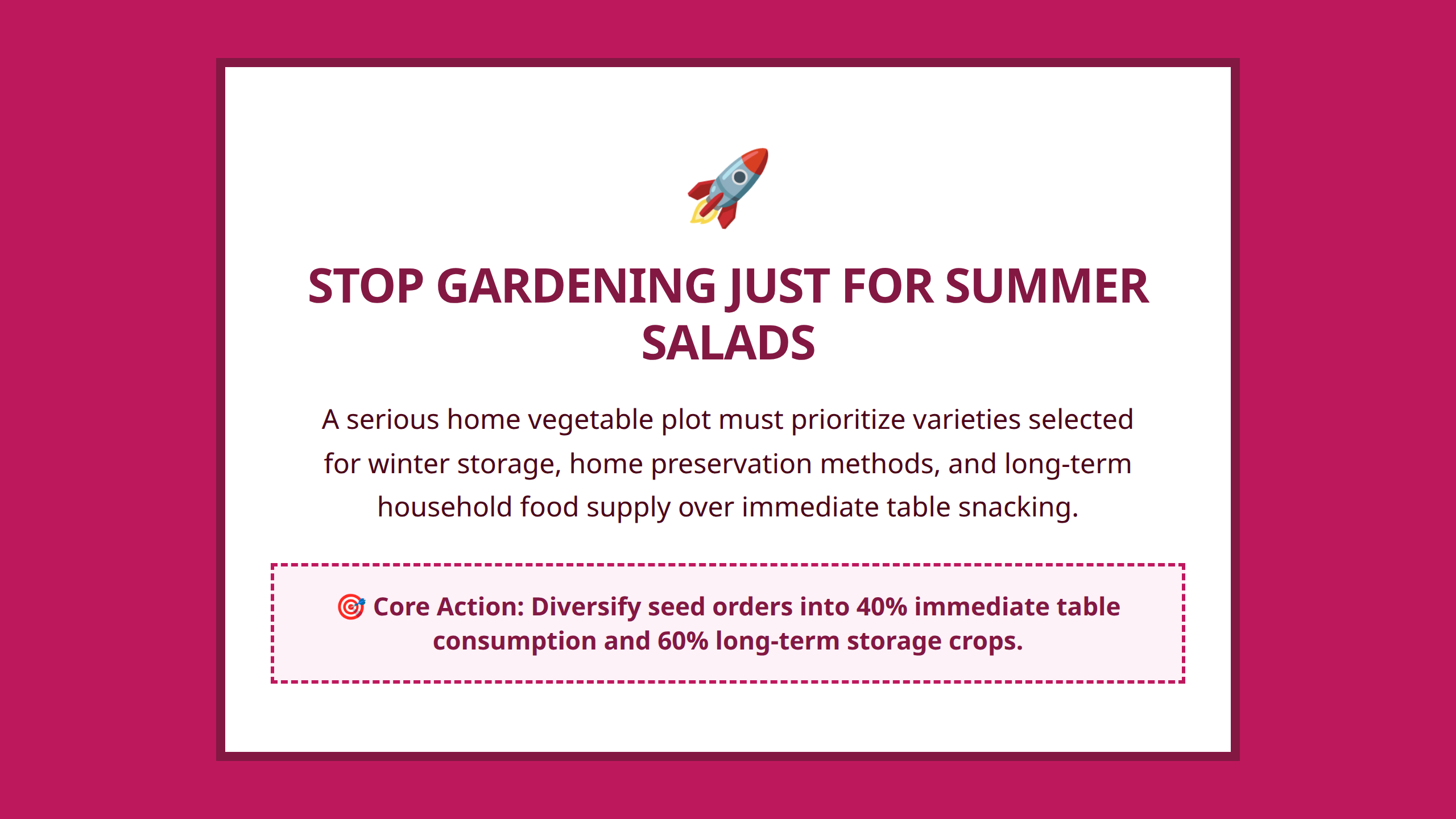
Once gardeners start thinking seasonally, crop selection changes naturally.
Storage vegetables gain importance. Preservation-friendly crops deserve space. Long-keeping root crops start competing more successfully against vegetables that produce heavily but briefly.
I would still leave room for enjoyable summer harvests. A food garden should remain satisfying and pleasant to use.
But I would not allow the excitement of midsummer crops to consume all the available space.
A small backyard garden that continues supporting meals into winter often provides more real value than a larger garden built mainly around short-lived summer abundance.
That is the shift I find most useful in long-term garden planning. The garden stops being a seasonal display and starts becoming part of the household food system itself.
- Storage crops: Vegetables that can remain usable for extended periods after harvest, especially through colder seasons.
- Root crops: Vegetables grown mainly for edible underground parts such as potatoes, carrots, beets, and turnips.
- Preservation: Methods used to extend food usability after harvest, including drying, canning, or storing vegetables.
- Fresh-use crops: Vegetables mainly eaten soon after harvest rather than stored long term.
- Household food supply: The combination of foods regularly available to support daily meals across seasons.
References:
- https://www.youtube.com/watch?v=nkjeSJQWhZc
- https://www.youtube.com/watch?v=x-WYaOY2TL4
- https://www.youtube.com/watch?v=28o_ktKhA8M
- https://www.reddit.com/r/gardening/comments/qubwwg/how_do_you_live_off_of_your_own_growings_yearround/
- https://www.reddit.com/r/gardening/comments/qubwwg/how_do_you_live_off_of_your_own_growings_yearround/hkp7wz1/
- https://www.reddit.com/r/gardening/comments/qubwwg/how_do_you_live_off_of_your_own_growings_yearround/hkpr0a5/
- https://www.quora.com/How-do-you-grow-your-own-vegetables-all-year-round
- https://www.quora.com/How-can-I-extend-the-growing-season-for-my-vegetable-garden
- https://www.leafrootfruit.com.au/how-to-plan-your-vegetable-crops-and-plant-them-out/
- https://content.ces.ncsu.edu/home-vegetable-gardening-a-quick-reference-guide
- https://www.theseasonalhomestead.com/the-ultimate-guide-to-growing-more-food-in-a-small-space/
- https://www.reddit.com/r/SquareFootGardening/comments/1gjag7u/how_can_gardening_provide_a_continuous_supply_of/
- https://www.reddit.com/r/SquareFootGardening/comments/1gjag7u/how_can_gardening_provide_a_continuous_supply_of/lvcwwx8/
- https://www.reddit.com/r/GardeningUK/comments/1ao55w8/has_anyone_been_able_to_grow_enough_veg_to_last/
- https://www.finegardening.com/project-guides/fruits-and-vegetables/getting-big-vegetable-production-from-a-small-space
- https://www.growveg.com/guides/planting-to-preserve-grow-a-garden-to-eat-from-year-round/
- https://www.reddit.com/r/gardening/comments/qubwwg/how_do_you_live_off_of_your_own_growings_yearround/hkp8pxj/
- https://gardenbetty.com/perennial-vegetables/
- https://travis-tx.tamu.edu/about-2/horticulture/edible-gardens-for-austin/vegetable-gardening-in-austin/10-tips-for-a-successful-vegetable-garden/
- https://northhillgardens.co.uk/blog/how-to-design-a-garden-for-every-season-expert-tips-for-year-round-beauty/
