A productive vegetable garden can be managed with a surprisingly small set of basic tools. Most beginners overspend on equipment long before they understand which tools actually solve everyday gardening problems.
One thing I’ve noticed about beginner gardening is how quickly people get pulled toward equipment. Before the first seed goes into the ground, many new gardeners are already comparing expensive tool sets, powered equipment, and specialized gadgets.
But most home vegetable gardens do not fail because the owner lacked machinery. They fail because the gardener never learned which simple tools handle the core work reliably.
Takeaways
- A few durable hand tools can handle most home vegetable garden tasks.
- Large powered equipment usually makes sense only for bigger gardens.
- Each tool should solve a specific recurring job.
- Buying too many tools early often wastes money and storage space.
The Best Beginner Tool Strategy Is Usually Minimal
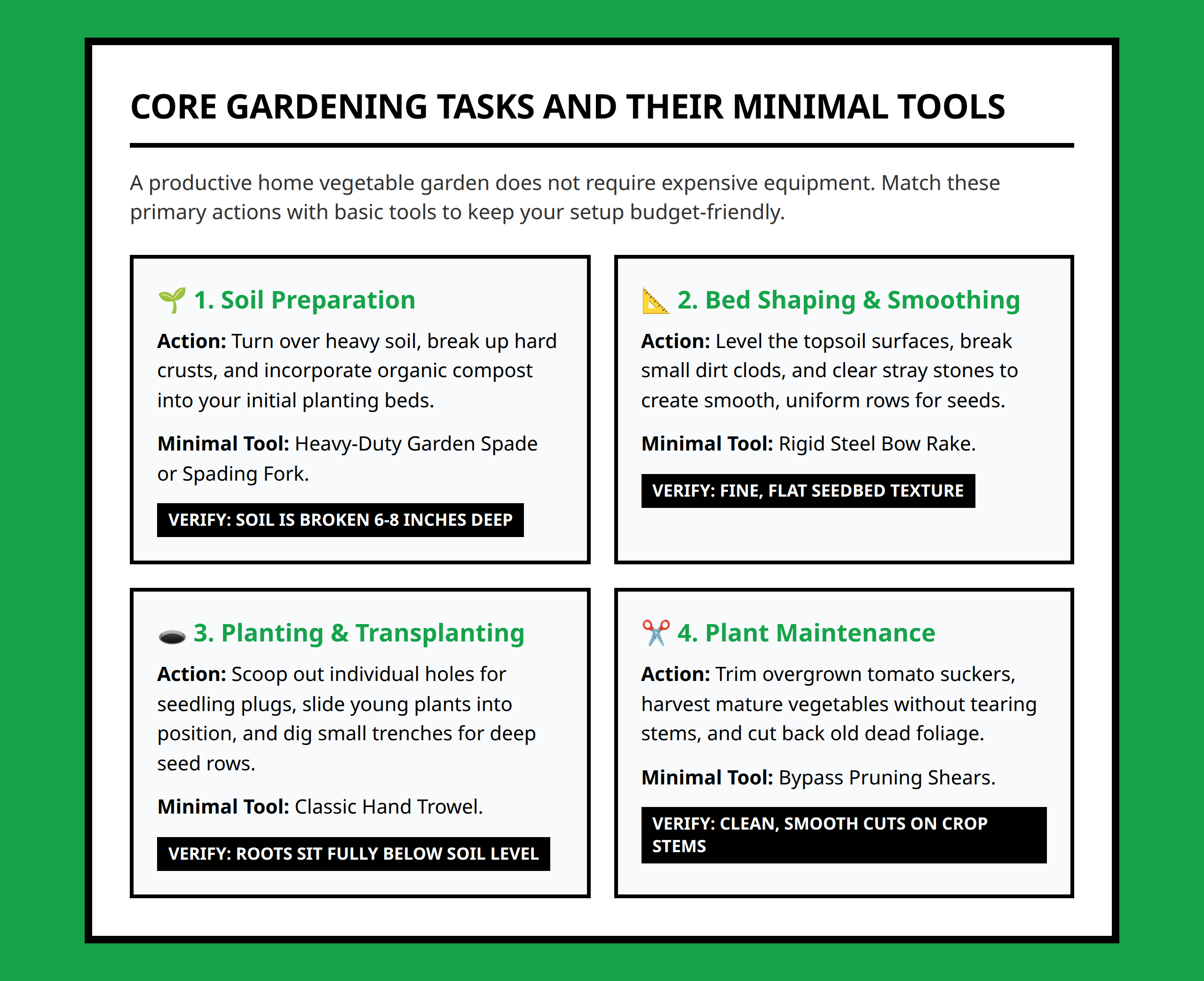
A small or medium home garden does not require elaborate equipment.
That matters because gardening tools tend to expand faster than the garden itself. A person starts with practical intentions, visits a garden center once or twice, and suddenly owns specialized tools they barely understand how to use.
I think beginners often confuse gardening seriousness with equipment quantity.
But gardening efficiency usually comes from matching tools to recurring work, not from collecting gadgets.
A good beginner setup focuses on a few dependable tools that handle:
- digging
- soil preparation
- weeding
- cultivating
- planting
- watering
Once those jobs are covered, most daily garden work becomes manageable.
A Good Spade Handles More Work Than People Realize
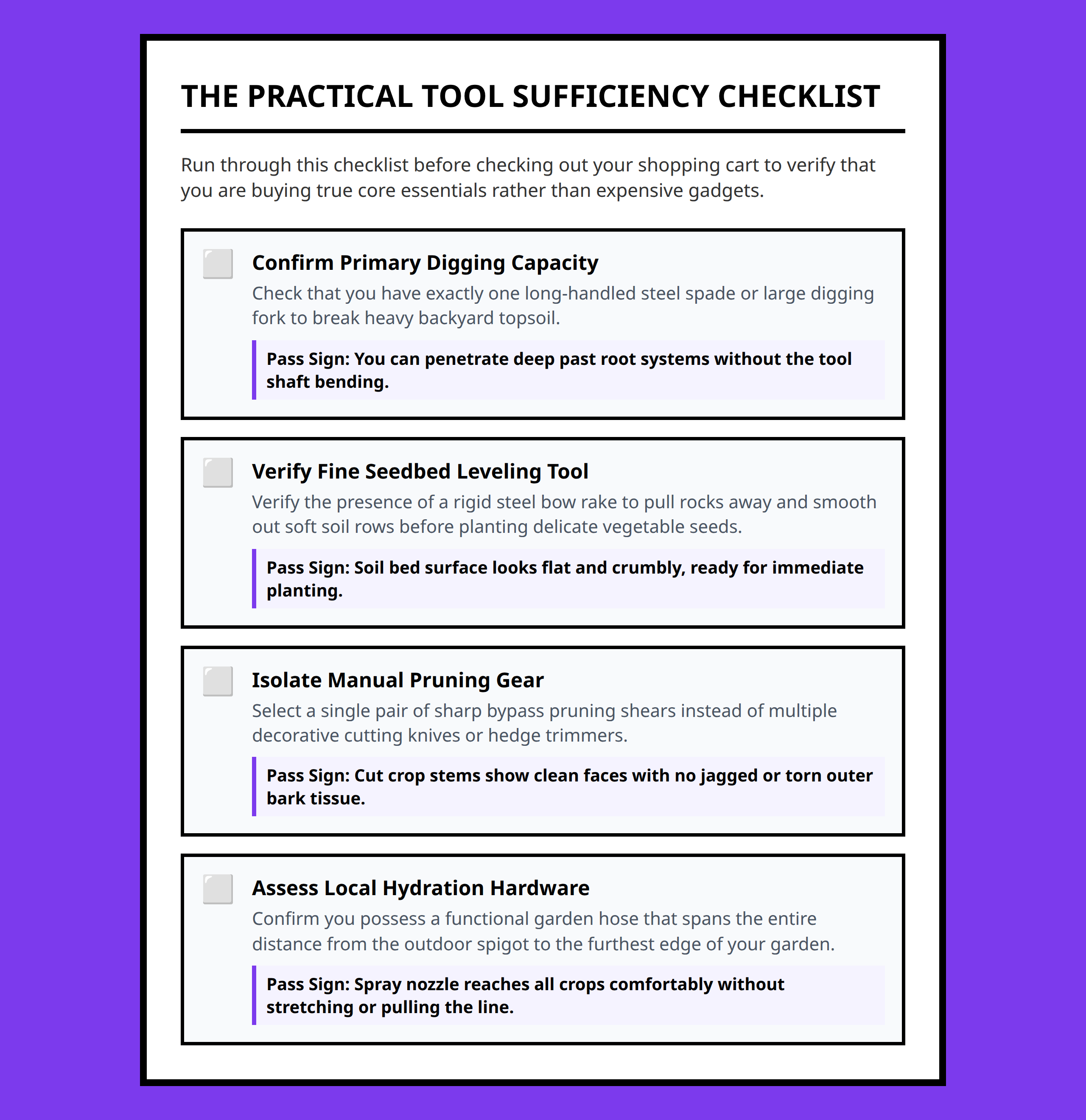
If I had to reduce a vegetable garden tool setup to essentials only, the spade would stay near the top of the list.
A sturdy spade handles digging, edging, turning soil, opening planting areas, and general preparation work. It becomes one of the few tools used repeatedly throughout the season.
The important detail is durability.
A weak or poorly balanced spade becomes frustrating quickly, especially in compacted soil. A strong spade, on the other hand, quietly solves dozens of routine tasks without much thought.
I would rather own one dependable digging tool than several specialized tools that overlap awkwardly.
That practical mindset keeps gardening simpler.
Rakes and Hoes Solve Different Problems
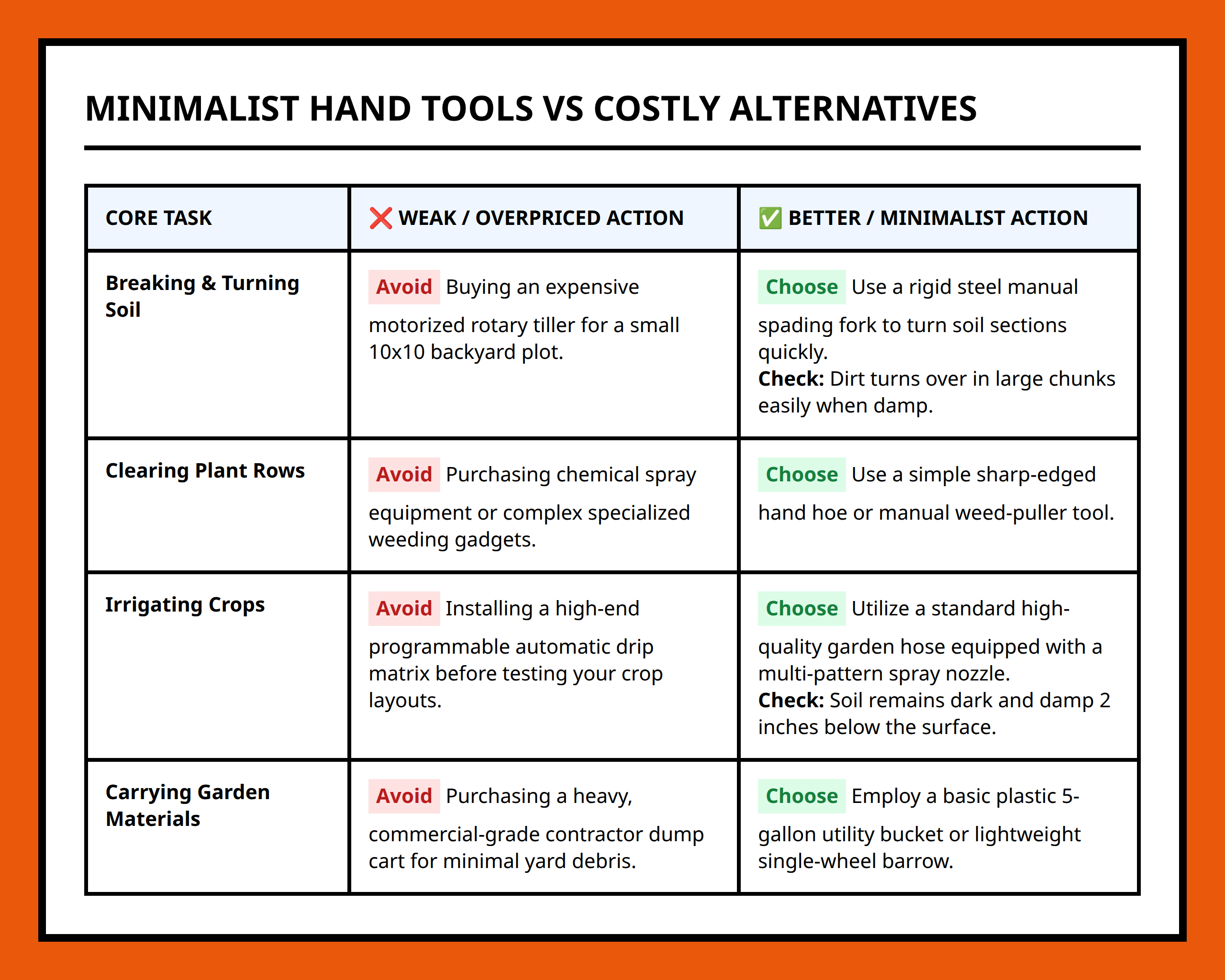
Many beginners treat rakes and hoes as interchangeable, but they handle different jobs.
A garden rake mainly helps level soil, break up clods, smooth seedbeds, and remove debris after digging. It prepares the surface for planting.
A hoe becomes important later because it controls shallow weeds and loosens surface soil around crops.
I think this distinction matters because new gardeners sometimes underestimate how much repetitive weeding shapes the gardening experience.
A hoe saves labor mainly through speed.
Imagine two gardeners facing several rows of young weeds after warm spring rain. One pulls weeds individually by hand. The other lightly cultivates early with a hoe before weeds mature.
The second gardener usually spends far less effort.
That is why simple cultivation tools matter more than many flashy gardening gadgets.
Hand Tools Handle the Precision Work
Large tools prepare the garden. Small hand tools handle the detailed work afterward.
A hand trowel helps with transplanting and small digging tasks. Hand cultivators loosen soil around delicate plants without disturbing roots excessively.
These smaller tools become especially useful once crops are growing closely together.
I pay attention to comfort with hand tools because repetitive garden work becomes tiring quickly when grips, weight, or balance feel awkward.
At the same time, I try not to overcomplicate this category.
Many stores sell highly specialized hand tools designed for narrow situations. Most beginners only need a few versatile tools that can adapt across different gardening tasks.
Watering Equipment Should Match Garden Size
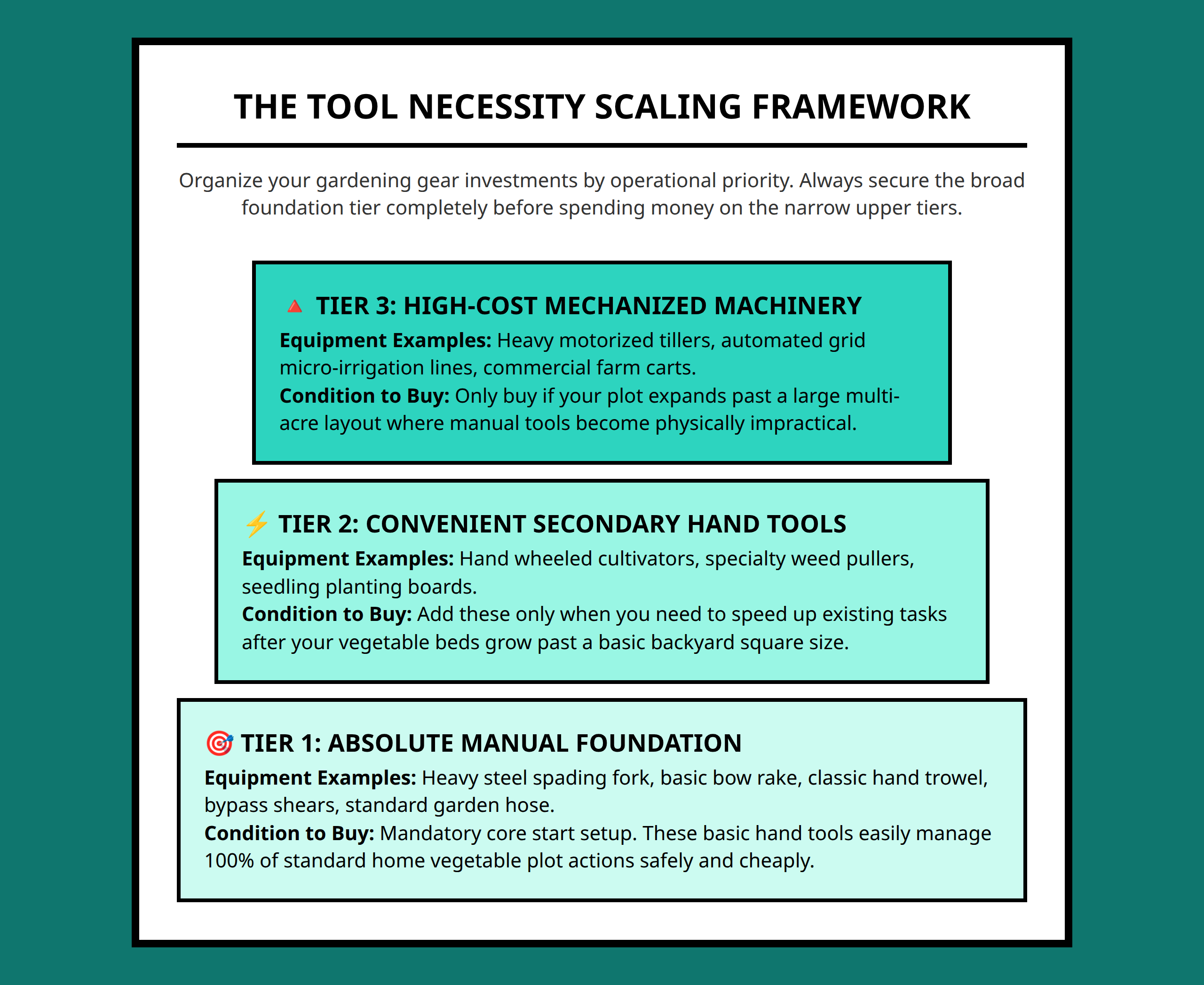
Watering systems often become another area where people overspend early.
For many home gardens, a hose and watering nozzle handle routine watering perfectly well.
Watering cans still remain useful too, especially for seedlings and delicate young plants that need gentler watering.
I think gardeners sometimes buy complicated irrigation equipment before they even understand how much water their garden actually requires.
That usually creates unnecessary complexity.
A smaller garden often benefits more from careful observation and consistent manual watering than from an elaborate setup installed too early.
Wheelbarrows Earn Their Place Quickly
Some tools feel optional at first but become extremely valuable once real garden work begins.
A wheelbarrow is one of them.
Moving soil, compost, weeds, mulch, tools, or harvested vegetables becomes much easier with even a basic wheelbarrow or garden cart.
I would not necessarily place it above digging tools for a tiny garden. But once a garden expands beyond a few small beds, carrying everything by hand becomes inefficient fast.
This is one place where labor reduction matters more than specialization.
A wheelbarrow does not perform one highly technical task. It simply removes repeated physical strain from many ordinary tasks.
Large Equipment Only Makes Sense at Larger Scale
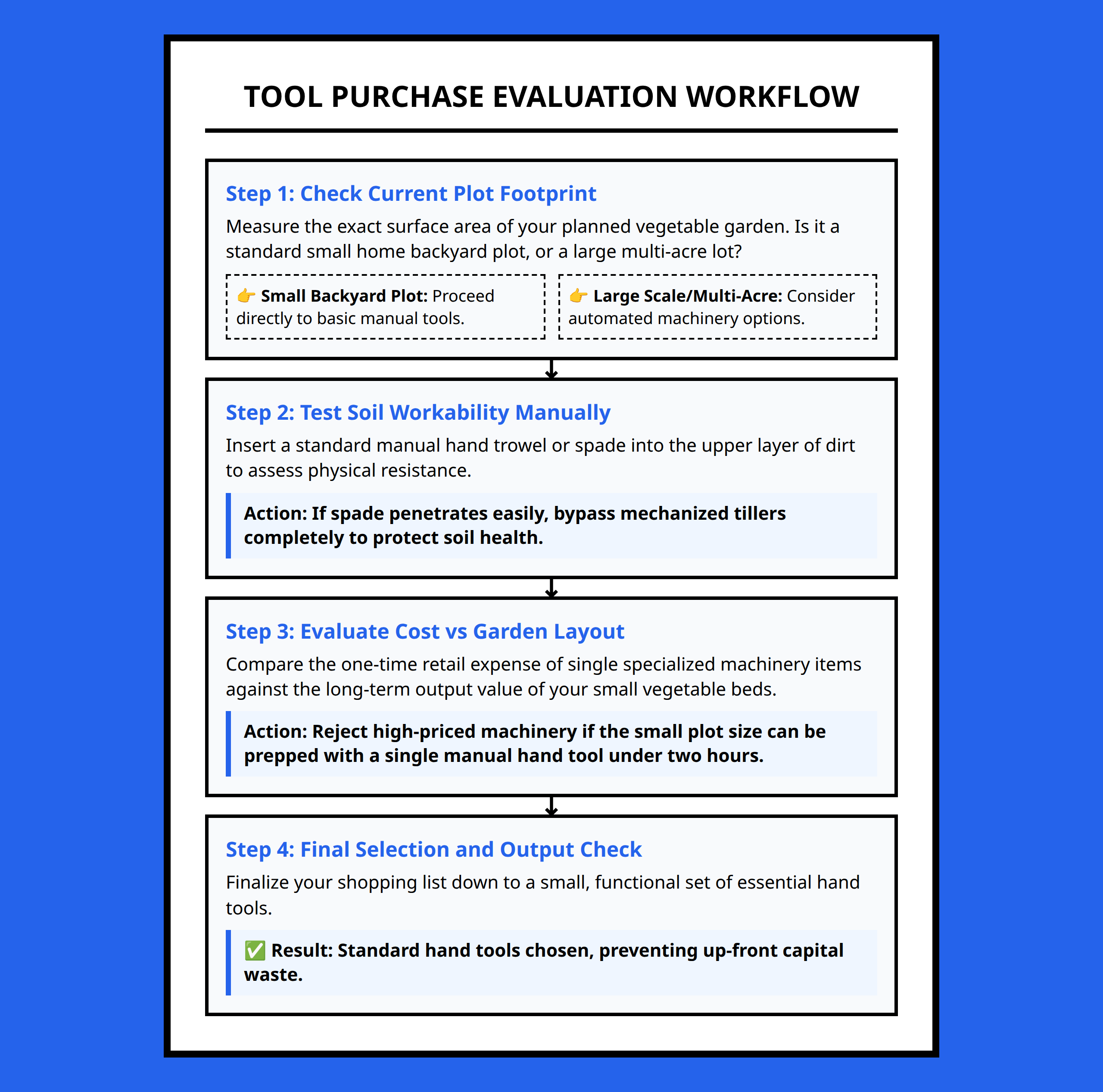
One practical idea I appreciate is the distinction between home gardens and large-scale cultivation.
Powered tillers and larger equipment become economically useful mainly when the garden reaches a size where manual labor becomes excessive.
For small and moderate gardens, hand tools often remain more practical, cheaper, easier to maintain, and easier to store.
I think many beginners buy equipment for the garden they imagine having someday instead of the garden they actually manage right now.
That usually leads to clutter more than productivity.
A modest backyard plot rarely needs commercial-scale equipment.
The better approach is usually to let the garden itself justify additional tools over time. If a recurring task becomes exhausting or inefficient repeatedly, then new equipment may earn its place naturally.
The Best Tool Collection Usually Grows Slowly
Most experienced gardeners I’ve observed do not build their tool setup all at once.
Their equipment expands gradually around real problems.
That creates a more practical collection because each tool has already proven useful before becoming permanent.
I think beginners benefit from approaching gardening equipment the same way.
Start with reliable basics. Learn what work actually repeats week after week. Pay attention to where labor accumulates. Then add tools carefully when they solve a clear ongoing problem.
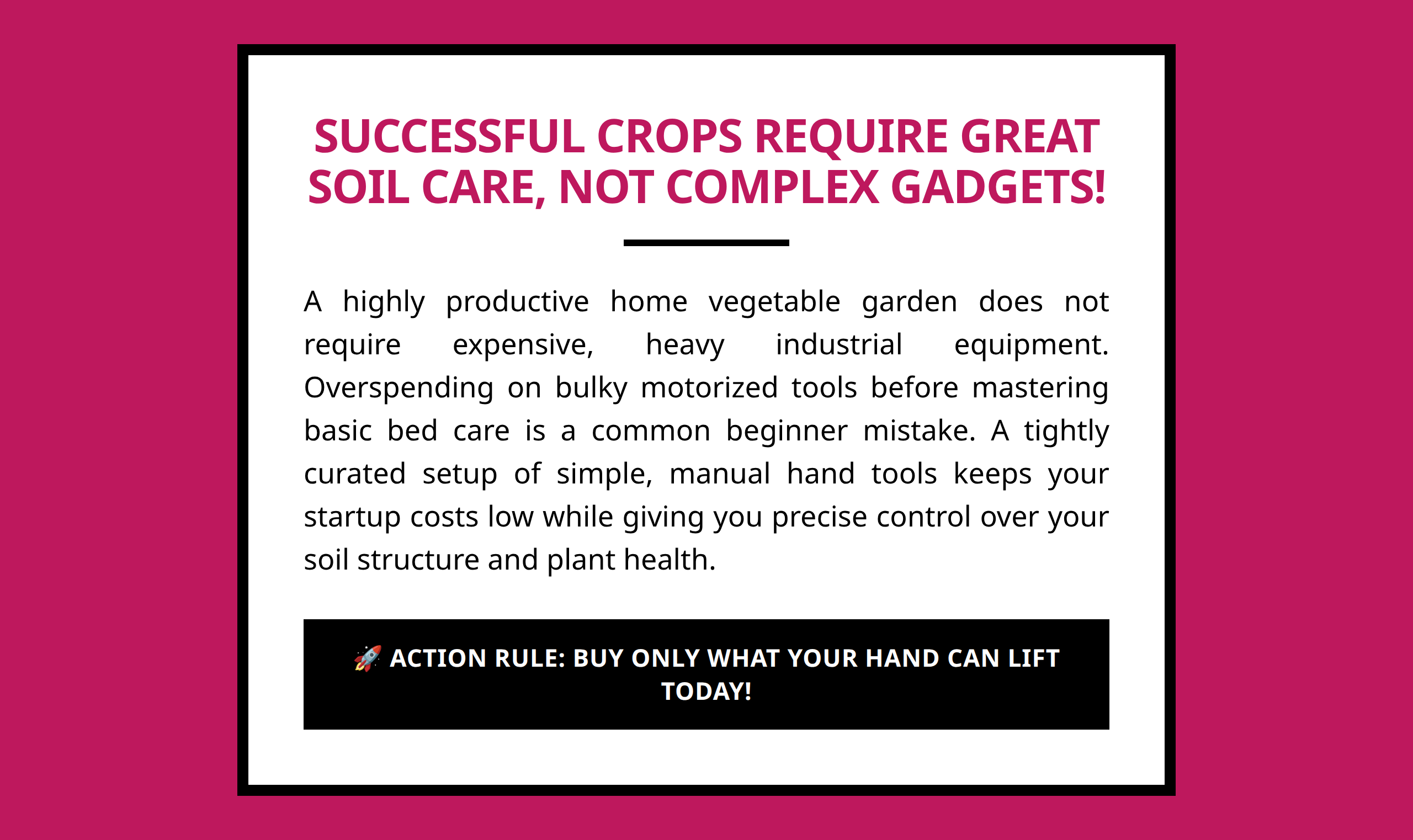
A productive garden usually depends more on consistent attention than on owning impressive equipment.
- Spade: A digging tool with a flat blade used for turning soil, edging, and preparing planting areas.
- Cultivator: A tool used to loosen surface soil and disturb young weeds around growing plants.
- Hoe: A long-handled tool mainly used for shallow weeding and soil cultivation.
- Seedbed: A prepared area of loose, level soil where seeds are planted.
- Powered tiller: A motorized machine used to break up and prepare larger areas of soil.
References:
- https://www.youtube.com/watch?v=qeTnnqN7OPI
- https://www.youtube.com/watch?v=knuT6GJByIw
- https://www.youtube.com/watch?v=Sg6RMW8x_J0
- https://www.youtube.com/watch?v=pUWlPVW3ET8
- https://www.reddit.com/r/minimalism/comments/1ial8fr/gardenworking_tools/
- https://www.reddit.com/r/gardening/comments/8gwueu/what_are_your_essential_garden_tools_to_start_a/
- https://www.theseasonalhomestead.com/11-time-saving-garden-tools-for-a-large-garden/
- https://www.creativevegetablegardener.com/best-garden-tools/
- https://theseedsage.com/blog/essential-garden-tools-for-beginners
- https://www.bunnings.com.au/diy-advice/garden/planting-and-growing/how-to-start-a-vegetable-garden
- https://minimalistgardener.com.au/
- https://cropcareequipment.com/blog/how-to-start-a-home-vegetable-garden/
- https://www.foodgardenlife.com/learn/grow-vegetable-row-spacing
- https://neversinktools.com/collections/long-handle-tools
- https://www.gardendesign.com/how-to/tools.html
