Small vegetable gardens work best when every square foot has a job. Choosing crops based on yield, food value, and harvest usefulness usually produces better results than filling limited space with vegetables that spread aggressively or produce too little food for the room they consume.
A lot of small gardens fail quietly. The plants grow. The garden looks healthy. But by the middle of summer, the space feels crowded, harvests feel uneven, and the family still buys most of its vegetables from the store.
What I’ve noticed is that the problem often starts before planting season even begins. The issue is not poor gardening technique. It’s poor crop selection for the amount of space available.
Takeaways
- Some vegetables consume far more space than they return in usable food.
- Small gardens benefit from crops with repeated harvests or dense planting potential.
- Yield alone is not enough; storage value and nutrition matter too.
- A productive small garden requires tradeoffs, not unlimited variety.
Small Gardens Need a Different Strategy
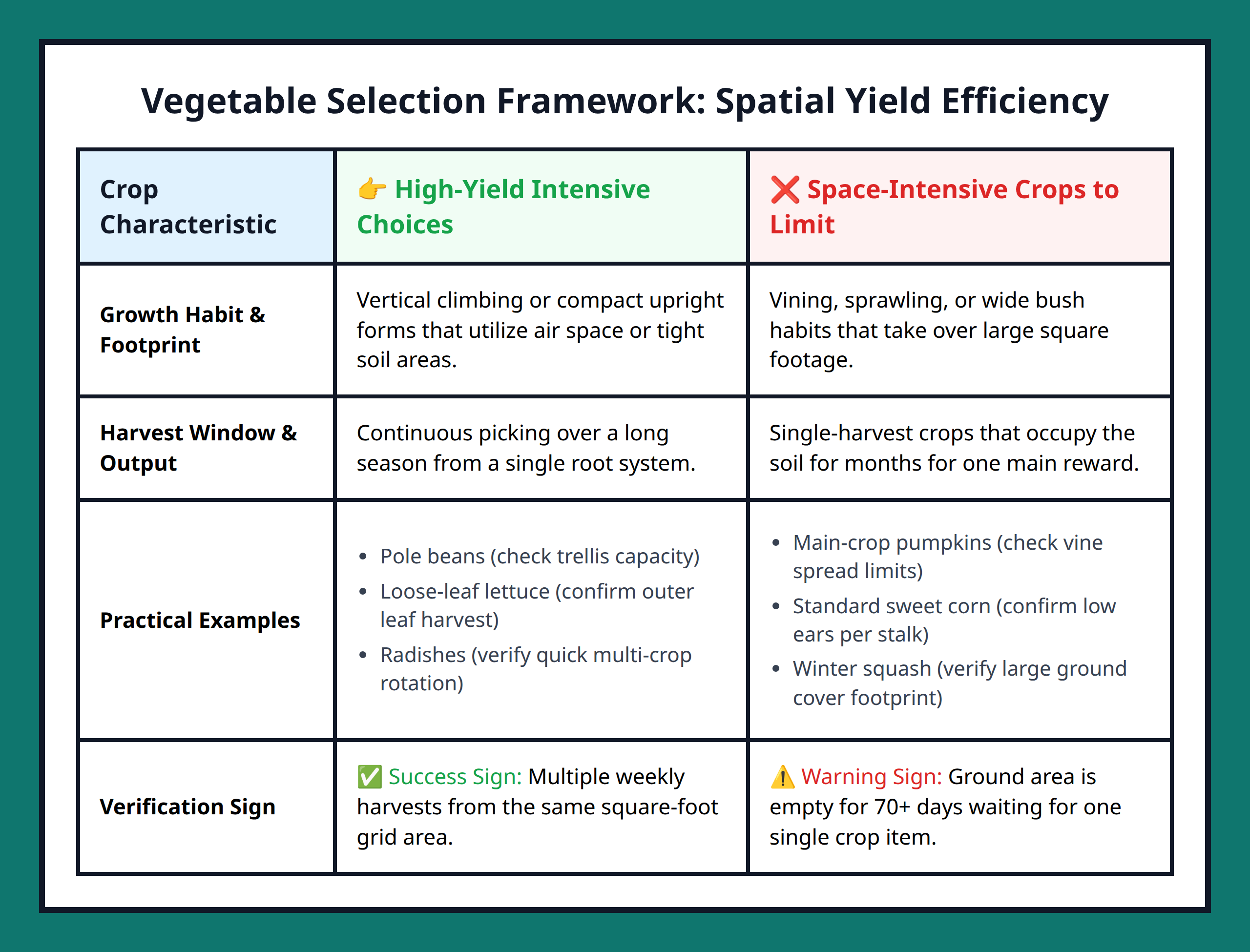
A large rural garden and a small suburban plot cannot be planned the same way.
That sounds obvious, but many gardening plans ignore it completely. Seed catalogs and social media garden photos encourage people to grow everything at once: corn, pumpkins, watermelons, cucumbers, squash, tomatoes, beans, peppers, herbs, greens, and root crops all squeezed into a tight space.
The problem is that vegetables do not use space equally.
Some crops spread aggressively and produce relatively little food for the amount of ground they occupy. Others stay compact while producing repeated harvests or nutritionally useful crops over a long season.
Once I started looking at gardening through a space-efficiency lens, I stopped asking, “What do I want to grow?” and started asking, “What deserves space in this garden?”
That single shift changes almost every planting decision.
Large Crops Carry Hidden Costs
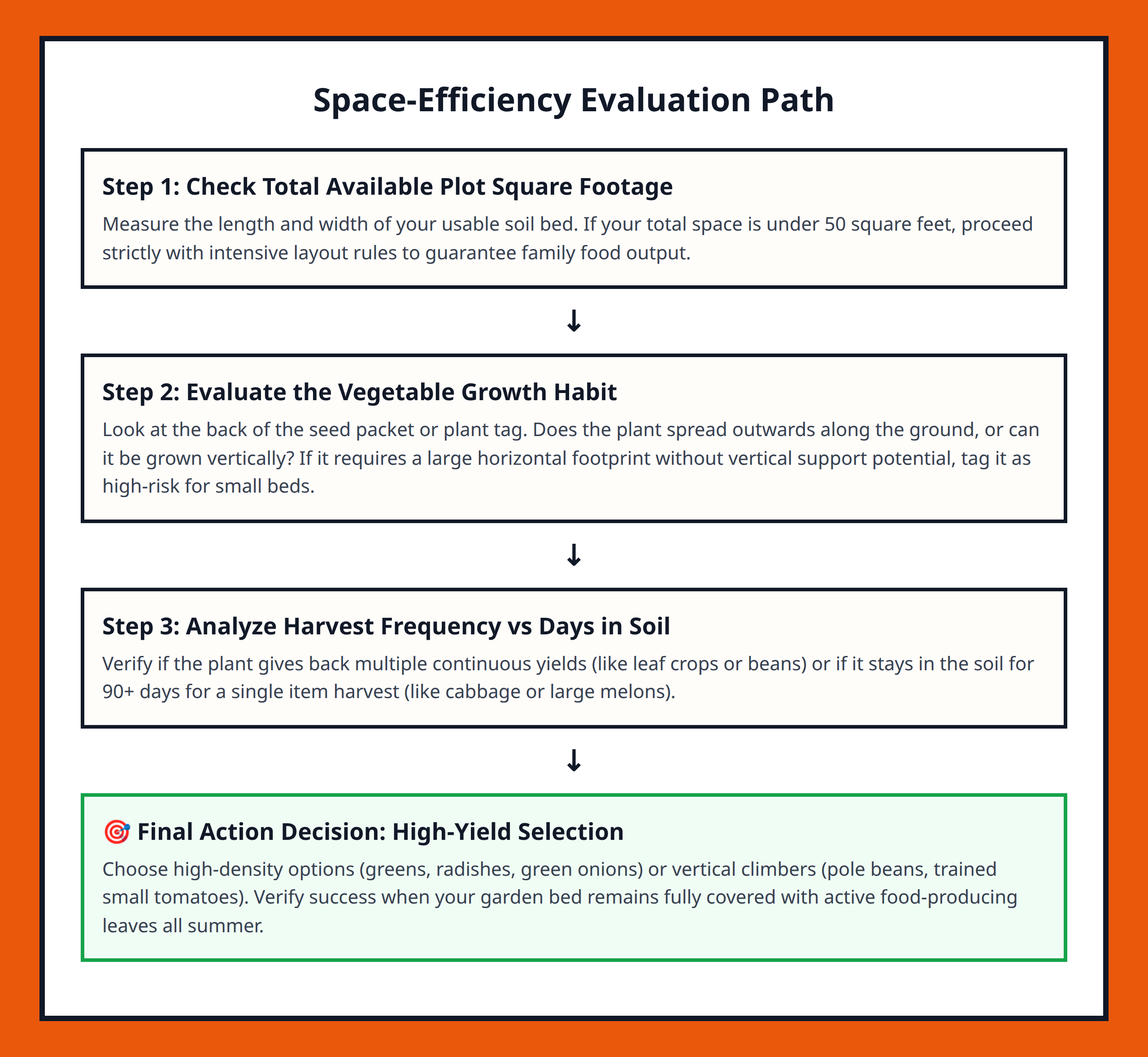
Space-heavy vegetables can look productive because their plants become physically large. But large plants are not automatically efficient plants.
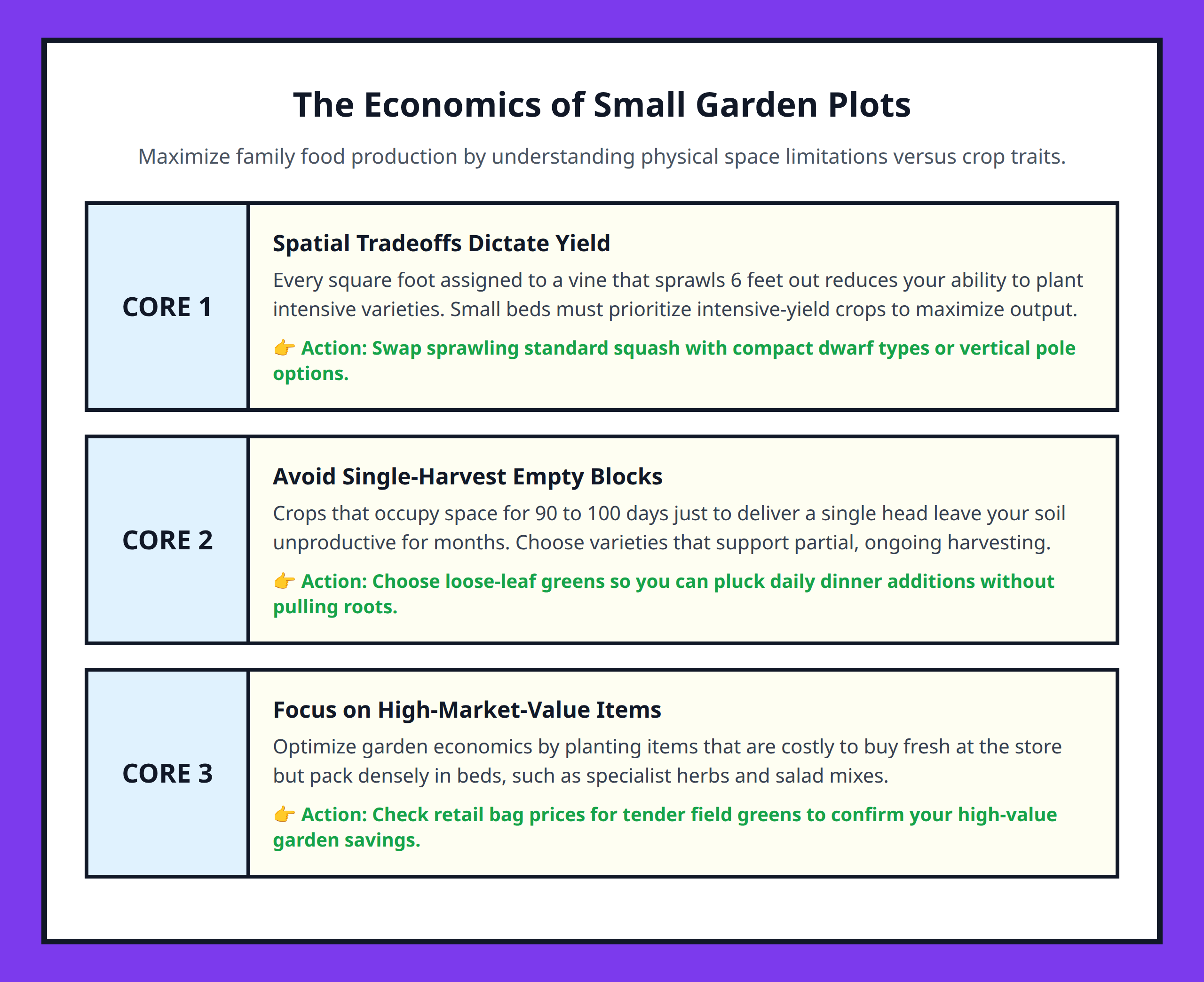
Crops like pumpkins, watermelons, squash, cucumbers, cantaloupes, and sweet corn require substantial room to develop properly. In a spacious garden, that may not matter much. In a ten-by-twenty-foot backyard plot, those crops can dominate the entire growing area quickly.
I think this is where beginner gardeners often get trapped by appearance instead of usefulness.
A sprawling pumpkin vine feels exciting in spring. By midsummer, it may be covering pathways, shading nearby vegetables, and competing for moisture and nutrients while producing only a small number of usable harvests.
That does not make pumpkins bad crops. It simply means they become expensive in terms of garden real estate.
Imagine a small backyard where one family dedicates half the garden to sprawling vine crops. Another family uses that same area for onions, carrots, lettuce, Swiss chard, parsley, radishes, and beans.
The second garden usually delivers more consistent food from the same amount of land.
Dense Crops Often Work Better in Tight Spaces
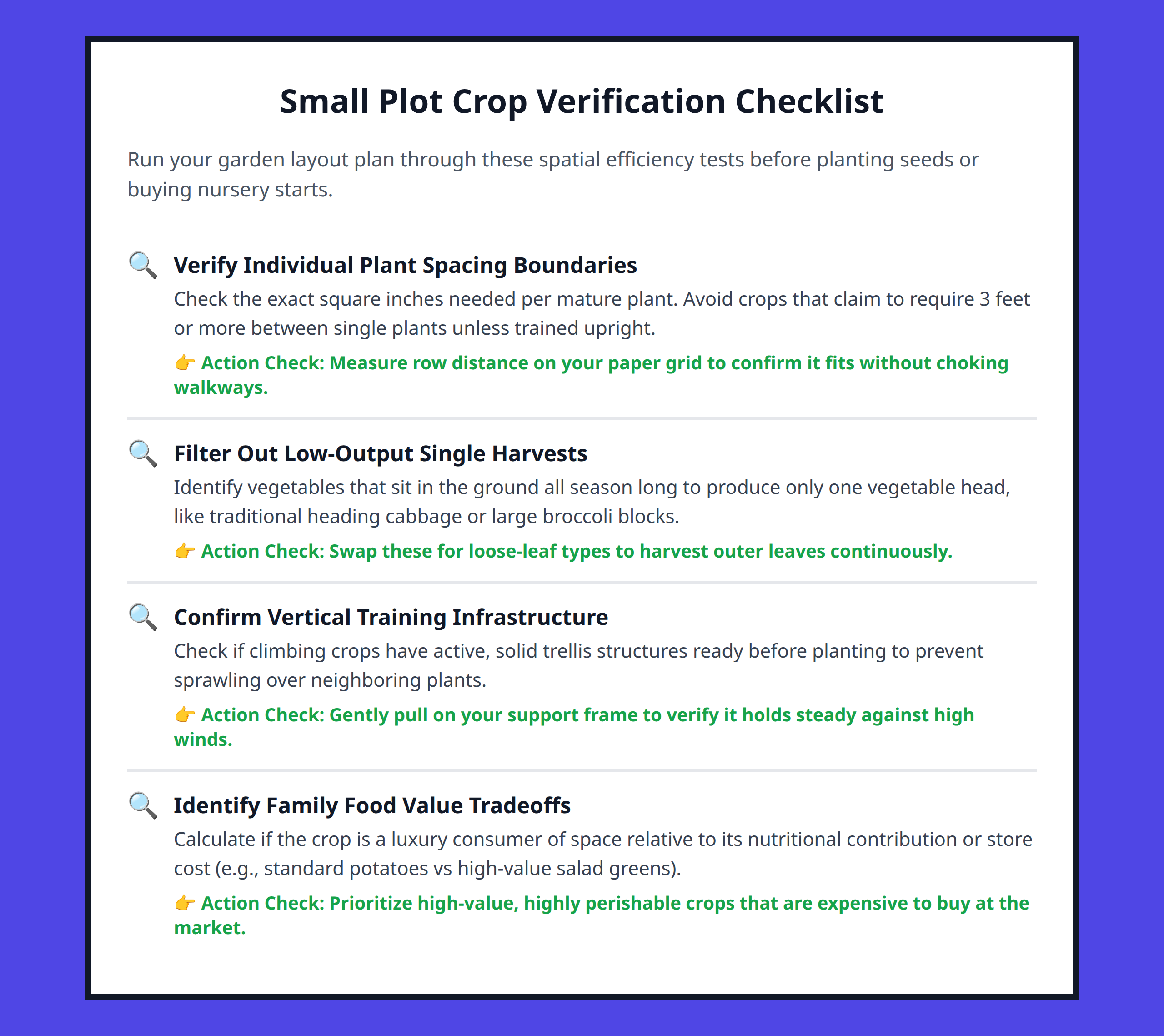
Small gardens benefit from crops that stay manageable and produce efficiently.
Vegetables like lettuce, radishes, parsley, onions, Swiss chard, and similar crops often make better use of limited ground because they can be planted more intensively and harvested steadily.
Some of these crops also solve another problem: they fit naturally into daily cooking.
I pay close attention to that now. A vegetable that gets used constantly in meals is usually more valuable than a novelty crop harvested once or twice.
For example, a compact row of onions may not look impressive compared to a giant squash vine. But onions quietly support everyday cooking for months. The same goes for carrots, greens, and herbs that fit into repeated household use.
That practical usefulness matters more in small gardens than visual impact.
Yield Per Square Foot Is Only Part of the Equation
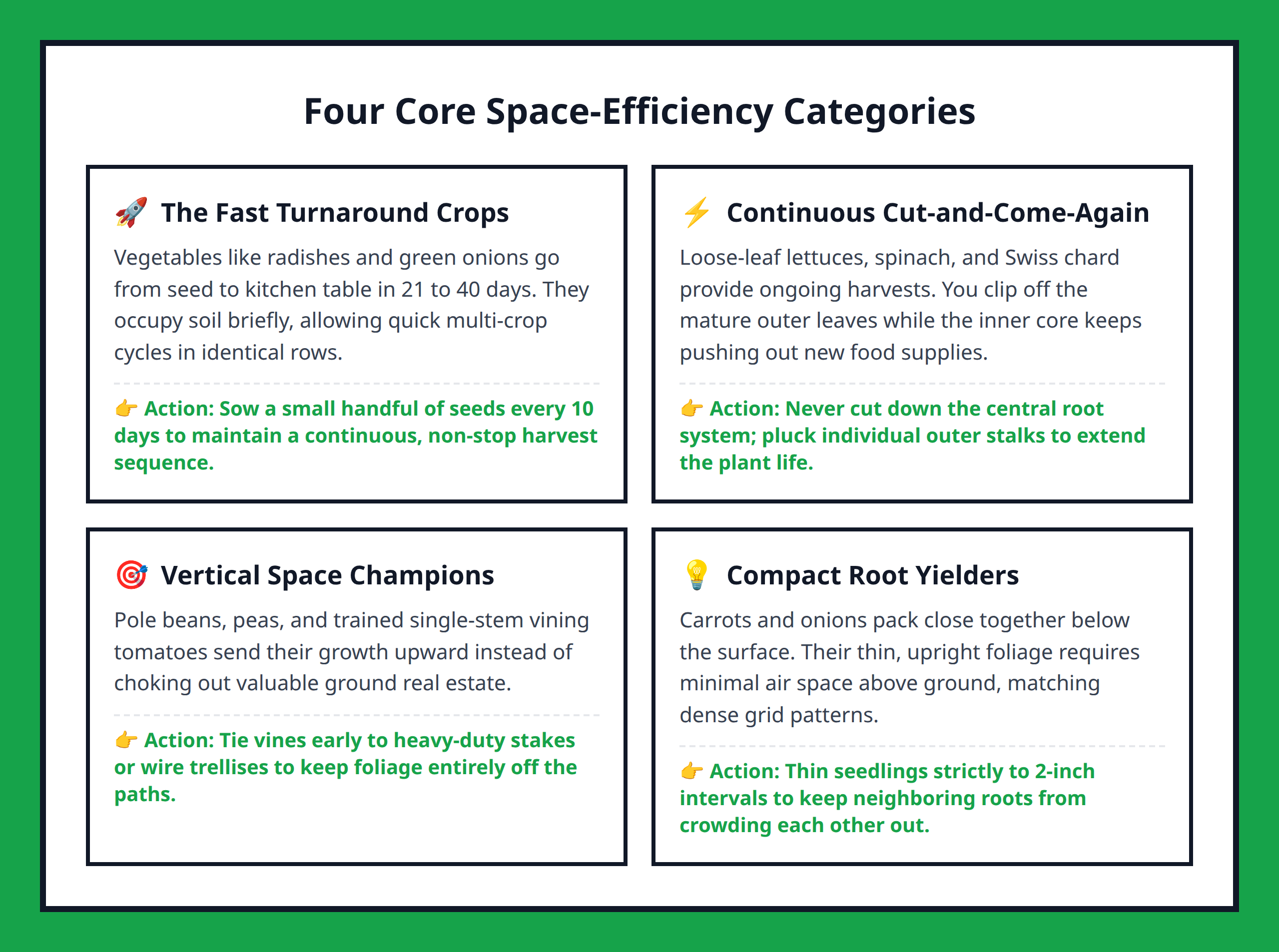
One mistake I try to avoid is treating gardening like a simple yield competition.
A crop can produce heavily and still be a poor fit for a small garden.
What matters more is the combination of:
- space required
- nutritional value
- frequency of harvest
- storage potential
- daily usefulness
Take root crops as an example. Potatoes, carrots, beets, and turnips not only produce food efficiently, they also store well. That extends the value of the garden beyond the immediate growing season.
Leafy vegetables carry another type of efficiency. Crops like lettuce, cabbage, and greens contribute important vitamins and minerals while fitting into repeated meals over long stretches of time.
That creates a different kind of productivity than a crop harvested once at peak season.
I think small gardens work best when several types of efficiency overlap together.
A Small Garden Should Match the Household
One detail people overlook is that efficiency depends partly on the family itself.
A household that eats salads daily may benefit enormously from compact leafy crops. Another family may rely heavily on onions, potatoes, and beans for regular meals. A gardener who barely cooks with squash probably should not dedicate major space to squash vines just because they grow aggressively.
Small gardens punish unrealistic planting decisions faster than large gardens do.
There is less room for decorative mistakes.
I would rather see a tiny garden producing vegetables the household genuinely uses every week than a crowded garden full of plants chosen mainly because they looked exciting at the garden center.
That practical filter also helps reduce waste.
Many gardeners eventually discover that producing too much of the wrong crop creates a different problem entirely. A large midsummer overflow of cucumbers or oversized squash sounds productive until half the harvest sits unused in the kitchen.
Good Small Gardens Usually Look Less Dramatic
I think this is one of the hardest mental adjustments for new gardeners.
The most practical small gardens often look simpler than the gardens people imagine when they first start planning.
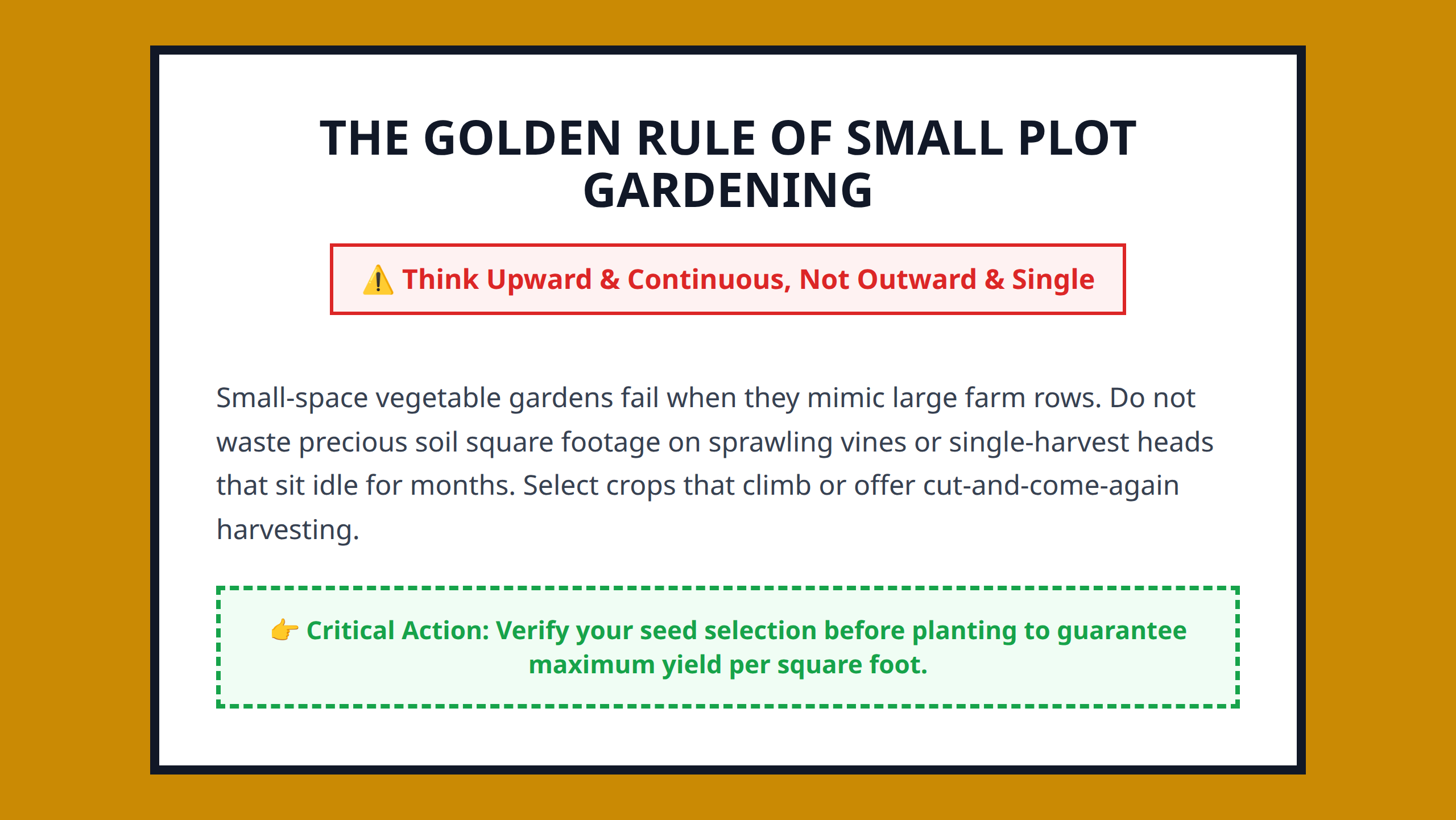
There may be fewer giant plants. Fewer sprawling vines. Fewer oversized leaves taking over pathways.
Instead, the garden becomes organized around reliable production, repeat harvests, useful crops, and efficient use of space.
That usually means more rows of compact vegetables and fewer plants chosen mainly for novelty or size.
Ironically, those quieter gardens often feed households more effectively than crowded “everything gardens” that try to grow every possible vegetable at once.
When space is limited, every planting decision becomes a tradeoff. The strongest small gardens accept that reality early instead of fighting it all season.
- Yield per square foot: A way of measuring how much usable food a crop produces relative to the amount of garden space it occupies.
- Root crops: Vegetables grown mainly for their edible underground parts, such as carrots, potatoes, and beets.
- Leafy crops: Vegetables grown mainly for their leaves, including lettuce, cabbage, kale, and Swiss chard.
- Storage crops: Vegetables that can remain usable for long periods after harvest, especially through colder seasons.
- Intensive planting: Growing crops closer together to make better use of limited garden space.
References:
- https://www.youtube.com/watch?v=-D4ZW6p61M4
- https://www.youtube.com/watch?v=ioJ0C2J1_Os
- https://www.youtube.com/watch?v=QUHnZd3A2KM
- https://www.reddit.com/r/vegetablegardening/comments/x1g9mi/basics_for_a_small_vegetable_garden/
- https://www.quora.com/How-can-I-decide-which-vegetables-to-plant-in-my-garden-to-avoid-wasting-food-and-feeling-overwhelmed
- https://www.foodgardenlife.com/learn/grow-vegetable-row-spacing
- https://joegardener.com/podcast/small-space-vegetable-gardening-mark-ridsdill-smith/
- https://www.aboutthegarden.com.au/vegetable-growing-for-one-or-small-spaces/
- https://plantvillage.psu.edu/posts/4433-general-most-productive-vegetables-for-limited-space
- https://www.botanicgardens.org.au/discover-and-learn/gardening-home/gardening-tips/best-vegetables-grow-beginners
- https://www.growveg.com.au/guides/growing-fruit-and-vegetables-in-small-spaces/
- https://www.foodgardenlife.com/learn/small-veg-garden-ideas
- https://tedsgardens.com/the-best-mini-vegetable-ideas-for-small-space-gardening/
