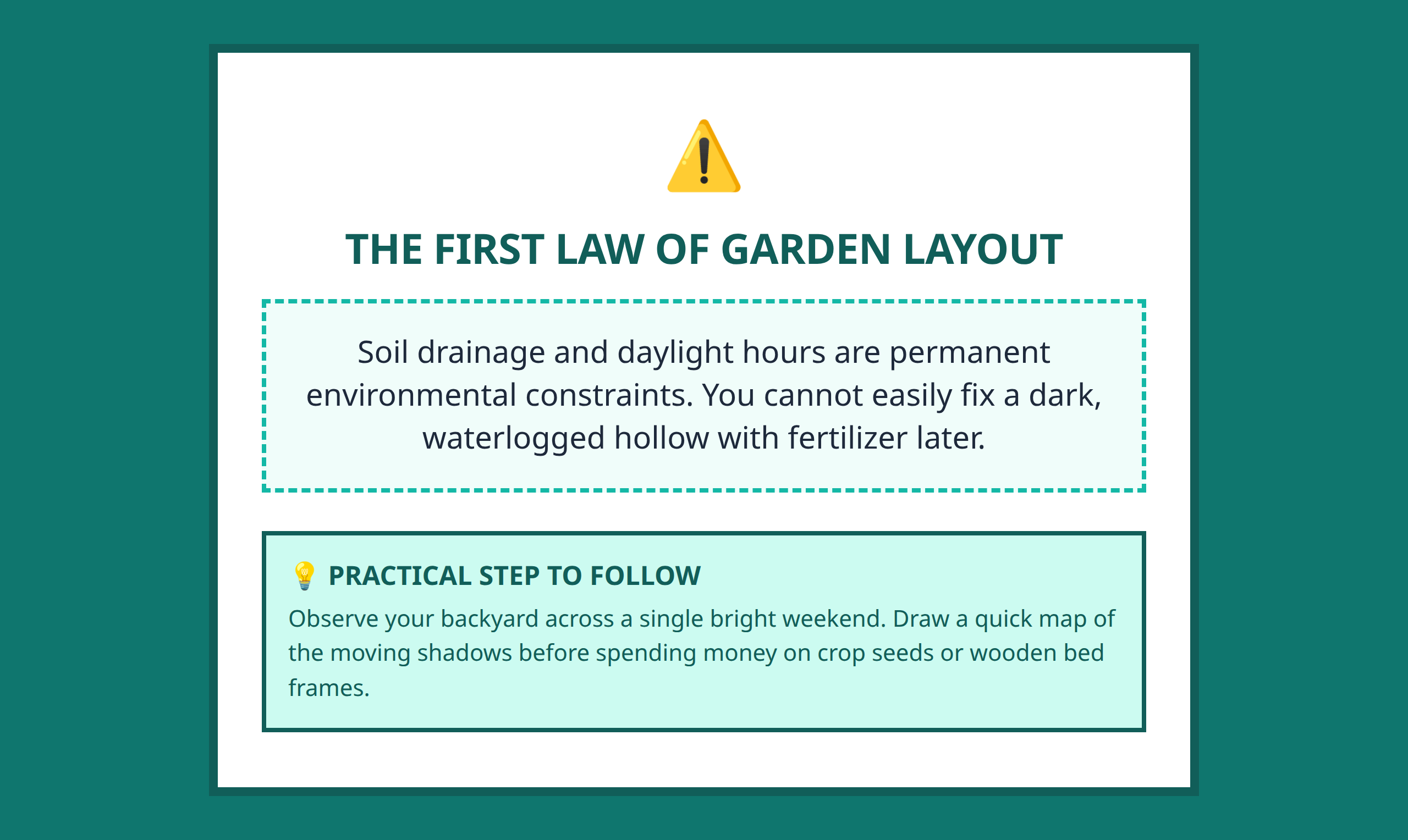
Most vegetable garden problems begin long before planting season. Poor drainage, weak sunlight, tree competition, and difficult garden placement quietly limit growth no matter how good the seeds or gardening methods are afterward.
When people imagine a successful garden, they usually think about vegetables, watering, or fertilizer first. I used to look at gardens the same way. But over time, I’ve become convinced that location decisions shape almost everything that happens afterward.
A weak garden site forces plants to struggle constantly. A strong garden site quietly solves problems before they appear.
Takeaways
- Drainage problems weaken vegetables even when watering seems correct.
- Tree roots compete aggressively with garden crops for moisture and nutrients.
- Sunlight exposure affects plant vigor, yield, and disease resistance.
- Convenient garden placement increases long-term garden care and productivity.
Drainage Problems Often Stay Invisible Until Plants Decline
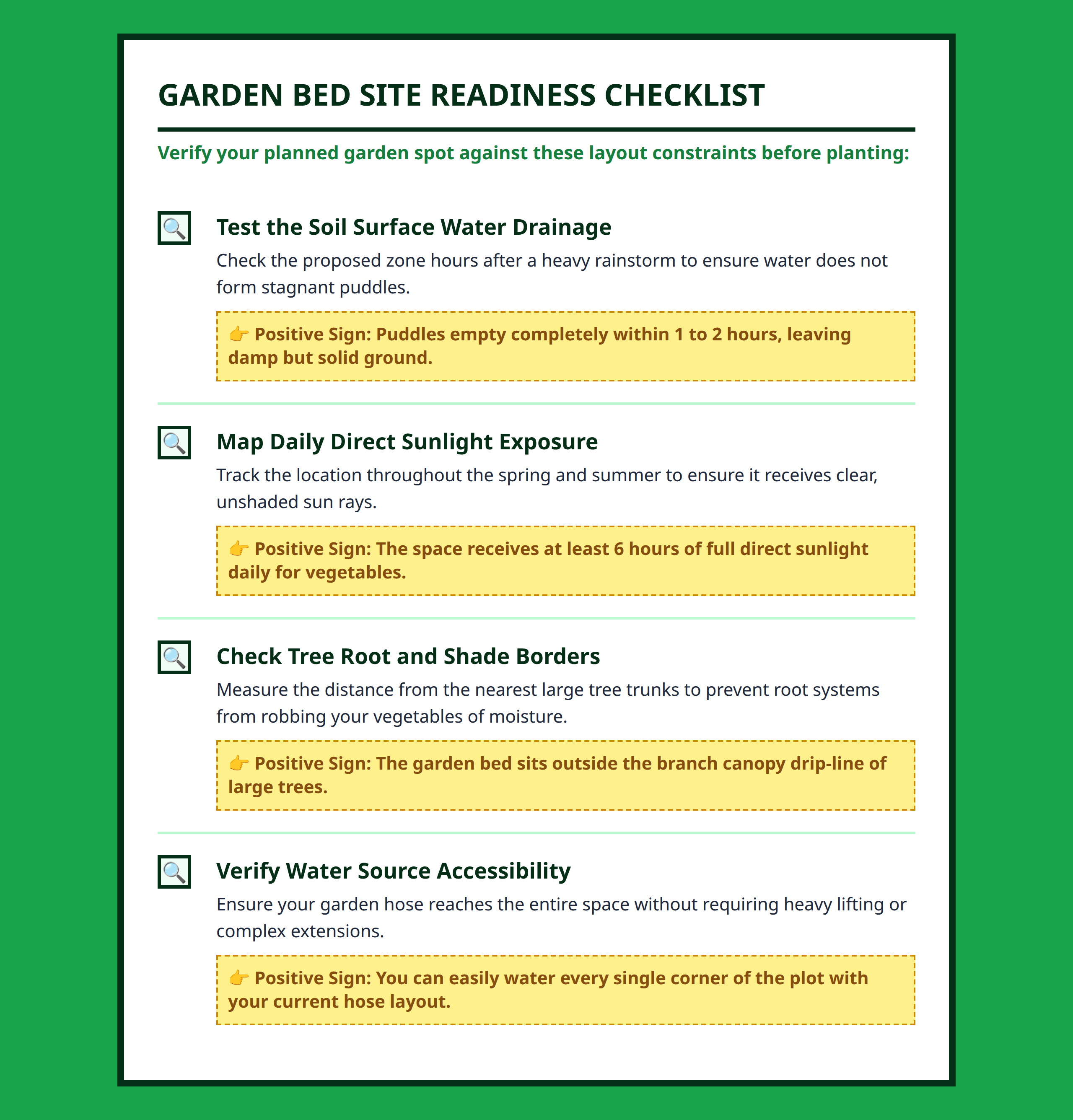
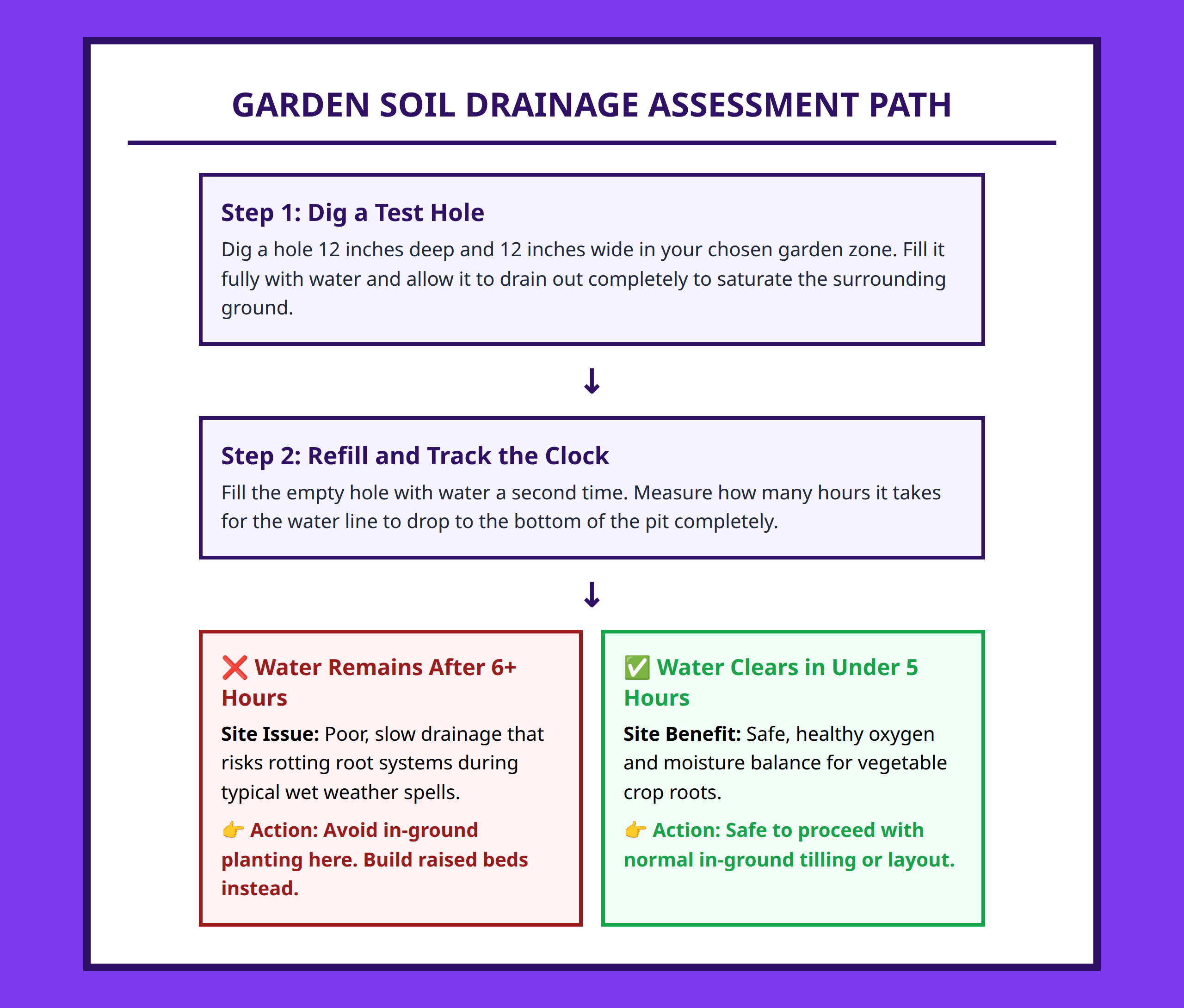
One reason drainage problems are so frustrating is that they do not always look dramatic at first.
A garden may appear healthy for weeks before vegetables begin showing slow growth, yellowing leaves, weak root systems, or disease problems. People often blame seeds, watering schedules, or weather when the real issue sits underground.
Poor drainage limits oxygen around roots.
That matters because vegetable crops depend on active root growth to absorb moisture and nutrients efficiently. When water remains trapped in the soil too long, roots weaken and plant growth slows.
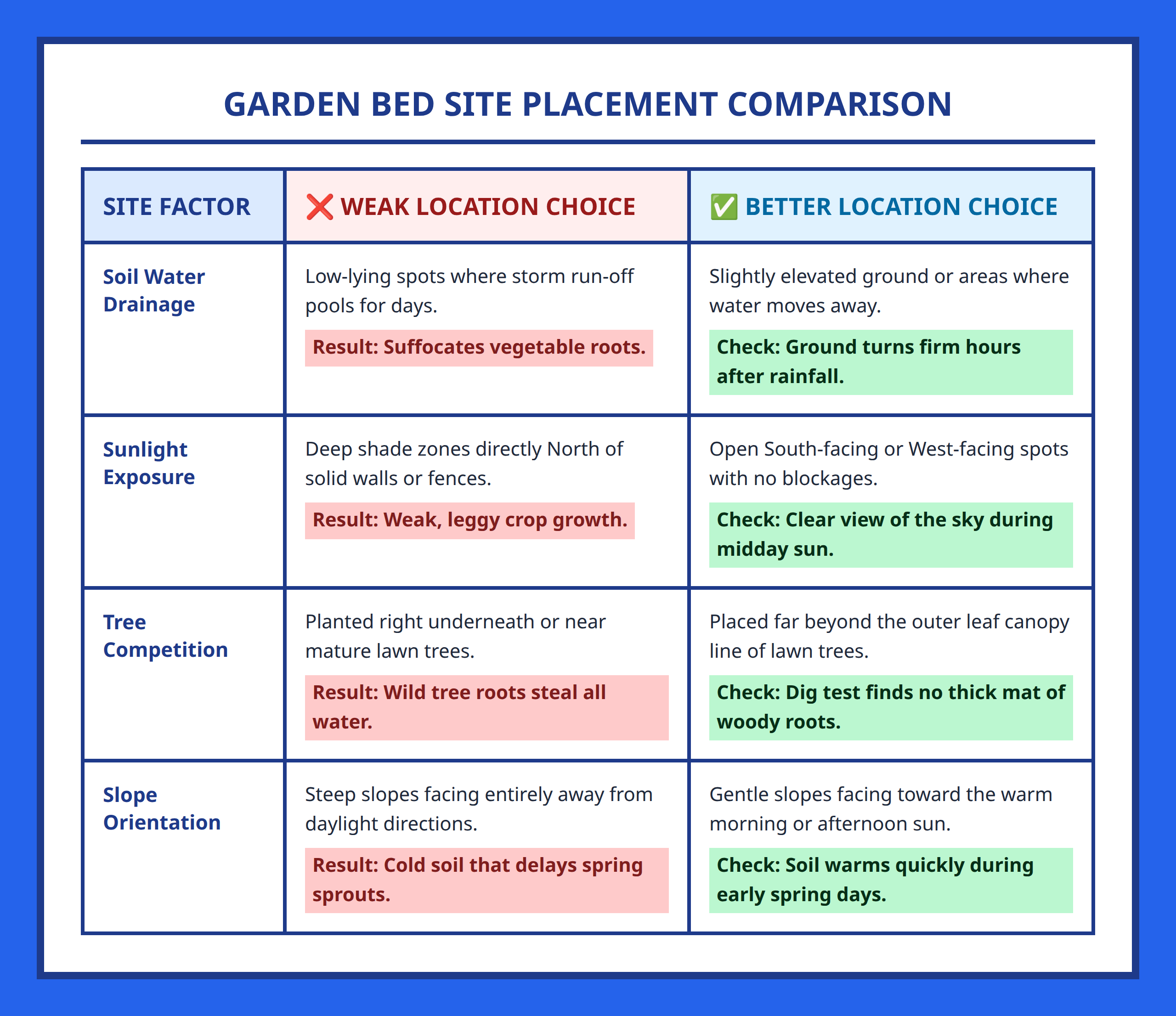
I think many beginners accidentally create this situation by choosing the lowest part of the yard simply because it feels convenient or unused.
After heavy rain, those areas often stay wet longer than the rest of the property.
A simple observation tells you a lot: if water stands in one section of the yard long after rain stops, vegetables will probably struggle there too.
Even when plants survive, they rarely grow vigorously in constantly wet soil.
Sunlight Is About Plant Energy, Not Just Brightness
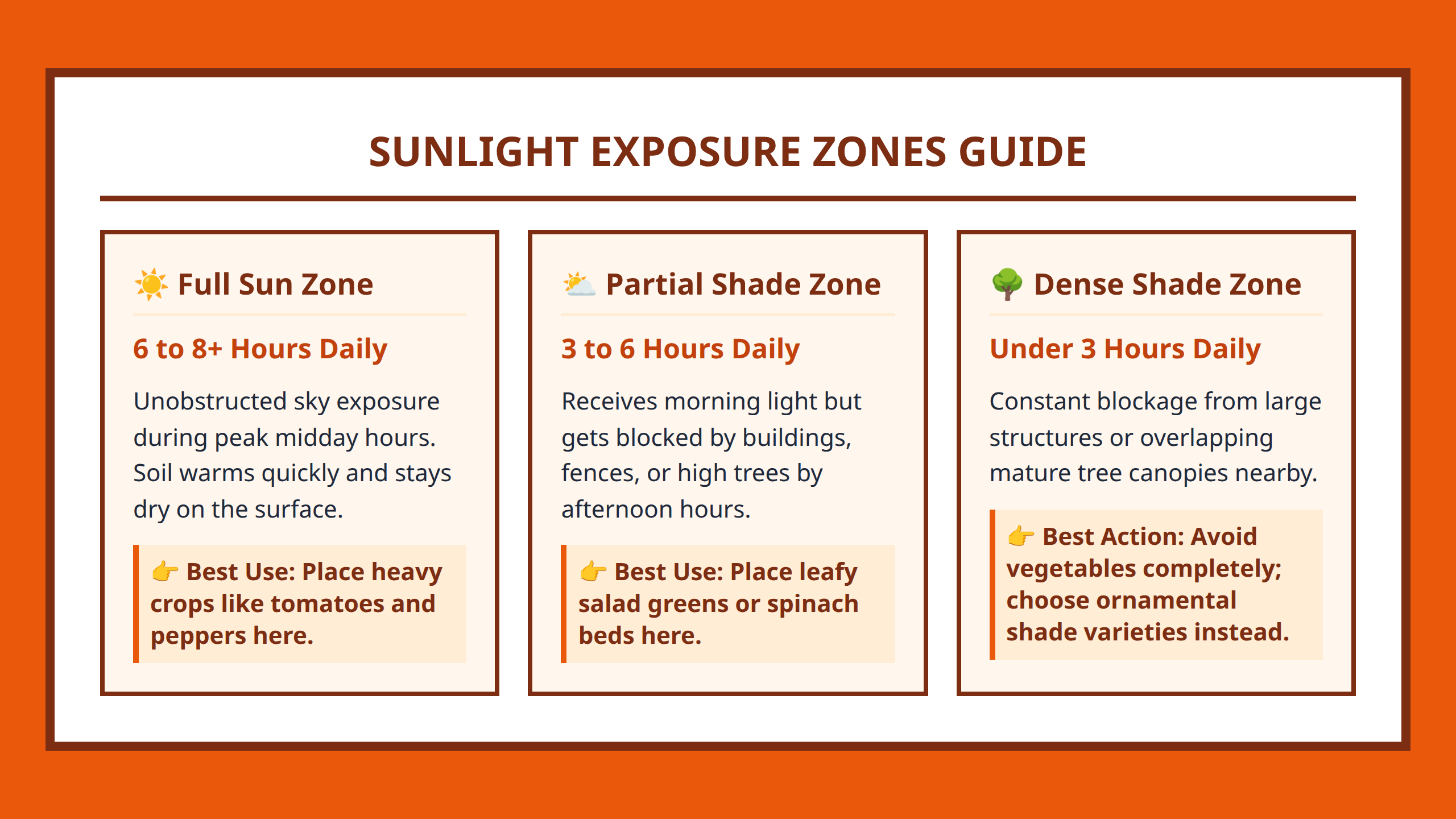
Most gardeners know vegetables need sunlight. What gets overlooked is how deeply sunlight controls plant performance.
Vegetables grown in weak light often become thin, slow, and unproductive even when everything else seems correct.
I think people sometimes underestimate how much energy vegetables require because garden spaces can appear bright to human eyes while still being partially shaded for large parts of the day.
A backyard may look sunny at noon but remain shaded during crucial morning or afternoon hours because of fences, nearby houses, or large trees.
That reduced exposure adds up.
Fruit-bearing vegetables especially depend on strong sunlight for steady development. Weak light often means weaker growth, delayed maturity, and lower yields.
This is one reason garden placement should be evaluated across the full day instead of judged from one quick afternoon glance.
Tree Competition Creates More Problems Than Shade Alone
Large trees affect gardens in two separate ways.
The obvious problem is shade. The less obvious problem is underground competition.
Tree roots aggressively absorb moisture from surrounding soil. That creates constant competition with shallow-rooted vegetable crops.
I think this issue surprises many gardeners because the vegetables may receive enough visible sunlight while still struggling due to hidden root competition beneath the surface.
A common example is a garden placed near mature backyard trees because the location feels attractive or protected. The vegetables may initially sprout normally, but later growth becomes uneven and dry despite regular watering.
The trees are quietly pulling enormous amounts of moisture from the same soil.
That kind of competition is difficult to overcome consistently.
Whenever I evaluate a garden location, I pay close attention not only to what stands above ground but also to what may already dominate the soil underneath.
Slope and Air Movement Affect Garden Conditions
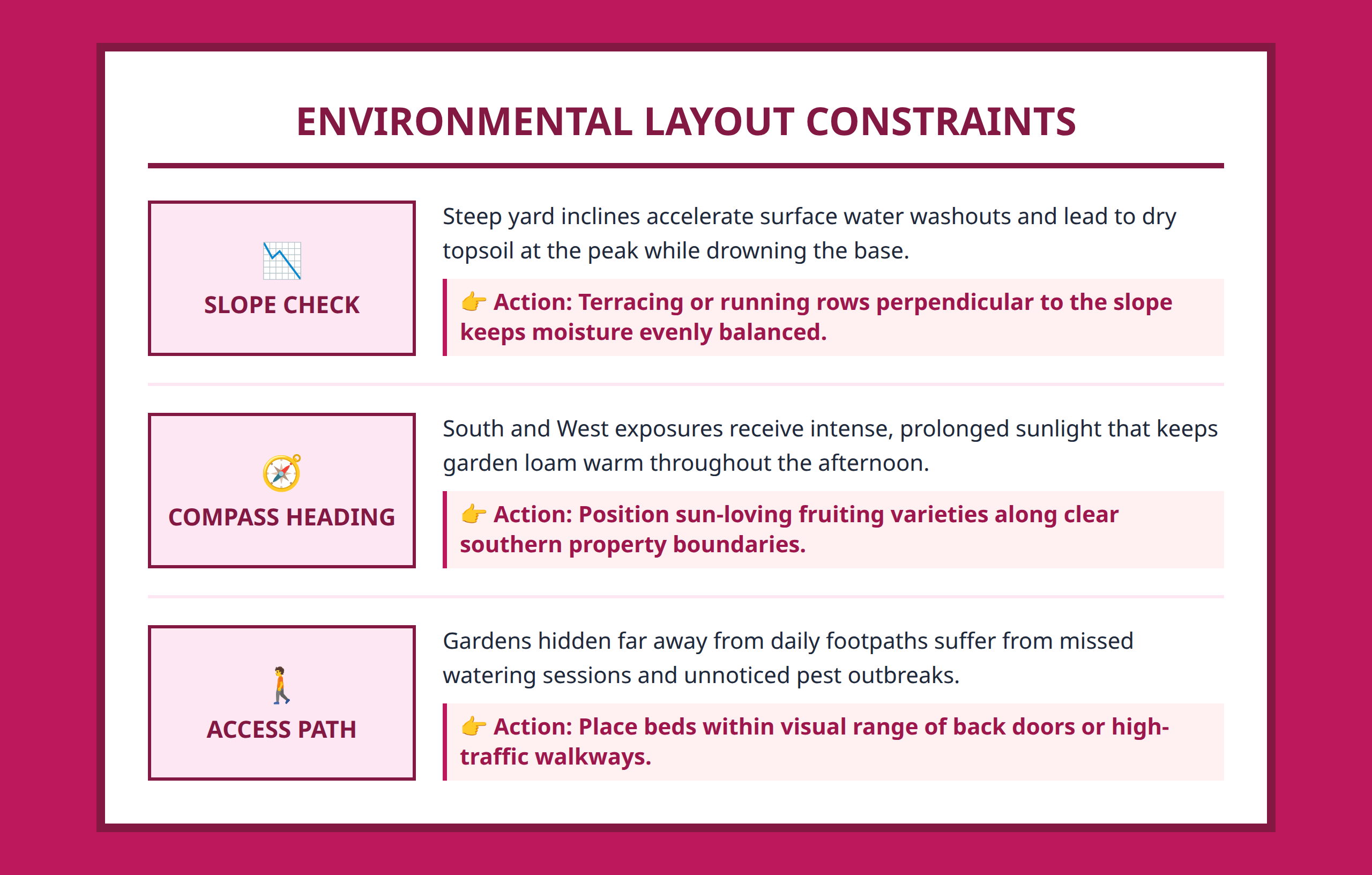
Slightly elevated locations often perform better than low, enclosed spots.
Part of the reason is drainage, but air movement matters too.
Cold air naturally settles into lower areas during cool nights. Moisture may also linger longer in poorly ventilated sections of the yard.
A gentle slope can improve both water movement and airflow around plants.
This does not mean every garden needs a hillside. But completely flat, enclosed, poorly drained areas often create more stress for vegetables over time.
I think many strong gardens succeed partly because they sit in naturally balanced locations where excess water drains away gradually without drying the soil excessively.
Good sites quietly regulate conditions better.
Convenience Affects Productivity More Than People Admit
One practical point I find underrated is accessibility.
A garden placed too far from the house often receives less consistent attention.
This sounds minor, but daily observation matters in gardening. People notice weeds earlier, harvest vegetables more regularly, and respond to problems faster when the garden sits along normal daily movement patterns.
A small backyard garden near the kitchen door may outperform a larger distant garden simply because it stays connected to everyday life.
You see it constantly. You walk past it. You notice changes faster.
That steady attention becomes part of the garden’s success.
I would rather have a slightly smaller garden in a practical location than a larger garden placed somewhere inconvenient and forgotten during busy weeks.
Strong Garden Sites Solve Problems Before They Begin
What makes garden placement so important is that environmental conditions shape every later gardening decision.
Good drainage reduces stress on roots. Strong sunlight improves growth and production. Reduced tree competition preserves moisture. Better airflow lowers persistent dampness problems. Convenient placement encourages regular care.
None of these factors feel exciting compared to buying seeds or planning harvests.
But I think experienced gardeners gradually realize that site quality determines how hard every future gardening task becomes.
A poor location forces constant correction. A good location quietly supports healthy growth from the beginning.
That is why I would spend more time evaluating sunlight, drainage, slope, and nearby trees before planting anything at all. Those decisions shape the entire season afterward.
- Drainage: The way excess water moves through and away from soil after rainfall or watering.
- Root competition: A situation where nearby plants, especially trees, absorb water and resources from the same soil used by vegetables.
- Airflow: The movement of air around plants, which affects moisture levels and growing conditions.
- Soil moisture: The amount of water held in the soil around plant roots.
- Fruit-bearing vegetables: Vegetables grown mainly for edible fruits, such as tomatoes, peppers, squash, and cucumbers.
References:
- https://www.youtube.com/watch?v=qePmuPod3e8
- https://www.youtube.com/watch?v=Y2P2_BuP55o
- https://www.youtube.com/watch?v=0T3e8l6mvcQ
- https://www.youtube.com/watch?v=4SmjaVyrLAQ
- https://www.johnandbobs.com/blogs/news/the-vital-role-of-good-drainage
- https://sunshinecoastplants.com.au/blogs/news/p-strong-span-gardening-and-sunlight-how-light-can-affect-your-garden-span-strong-p-p-p
- https://www.youtube.com/watch?v=uKi9oilpeqg
- https://www.mofga.org/resources/gardening/sunlight-and-water-in-the-garden/
- https://www.reddit.com/r/IndoorGarden/comments/1onguqg/please_end_this_debate_does_sunlight_need_to_hit/
- https://www.reddit.com/r/IndoorGarden/comments/1onguqg/please_end_this_debate_does_sunlight_need_to_hit/nmwn0o1/
- https://www.reddit.com/r/explainlikeimfive/comments/alerw6/eli5_if_plants_only_need_water_co2_sunlight_and/
- https://agrio.app/How-to-Solve-Poor-Drainage-and-Save-Your-Plants/
- https://ucanr.edu/blog/hort-coco-uc-master-gardener-program-contra-costa/article/vegetable-garden-when-full-sun-too
