Watering balcony plants is harder because containers, wind, sun, heat, and limited root space all speed up moisture loss. A routine that works in a backyard garden can fail quickly when plants are growing in pots several floors above the ground.
When balcony plants wilt, many beginners assume they watered wrong once or chose weak plants. I would look at the balcony environment first. A container garden loses water in ways a ground-level garden does not.
The problem is not simply that plants need water. The problem is that balcony plants often need water under tougher conditions: shallow soil volume, exposed containers, strong sun, moving air, and no surrounding ground soil to act as a moisture reserve.
That is why a watering routine can feel reasonable in the morning and still fail by late afternoon.
Takeaways
- Container plants cannot send roots deep into the ground to search for moisture.
- Sun and wind make balcony containers dry out faster.
- Hot summer weather can turn watering into a daily or twice-daily job.
- Manual watering becomes more demanding when there is no outdoor faucet.
- Balcony watering should respond to conditions, not follow a fixed calendar.
Container Plants Do Not Have a Backup Water Supply
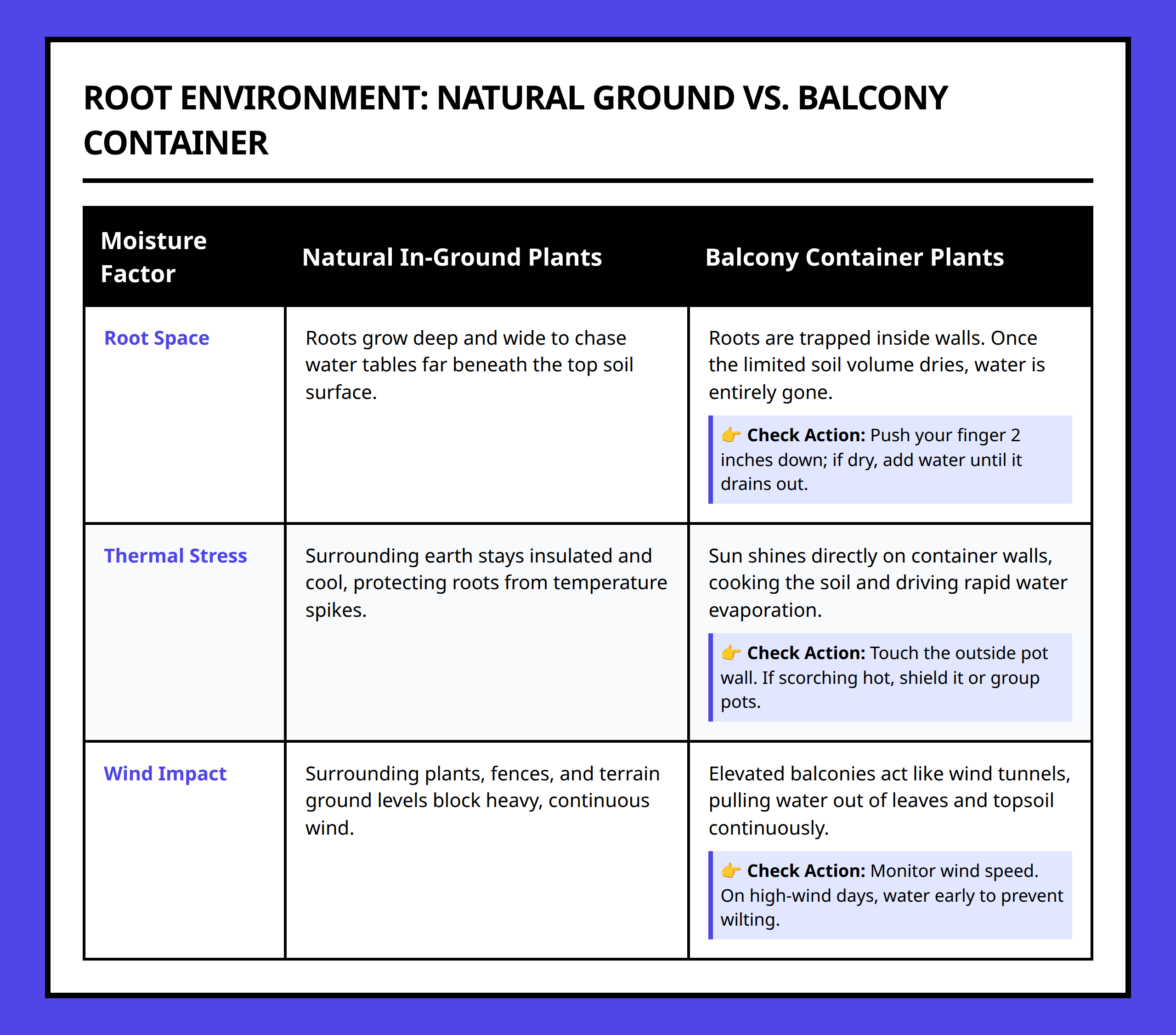
The main difference between a balcony plant and an in-ground plant is root freedom.
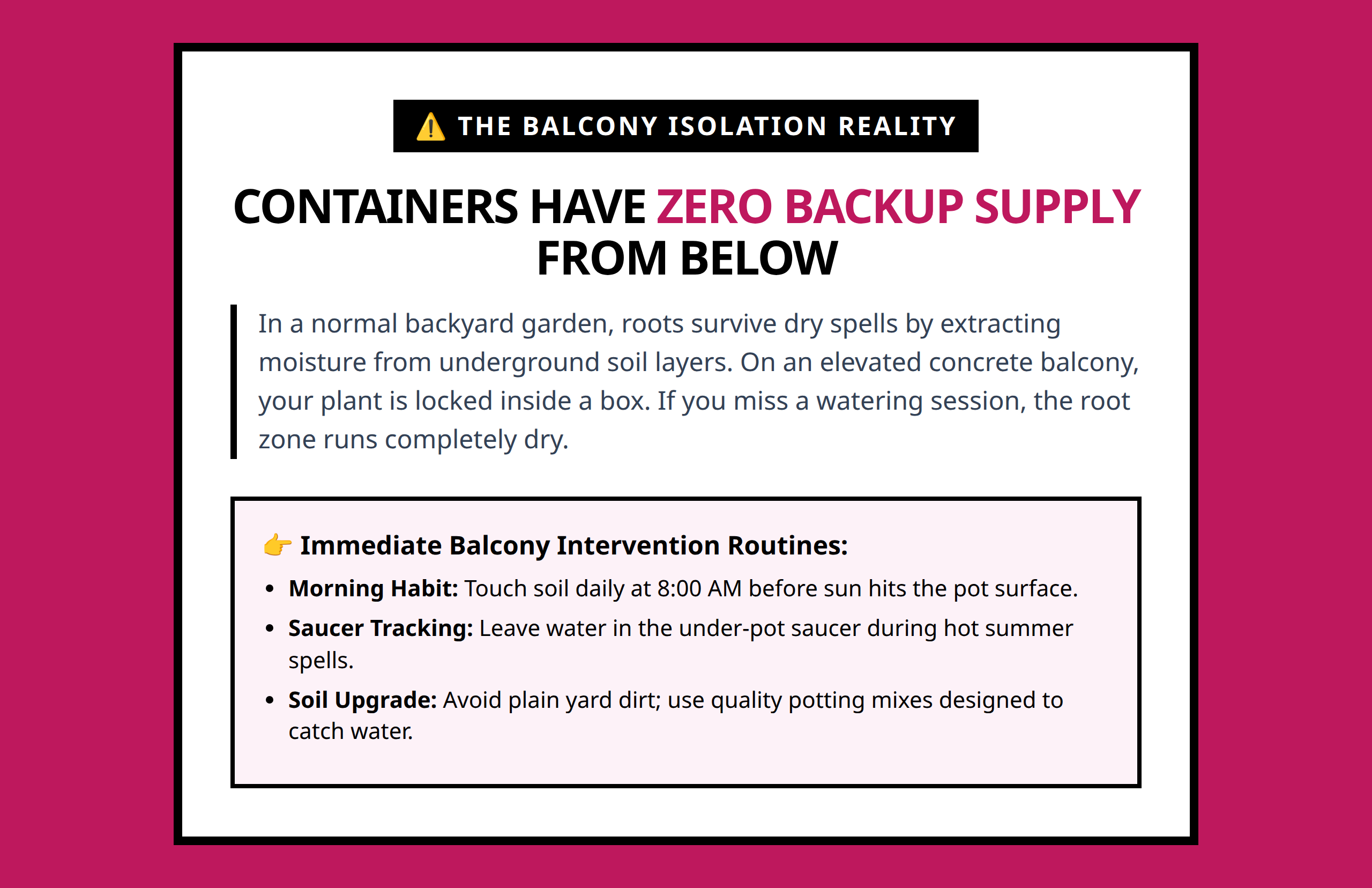
A plant growing in the ground can spread roots outward and downward. When the surface soil dries, the plant may still find moisture deeper in the soil. A balcony plant in a pot has no such backup.
Its entire water supply is limited to the container.
I think this is the first thing new balcony gardeners should take seriously. A container is convenient, but it also creates a hard boundary around the plant’s roots. Once the available moisture inside that pot is gone, the plant has nowhere else to search.
This is why small containers become risky during hot weather. They may look tidy and easy to manage, but they hold only a limited amount of growing mix and water.
Sun and Wind Pull Moisture Out at the Same Time
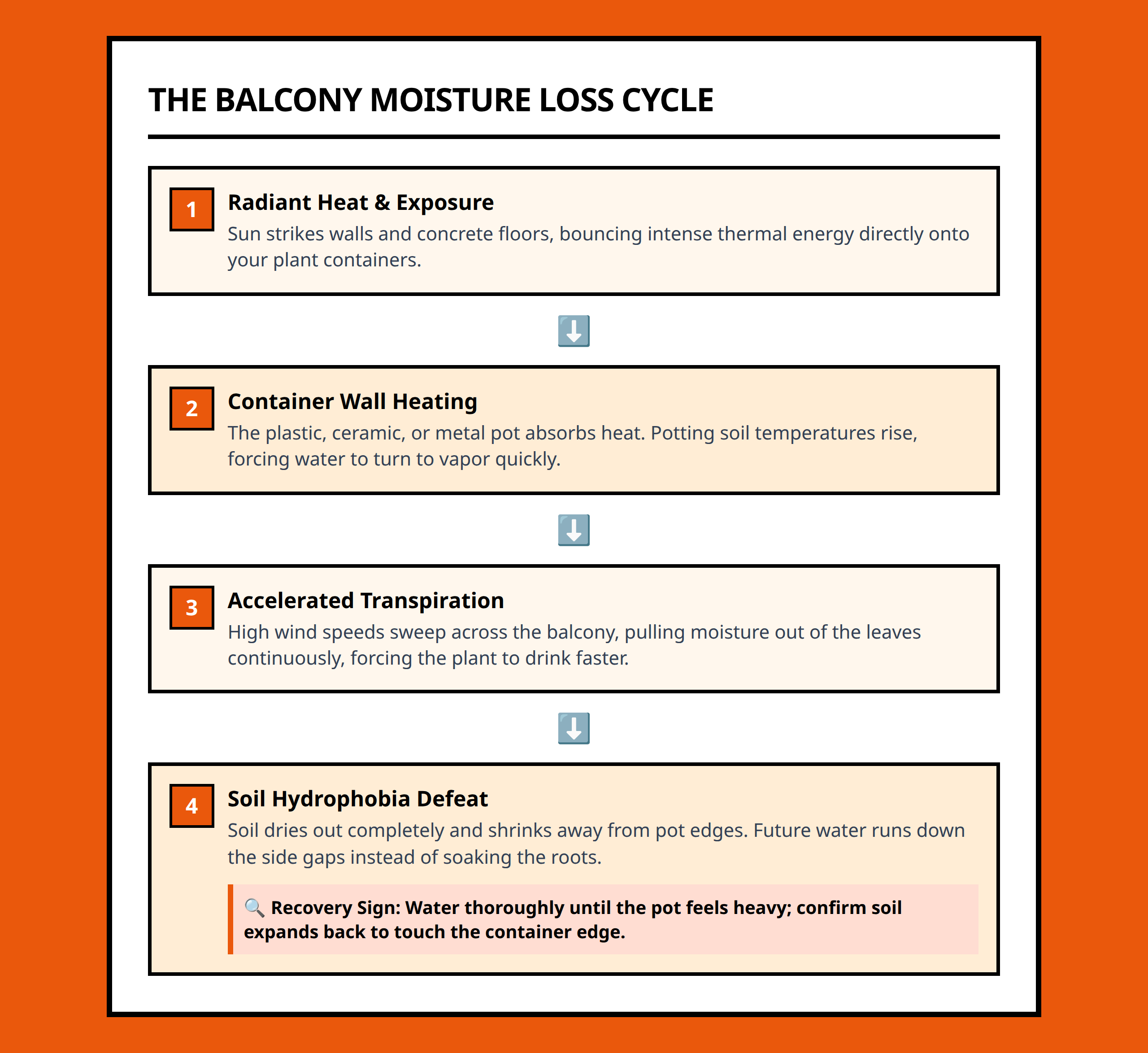
Balcony containers lose water from more than one direction.
Direct sun warms the container and the potting mix. That increases evaporation from the soil surface and can heat the root zone. Wind adds another layer by moving dry air across the plant and the container, speeding up moisture loss.
I would not judge watering needs by temperature alone.
A warm, still day may be easier on plants than a slightly cooler day with strong wind. Moving air can make plants draw water faster and dry the container sooner.
A realistic balcony scene makes the problem easy to picture: someone waters before work, the soil looks damp, and the plant stands upright. By early evening, the leaves have softened and drooped because the afternoon sun and wind have emptied the container faster than expected.
That does not always mean the gardener made a careless mistake. It may mean the balcony is a high-moisture-demand environment.
Watering Takes More Time Than Beginners Plan For
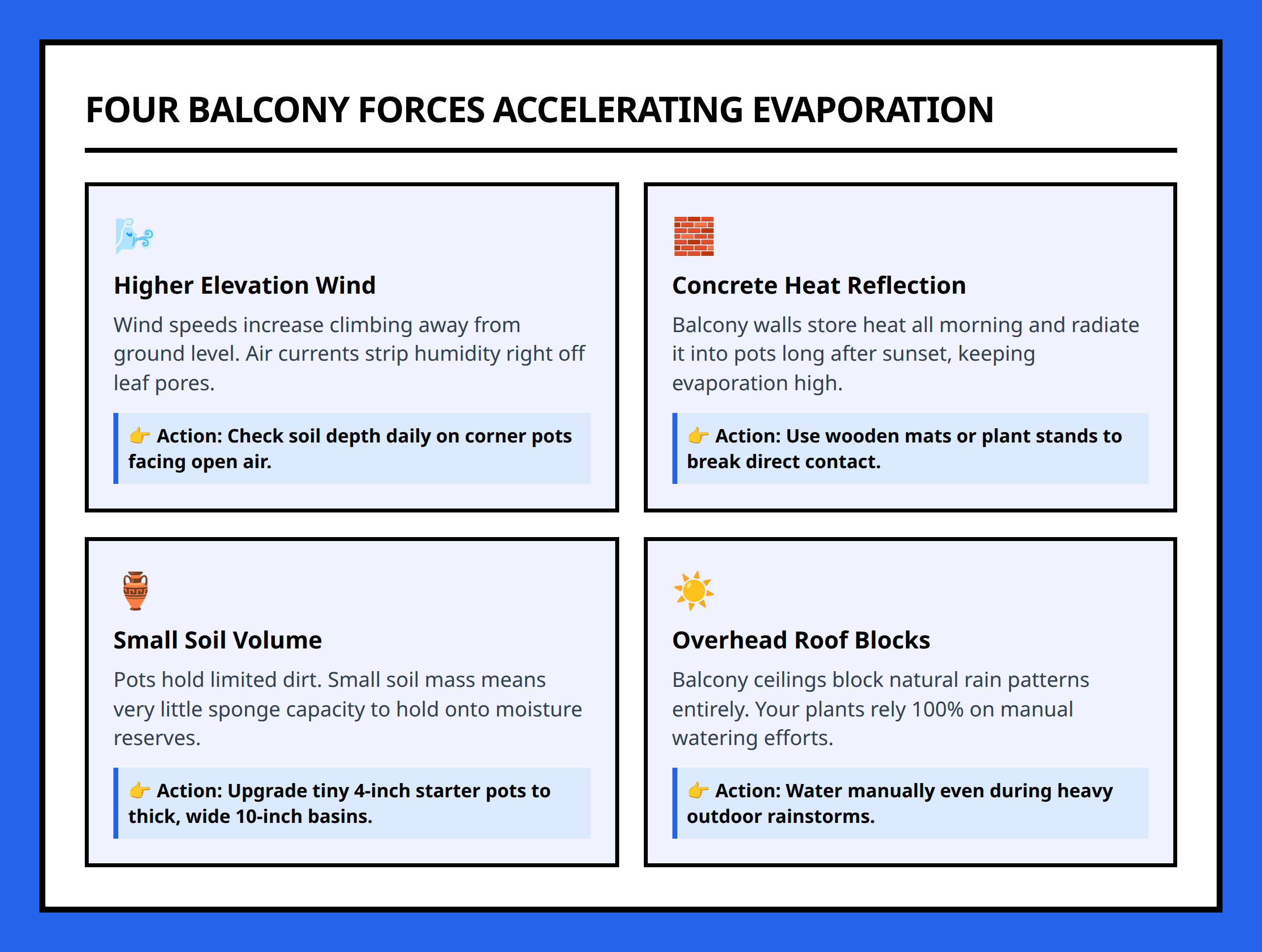
Balcony watering also becomes a labor problem.
If there is no outdoor faucet, every watering trip depends on a watering can, bucket, or jug carried from indoors. That may sound manageable with two or three pots. It becomes much less charming once the garden grows and summer heat arrives.
I would be honest about that before setting up a large balcony garden.
During peak heat, some container gardens may need a surprising amount of water. Larger vegetable plants, especially in exposed positions, can drink heavily. Some plants may even need watering twice a day when conditions are hot and dry.
This is where ambition can create a daily burden. Adding more containers does not only add more plants. It adds more water trips.
A Fixed Watering Schedule Can Mislead You
One of the least helpful questions in balcony gardening is “How often should I water?”
The better question is: how quickly does this container dry under today’s conditions?
I would not trust a fixed schedule without checking the soil and the plant. Balcony conditions change too much. A shaded container near a wall may stay moist longer than a pot near the outer railing. A windy week may change the entire watering routine.
Plant size also matters.
A young seedling uses less water than a mature vegetable plant with a large leaf canopy. As plants grow, the same container can become more demanding because the plant draws more moisture from the potting mix.
That means the watering routine that worked in spring may fail in midsummer.
Wilting Is a Signal, but It Is Not the Whole Diagnosis
Wilting often tells you the plant is under water stress, but I would still check the container before reacting.
Sometimes soil is genuinely dry. Other times, poor drainage or compacted growing mix can create confusing symptoms because roots are stressed even when the container seems moist.
For this article, the main point is moisture loss, but the practical habit is the same: check the growing conditions before guessing.
I would look at:
- Whether the top layer of soil is dry
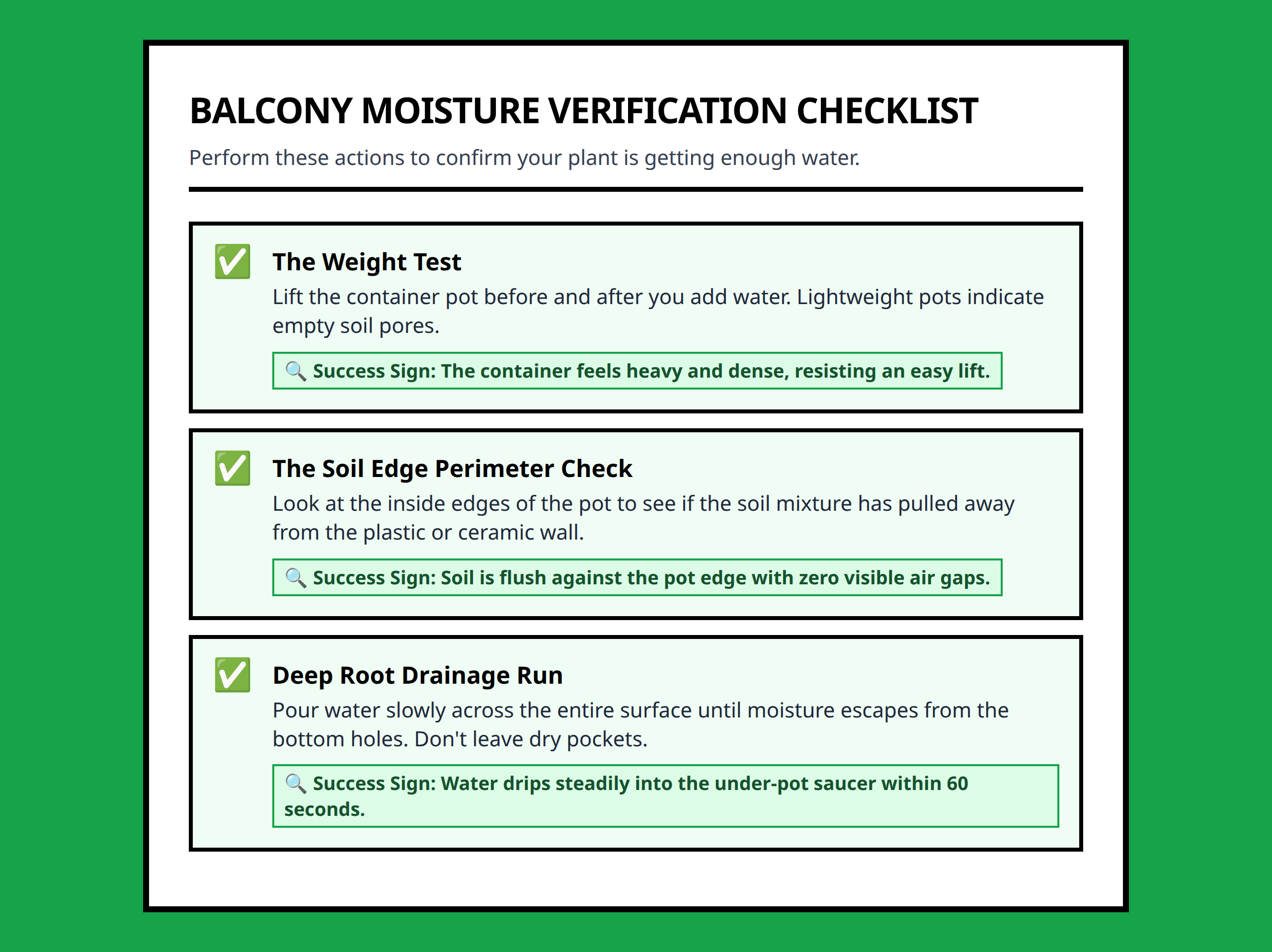
- Whether the container feels unusually light
- Whether water drains properly after watering
- Whether the plant is exposed to strong afternoon sun
- Whether wind is hitting the plant directly
This kind of checking turns watering from a routine into a diagnosis.
Self-Watering Containers and Drip Systems Solve a Specific Problem
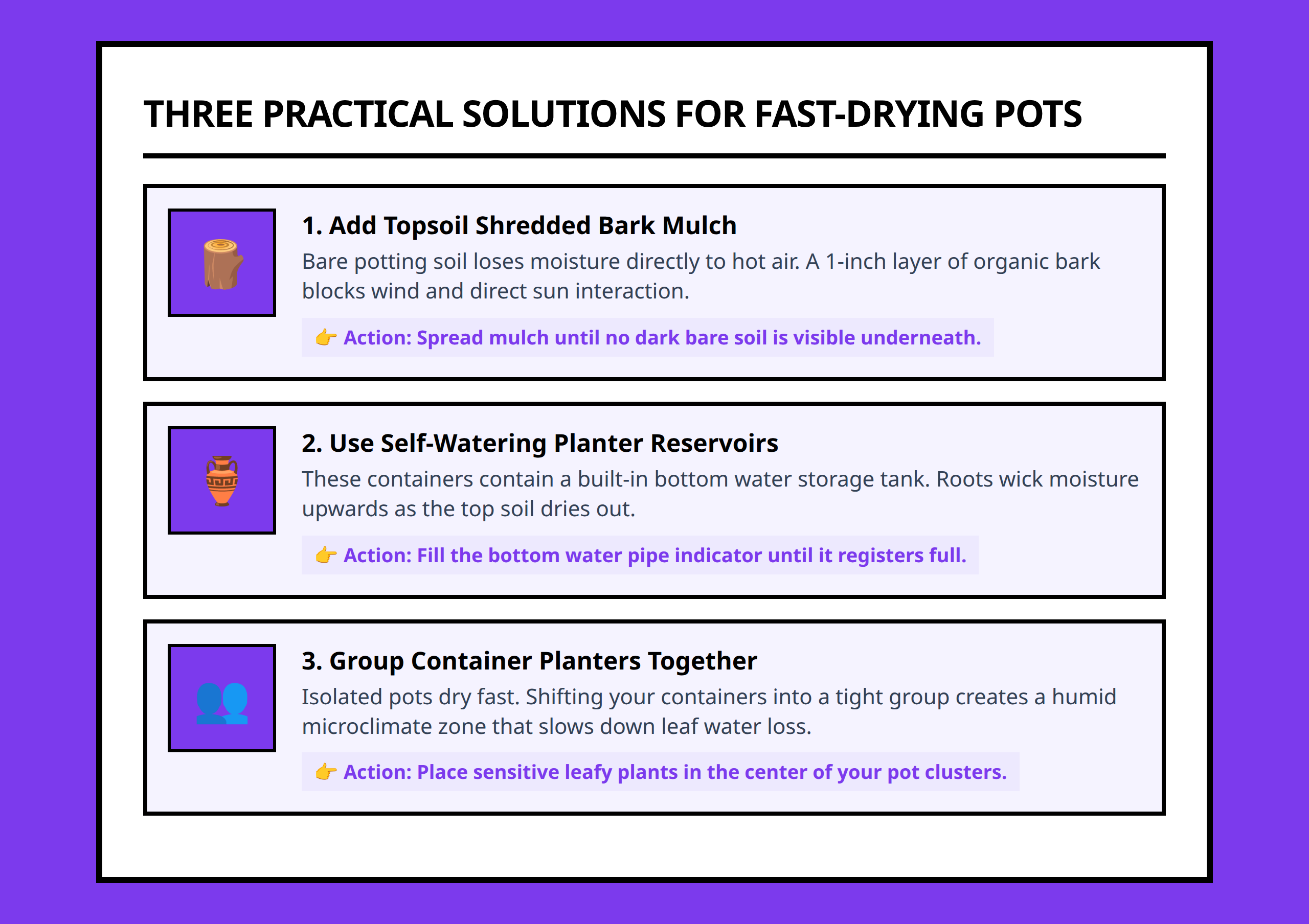
Some balcony gardeners use self-watering containers or drip irrigation to reduce the daily burden.
I would see these as practical responses to a real balcony problem, not fancy upgrades. They help because balcony plants can run through available moisture quickly, especially when the gardener cannot be home to water at the right moment.
A self-watering container gives plants access to a reservoir of water. A drip setup can deliver water more consistently than occasional hand watering.
That said, I would not treat either option as a complete substitute for observation.
Even with a better watering system, the gardener still needs to understand which plants dry fastest, which containers sit in the harshest exposure, and how weather changes the garden’s water demand.
The Real Skill Is Matching Watering to the Balcony
Good balcony watering is not about finding one perfect schedule.
It is about learning how the balcony behaves.
I would pay attention to which containers dry first, which plants wilt fastest, and which parts of the balcony are hottest or windiest. Over time, that pattern becomes more useful than any general watering rule.
The mistake is assuming all containers need the same treatment because they are on the same balcony. They often do not.
A plant near a bright outer edge may need water sooner than one tucked closer to a shaded wall. A large tomato plant may drain its container faster than a compact herb. A windy afternoon can change the whole routine.
Once watering is treated as a response to real conditions, balcony gardening becomes less mysterious.
Watering Problems Usually Start With the Setup
If watering feels impossible, I would not only ask whether the plant needs more water. I would ask whether the setup is making moisture management too difficult.
Too many containers, very small pots, exposed placement, and no easy water access can turn a simple balcony garden into a daily chore.
Sometimes the best watering improvement is not a new technique. It is fewer plants, better-positioned containers, or a setup that does not require endless trips from the kitchen sink.
The question I would ask before expanding a balcony garden is simple: can I realistically keep this watered during the hottest part of the season?
- Container gardening: Growing plants in pots, buckets, or planters instead of directly in the ground.
- Evaporation: The process where water changes into vapor and leaves the soil or container surface.
- Water stress: A condition where a plant does not have enough available water to support normal growth.
- Self-watering container: A container with a water reservoir that lets plants draw moisture as needed.
- Drip irrigation: A watering system that delivers small amounts of water slowly and directly to the growing area.
- Root zone: The part of the container or soil where the plant’s roots grow and take up water and nutrients.
References:
- https://balconygardener.com.au/balcony-gardening-for-beginners/
- https://www.reddit.com/r/microgrowery/comments/1rm17za/why_is_watering_so_hard_for_beginners/
- https://www.reddit.com/r/botany/comments/zy6tnk/question_how_come_gardeners_shouldnt_overwater/
- https://www.reddit.com/r/botany/comments/zy6tnk/question_how_come_gardeners_shouldnt_overwater/j24309w/
- https://www.reddit.com/r/UrbanGardening/comments/1i1zl0d/i_keep_failing_at_growing_stuff_in_my_balcony_help/
- https://www.reddit.com/r/gardening/comments/1aq5bbw/what_advice_would_you_give_to_an_absolute/
- https://www.youtube.com/watch?v=891z2U1FV_Q
- https://www.rhs.org.uk/garden-jobs/watering
- https://www.dnagardens.com/avoid-beginner-gardening-mistakes/
- https://www.youtube.com/watch?v=ngpmHSmEAJI
- https://thecottagepeach.com/blog/no-more-underwatered-or-overwatered-plants-a-comprehensive-guide-to-watering-your-garden
