A productive vegetable garden starts with food planning, not seed catalogs. When I look at a garden layout, I want to know what the family needs through the year, what stores well, and which crops actually support daily meals before deciding what deserves space.
One of the easiest mistakes in home gardening is planting whatever sounds interesting in spring. A few tomato plants, some cucumbers, maybe corn because it feels like a real garden. Then midsummer arrives and the family still buys most vegetables from the store while half the garden produces more of one crop than anyone can use.
I’ve come to think of a vegetable garden less as a collection of plants and more as a small food system. That changes how I look at every decision. Instead of asking, “What should I grow?” the better question becomes, “What does this household actually need across an entire year?”
Takeaways
- Plan vegetables around nutrition, storage, and meal use before thinking about variety.
- Different vegetable groups serve different nutritional roles.
- Small gardens work better when space-heavy crops are limited.
- A useful garden includes fresh-use crops and storage crops together.
Start With Food Value, Not Personal Preference
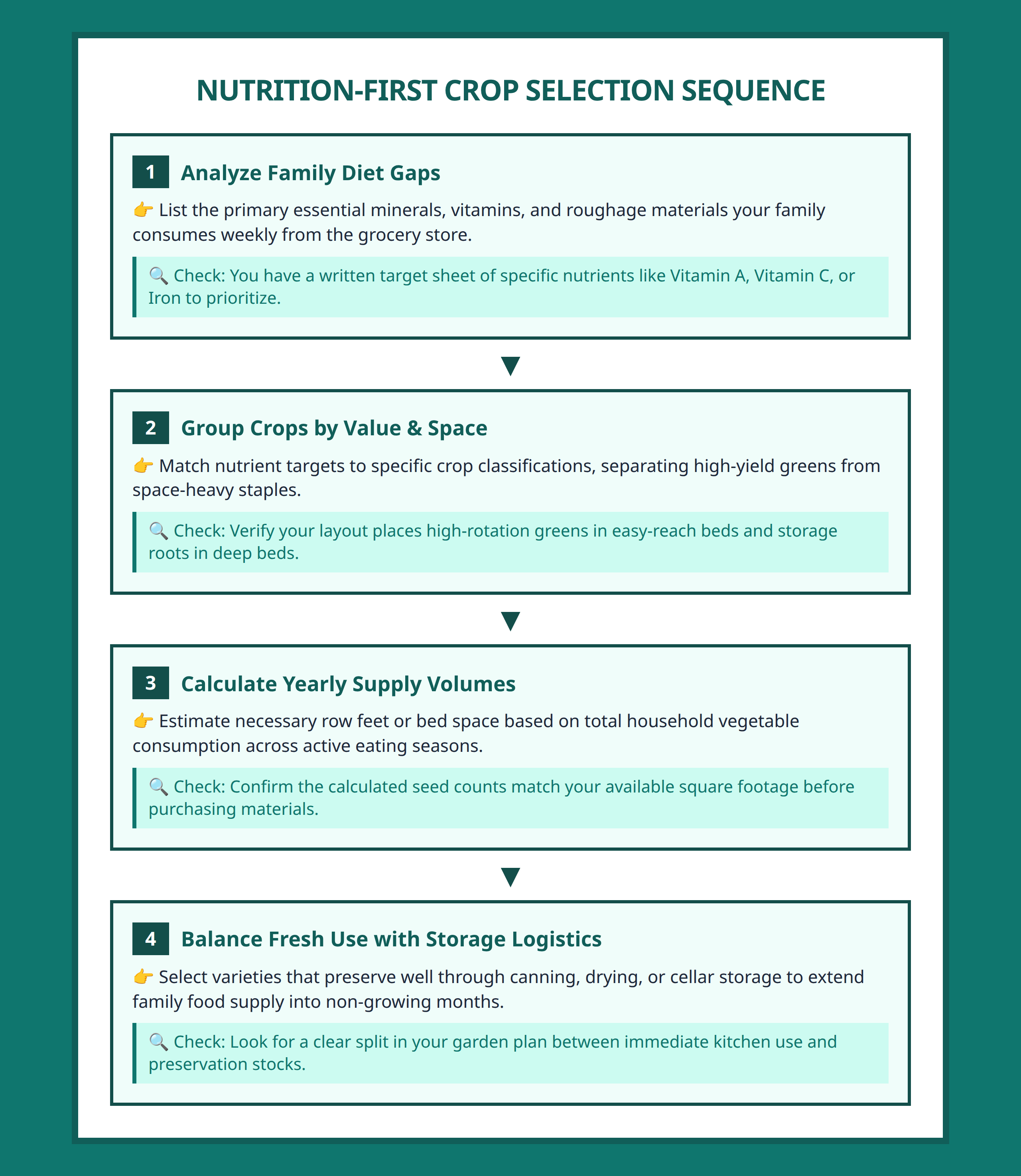
Many beginner gardens are built almost entirely around preference. People plant vegetables they like without thinking about balance, nutrition, storage, or harvest timing. That usually creates gaps.
A garden can produce a lot of food and still fail to support daily eating well.
The stronger approach is to start with what vegetables actually contribute to the household diet. Some crops mainly provide vitamins and minerals. Some provide bulk and calories. Some store well for winter. Others are useful mainly when eaten fresh.
That distinction matters because vegetables do different jobs inside a household food system.
Leafy crops such as cabbage, lettuce, kale, collards, parsley, and Swiss chard were treated as especially valuable because of their mineral and vitamin content. Green vegetables like peas, asparagus, broccoli, and green beans were also considered nutritionally important. Yellow vegetables such as carrots, sweet potatoes, pumpkins, and yellow squash were valued for vitamin A.
Even tomatoes were singled out for their importance as a vitamin C source.
What I find useful about this approach is that it immediately changes how I think about balance. Instead of asking whether I have enough “variety,” I start asking whether the garden covers enough nutritional functions.
A backyard filled with cucumbers and zucchini may look productive for six weeks, but it does not solve the same problem as a garden that consistently supplies leafy greens, root crops, and storage vegetables across multiple seasons.
Think in Crop Groups Instead of Individual Plants
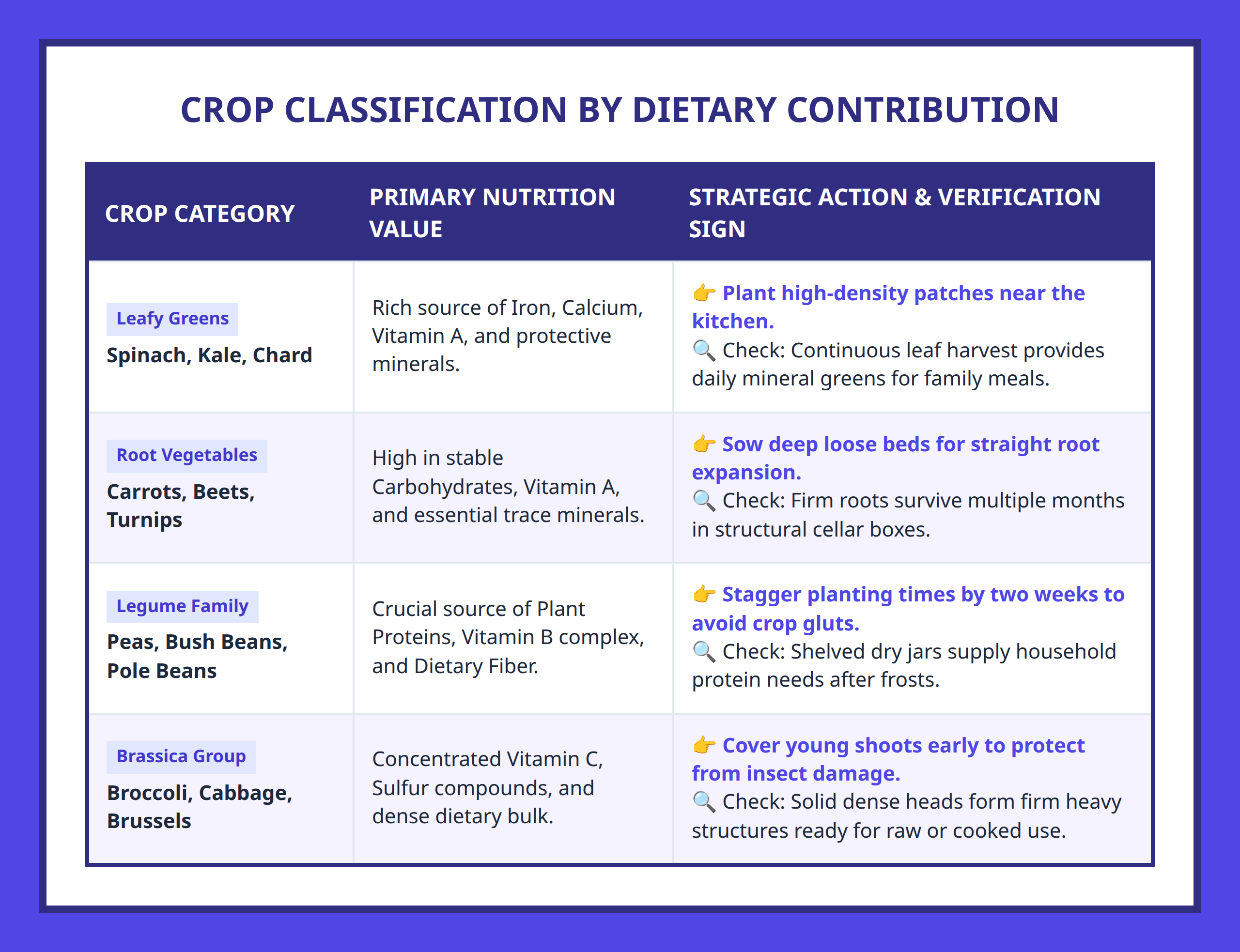
Once nutrition becomes the starting point, the next step is organizing the garden around crop categories instead of isolated vegetables.
The old nutrition-focused planning model divided gardens into three broad groups:
- Root crops such as potatoes, carrots, beets, and turnips
- Fruit crops such as tomatoes, peas, and beans
- Leafy crops such as lettuce, cabbage, and greens
I think this grouping system still works surprisingly well because it forces balance naturally.
If someone tells me their garden plan includes tomatoes, peppers, cucumbers, melons, and squash, I immediately notice the same issue: almost everything falls into one type of harvest pattern. The garden may produce heavily for a short period, but it may not support everyday meals consistently.
A more balanced setup spreads risk and usefulness.
For example, a family might harvest lettuce and spinach early in the season, rely on beans and tomatoes through summer, then continue using onions, carrots, potatoes, cabbage, and squash deep into colder months.
That creates continuity instead of a short harvest spike.
Plan for the Year, Not Just Summer
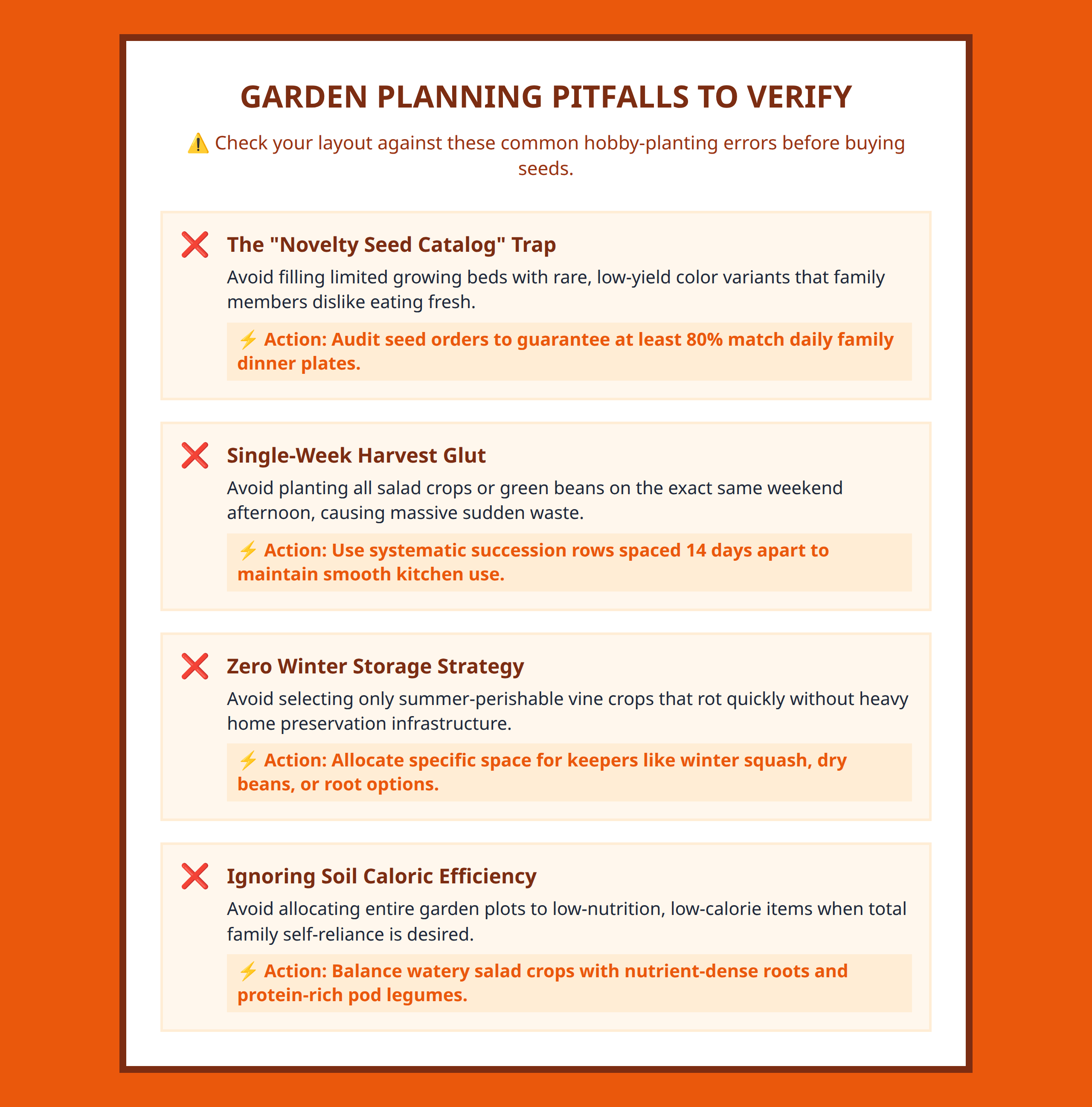
One detail many gardeners overlook is that some vegetables are valuable because they store well.
That changes how much space they deserve.
Root crops like potatoes, carrots, beets, and turnips can support household eating long after the growing season ends. Crops like onions, cabbage, squash, celery, and pumpkins were also treated as important partly because they extended food use into winter.
I think this is where many modern backyard gardens quietly become decorative instead of practical.
A person may grow a beautiful summer garden but still depend almost entirely on grocery stores by October because very little of the garden was planned around storage or preservation.
Even a small amount of planning changes that.
Imagine two gardens of equal size.
One garden is filled mostly with crops that peak for a few weeks in midsummer. The second includes potatoes, onions, cabbage, carrots, beans for drying, and winter squash alongside fresh vegetables.
The second garden keeps feeding the household long after summer ends.
That difference comes from planning around use, not appearance.
Small Gardens Need Hard Decisions
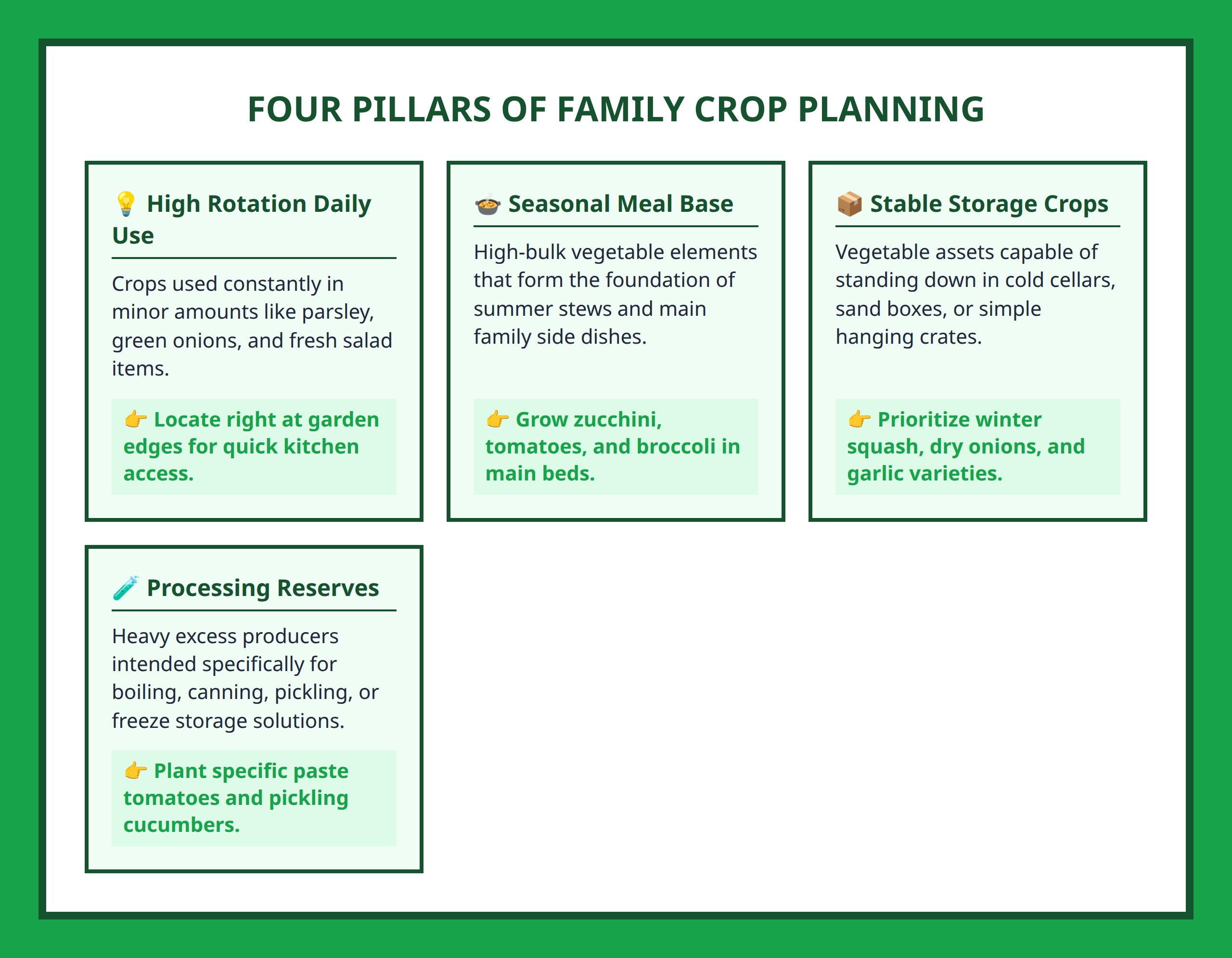
Limited space changes everything.
Some crops simply require too much room relative to their contribution. Watermelons, pumpkins, squash, sweet corn, cucumbers, and cantaloupes can consume large amounts of space quickly.
That does not mean they are bad crops. It means they carry an opportunity cost.
In a large rural garden, giving part of the plot to sprawling crops may make sense. In a tight suburban backyard, those same plants may crowd out vegetables that produce more food over a longer period.
When I think about small gardens, I usually look for crops that either:
- produce repeatedly
- provide strong nutritional value
- store well
- fit dense planting layouts
Lettuce, radishes, parsley, Swiss chard, onions, carrots, and similar crops often work better in restricted spaces because they use land more efficiently.
This is one place where practical gardening sometimes conflicts with emotional gardening.
A family may love the idea of growing giant pumpkins. But if the garden is only ten by twenty feet, dedicating a large percentage of the plot to one low-frequency harvest may not support the household very well.
I would rather see a small garden produce steady useful food than occasional novelty harvests.
Match the Garden to the Household
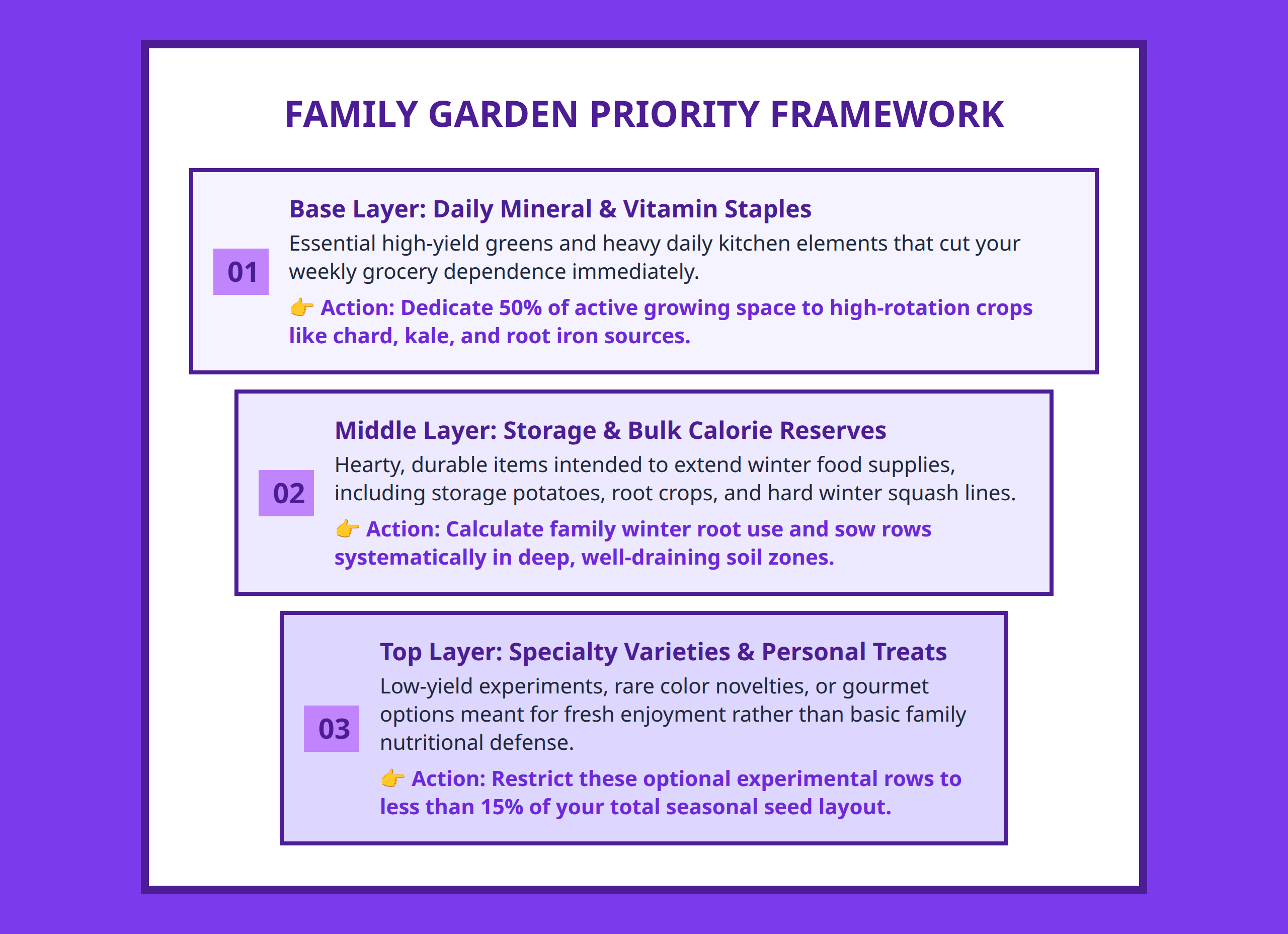
No two households eat the same way.
That sounds obvious, but many garden plans ignore it.
A household with teenagers may consume large amounts of potatoes, tomatoes, and beans. A retired couple may eat smaller portions but rely heavily on leafy greens and root vegetables.
The planning process should reflect real eating habits.
One practical idea I like is estimating yearly vegetable use instead of thinking only about planting season excitement. The older planning models even suggested rough annual quantities for families, especially for potatoes, leafy vegetables, tomatoes, and dried peas or beans.
I do not think most people need exact calculations, but the underlying idea matters: gardens should reflect consumption patterns.
If nobody in the household eats turnips willingly, expanding turnip production because seeds were cheap is not efficient planning.
Likewise, if the family uses onions constantly in cooking, onions deserve serious space.
That sounds simple, but it shifts the garden from hobby mode into practical food production.
A Good Garden Solves Multiple Problems at Once
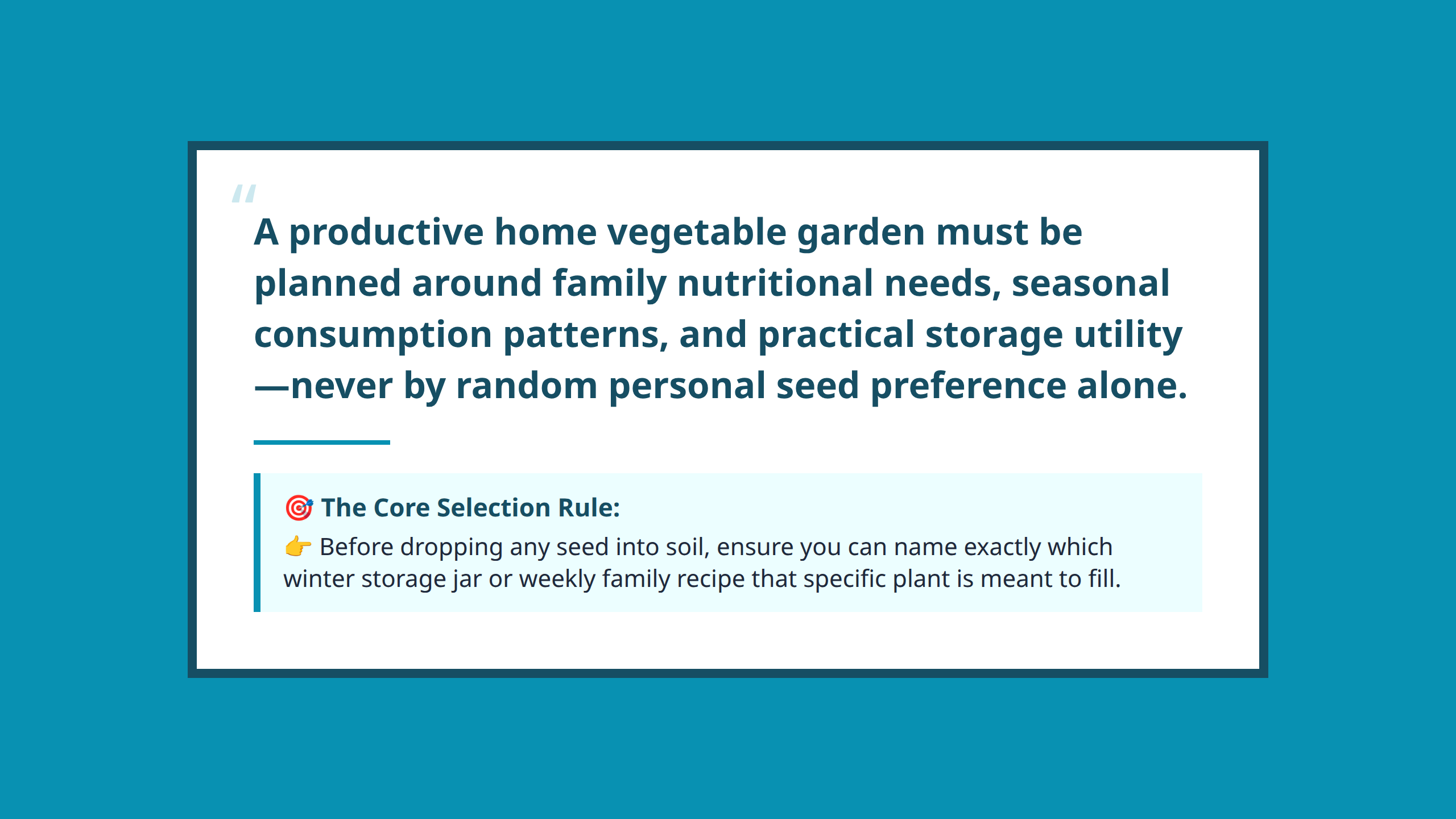
The strongest home gardens usually do several jobs together.
They improve food quality. They support nutrition. They reduce grocery dependence during harvest season. They provide fresh vegetables that taste better than store produce. They also create a reserve of stored crops for colder months.
I think that broader view is what separates a thoughtful food garden from random seasonal planting.
A productive garden is not measured only by how much grows in July. It is measured by how well the harvest fits daily life across the year.
That often leads to quieter decisions.
More onions. Fewer novelty crops. More leafy greens. More root vegetables. More storage planning. More attention to what the household consistently eats instead of what looks exciting in spring.
And honestly, that kind of planning usually creates a garden that feels more satisfying by the end of the season because the work connects directly to real use.
- Root crops: Vegetables grown mainly for their underground edible parts, such as potatoes, carrots, beets, and turnips.
- Leafy crops: Vegetables grown mainly for their leaves, including lettuce, cabbage, kale, and spinach.
- Fruit crops: Vegetables that produce edible fruits or pods, such as tomatoes, peas, beans, and peppers.
- Storage crops: Vegetables that can remain usable for long periods after harvest, especially through winter.
- Vitamin A: A vitamin important for vision, immune function, and general health. Yellow vegetables were considered strong sources of it.
- Vitamin C: A vitamin associated with immune support and tissue health. Tomatoes were highlighted as a major source.
References:
- https://www.youtube.com/watch?v=25IJlstHIRM
- https://www.youtube.com/watch?v=-D4ZW6p61M4
- https://www.youtube.com/watch?v=qD0EG1djPms
- https://www.quora.com/How-do-you-arrange-your-garden-to-provide-your-family-organic-vegetable-and-fruit
- https://www.reddit.com/r/SelfSufficiency/comments/9yrp8j/easy_guide_to_self_sufficient_vegetable_garden/
- https://www.foodgardenlife.com/learn/grow-vegetable-row-spacing
- https://www.reddit.com/r/gardening/comments/1h0igr6/i_want_to_start_building_a_garden_to_selfsustain/
- https://www.reddit.com/r/homestead/comments/oirtw3/garden_planning_what_would_feed_2_people/
- https://www.reddit.com/r/LifeProTips/comments/b0mirv/lpt_most_people_dont_need_an_entire_vegetable/
- https://sunnysimpleliving.com/choosing-vegetables-for-self-reliance/
- https://content.ces.ncsu.edu/home-vegetable-gardening-a-quick-reference-guide
- https://growfully.com/emergency-vegetable-garden/
- https://www.nal.usda.gov/plant-production-gardening/vegetable-gardening
- https://gardenbetty.com/how-much-to-plant-in-a-vegetable-garden-to-feed-a-family/
- https://www.reddit.com/r/SelfSufficiency/comments/9yrp8j/easy_guide_to_self_sufficient_vegetable_garden/ea3iajv/
- https://www.reddit.com/r/SelfSufficiency/comments/9yrp8j/easy_guide_to_self_sufficient_vegetable_garden/ea3x72d/
- https://www.reddit.com/r/SelfSufficiency/comments/9yrp8j/easy_guide_to_self_sufficient_vegetable_garden/ea3qwfw/
- https://www.thrive.org.uk/get-gardening/gardening-to-support-adhd
- https://www.heartfoundation.org.nz/about-us/news/blogs/how-gardening-nurtures-your-heart
