Balcony garden containers should be chosen for drainage, weight, stability, moisture behavior, and root space before appearance. A good-looking pot can still be a poor choice if it dries out too fast, traps water, tips easily, or limits root growth.
When I look at containers for a balcony garden, I don’t start with color or style. I start with a more practical question: will this container help the plant survive the conditions on the balcony?
That question matters because balcony containers have to do more than hold soil. They have to drain properly, stay stable in wind, give roots enough room, avoid becoming too heavy to move, and handle sun exposure without making the plant’s life harder.
A container can look perfect at the garden center and still be wrong for a balcony vegetable garden.
Takeaways
- Drainage is the first container feature to check.
- Container weight matters because balcony plants may need to be moved.
- Wider, straight-sided containers usually give roots more usable space.
- Plastic holds moisture well but can heat up in direct sun.
- Terracotta dries faster and may become too heavy for many balcony setups.
Drainage Comes Before Everything Else
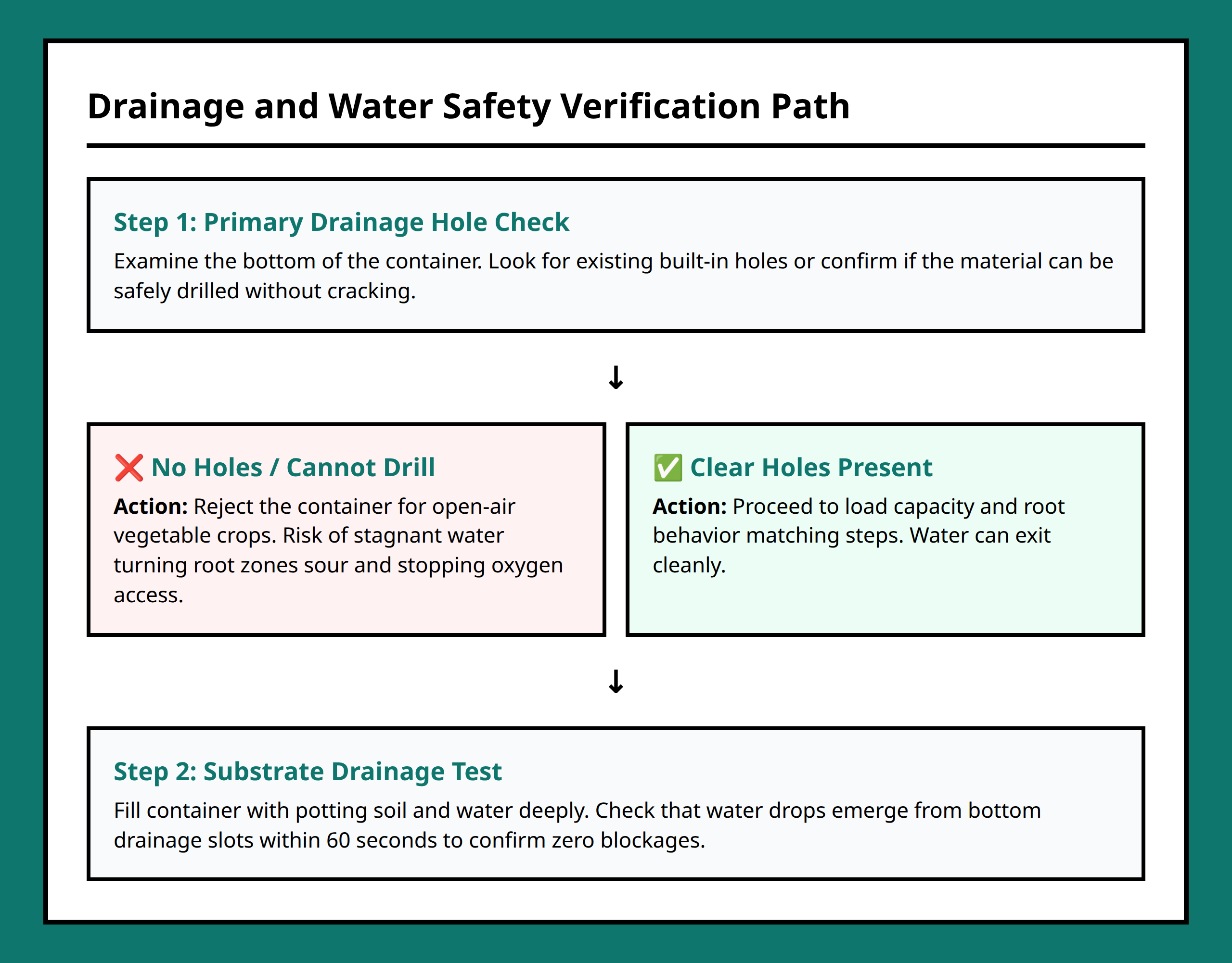
If I had to check only one feature before buying a balcony garden container, I would check the bottom.
Containers need enough drainage holes to let excess water escape. Without that escape route, soil can stay too wet, and roots may not get enough oxygen. Plants do not only need water around their roots. They also need air.
This is where many attractive containers become risky. A decorative pot may look sturdy and clean, but if it has no drainage hole, it can create a waterlogged root zone.
I would not trust a container just because it is sold as a planter. I’d turn it over and check whether water can actually leave.
If the container is plastic and has poor drainage, adding extra holes is usually straightforward. With ceramic or clay, that becomes harder and more likely to crack the container. That one practical detail can decide whether a container is worth using on a balcony.
Weight Matters More on a Balcony Than in a Yard
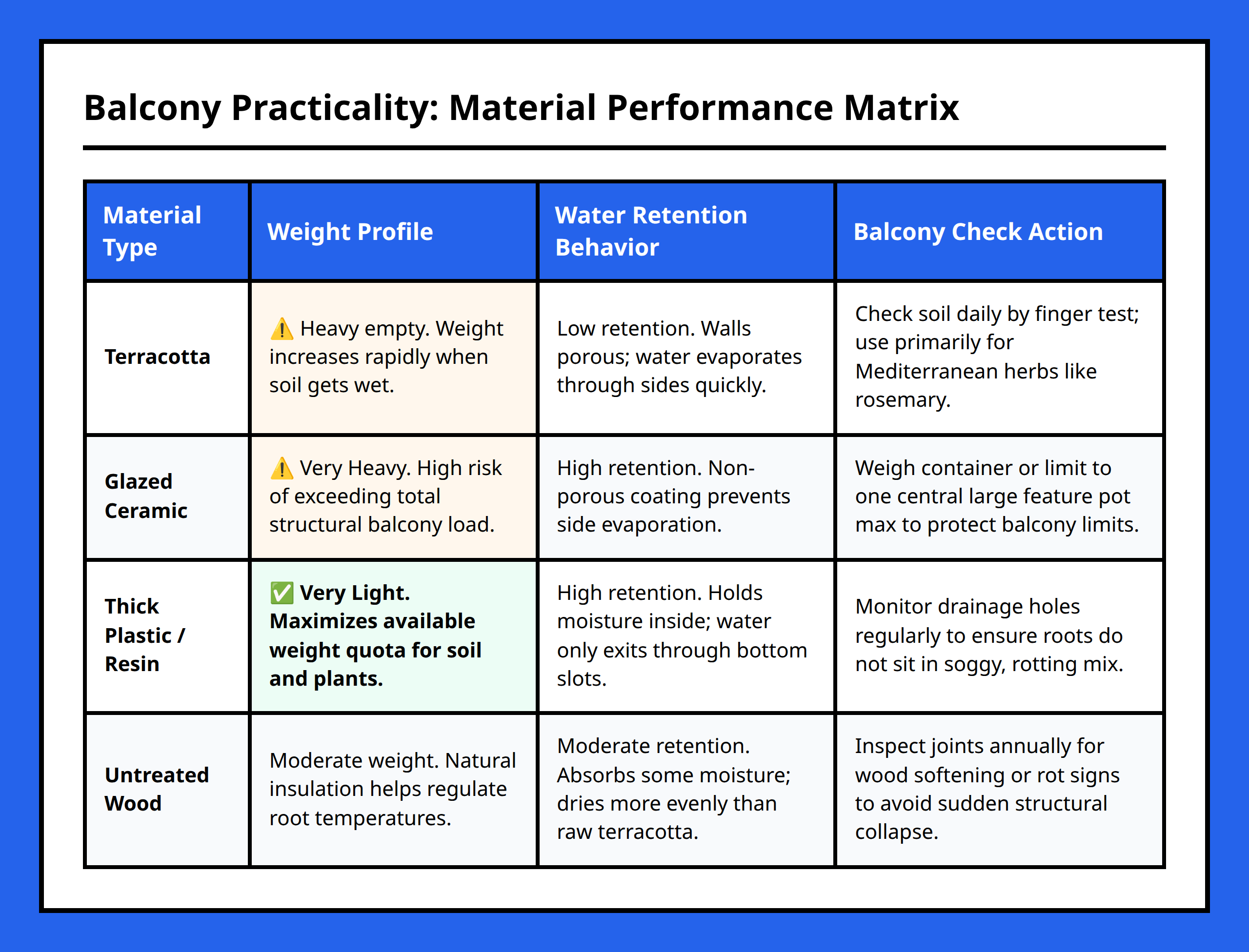
Weight is easy to underestimate because empty containers feel manageable in the store.
Once a container is filled with potting mix, watered, and supporting a mature plant, it becomes much heavier. On a balcony, that weight affects more than convenience. It affects whether you can reposition plants, bring them indoors during bad weather, or rearrange the layout when sunlight changes.
I would be careful with large clay, ceramic, and wood containers for this reason.
They can work, but they are not always practical in a small elevated space. If a plant needs to be moved away from wind or shifted toward better sun, a heavy container turns a simple adjustment into a chore.
There is also the broader question of balcony load. Modern concrete balconies may handle container gardens well, but gardeners should still respect how quickly wet containers add up in total weight.
Shape Affects Root Space and Stability
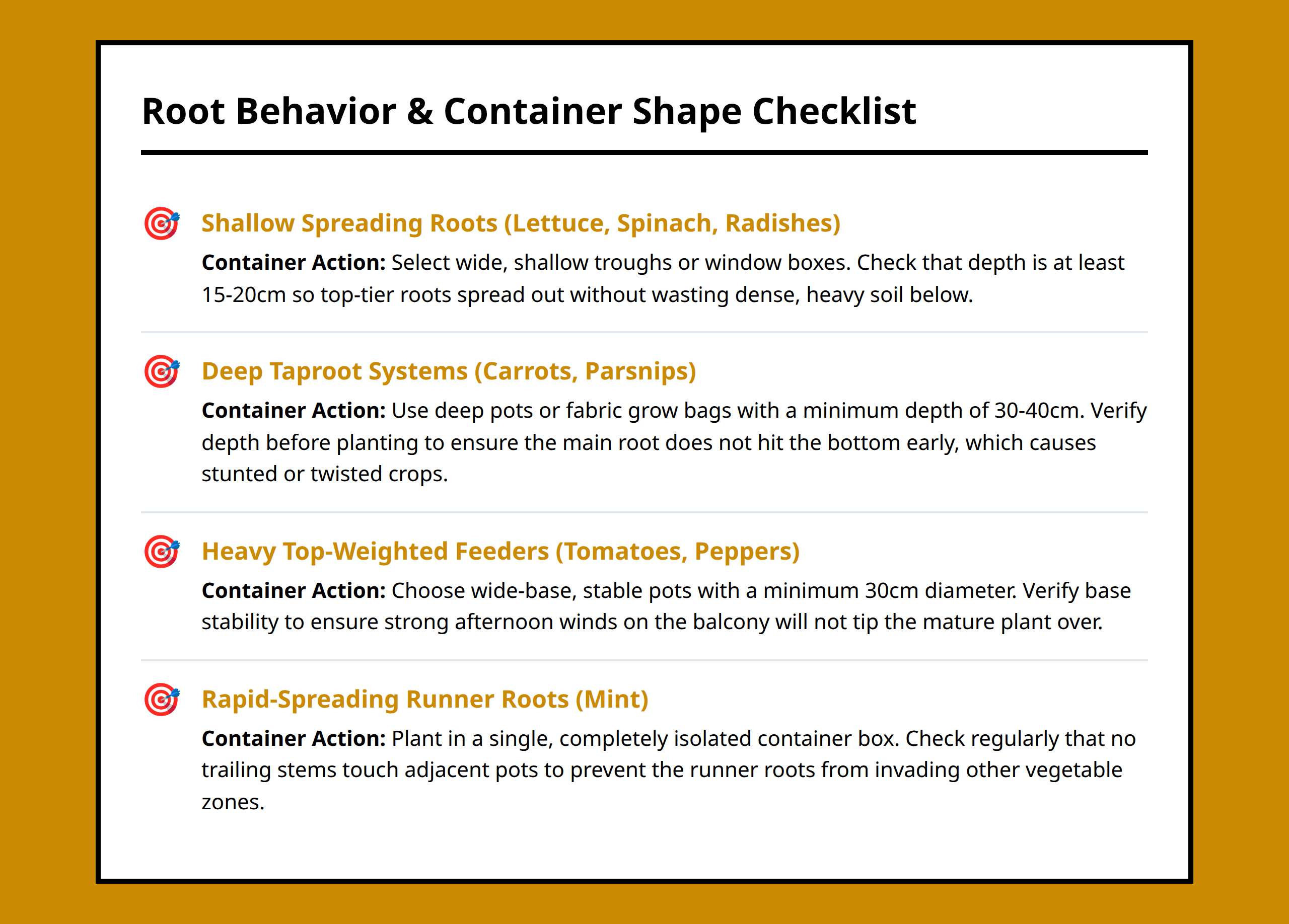
Container shape is not just a design choice.
Many common pots are wider at the top and narrower at the bottom. They look familiar, but they do not give roots as much usable space as a container with straighter sides.
I’d prefer a container that is more cylindrical or box-like when growing larger vegetables. A container that keeps its width from top to bottom gives roots more room to spread through the entire pot.
Shape also affects stability.
A narrow-bottomed container can become easier to tip in wind, especially once the plant grows tall and leafy. A wider base gives the container more balance.
For balcony gardening, that matters. Wind can push against a mature plant much harder than it pushes against a small seedling. A pot that seemed stable in spring may feel risky once the plant reaches full size.
Plastic Containers Are Practical, but Not Perfect
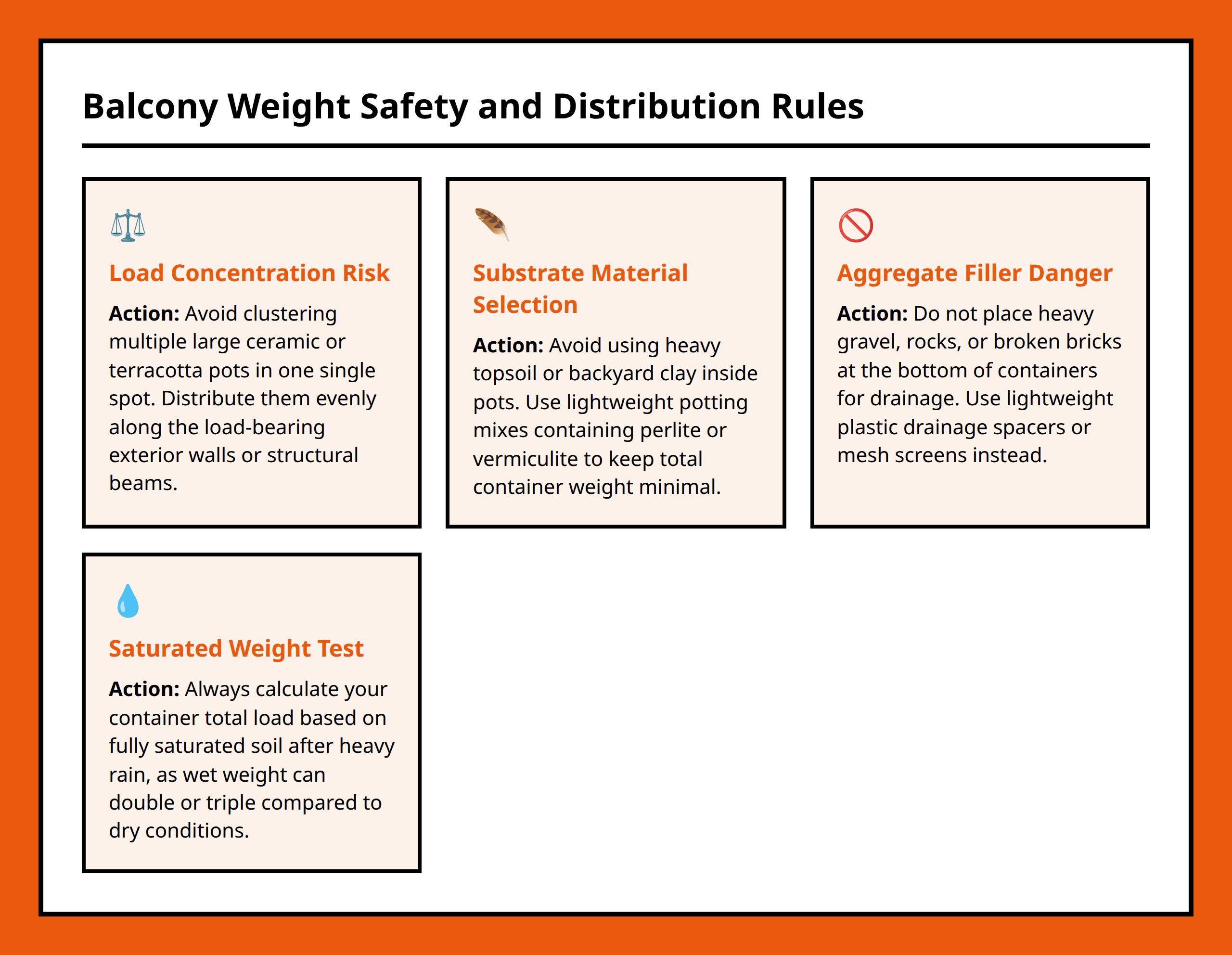
Plastic is often the most practical container material for balcony gardens.
It is light, affordable, easy to move, and easy to drill if more drainage holes are needed. It also holds moisture better than porous materials, which can help balcony plants that dry out quickly in sun and wind.
This is usually the material I would consider first for a working vegetable balcony, especially when function matters more than appearance.
Plastic has limits, though.
It can heat up quickly in direct sun, which may warm the root zone more than some plants like. Some plastic containers also break down over time when exposed to sunlight, especially if they were not made for outdoor gardening.
So I would choose plastic for practicality, but I would still pay attention to sun exposure, durability, size, and drainage.
Terracotta Looks Simple but Dries Out Fast
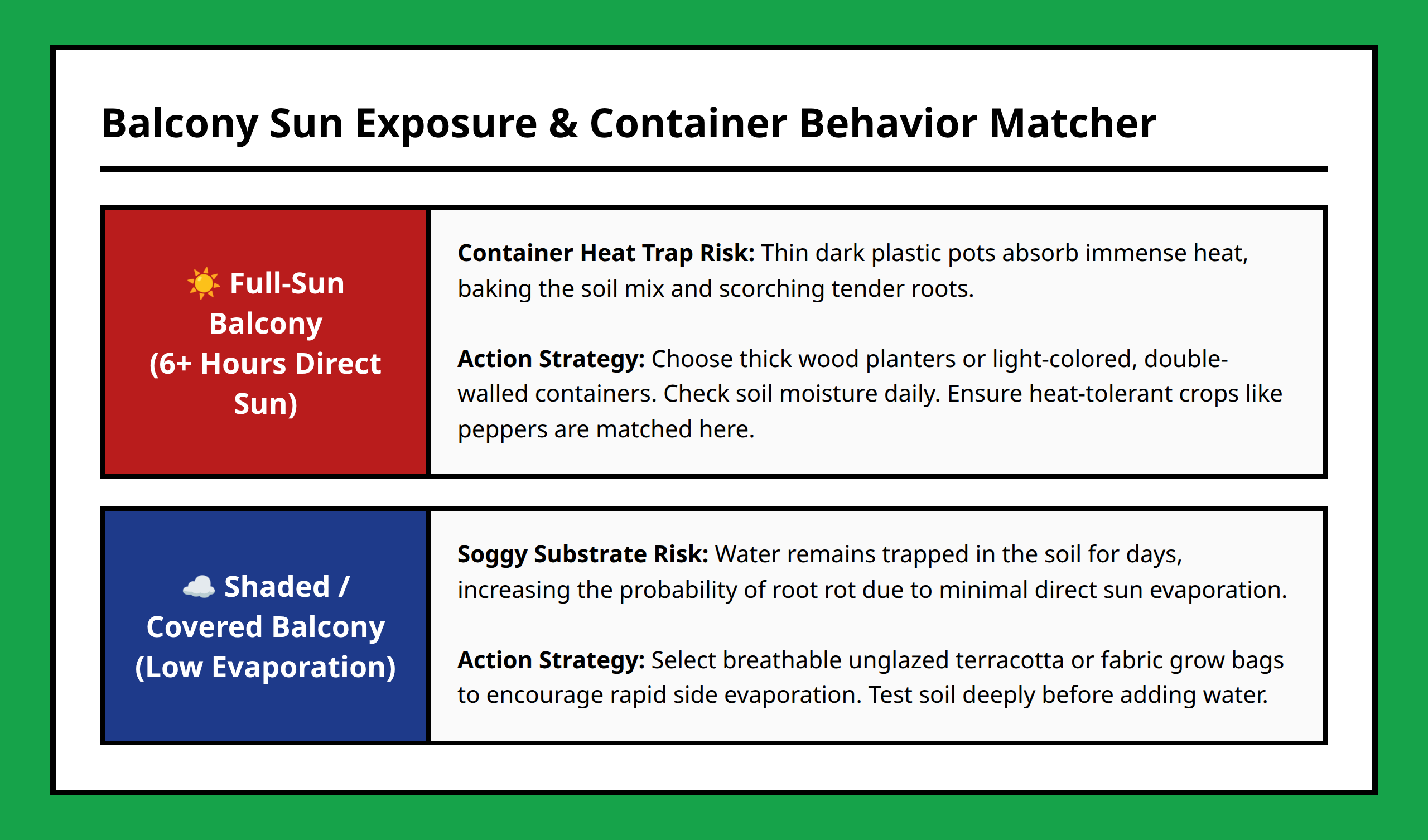
Terracotta containers are common, affordable, and easy to find.
They also have one major behavior that balcony gardeners should understand: unglazed clay is porous. It absorbs moisture and pulls water out of the potting mix.
That can be useful for plants that prefer drier conditions, but it can become a problem for vegetables that already face sun, heat, and wind on a balcony.
I would be cautious about using large terracotta pots for balcony vegetables. They can become heavy, dry out quickly, and crack in cold weather if left outside through freezing conditions.
They also break more easily than plastic if bumped or dropped.
Terracotta is not automatically bad. It just requires a gardener to accept more drying, more weight, and less flexibility.
Glazed Ceramic Works Better for Small Plants Than Large Vegetable Setups
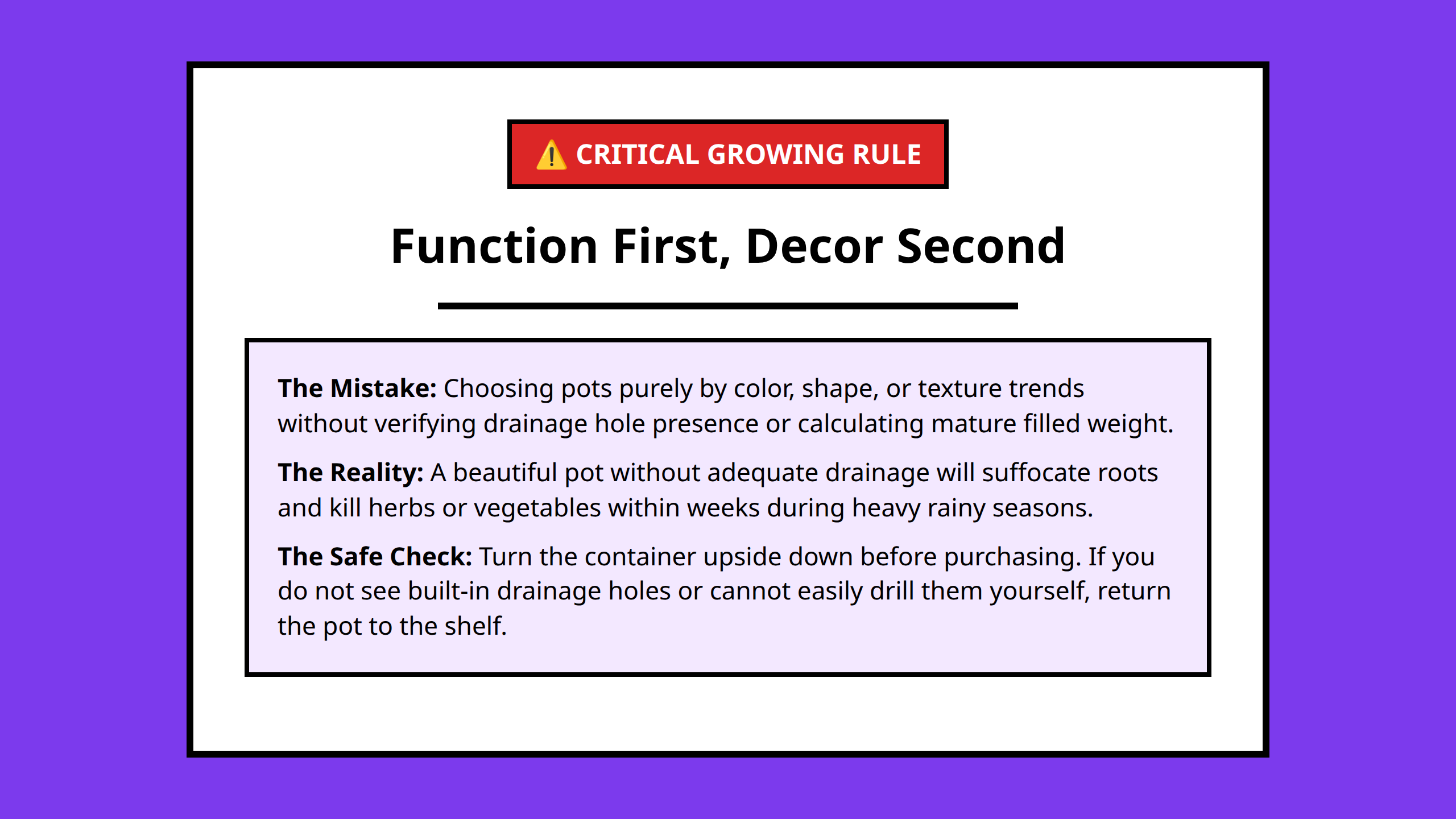
Glazed ceramic containers hold moisture better than unglazed terracotta because the glazed surface is not porous in the same way.
That can make them useful for smaller herbs or decorative plants, especially when the container will sometimes be kept indoors.
For larger balcony vegetables, I would be more selective.
Ceramic containers can be heavy, and larger ones become awkward once filled. Some glazed pots also do not handle harsh outdoor weather well over time.
My decision would be based on scale. A small glazed pot for a compact herb makes sense. A large glazed container for a tall vegetable plant may be more trouble than it is worth on a balcony.
Wood Planters Can Work, but They Need Space and Care
Wood planters can look good and can last for several seasons when made from weather-resistant wood and cared for properly.
Cedar is often a practical choice because it handles outdoor conditions better than many cheaper woods. Other durable woods can work too, but they may cost more.
The tradeoff is size and weight.
Wood containers can take up a lot of balcony space and become heavy. If I used one, I would think carefully about where it will stay because moving it later may be difficult.
I would also avoid pressure-treated lumber for edible container gardening. The concern is that chemicals used to preserve the wood may leach into the growing mix.
A wood planter is best treated as a semi-permanent balcony feature, not a flexible container you expect to move often.
The Container Should Match the Plant’s Root Behavior
The plant should decide the container size more than the balcony’s empty floor space does.
A plant with a large root system needs enough depth and width to keep growing. If roots completely fill the container, the plant becomes root bound. Once that happens, growth slows because there is no room for new root development.
I would not choose a container only because it fits neatly in a corner.
That corner may physically hold a small pot, but the plant may need more soil volume than that pot can provide. On the other hand, oversized containers can waste precious balcony space if the plant does not need them.
The practical question is: does this container give this plant enough root room without taking more balcony space than necessary?
How I’d Compare Containers Before Choosing One
If I were standing in front of several container options, I would compare them in a simple order.
- Drainage: Does it have enough holes for excess water to escape?
- Weight: Can it still be moved when full of wet potting mix?
- Shape: Does it give roots usable space from top to bottom?
- Stability: Is the base wide enough to resist wind and tall plant growth?
- Material: Will it hold moisture, dry quickly, heat up, crack, or break down?
- Plant fit: Does the container match the mature plant’s root needs?
This checklist keeps the decision grounded in plant health and balcony practicality.
A beautiful pot that fails these tests may still be fine for decoration, but I would not rely on it for productive balcony vegetables.
The Best Balcony Container Is the One That Reduces Problems
Balcony gardening already has enough challenges: limited sunlight, wind, fast-drying containers, building rules, and small floor space.
The right container should reduce those problems, not add new ones.
That is why I would choose containers as working equipment first and visual objects second. A lightweight plastic bucket with drainage may outperform a beautiful ceramic pot if the plant gets better root space, moisture control, and mobility.
The best balcony container is not always the prettiest one. It is the one that lets the plant grow well in the actual conditions of the balcony.
- Drainage: The ability of a container to let excess water escape through holes in the bottom.
- Root bound: A condition where roots fill the container so completely that the plant has little room left for new root growth.
- Terracotta: Unglazed clay pottery that is porous and can pull moisture from potting mix.
- Glazed ceramic: Ceramic pottery with a sealed surface that holds moisture better than unglazed clay.
- Potting mix: A growing medium designed for containers, usually lighter and better draining than normal garden soil.
- Pressure-treated lumber: Wood treated with chemicals to resist rot and insects; it is generally avoided for edible container gardens because of possible leaching concerns.
References:
- https://www.youtube.com/watch?v=2Os0p_A6y0A
- https://www.youtube.com/watch?v=LZTMN8l5D88
- https://www.youtube.com/watch?v=8gmu-G4jACg
- https://www.thebalconygarden.com.au/pages/best-outdoor-pots-for-australian-homes
- https://www.flowerpower.com.au/garden-advice/gardening/gardening-101-caring-balcony-garden/
- https://chiswickwoollahra.com.au/balcony-garden-beginners
- https://themicrogardener.com/three-key-factors-to-consider-when-choosing-pots/
- https://stratacare.com.au/what-to-consider-when-creating-a-balcony-garden/
- https://tenthousandpots.com/blogs/ten-thousand-pots-blog/how-to-choose-the-best-planters-for-balcony-spaces
- https://www.potsrus.com.au/choosing-plants-for-your-pots-and-planters/
- https://plantsforallseasons.com/container-gardening-101-basic-elements/
