Container plants need a completely different root environment than plants growing in the ground. Balcony gardens struggle when normal garden soil becomes compacted, blocks airflow, and traps too much water around confined roots.
A lot of beginner gardeners focus on seeds, fertilizers, or sunlight first. I understand why. Those parts feel visible and important. But when container plants consistently struggle on balconies, I’d usually look at the soil before anything else.
The biggest misunderstanding is assuming that dirt is just dirt.
In reality, potting soil for containers behaves more like an engineered growing system than ordinary ground soil. Once plants are trapped inside containers, roots depend entirely on that limited environment for oxygen, water balance, stability, and drainage.
Takeaways
- Garden soil usually becomes too dense inside containers.
- Roots need both water and oxygen to stay healthy.
- Potting mixes are designed to balance drainage and moisture retention.
- Different ingredients each perform a specific function inside the container.
- Good container soil supports root structure over time instead of collapsing into compaction.
Container Roots Live in a Very Different Environment
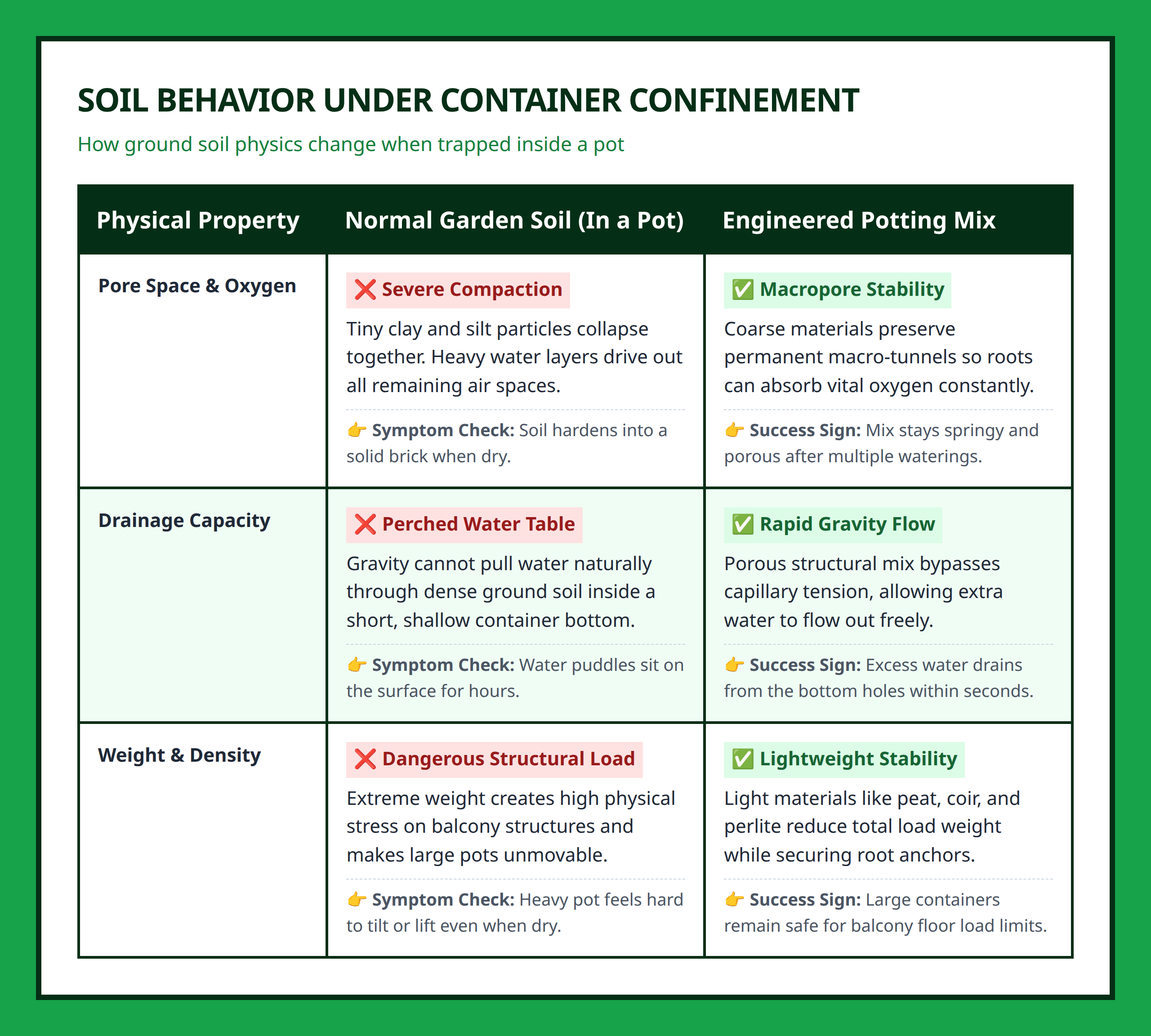
Plants growing in the ground have advantages that container plants do not.
Water can move downward through deep layers of soil. Roots can spread outward in search of oxygen and moisture. Soil organisms and natural structure help maintain balance over time.
Containers remove most of those safety systems.
Once a plant lives inside a pot, its roots are confined to a small artificial space where drainage, airflow, and moisture all depend on the growing mix itself.
I think many beginners picture soil mainly as something that holds the plant upright. But roots also need oxygen constantly.
That part gets overlooked surprisingly often.
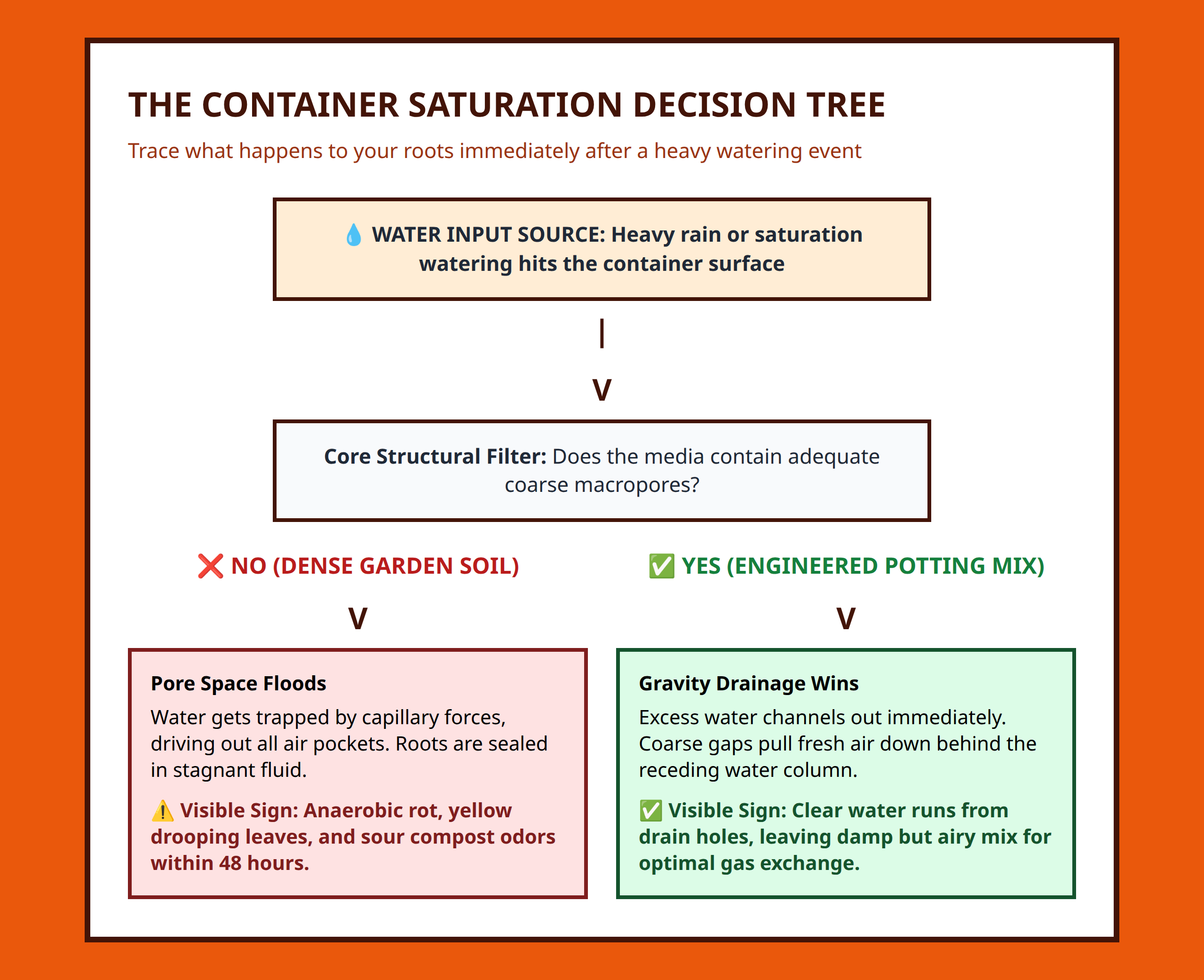
If water fills too many air spaces inside a container, roots struggle to breathe. Over time, growth weakens and root problems begin developing below the surface long before the plant visibly collapses.
Why Garden Soil Performs Poorly Inside Pots
At first glance, using ordinary garden soil in containers seems logical. It already supports plants outdoors, so why not move some into a balcony pot?
The problem is structural behavior.
Garden soil changes once it becomes trapped inside a confined container. Instead of staying loose and balanced, it tends to compress and compact over time.
That compaction creates several problems at once:
- Water drains more slowly
- Airflow around roots decreases
- Roots struggle to expand
- The soil surface hardens
- Containers remain wet too long after watering
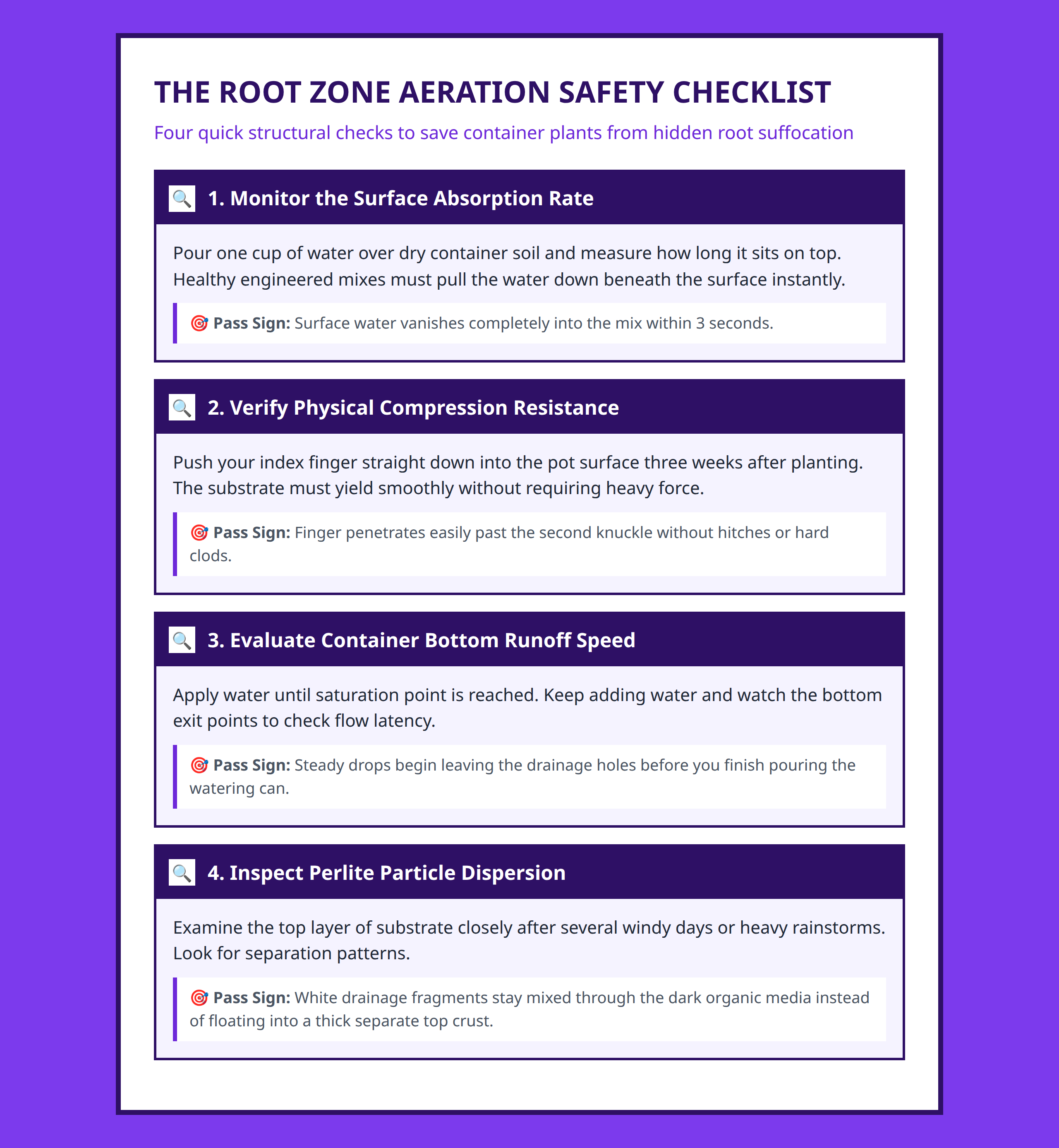
I’d pay attention to how a container feels after repeated watering cycles.
A compacted pot often becomes heavy, dense, and poorly aerated. Water may even pool on the surface briefly before soaking in.
Meanwhile, the roots below are sitting inside an increasingly oxygen-poor environment.
This is one reason beginner gardeners sometimes overcorrect with more watering or fertilizer when the real issue is soil structure itself.
Potting Mixes Are Designed to Hold Air as Well as Water
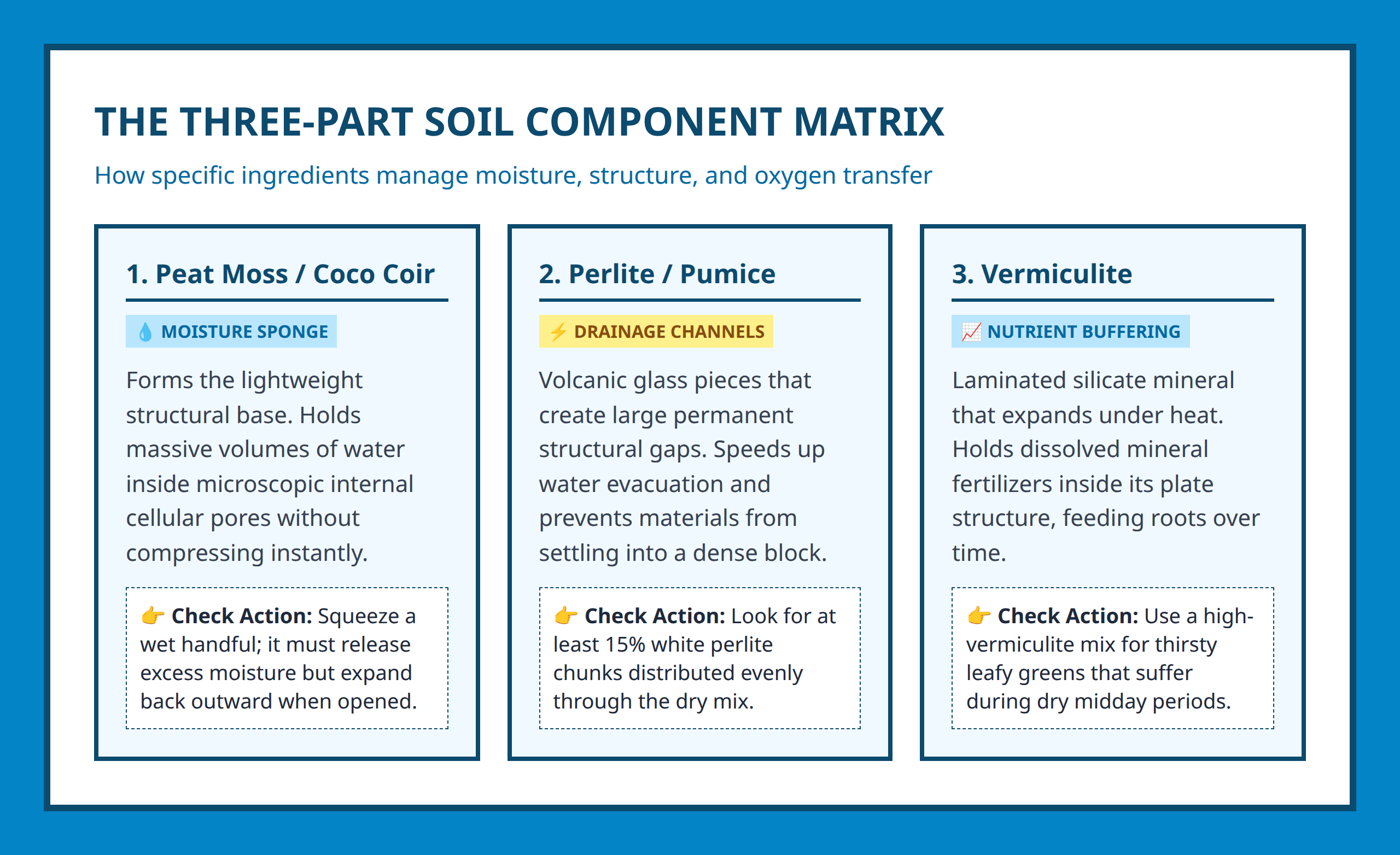
Once I understood that roots need oxygen constantly, container soil made much more sense to me.
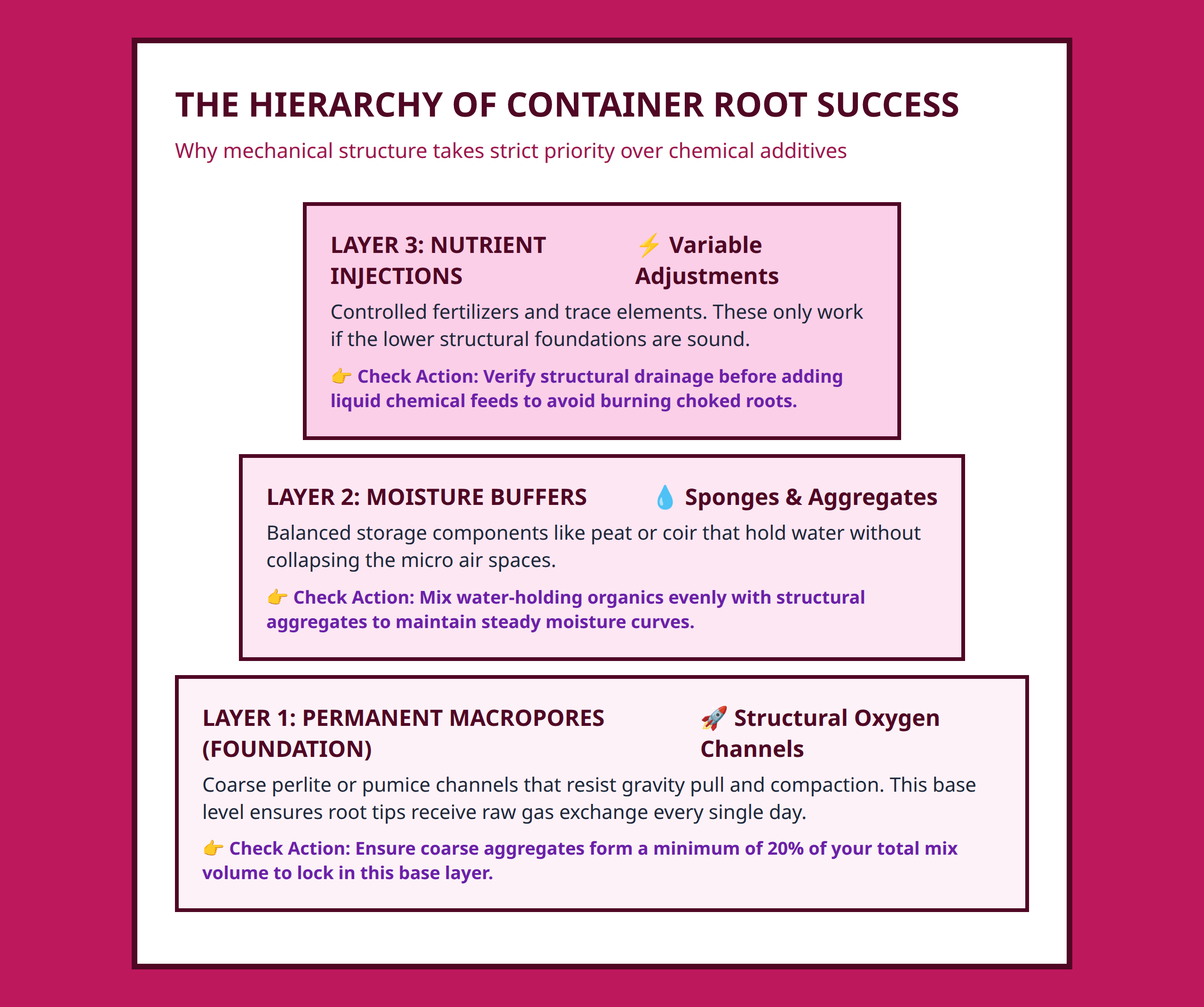
Good potting mixes are designed to create balance.
They must hold enough moisture for the plant to survive between waterings while still preserving open air spaces inside the container.
That balancing act is harder than it sounds.
If a mix drains too quickly, plants dry out constantly. If it holds too much water, roots remain saturated too long.
That’s why container mixes usually contain multiple ingredients with different physical roles.
The goal is not simply “rich soil.” The goal is a stable root environment.
Each Potting Soil Ingredient Has a Specific Job
One detail I find useful is thinking about potting mixes as systems made from cooperating materials.
Different ingredients control moisture, drainage, structure, and airflow in different ways.
Peat Moss or Similar Organic Material
Many potting mixes use peat moss or similar organic materials to help retain moisture.
These ingredients absorb water while still remaining relatively light compared to dense soil.
But peat-based mixes also break down gradually over time. As decomposition continues, the structure becomes finer and more compact.
That’s one reason older potting mixes often stop performing well after repeated growing seasons.
Perlite
Perlite is the lightweight white material often visible in potting mixes.
Its main job is improving aeration and drainage.
I think beginners sometimes assume perlite is decorative because of how it looks, but it plays an important structural role by helping maintain open air spaces around roots.
Compost and Organic Components
Organic matter contributes nutrients and biological activity.
But inside containers, too much dense organic material can also increase compaction and moisture retention beyond what some plants tolerate comfortably.
That balance matters more on balconies because containers already experience uneven moisture conditions from heat and wind exposure.
Why Container Soil Changes Over Time
A fresh potting mix does not stay physically identical forever.
Repeated watering gradually compresses particles. Organic materials decompose. Fine material settles downward. Air spaces shrink.
I think this explains why some balcony gardens perform well early in the season and slowly decline later even when watering and sunlight remain consistent.
The root environment itself is changing.
A container that originally drained well may start holding too much moisture months later. The top layer may harden. Water movement becomes uneven.
This process happens faster in balconies because containers experience repeated wet-dry cycles, heat exposure, and limited soil volume.
That’s why refreshing or rebuilding potting mixes eventually becomes necessary instead of treating soil as a permanent setup.
The Goal Is Root Stability, Not Just Plant Growth
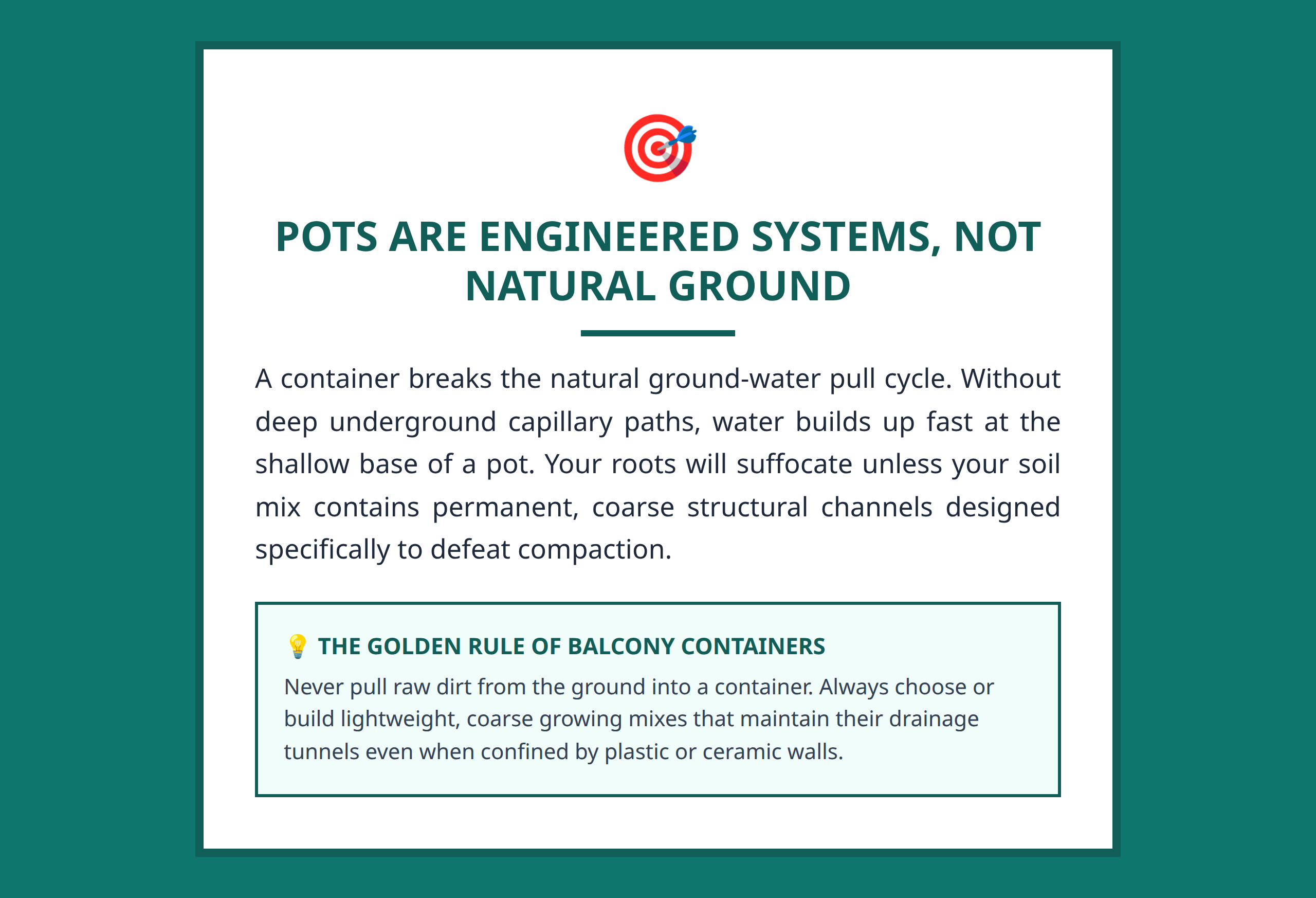
I think container soil becomes easier to understand once you stop viewing it as “dirt for plants” and start viewing it as infrastructure for roots.
The container mix is responsible for:
- Holding the plant upright
- Managing water movement
- Preserving oxygen access
- Reducing compaction
- Supporting long-term root expansion
That’s a surprisingly difficult job inside a confined balcony container.
A healthy-looking plant above the soil usually depends on a carefully balanced environment below it.
And when balcony plants repeatedly struggle despite reasonable sunlight and watering, I’d seriously question whether the roots are trapped inside a mix that can no longer support them properly.
- Potting mix: A specially designed growing medium for containers that balances drainage, airflow, and moisture retention.
- Compaction: The process where soil particles become compressed, reducing airflow and drainage around roots.
- Aeration: The presence of air spaces inside soil or potting mix that allow roots to access oxygen.
- Perlite: A lightweight material added to potting mixes to improve drainage and maintain air spaces.
- Peat moss: An organic material commonly used in potting mixes to help retain moisture.
- Root environment: The physical conditions surrounding plant roots, including moisture, oxygen, temperature, and soil structure.
References:
- https://www.espoma.com/espoma-videos/2025-video-6-common-beginner-balcony-gardening-mistakes-growing-joy-with-maria/
- https://www.youtube.com/watch?v=CurPamv12Qw
- https://www.youtube.com/watch?v=cq5IYDQkssw
- https://www.quora.com/Why-is-soil-from-your-garden-not-suitable-for-pots
- https://dianapierce.substack.com/p/potting-soil-vs-potting-mix-the-one
- https://www.reddit.com/r/YouShouldKnow/comments/13l4yy5/ysk_that_potting_soil_contains_significantly_more/
- https://earthbox.com/blog/what-is-the-best-soil-for-container-gardening
- https://thegreencorner.com.sg/potting-mix-vs-garden-soil/
- https://laidbackgardener.blog/2025/04/26/which-potting-soil-for-containers-on-the-balcony/
- https://www.gardendesign.com/how-to/potting-soil.html
- https://www.gardeningknowhow.com/gardening-pros-cons/garden-soil-vs-potting-soil-pros-and-cons
- https://etepek.com/blog/garden-soil-vs-potting-soil-vs-potting-mix/
