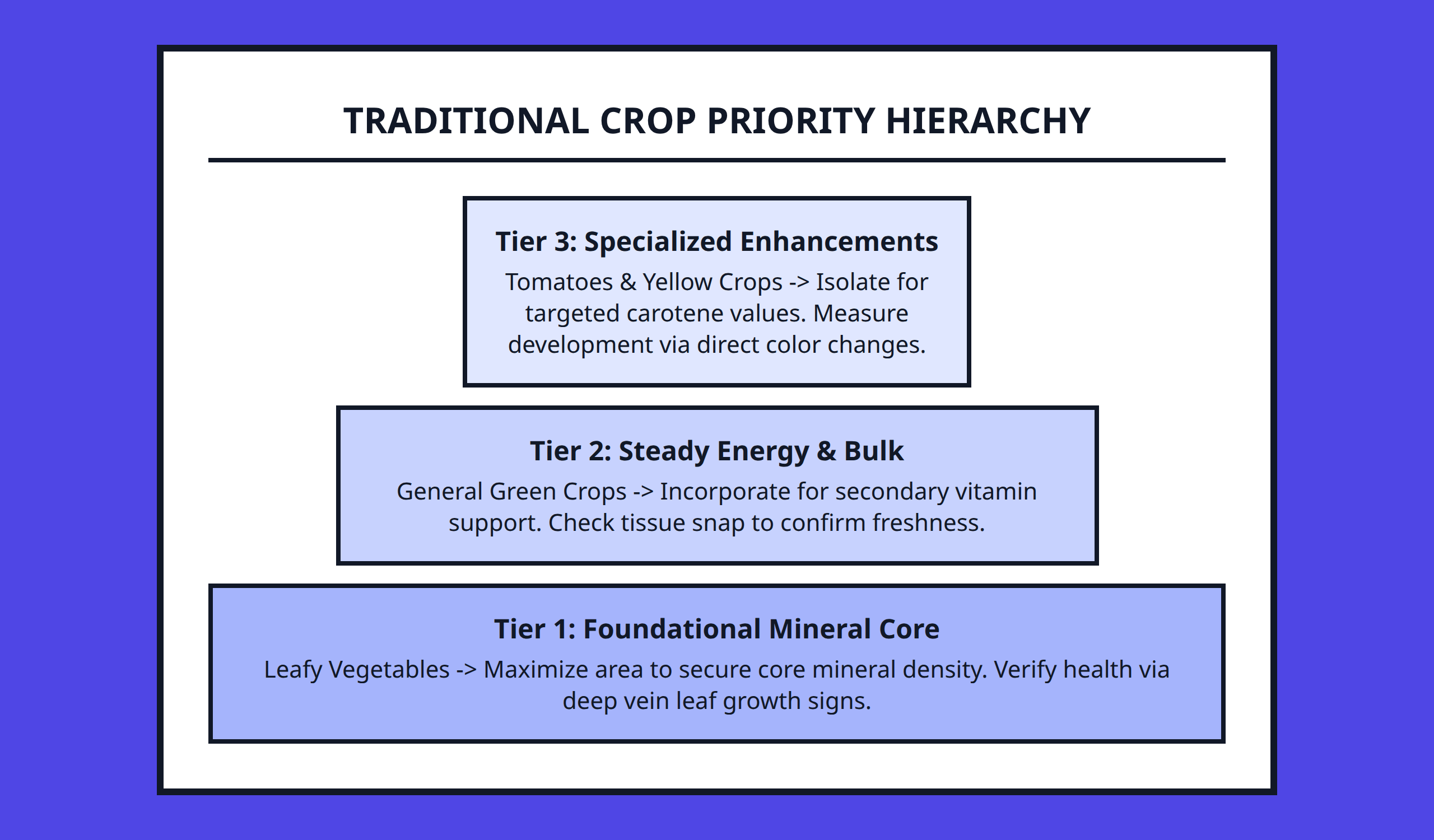
Traditional vegetable garden planning treated leafy vegetables as nutritionally important because they supplied large amounts of vitamins and minerals that other crops could not provide as consistently. Garden balance was often judged partly by how well these crops supported everyday nutrition.
One thing I find interesting about older garden planning systems is that they did not treat all vegetables as nutritionally equal. Some crops were considered useful mainly for bulk or storage. Others were valued because they carried specific vitamins or minerals that families needed regularly.
Leafy vegetables sat near the center of that logic.
That emphasis can feel surprisingly modern at first glance, but the reasoning was actually very practical. A home garden was expected to help support household nutrition across long stretches of the year, not simply produce attractive harvests during summer.
Takeaways
- Traditional garden planning grouped vegetables partly by nutritional contribution.
- Leafy vegetables were valued for mineral and vitamin density.
- Different vegetable categories were expected to solve different nutritional needs.
- Garden balance mattered more than producing large amounts of one crop.
Older Garden Planning Focused on Nutrition, Not Just Production
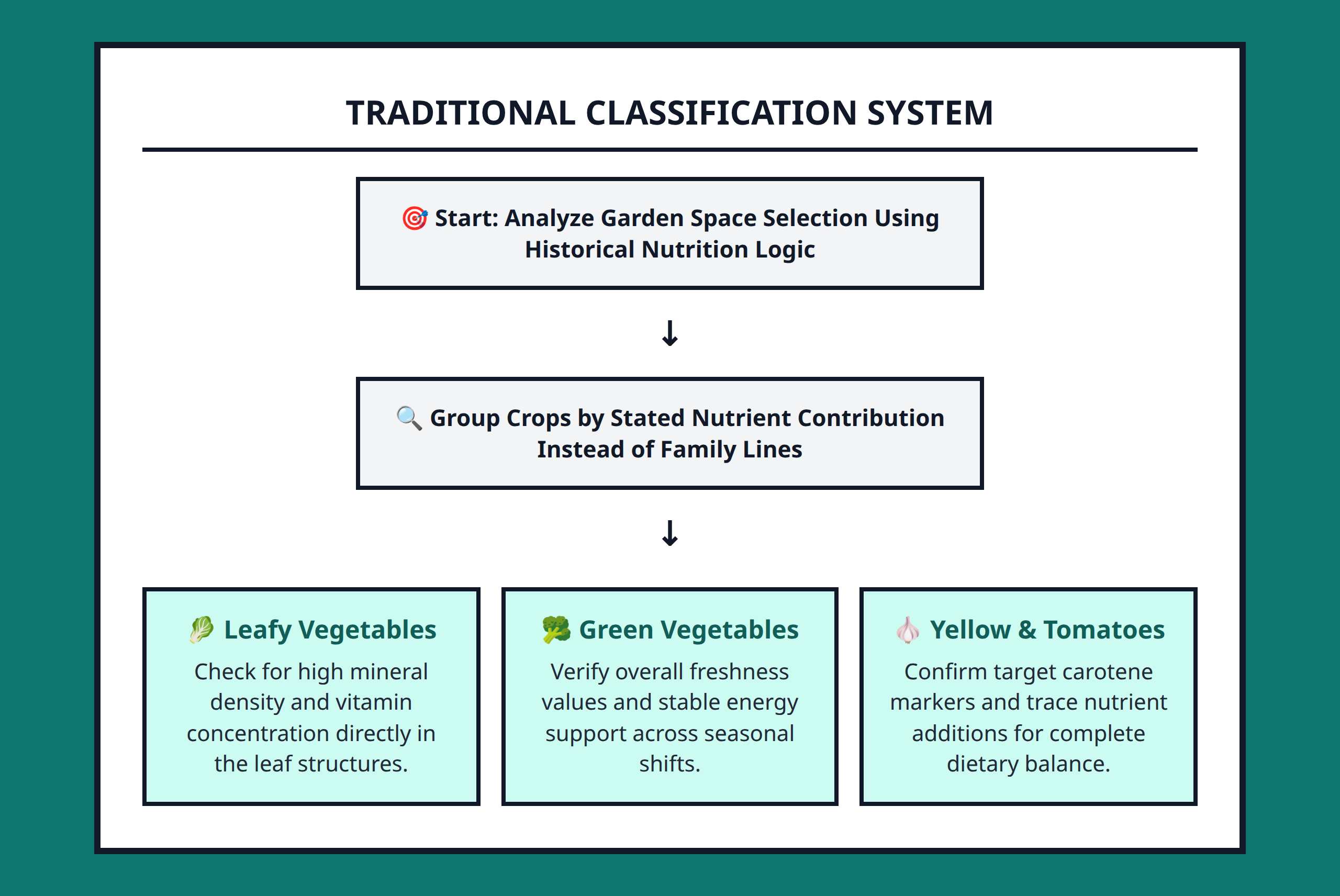
It is easy to assume older vegetable gardens focused mainly on quantity because households depended more directly on home food production.
But nutritional balance mattered too.
Vegetables were often classified according to the nutrients they supplied. That classification shaped which crops deserved space in the garden and how different vegetables complemented one another.
I think this changes how we interpret traditional gardening advice.
The goal was not simply to grow as much food as possible. The goal was to grow food that supported health across different nutritional categories.
A garden overloaded with one or two productive vegetables could still be considered incomplete if it lacked crops associated with vitamins and minerals.
That framework explains why leafy vegetables received consistent attention even though some of them produced less dramatic harvests than larger crops.
Leafy Vegetables Were Treated as Nutritional Anchors
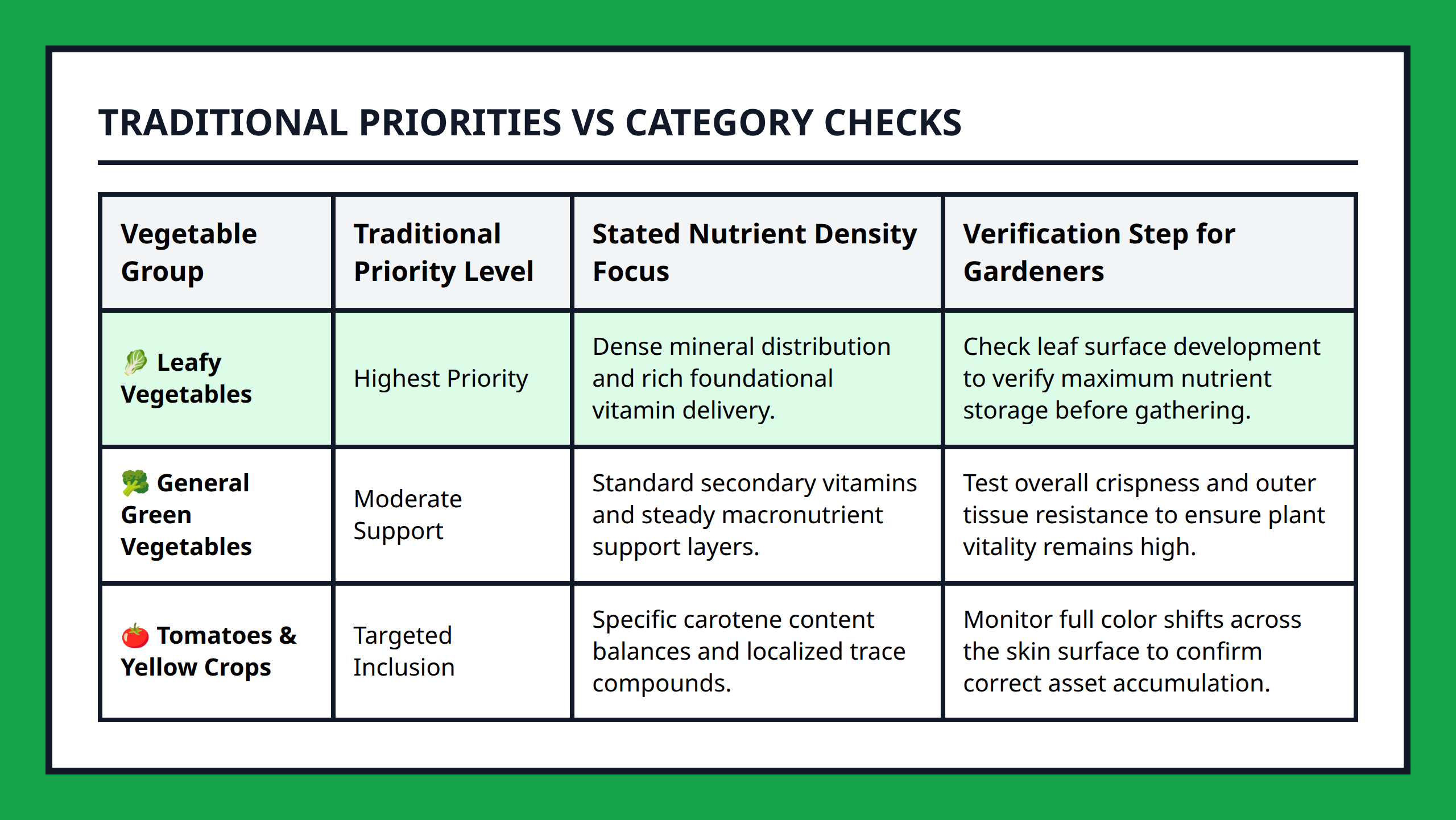
Leafy vegetables were commonly viewed as especially important because of their mineral and vitamin content.
Crops such as:
- cabbage
- lettuce
- spinach
- Swiss chard
- collards
- parsley
were treated as valuable partly because they contributed nutrients that households needed regularly.
I think one reason this mattered so much is that leafy vegetables fit naturally into frequent eating patterns. They were not occasional crops harvested once and forgotten. Many could appear repeatedly in meals over long parts of the growing season.
That steady presence increased their practical nutritional importance.
A gardener planning mainly around dramatic harvests might prioritize pumpkins, melons, or oversized vine crops. A nutrition-focused garden looked at the problem differently. It asked what kinds of vegetables supported daily eating consistently.
Leafy greens answered that question well.
Green Vegetables and Yellow Vegetables Served Different Roles
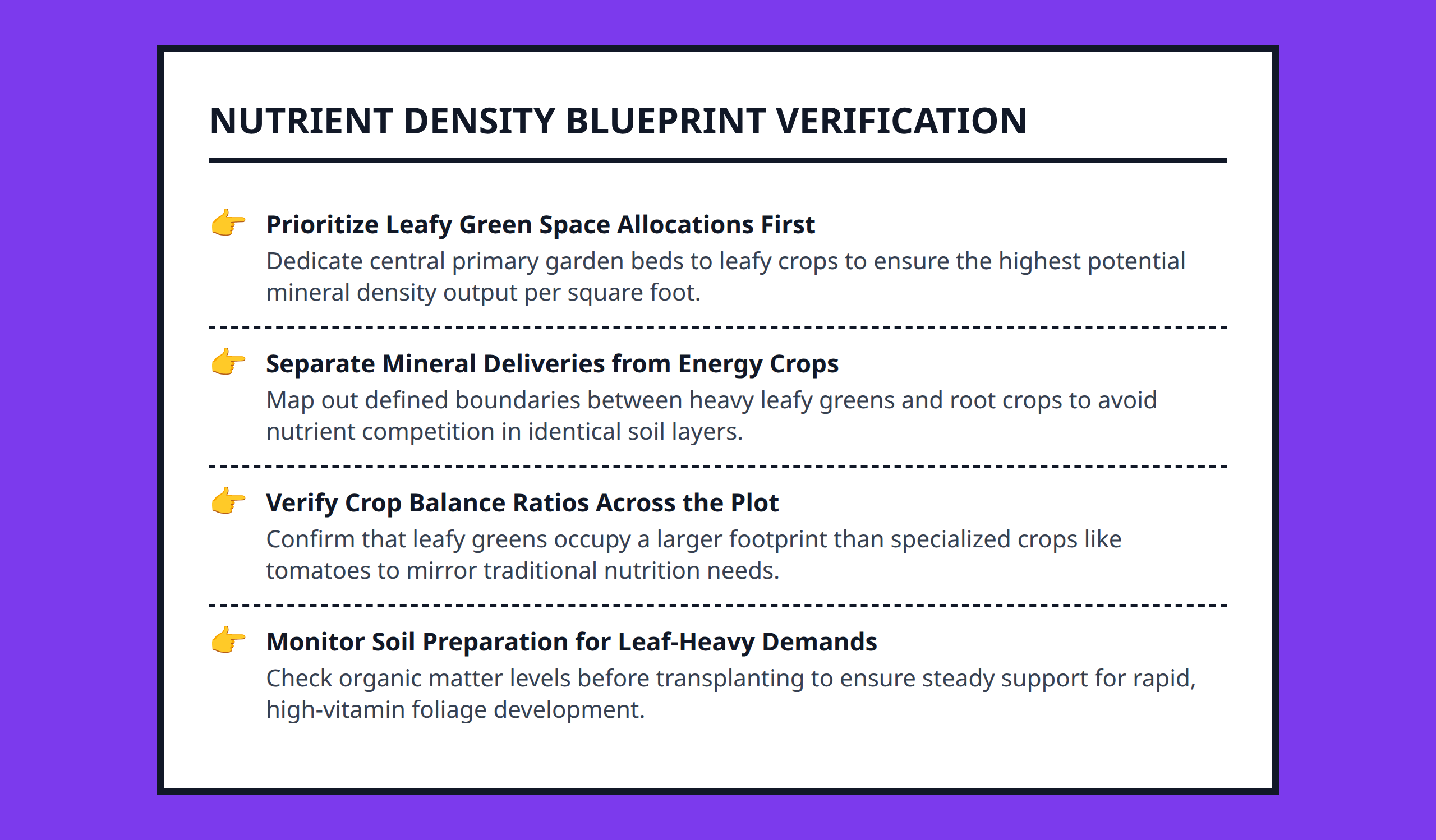
The older classification systems did not stop with leafy crops alone.
Vegetables were often grouped according to the kinds of nutrients they were expected to contribute.
Green vegetables such as peas, asparagus, broccoli, and green beans were considered important for their broader nutritional value. Yellow vegetables such as carrots, sweet potatoes, pumpkins, and yellow squash were strongly associated with vitamin A.
Tomatoes received attention for vitamin C.
I think this structure is useful because it shows that traditional garden planning was trying to create nutritional coverage across several categories at once.
No single vegetable solved every problem.
A family garden worked best when different crop groups balanced one another nutritionally instead of competing only for space or yield.
That is a very different mindset from planting mostly according to taste, novelty, or appearance.
Large Harvests Were Not Automatically the Most Valuable Harvests
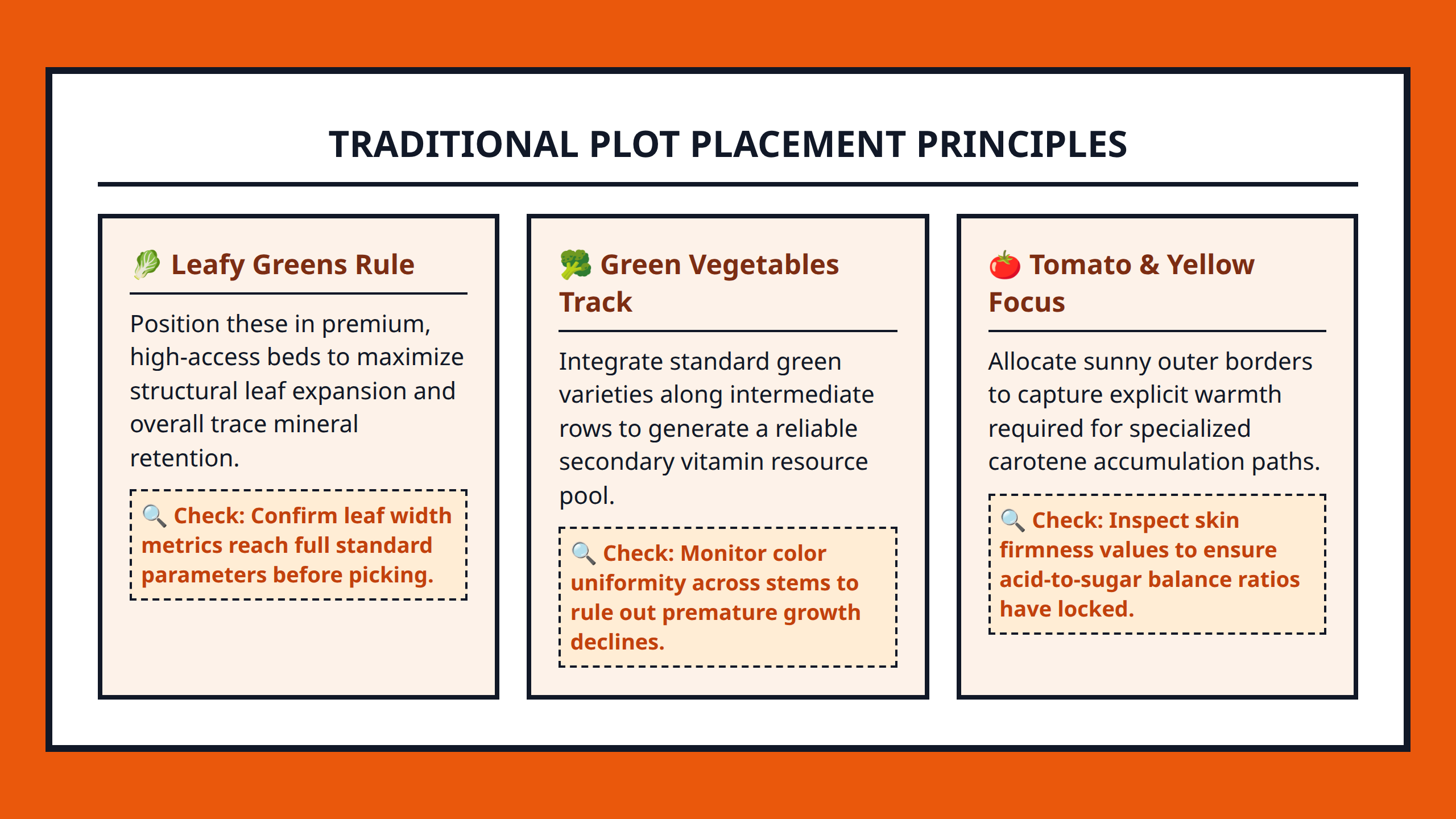
One point I keep returning to is how differently value was measured.
A sprawling crop producing large visible harvests could still contribute less nutritional diversity than a smaller planting of greens or root vegetables.
This becomes easier to understand when you picture a typical backyard garden.
One gardener fills much of the space with corn, melons, and squash because those crops feel abundant and satisfying visually. Another gardener includes moderate amounts of those crops but protects space for greens, root crops, tomatoes, onions, and beans.
The second garden may look less dramatic during peak summer growth, but nutritionally it supports a broader range of everyday needs.
I think older nutrition-focused garden planning was trying to protect against imbalance more than maximize spectacle.
That distinction still feels useful.
Leafy Crops Also Fit Smaller Garden Spaces Well
Another practical advantage of leafy vegetables is that many of them use garden space efficiently.
Compact leafy crops can often be planted densely and harvested steadily without consuming the enormous space required by sprawling vine crops.
That mattered especially for families gardening on limited land.
I would pay attention to this even today if the goal were practical food production rather than purely recreational gardening. A small garden overloaded with space-hungry vegetables may produce exciting harvest photos while still contributing surprisingly little nutritional variety.
Leafy vegetables helped solve that problem because they combined nutritional value with relatively efficient land use.
The Real Priority Was Nutritional Diversity
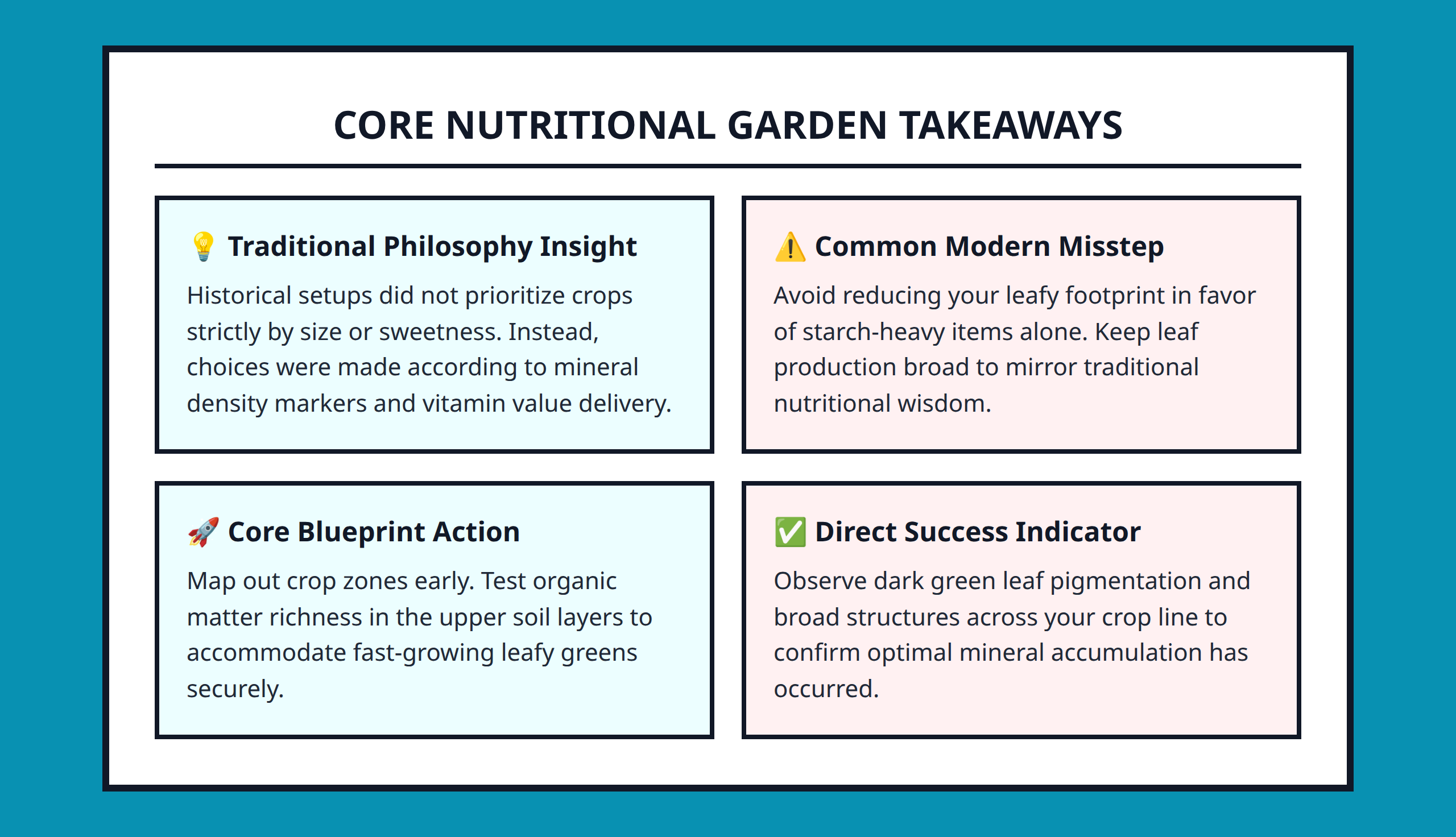
What stands out to me most is that older garden planning systems treated diversity as functional, not decorative.
Different vegetables were expected to contribute different nutritional strengths.
Leafy vegetables mattered because they carried minerals and vitamins consistently. Yellow vegetables filled another role. Tomatoes filled another. Root crops and storage vegetables supported longer-term food supply.
The garden worked as a combined system.
I think this explains why traditional vegetable gardens often looked more balanced than trend-driven gardens built around a handful of fashionable crops.
The planning logic was not asking, “What vegetable do I want most?”
It was asking, “What combination of vegetables supports the household best?”
That question naturally gave leafy greens an important place in the garden.
- Leafy vegetables: Vegetables mainly grown for their edible leaves, such as lettuce, spinach, cabbage, and collards.
- Vitamin A: A vitamin associated with vision, growth, and general health. Yellow vegetables were often valued as important sources.
- Vitamin C: A vitamin linked to tissue health and nutrition. Tomatoes were commonly highlighted as strong contributors.
- Nutritional diversity: A range of foods that provide different nutrients rather than relying heavily on one type of crop.
- Minerals: Nutrients needed for body functions and health that were considered especially abundant in many leafy vegetables.
References:
- https://pmc.ncbi.nlm.nih.gov/articles/PMC12388681/
- https://vibrantnutrition.com.au/food-focus/food-focus-green-leafy-vegetables/
- https://www.ars.usda.gov/plains-area/gfnd/gfhnrc/docs/news-articles/2013/dark-green-leafy-vegetables
- https://www.frontiersin.org/journals/sustainable-food-systems/articles/10.3389/fsufs.2025.1502711/full
- https://ikee.lib.auth.gr/record/361538/files/Koukounarasetal.pdf
- https://californiaagriculture.org/article/109678-school-based-gardens-can-teach-kids-healthier-eating-habits.pdf
- https://www.franciscanhealth.org/community/blog/benefits-of-gardening-beyond-fresh-vegetables
- https://www.youtube.com/watch?v=rWnfTUst0F0
- https://www.b4fn.org/fileadmin/templates/b4fn.org/upload/documents/Diversity_for_Food_and_Diets/CS6_Keatingeetal.pdf
