Vegetables respond to temperature in very different ways. Some crops can survive frost and cold soil, while others stop growing or die after even a light freeze. Understanding these temperature groups makes planting decisions much easier and prevents many common garden failures.
A lot of new gardeners assume planting season begins on one specific date. Warm weekend arrives, garden centers get crowded, and suddenly everything goes into the ground at once.
Then the problems start. Beans stall. Tomatoes turn dark after a cold night. Peas struggle in rising heat. Lettuce bolts early. The issue often looks random, but most of the time the plants are reacting exactly as their temperature group predicts.
I think gardeners get better results when they stop treating vegetables as one category and start treating them as different biological responses to temperature.
Takeaways
- Vegetables belong to different temperature groups with very different frost tolerance levels.
- Cold-tolerant crops should usually be planted earlier than warm-season vegetables.
- Planting by calendar date alone often causes avoidable crop failures.
- Heat can damage cool-weather crops just as frost damages tender crops.
Why Calendar Planting Dates Often Fail
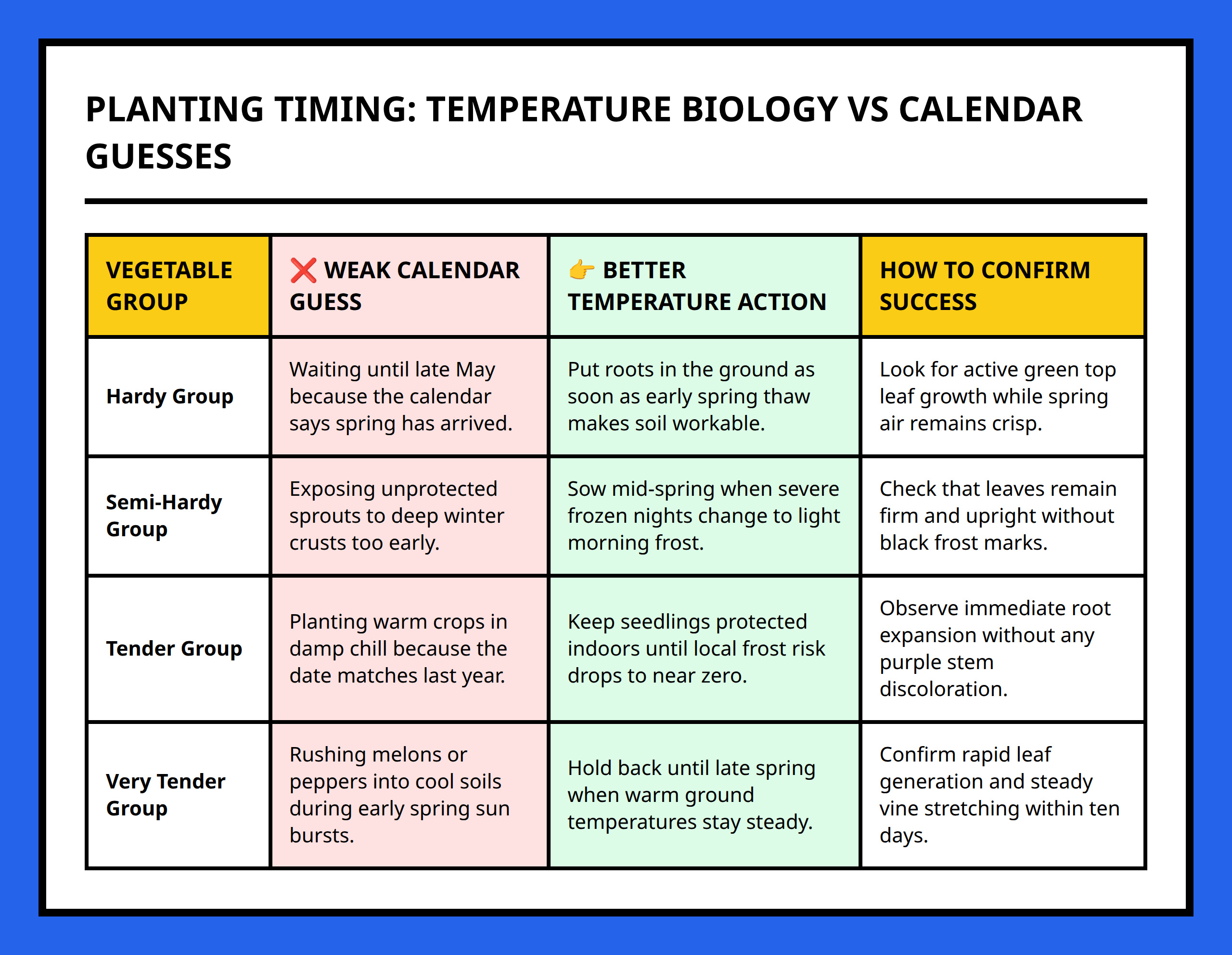
One of the biggest gardening mistakes is assuming the same planting schedule works everywhere.
Climate varies too much for that.
A planting date that works safely in one region may destroy crops in another. Even within the same area, spring weather can shift dramatically from year to year. A warm week in early spring often tricks gardeners into planting tender vegetables too early.
I’ve noticed that many gardening disappointments come from reacting to temporary weather instead of seasonal temperature patterns.
A sunny afternoon can make the ground feel ready. But nighttime temperatures may still fall low enough to injure sensitive crops badly.
That is why vegetables are better understood through temperature tolerance groups instead of fixed calendar dates.
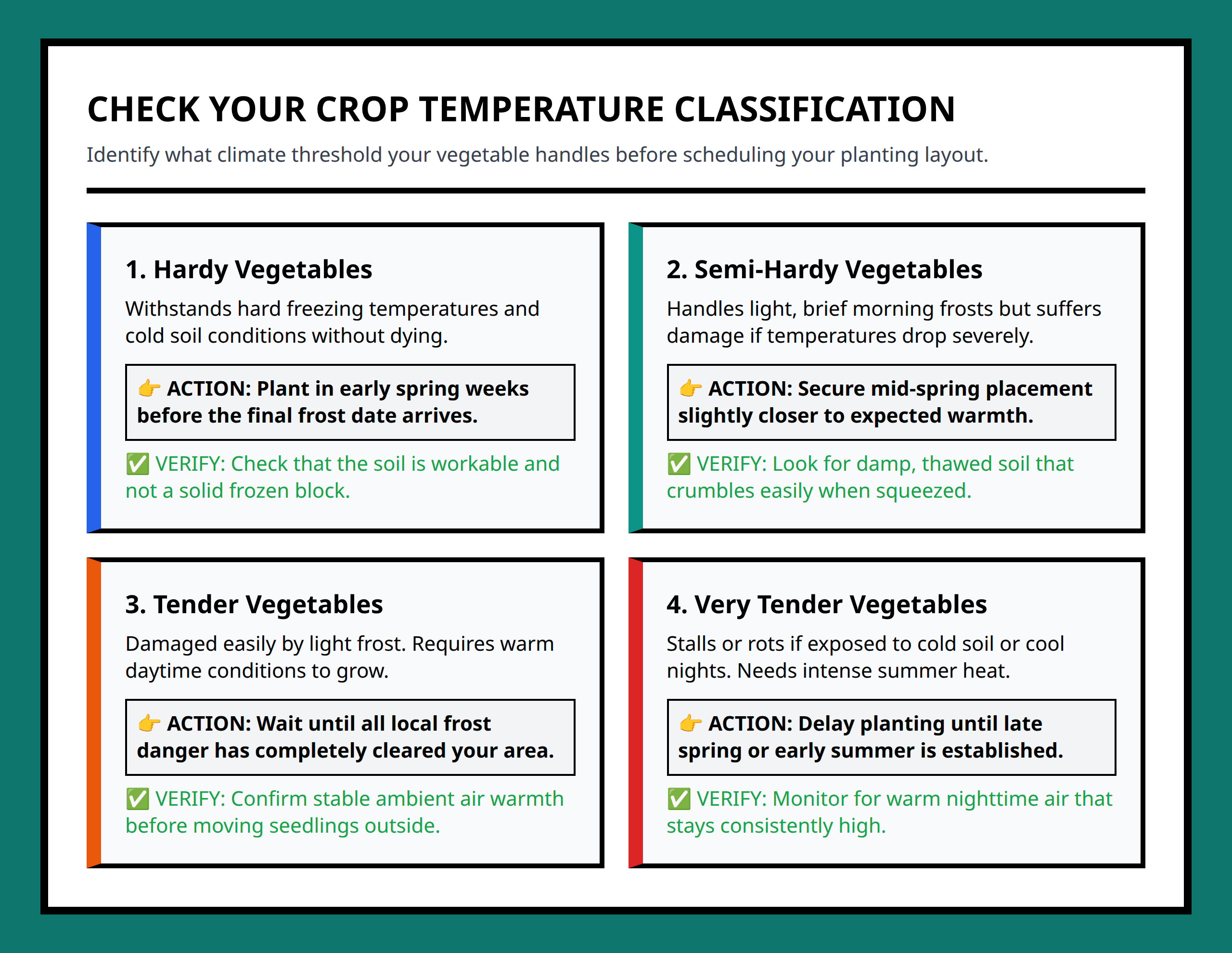
The Four Basic Vegetable Temperature Groups
Vegetables were traditionally grouped according to how they respond to frost, cool weather, and heat.
This system is practical because it helps gardeners understand risk before planting.
1. Very Hardy Crops
Very hardy vegetables tolerate freezing temperatures and can survive repeated frosts. These crops generally grow best during cool conditions and often struggle once temperatures rise sharply.
Examples include:
- onions
- asparagus
- spinach
- peas
- cabbage
- lettuce
These vegetables are often planted first because cold weather does not damage them easily.
I think many beginners plant these crops too late rather than too early. Peas and spinach, for example, usually perform best before summer heat arrives.
Waiting for fully warm weather can shorten their productive season dramatically.
2. Hardy Crops
Hardy vegetables tolerate light frost and cool conditions but may not handle severe freezing as well as the very hardy group.
Examples include:
- beets
- carrots
- celery
- potatoes
- Swiss chard
These crops still prefer relatively cool growing conditions, especially during establishment.
In practical gardening, this means they can usually go into the garden fairly early, though not quite as aggressively as the most frost-tolerant vegetables.
3. Tender Crops
Tender vegetables are damaged by frost and require warmer conditions for healthy growth.
Examples include:
- beans
- sweet corn
- tomatoes
- peppers
- okra
This is the group that causes many spring gardening disasters.
A gardener sees several warm days in April or early May, plants tomatoes and beans enthusiastically, then loses growth after one cold night drops temperatures unexpectedly.
Sometimes the plants survive but remain stunted for weeks afterward.
I would rather plant tender crops slightly late than expose them to cold stress early. Warm-season vegetables usually recover faster from delayed planting than from repeated cold injury.
4. Very Tender Crops
Very tender vegetables require sustained warmth and react badly even to mild chilling conditions.
Examples include:
- cucumbers
- melons
- squash
- pumpkins
- eggplant
These crops depend heavily on warm soil and stable nighttime temperatures.
Planting them too early often leads to weak growth, poor yields, disease vulnerability, or outright failure.
This is one reason some gardens look disappointing for weeks after planting season. The plants are technically alive, but the temperature conditions are still working against them.
Cold Can Hurt Plants Even Without Frost
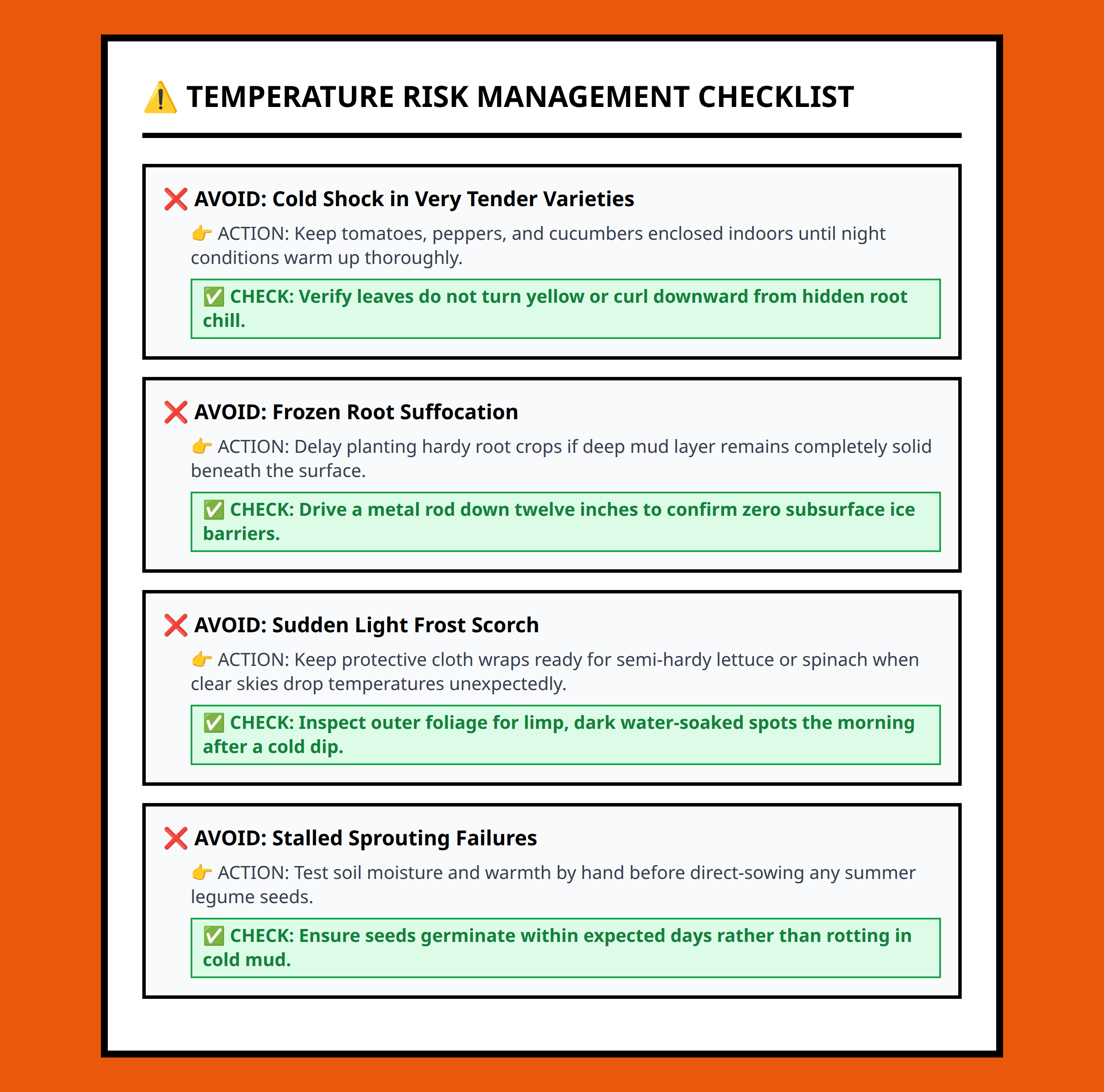
One detail many people miss is that frost is not the only problem.
Some vegetables react poorly to prolonged cool temperatures even when temperatures stay above freezing.
Tomatoes are a good example. A tomato plant may survive chilly weather but stop growing actively, discolor, or struggle to recover normal vigor afterward.
Very tender crops are even more sensitive because cold soil slows root activity and weakens early development.
I think gardeners sometimes focus too much on “last frost date” and not enough on overall temperature stability.
A crop may technically survive cold nights while still losing weeks of productive growth.
That distinction matters because delayed growth affects the entire season afterward.
Heat Creates Problems Too
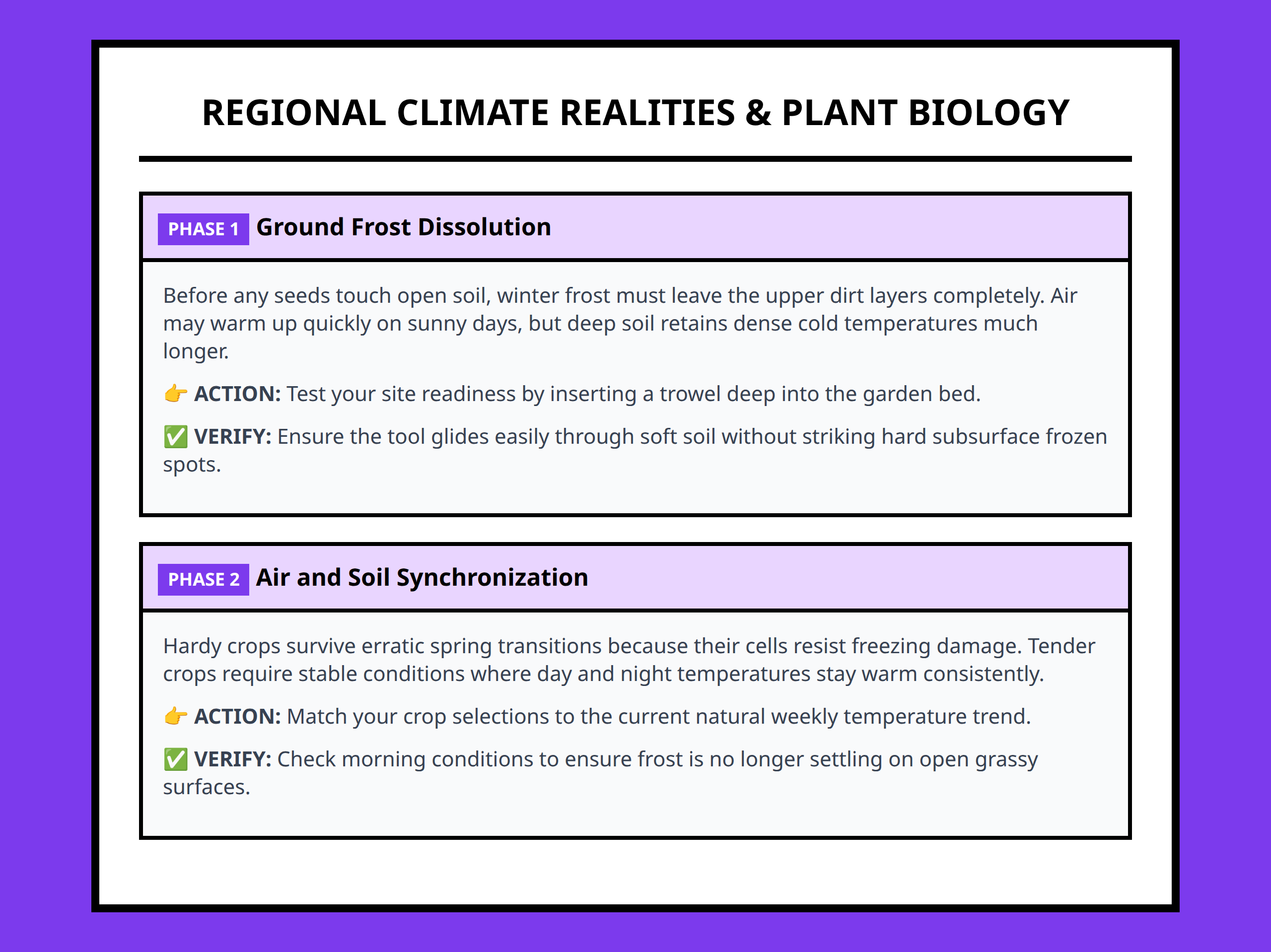
Temperature management is not only about avoiding frost.
Cool-weather vegetables can decline quickly once temperatures rise.
Leafy crops like spinach and lettuce often bolt during hot conditions. Peas may stop producing heavily once sustained heat arrives. Cabbage can struggle under prolonged summer stress.
This creates an important timing lesson.
Many cool-season vegetables are not simply “spring vegetables.” They are crops that need most of their development to happen before intense summer heat arrives.
That is why early planting is often beneficial for hardy vegetables.
I think understanding this changes how gardeners see the growing season. Instead of one long uniform planting window, the season becomes a series of temperature opportunities for different crop groups.
Planting Timing Is Really Risk Management
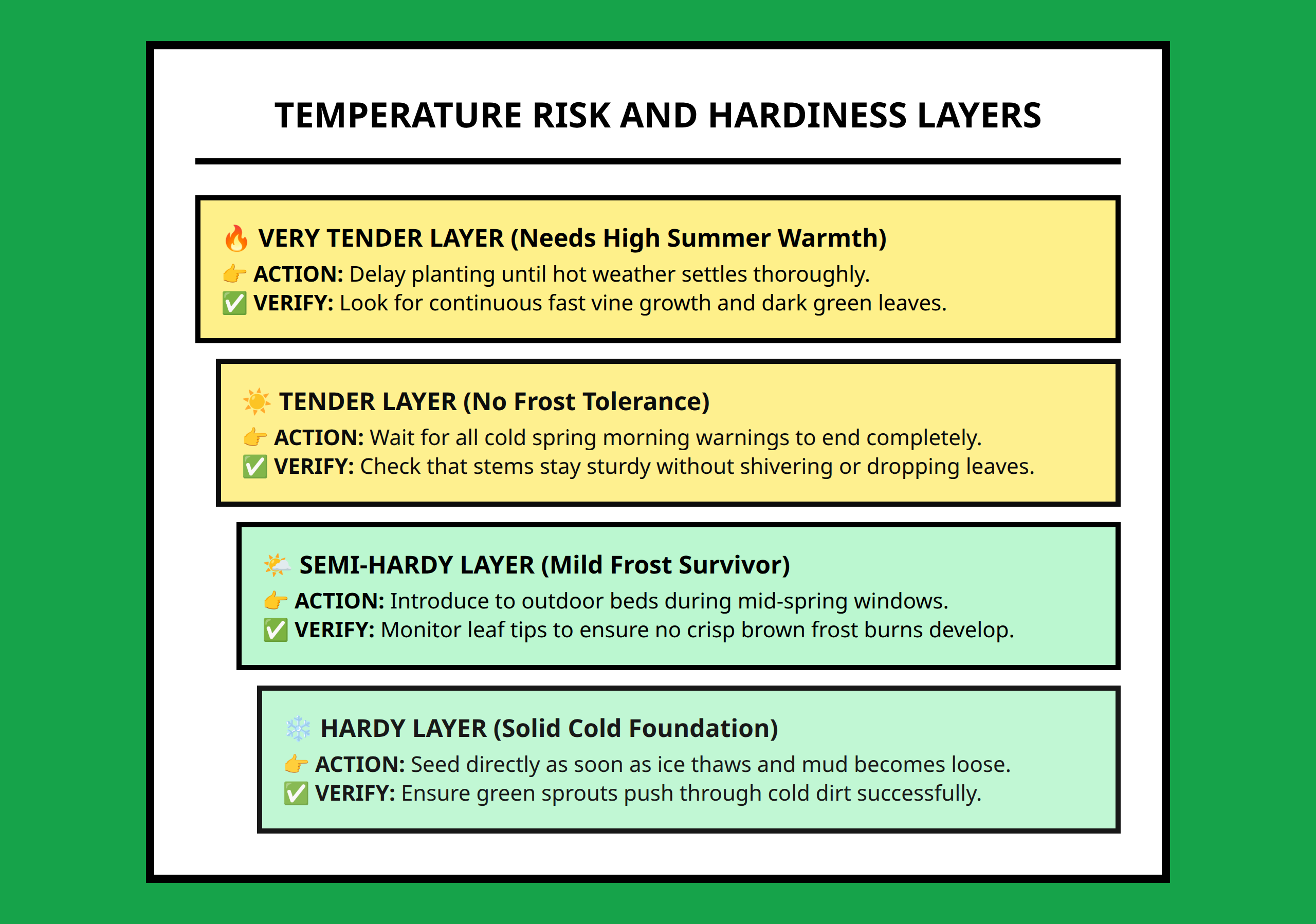
Once gardeners understand temperature groups, planting decisions become less emotional.
You stop reacting to one warm weekend and start paying attention to what the crop actually tolerates.
A gardener planting peas early is taking a very different risk than a gardener planting cucumbers early. The pea crop may tolerate frost easily. The cucumber crop may suffer badly from temperatures that barely affect the gardener personally.
I think this framework makes gardening calmer because it replaces guesswork with biological logic.
Instead of asking, “Is it finally planting season?” the more useful question becomes, “Which temperature group matches current conditions?”
That single question prevents a surprising number of gardening mistakes.
- Hardy crops: Vegetables that tolerate cool weather and light frost without major damage.
- Very hardy crops: Vegetables that can survive freezing temperatures and repeated frosts.
- Tender crops: Vegetables damaged by frost and prolonged cool conditions.
- Very tender crops: Warm-season vegetables that require stable warmth and react poorly even to mild chilling.
- Bolting: A stress response where vegetables rapidly produce flowers and seeds, often reducing food quality.
- Frost: Ice crystals that form during freezing conditions and can damage plant tissues.
References:
- https://www.youtube.com/watch?v=EdWbLWYS38o
- https://www.youtube.com/watch?v=oKPUQ2ztXv8
- https://www.youtube.com/watch?v=47xot51k3WI
- https://www.leafrootfruit.com.au/how-to-plan-your-vegetable-crops-and-plant-them-out/
- https://www.reddit.com/r/vegetablegardening/comments/t63i0w/help_understanding_recommended_growing_temps/
- https://www.botanicgardens.org.au/discover-and-learn/gardening-home/gardening-tips/best-vegetables-grow-beginners
- https://stoneycreekfarmtennessee.com/garden-vegetable-temperatures/
- https://www.allgreen.com.au/garden-advice/vegetable-planting-guide-melbourne
- https://extension.umn.edu/planting-and-growing-guides/planting-vegetable-garden
- https://www.dripworks.com/blog/gardening-understanding-how-and-when-to-plant-vegetables
- https://news.oregonstate.edu/news/let-soil-temperature-guide-you-when-planting-vegetables-0
- https://harvesttotable.com/soil-and-air-temperatures-for-growing-vegetables/
- https://learn.thedallasgarden.com/blog/frost-resistant-vegetables-how-low-can-they-go
