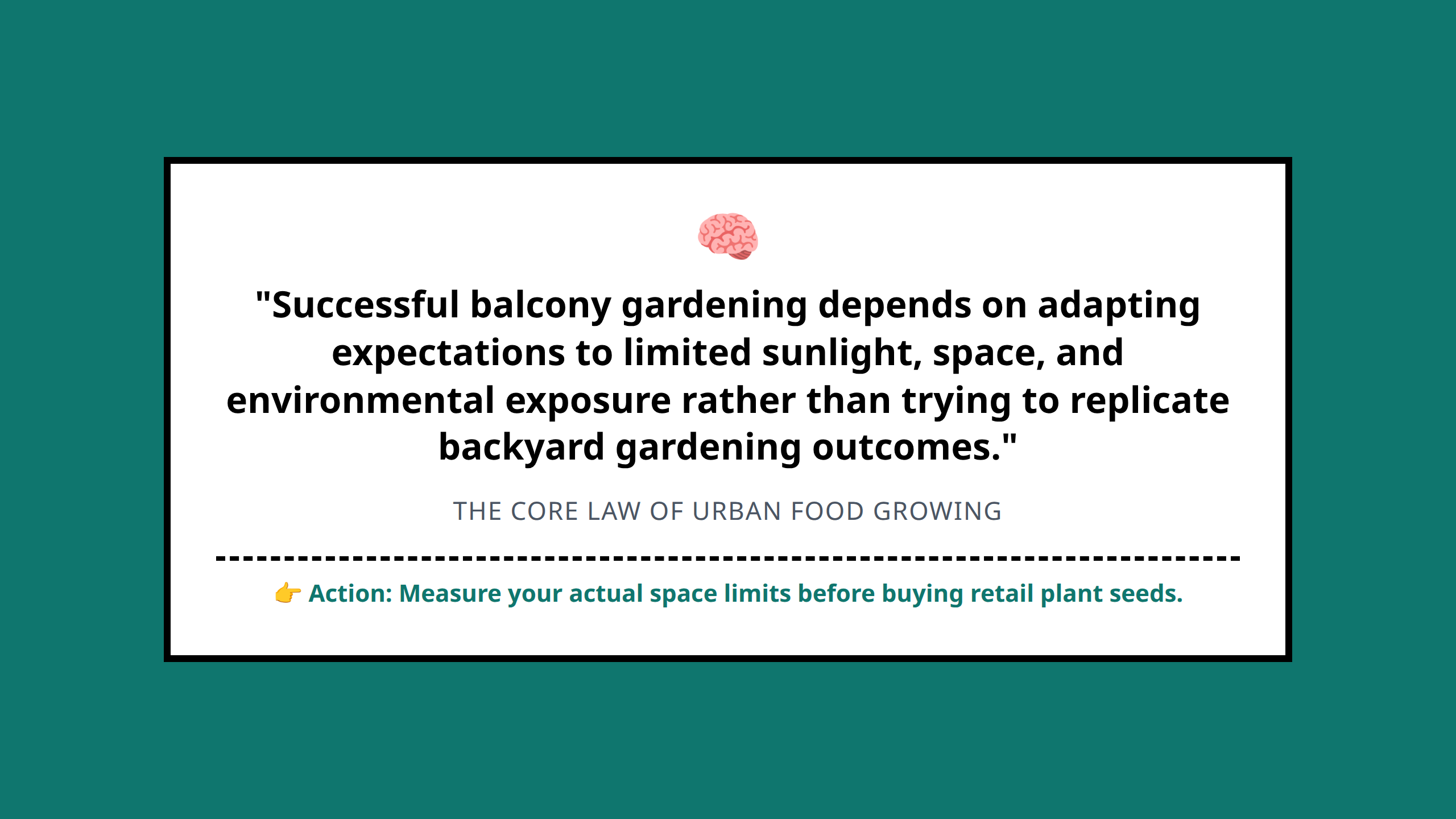
Balcony gardening is rewarding, but it works best when expectations match the space. A balcony can grow herbs, tomatoes, greens, and small harvests, but it usually cannot behave like a backyard garden or provide full food self-sufficiency.
I think the biggest mistake in balcony gardening is not choosing the wrong plant. It is expecting the balcony to do a job it was never built to do.
A balcony is a small, exposed, artificial growing space. It may have strong sun in one corner, deep shade near the floor, wind moving in odd directions, and containers that dry out faster than expected. That does not make gardening impossible. It just means the goal has to be realistic.
Once I stop comparing a balcony to a backyard, the whole project becomes more enjoyable. The question changes from “How much food can I force out of this space?” to “What can this space grow well?”
Takeaways
- A balcony garden is usually not a path to food self-sufficiency.
- Limited sunlight and space shape what can realistically grow.
- Containers create different watering, root, and weight limits than ground soil.
- Wind, building rules, and neighbors can affect the garden as much as plant care does.
- A smaller, well-matched garden is often more satisfying than an ambitious crowded one.
A Balcony Is Not Just a Smaller Yard
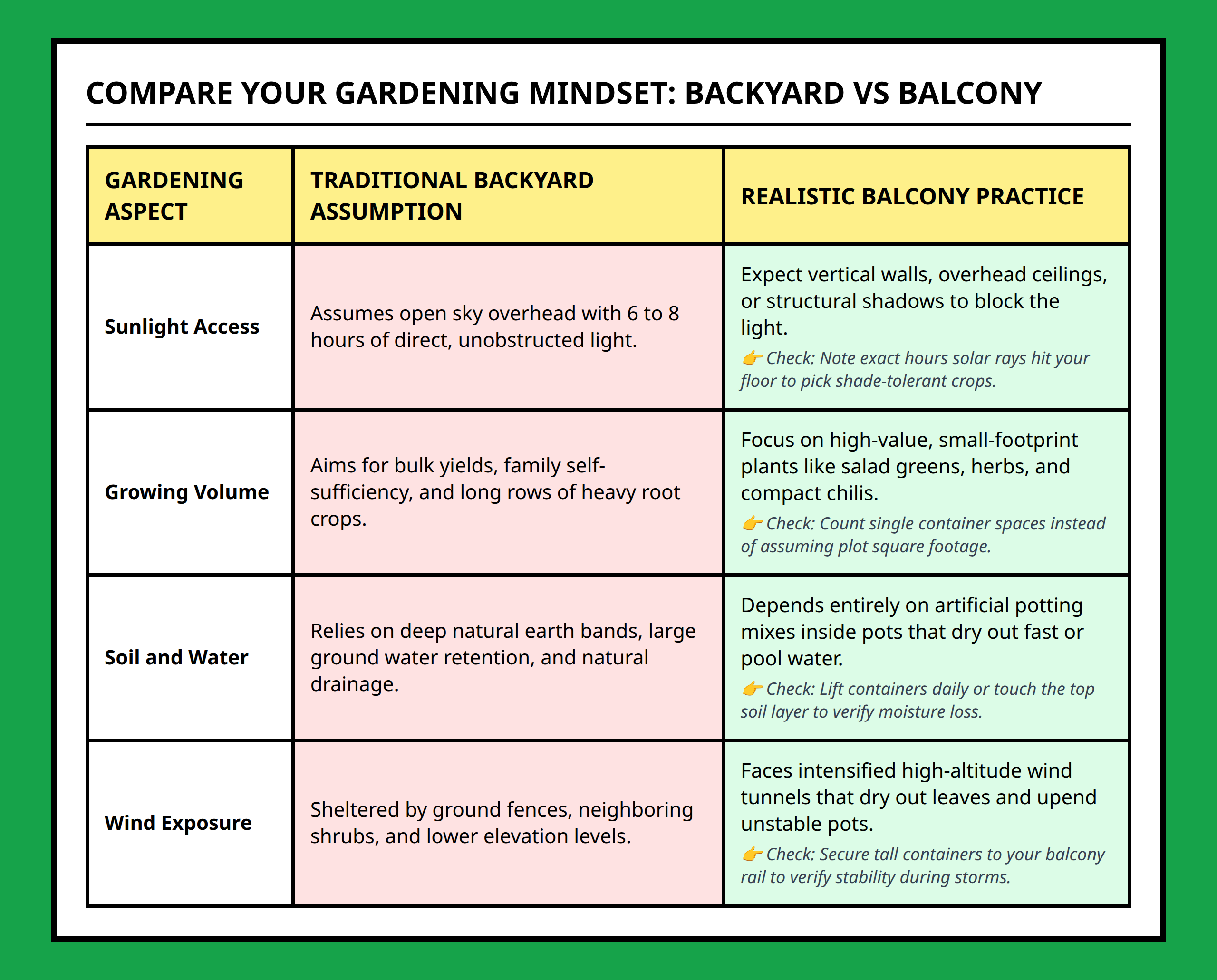
It is tempting to treat balcony gardening as backyard gardening in miniature. I would not start there.
A yard has open ground, deeper soil, more room for roots, and often more stable light exposure. A balcony has containers, walls, railings, overhangs, building shadows, and limited floor area. Those differences change how plants behave.
Vegetables that seem simple in the ground may become demanding in containers. Their roots cannot spread into surrounding soil. Their water supply is limited to the pot. Their sunlight depends on the shape of the building as much as the direction the balcony faces.
That is why copying traditional gardening advice too directly can lead to frustration. The balcony has its own rules.
Self-Sufficiency Is Usually the Wrong Goal
I would be careful with the idea that a balcony garden can replace grocery shopping.
A typical city balcony can grow useful, fresh food, but it is unlikely to make a household self-sufficient. There is simply too little space, soil volume, and sun exposure for that kind of production.
That does not make the garden less valuable.
Fresh herbs, a few juicy tomatoes, a small harvest of greens, or a handful of peppers can still make the space feel alive and useful. The reward is partly the food and partly the experience of turning unused outdoor space into something productive.
A person who expects a full pantry may feel disappointed. A person who expects fresh additions to meals will probably enjoy the garden much more.
Sunlight Sets the Ceiling on What the Balcony Can Do
Most vegetable expectations should begin with sunlight.
Fruit-producing vegetables need strong direct sun to thrive. If a balcony gets only a few hours of direct light, it may still feel bright to a person but fail to support productive vegetables well.
I would not assume that balcony direction tells the whole story.
A south-facing balcony can still be shaded by an overhang. A west-facing balcony may receive strong afternoon light but only in certain sections. Solid half walls can block light from reaching containers near the floor. Nearby buildings can remove sunlight for large parts of the day.
This is where expectation management becomes practical. If the balcony is deeply shaded, the better decision may be to grow ornamental plants, shade-tolerant greenery, or seek another growing space for vegetables.
Trying to force tomatoes into poor light often creates more disappointment than harvest.
Small Space Means Fewer Plants Than You Want
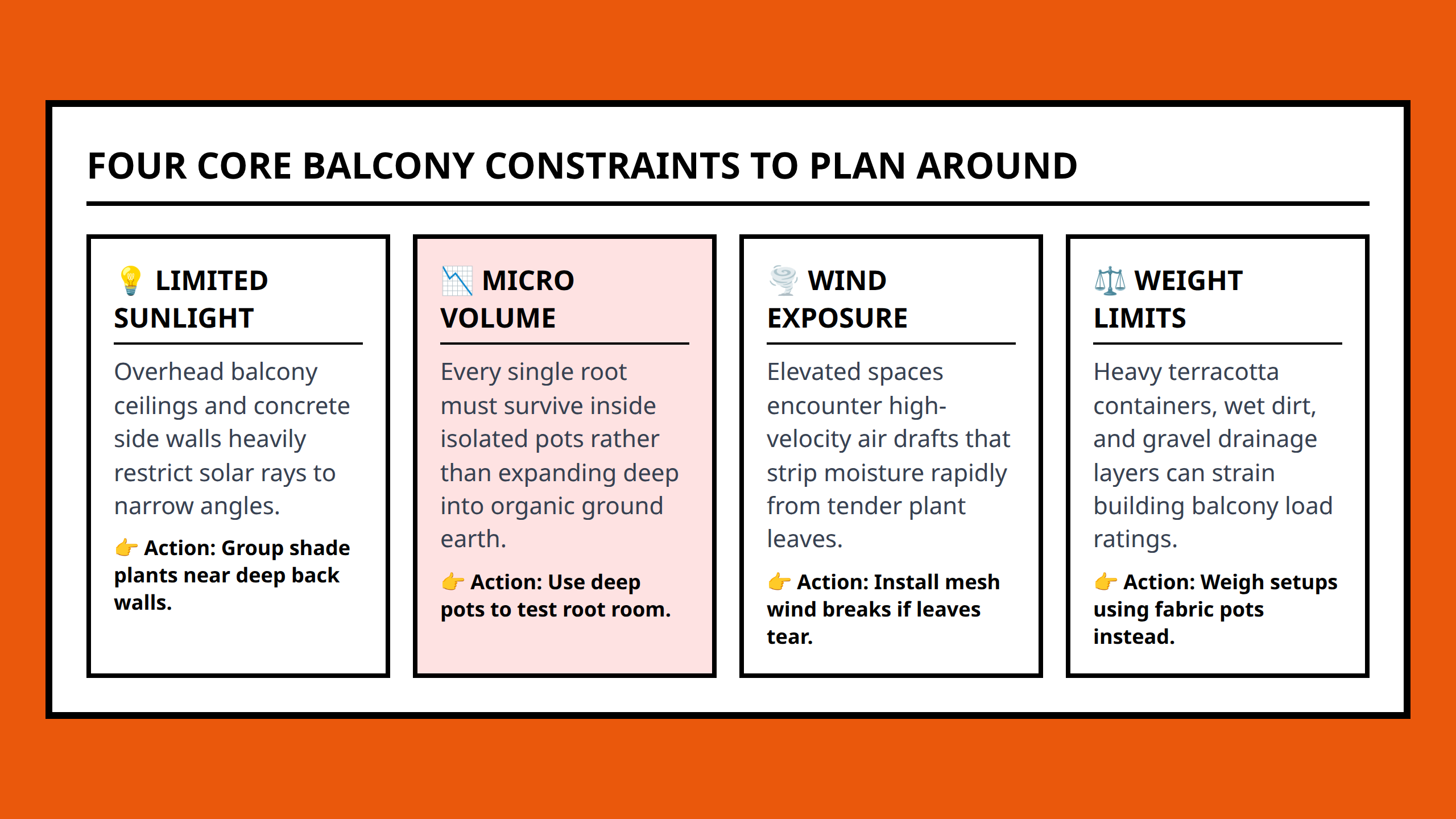
Balcony gardens become crowded quickly.
At the start of the season, small seedlings make the space look roomy. Later, plants spread, stretch, and shade each other. More plants do not always mean more vegetables. In a small space, more plants can mean less sunlight for each one.
I would plan around mature plant size instead of starter size.
A realistic balcony garden may need open space that looks unused at first. That space helps sunlight reach the plants, keeps containers accessible, and prevents the garden from becoming an exhausting tangle by midsummer.
There is a small emotional adjustment here. A less crowded balcony can feel less impressive early on, but it often performs better once plants reach full size.
Containers Add Limits That Ground Gardens Do Not Have
Containers make balcony gardening possible, but they also create the main limits.
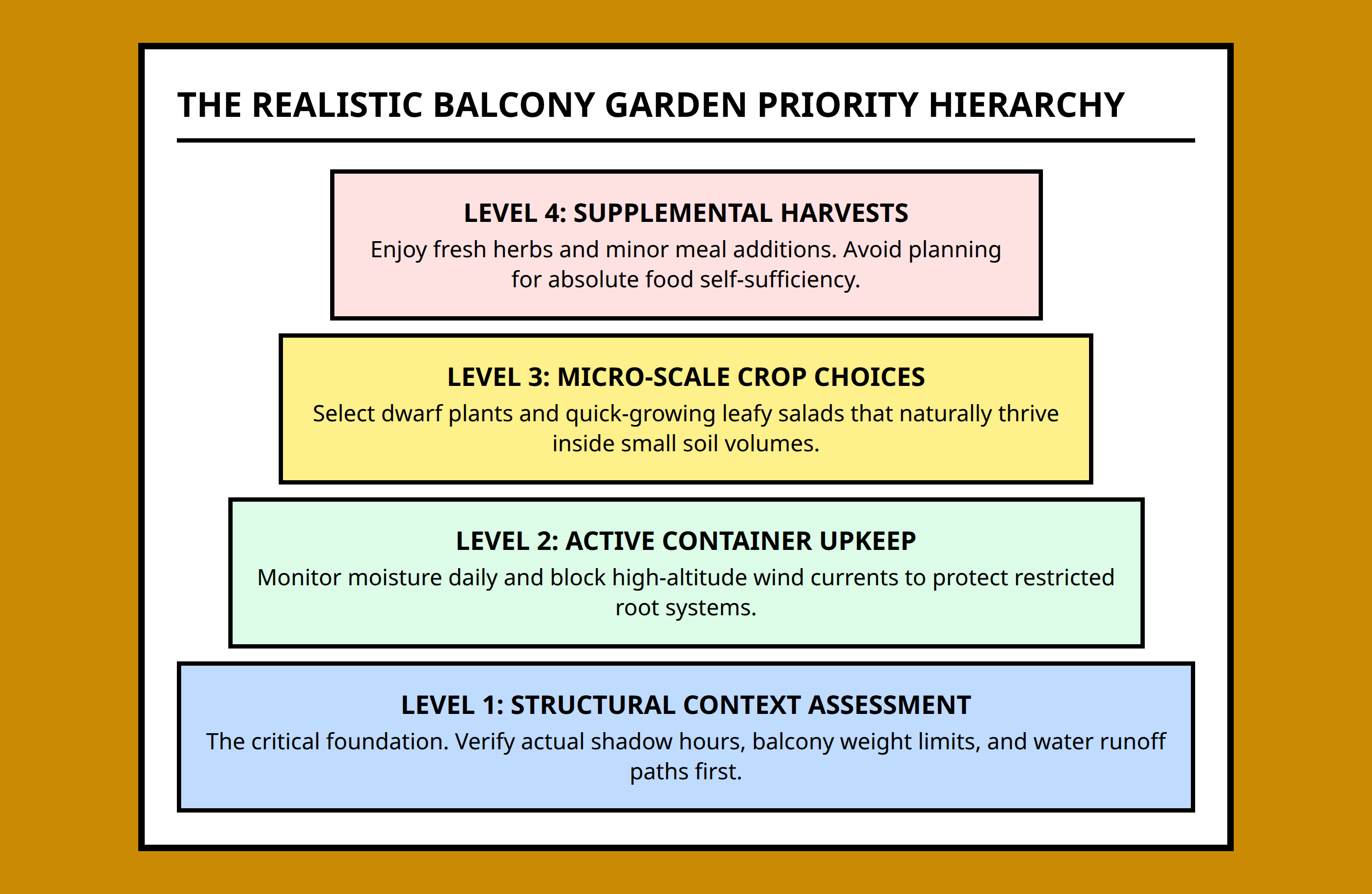
Roots can only grow inside the container. Potting mix dries faster than ground soil. Watering becomes more frequent. Large wet containers become heavy. Poor drainage can damage roots. Small containers can restrict growth.
I would treat container choice as part of the garden’s design, not as an afterthought.
For example, a large tomato plant may need a deeper, heavier container than a small herb. But a balcony can only handle so many large containers before space, weight, and watering demands become difficult.
That is another reason self-sufficiency is unrealistic for most balconies. Each productive plant requires its own root space, water, support, and sun.
The Balcony Environment Can Be Harsh
A balcony may look calm from indoors, but plants experience it differently.
Wind is stronger on many high-rise balconies. Heat builds up around walls and containers. Soil dries quickly. Fewer pollinating insects may visit upper floors. Pests such as aphids, whiteflies, and spider mites can still arrive on new plants and become persistent once established.
I would not blame every struggling plant on personal failure.
Sometimes the balcony itself is the stressor. A plant that fails in a windy, shaded, fast-drying container might have grown well in a ground garden with better soil, more insects, and steadier moisture.
That distinction matters because it helps a gardener adjust the setup instead of simply feeling bad at gardening.
Building Rules and Neighbors Are Part of the Garden
Traditional gardens rarely have upstairs and downstairs neighbors directly affected by watering runoff.
Balcony gardens do.
Condo and apartment rules may limit what residents can place outside, how high plants can grow, what can be visible from the street, or whether structures can be attached to railings and walls. Water dripping onto lower balconies can also create conflict.
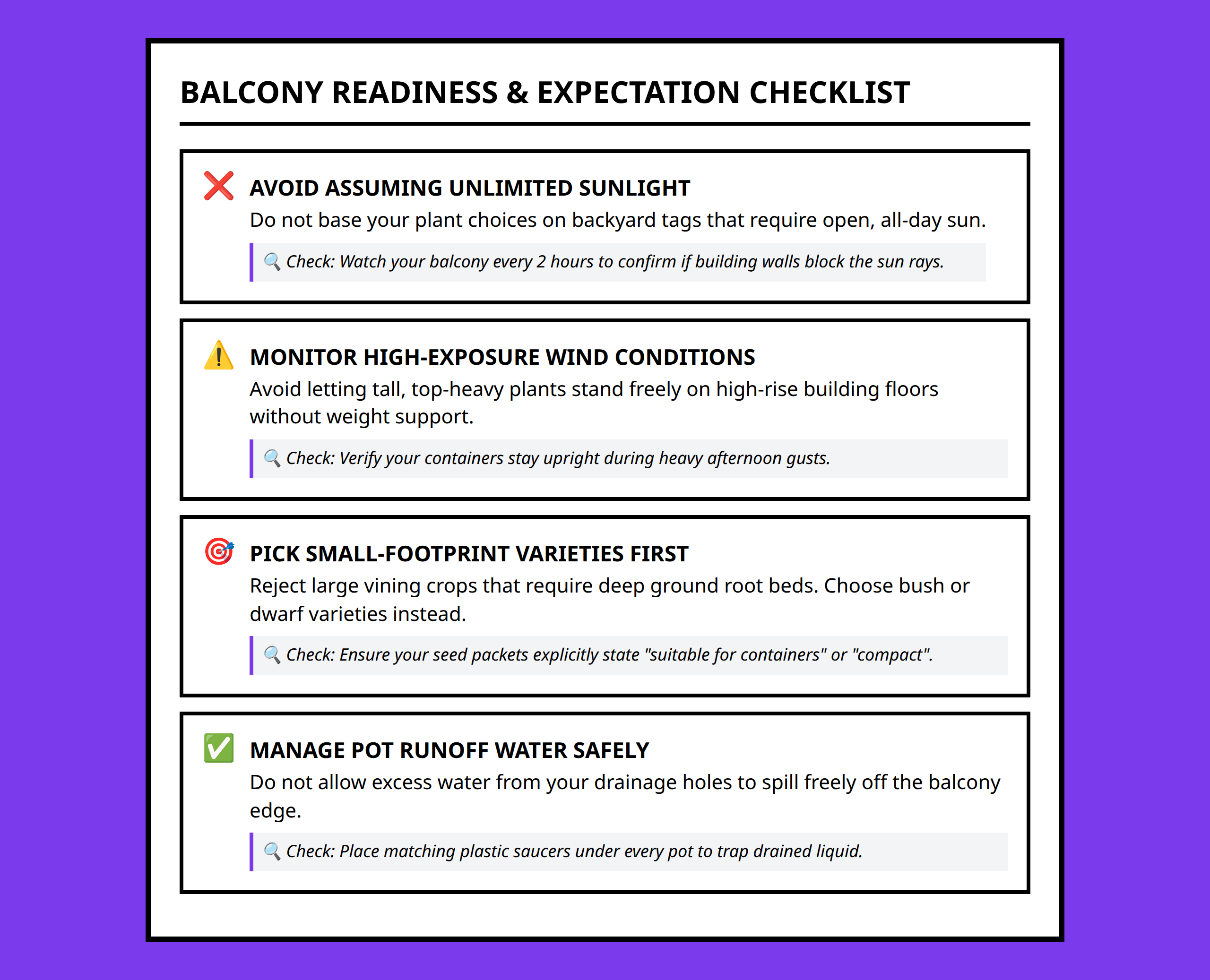
I would check these limits before buying large containers or ambitious plants.
This is not the fun part of gardening, but it is part of the reality. A balcony garden has to work inside a shared building, not just inside a gardener’s imagination.
The Best Goal Is a Garden That Fits the Space
The balcony gardener’s advantage is not scale. It is focus.
A good balcony garden uses a space that might otherwise hold a chair, bicycle, or storage bin and turns it into a small growing area. That is already a meaningful improvement.
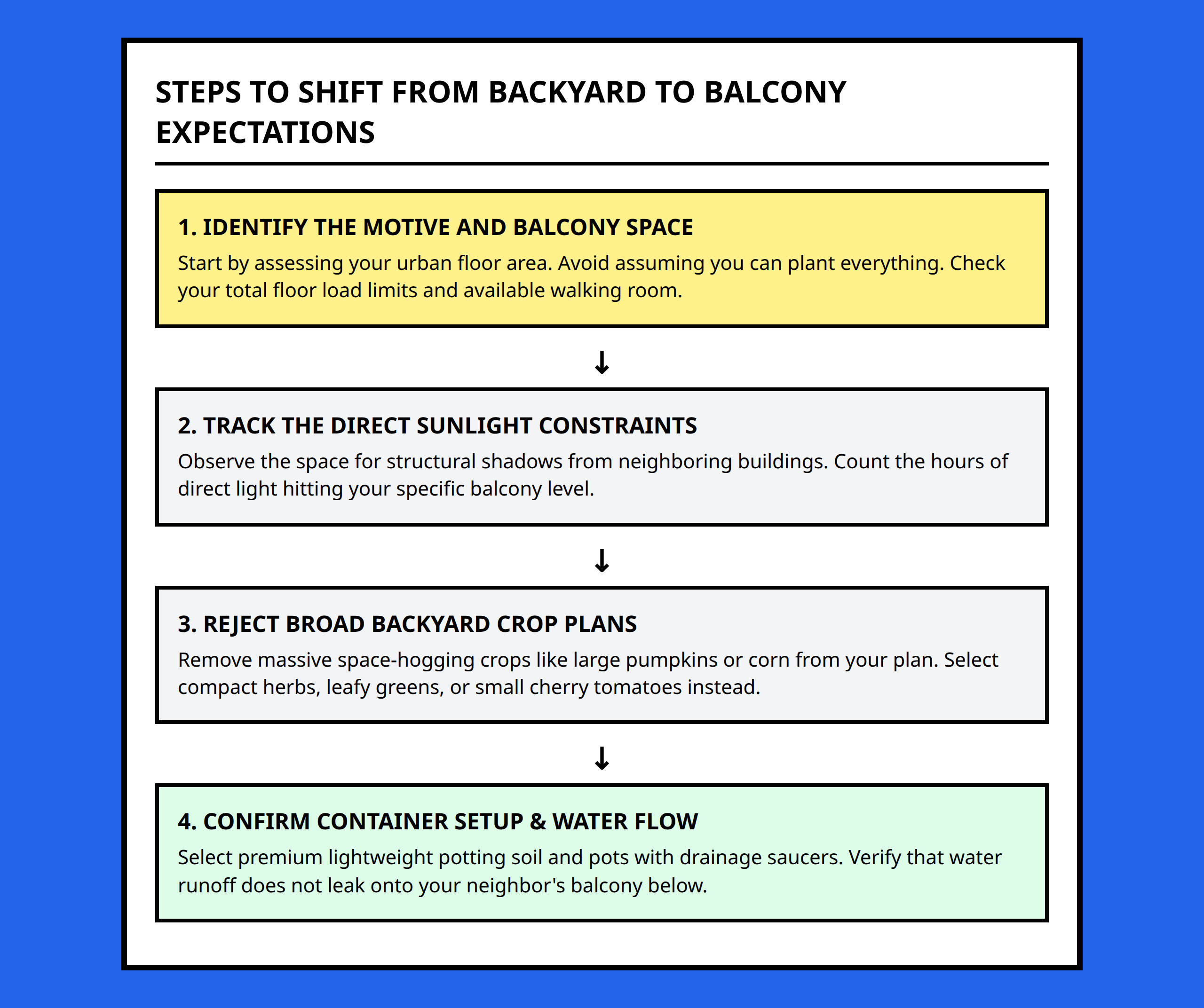
I would aim for a garden that fits the balcony’s sunlight, wind, weight, water access, and maintenance demands.
That may mean one or two strong tomato plants instead of six crowded ones. It may mean herbs near the kitchen door instead of a complicated vegetable setup. It may mean accepting that some crops are better grown somewhere else.
The most satisfying balcony garden is usually not the most ambitious one. It is the one that keeps producing something useful without becoming a constant fight against the space.
Realistic Expectations Make Balcony Gardening More Enjoyable
Once expectations become realistic, balcony gardening feels less like a compromise.
The harvest may be small, but it can still be fresh, personal, and satisfying. The space may be limited, but it can still become greener and more useful. The garden may not feed a household, but it can still change how the balcony is used every day.
I would measure success by whether the garden fits the conditions and gives something back: fresh herbs, a few vegetables, shade, beauty, practice, or simply the pleasure of growing food in a place that would otherwise sit unused.
The practical question is not whether a balcony can act like a backyard. It cannot. The better question is whether the garden you want matches the balcony you actually have.
- Balcony gardening: Growing plants in containers on a balcony instead of in ground soil.
- Container gardening: Growing plants in pots, buckets, or planters where root space and water supply are limited.
- Direct sunlight: Sunlight that reaches plants without being blocked by walls, railings, overhangs, or nearby buildings.
- Self-sufficiency: Producing enough food to meet most or all household needs without relying on outside sources.
- Potting mix: A lightweight growing medium made for containers, designed to hold moisture while allowing drainage and air around roots.
- Runoff: Extra water that drains out of containers after watering and may drip onto surfaces below.
References:
- https://greenagelandscape.com/4-things-you-should-know-about-maintaining-a-thriving-balcony-garden-in-singapore/
- https://www.unsw.edu.au/newsroom/news/2020/04/why-you-need-a-balcony-garden
- https://www.thecorncribgreenhouse.com/basics-of-balcony-gardens/
- https://global.chinadaily.com.cn/a/202205/12/WS627c492ea310fd2b29e5c154.html
- https://blogs.oregonstate.edu/gardenecologylab/2025/09/28/lessons-learned-from-a-case-study-in-urban-agriculture-and-considerations-for-balcony-gardeners/
- https://www.gardenninja.co.uk/how-to-create-a-balcony-garden-the-complete-guide-for-uk-gardeners/
- https://www.thrive.org.uk/get-gardening/getting-started-with-a-balcony-garden
- https://medium.com/@wrameen24/why-balcony-gardening-in-small-spaces-is-essential-for-a-healthy-lifestyle-2023-06a05a336e14
- https://kisaanmitrr.in/blog/terrace-farming-advantages-disadvantages/
- https://www.gardendesign.com/small/balcony-garden.html
- https://www.heartfoundation.org.nz/about-us/news/blogs/how-gardening-nurtures-your-heart
- https://bountifulacres.com/blog/different-types-of-gardens/
