Reusing potting soil can save money in a balcony garden, but old container mix needs help. Peat breaks down, nutrients get used up, mineral salts can build up, and the soil structure usually needs compost, perlite, vermiculite, or fresh mix before planting again.
I would not automatically throw away every container of potting soil at the end of the season. In a balcony garden, that gets expensive fast, and there is usually no convenient yard where old mix can be dumped anyway.
At the same time, I would not treat last year’s potting soil as if nothing changed. A container mix works hard for a full growing season. Roots fill it, plants feed from it, repeated watering changes it, and the material itself slowly breaks down.
The practical answer sits in the middle: reuse some old potting soil, but refresh it before asking another crop to grow in it.
Takeaways
- You do not need to replace all potting soil every season.
- Old root balls should be shaken out so usable mix can be reclaimed.
- Compost helps replace organic matter and nutrients used by last season’s plants.
- Perlite or vermiculite can help lighten old mix that has become dense.
- Replacing part of the old mix helps reduce mineral salt buildup and supports better pH balance.
Old Potting Soil Is Not the Same Mix You Started With
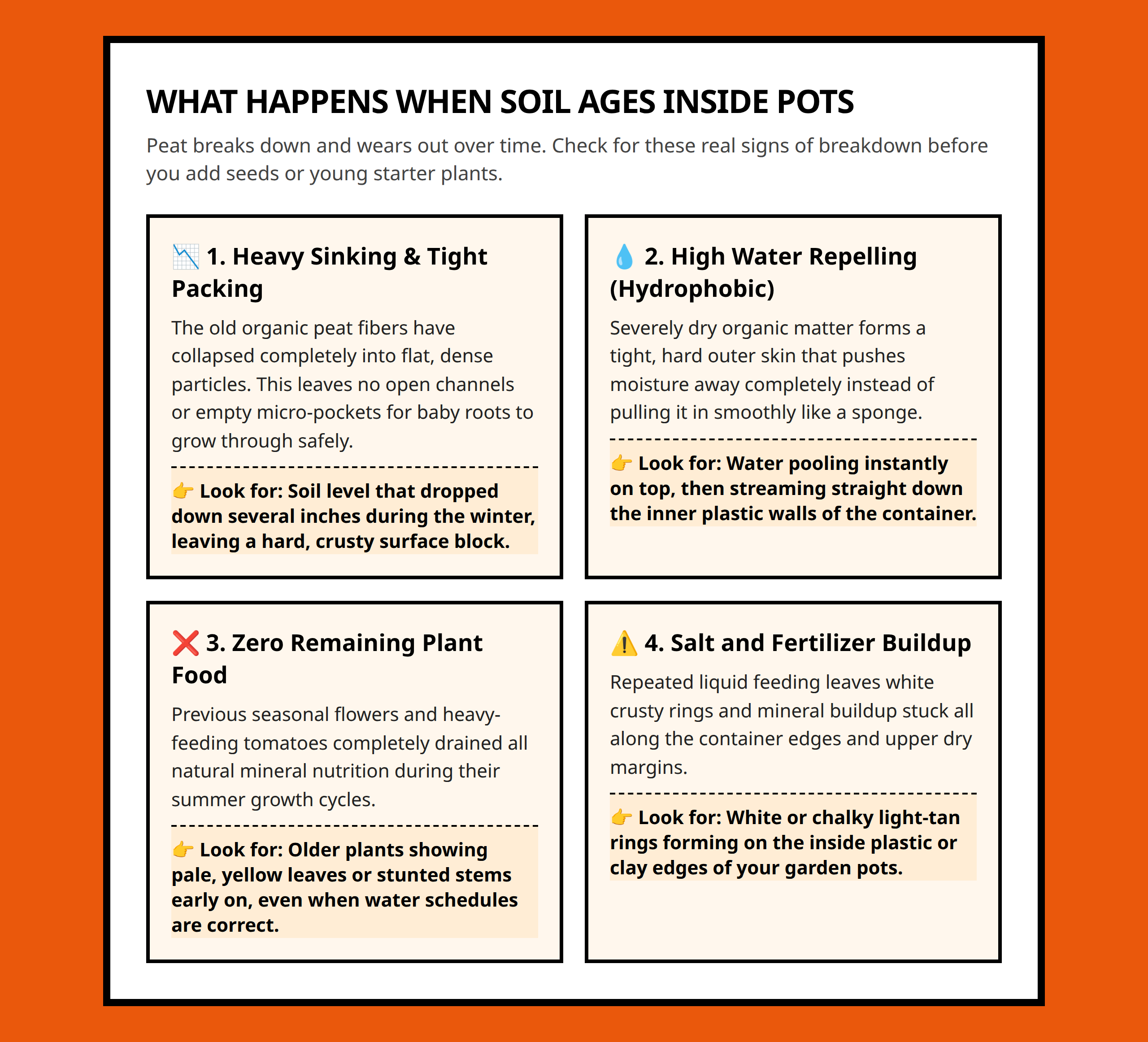
Fresh potting soil is designed to hold moisture, drain well, and leave enough open space for roots to breathe. After a season in a container, that balance changes.
Peat and other organic materials gradually break down. Plants use up part of the organic matter during growth. Roots spread through the container and trap potting mix inside old root balls. Repeated watering also leaves behind mineral salts over time.
I would start by assuming old potting soil is partly useful and partly worn out.
That mindset keeps the process realistic. The goal is not to magically turn exhausted mix back into brand-new soil. The goal is to reclaim the usable portion and rebuild enough structure and nutrition for another season.
Start by Removing Dead Plants and Breaking Apart Root Balls
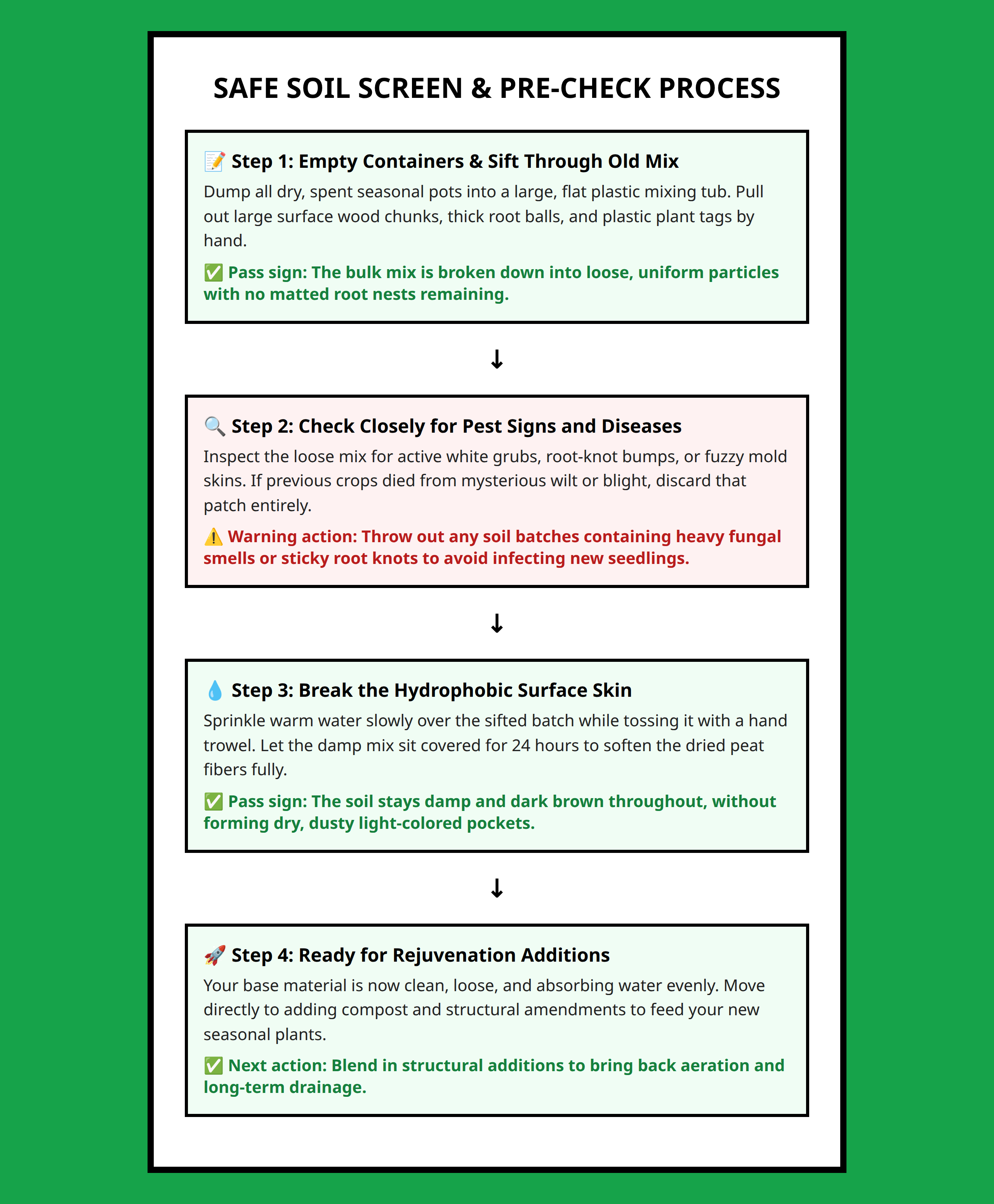
The simplest way to begin is to pull out last season’s dead plants and shake the old root balls into a separate bin or tote.
This step matters because a surprising amount of potting mix stays caught in the roots. If I were working on a balcony, I would do this inside a plastic storage bin so the mess stays contained and the reusable material does not scatter across the floor.
Some old roots will remain mixed in. That is normal. But large root masses should not simply be planted around as if they were fresh soil.
A realistic balcony situation is easy to picture: a gardener finishes the season with several tomato or pepper containers, waits until spring, and then realizes each pot is packed with dry stems and dense roots. Shaking and loosening that material turns the cleanup into a soil-recovery step instead of just a disposal chore.
Do Not Try to Save Every Bit of Old Mix
I would not fight to reclaim every handful of soil caught in old roots.
Some potting mix will be locked inside the root ball, and that is not necessarily worth keeping. Older mix may contain mineral salts from the previous season, and those salts can concentrate as water evaporates and fertilizers are used.
Replacing a good portion of the old mix helps dilute that buildup.
Adding fresh potting soil also helps keep the overall mix closer to an acceptable pH level. In simple terms, pH affects how well plants can use nutrients in the soil. Old container mix can drift away from ideal conditions over time, so fresh material helps reset the balance.
If I were reusing balcony soil, I would see partial replacement as part of the method, not as waste.
Add Compost to Restore What Plants Used Up
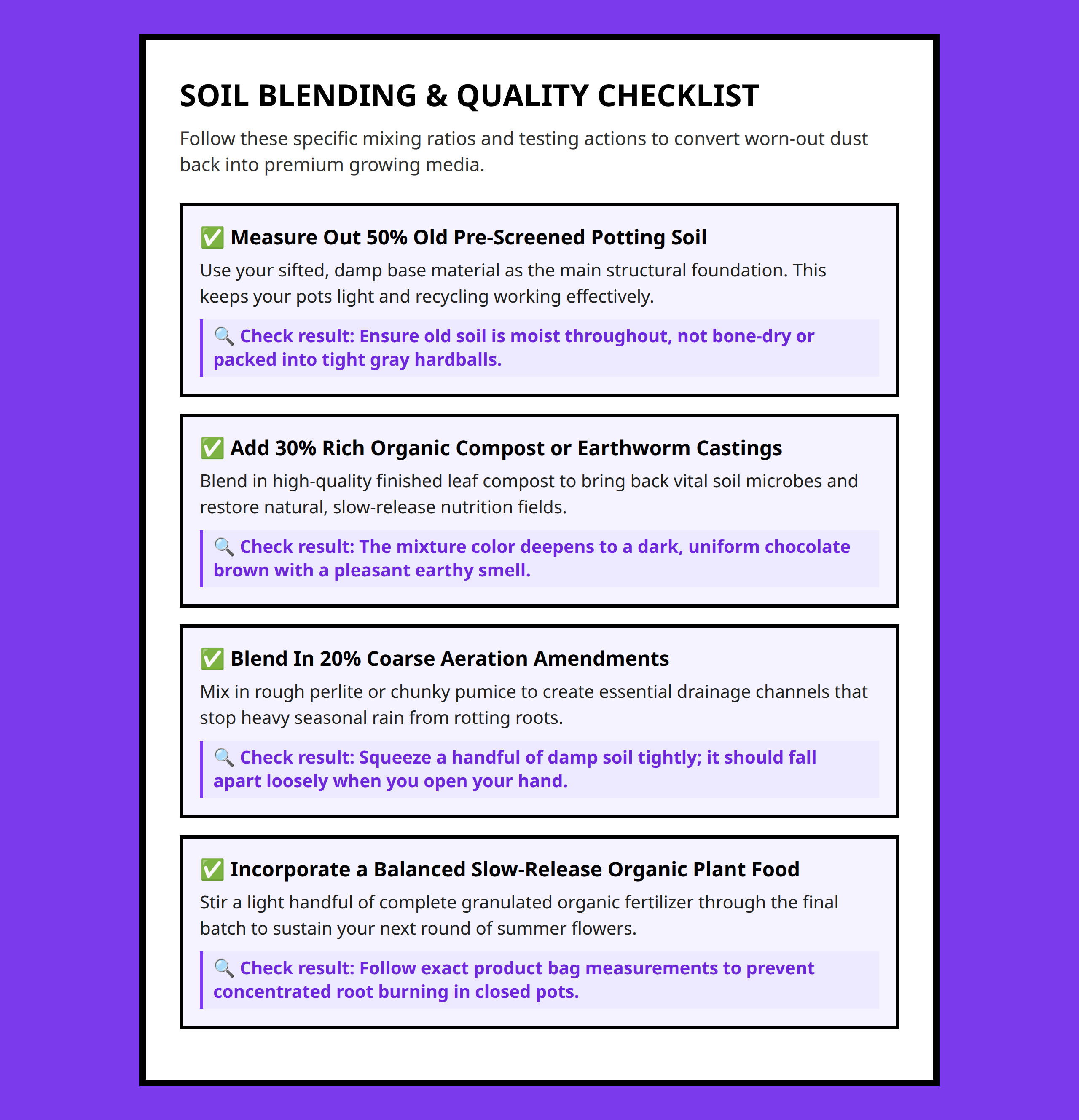
Once the old mix is loosened, compost is the first amendment I would reach for.
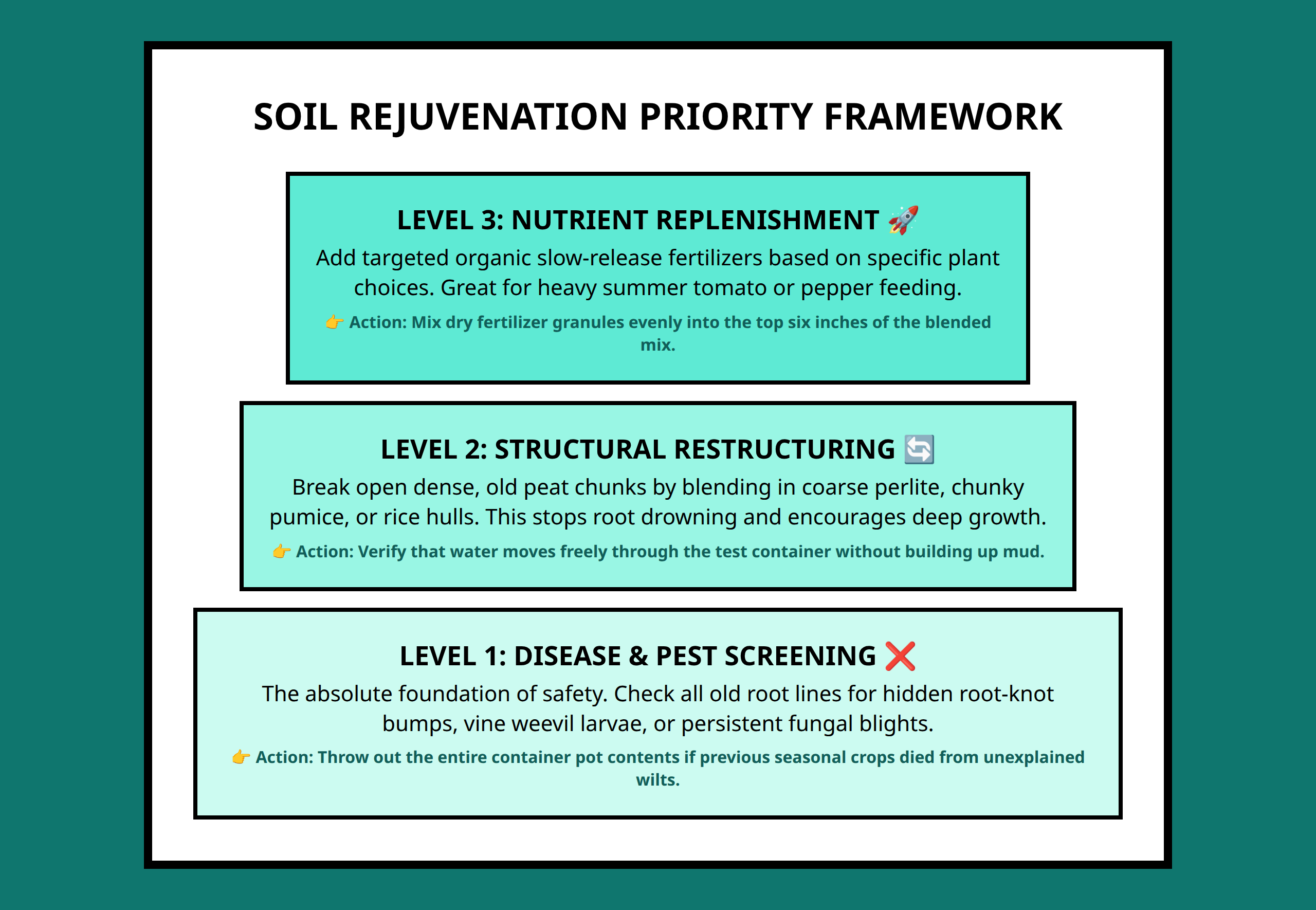
Compost helps replace organic matter and supports nutrient availability. Last season’s plants consumed part of the organic material in the potting soil, so reused mix needs something added back before it can support another crop well.
This does not mean turning the container into pure compost. The reused mix still needs structure, drainage, and airflow.
I would mix compost in as a restoring ingredient, not as the entire growing medium.
That distinction matters on a balcony because containers can become too dense or too wet if the mix loses its light structure. Good reused potting soil should still feel loose enough for roots and water to move through it.
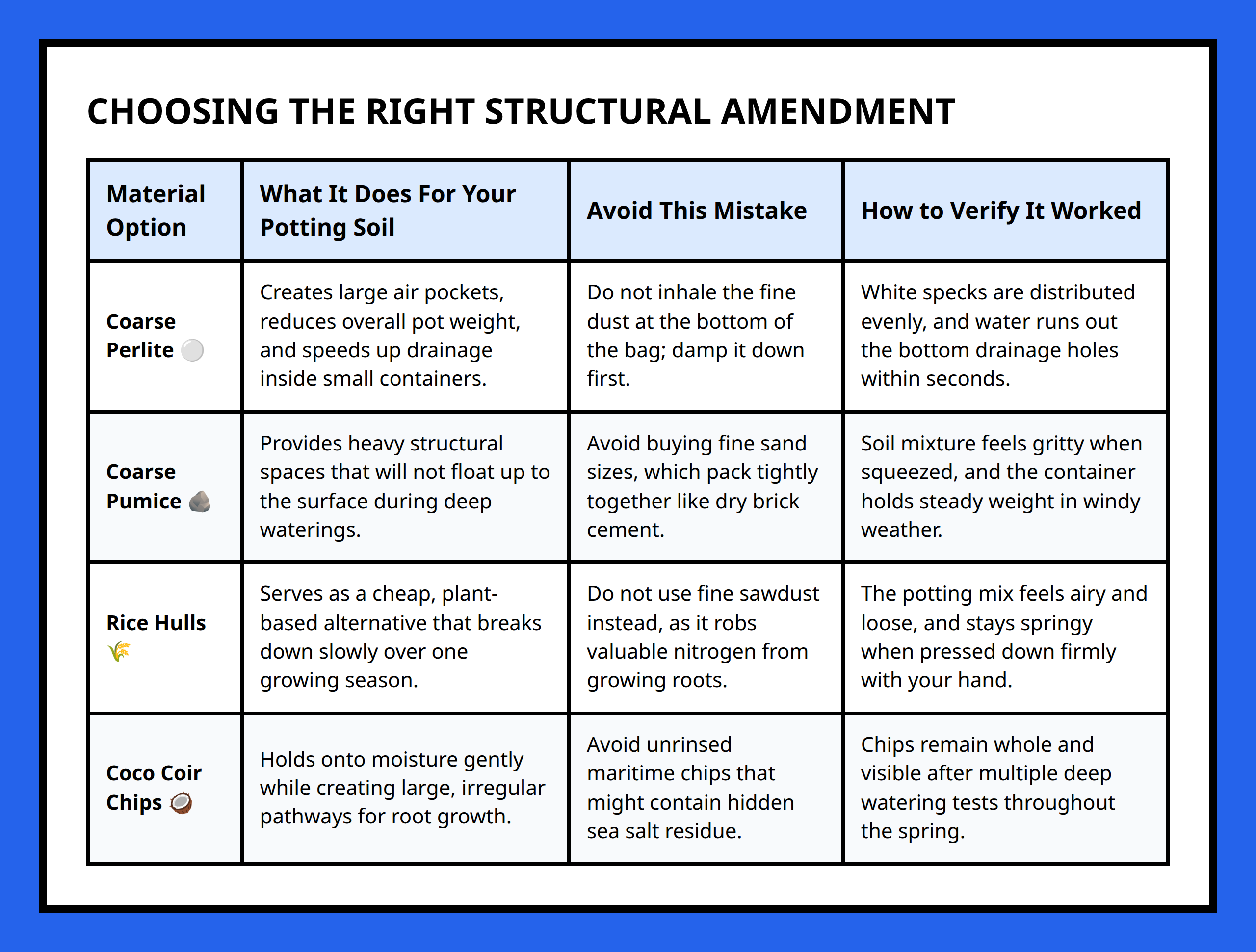
Use Perlite or Vermiculite to Lighten Dense Soil
Old potting soil often feels heavier and more compact than it did when new.
That is where perlite and vermiculite become useful. They help rebuild the physical structure of the mix. Perlite keeps the mix lighter and helps with air space. Vermiculite can help retain moisture while still improving texture.
I would add one or both when the reused mix feels dense, tired, or too fine.
This is especially useful for balcony containers because plant roots need oxygen in a limited space. A compacted mix can hold too much water and not enough air, which makes root growth harder.
The practical test is simple: after mixing, the soil should not feel like a heavy, sticky mass. It should feel loose enough to crumble, hold some moisture, and still drain.
Know the Risk of Carrying Problems Into the New Season
Reusing potting soil is useful, but it is not risk-free.
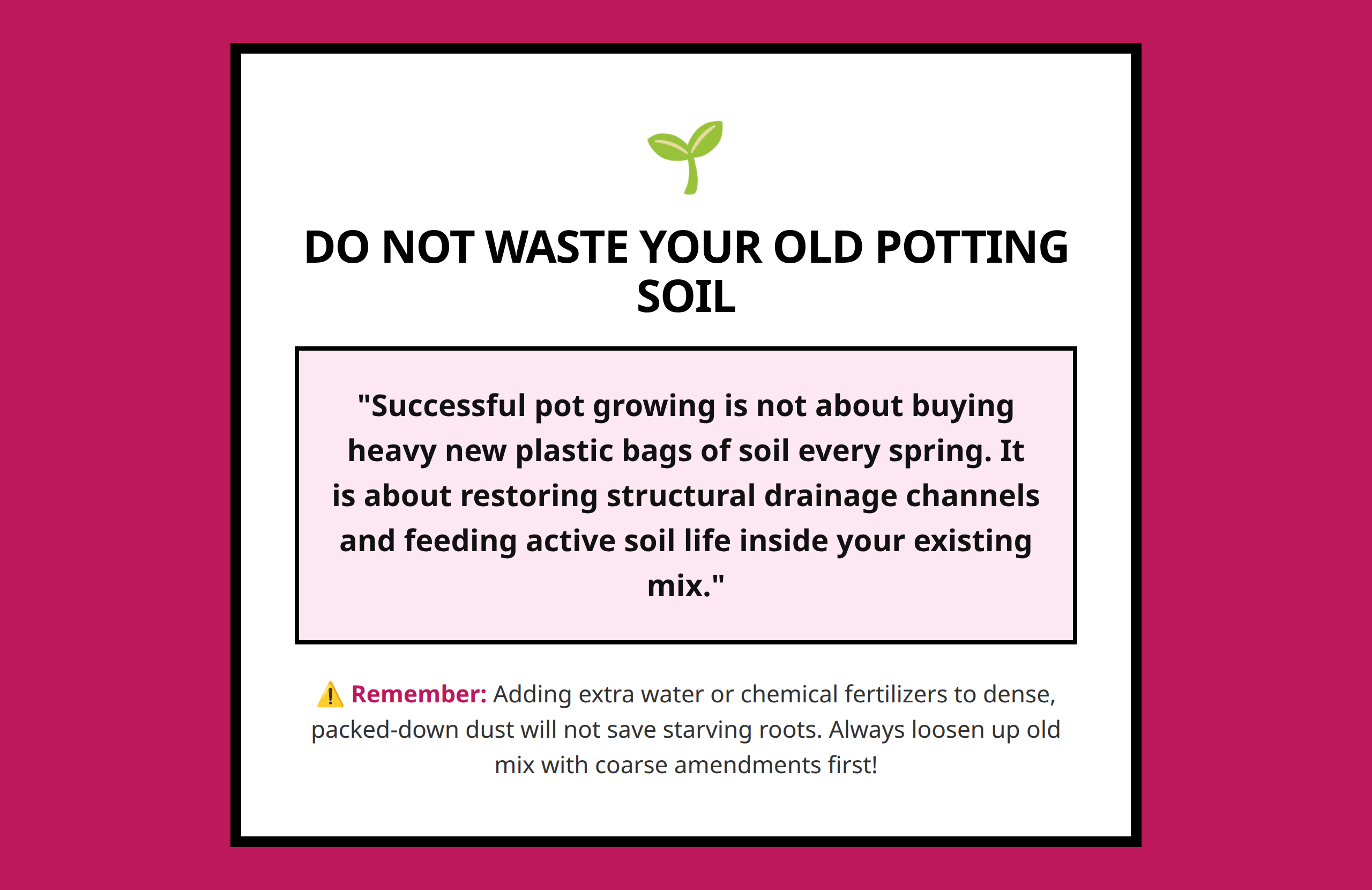
Old mix can carry diseases, spores, or bugs from the previous season. If a container had serious plant problems, I would be cautious about reusing that soil for a new vegetable crop.
Some gardeners sterilize old potting soil by heating it, but that can be a lot of trouble for a balcony gardener.
I would rather make a practical judgment: if last season’s plants were mostly healthy, the mix may be worth refreshing. If the container had persistent pests or disease, starting fresh may be the better choice.
Saving money is useful. Saving a problem and planting into it again is not.
When Starting Fresh Makes More Sense
There are times when I would not reuse potting soil at all.
If the mix smells bad, stays soggy, is badly compacted, or came from plants that struggled with obvious disease or pests, replacing it may be simpler and safer.
Fresh potting soil costs money, but it also reduces uncertainty.
For a small balcony, I would rather buy new mix for a few important containers than risk losing an entire growing season because I tried to save a worn-out batch of soil.
The decision does not have to be all or nothing. Reclaiming half the old soil and replacing the rest with fresh mix is often a practical middle ground.
A Simple Way to Refresh Balcony Potting Soil
If I were refreshing old balcony potting soil, I would keep the process simple.
- Empty the container into a bin: This keeps the mess controlled in a small balcony space.
- Remove dead stems and large root masses: Shake loose any usable potting mix from the roots.
- Decide how much old mix is worth keeping: Do not force yourself to save every bit.
- Add compost: Use it to restore organic matter and nutrient value.
- Add perlite or vermiculite if needed: Use these to lighten the mix and improve structure.
- Blend in fresh potting soil: This helps dilute mineral salts and improve the overall balance.
- Check the texture: The finished mix should feel loose, not dense or muddy.
This is not a lab process. It is a practical maintenance routine for container gardening.
The main thing I would avoid is treating old potting soil as if it only needs to be stirred once and reused unchanged.
Reused Soil Should Be Managed, Not Trusted Blindly
Reusing potting soil works best when the gardener stays realistic about what has changed inside the container.
The old mix has lost structure. Some organic material has broken down. Plants have used part of its value. Salts may have built up. Roots may have trapped soil that is not worth saving.
Once I see reused potting soil as something to rebuild instead of something to preserve perfectly, the process becomes much easier.
The question is not, “Can I reuse this soil?” The better question is, “What does this old mix need before I ask plants to grow in it again?”
- Potting soil: A growing mix designed for containers. It is usually lighter and better draining than normal garden soil.
- Peat: A common potting soil ingredient that holds moisture but breaks down over time.
- Compost: Decomposed organic matter that adds nutrients and improves the value of potting mix.
- Perlite: A lightweight white material added to potting mixes to improve air space and drainage.
- Vermiculite: A lightweight mineral material that helps hold water and nutrients while improving soil texture.
- Mineral salts: Leftover dissolved minerals that can build up in container soil after repeated watering and fertilizing.
- pH level: A measure of how acidic or alkaline the soil is, which affects how easily plants can use nutrients.
References:
- https://www.youtube.com/watch?v=SXXNkY6UW4M
- https://www.youtube.com/watch?v=nhMMgtQTEJU
- https://www.youtube.com/watch?v=aNQOyk8XywQ
- https://www.youtube.com/watch?v=0vo9F3r2Tco
- https://www.growveg.com.au/guides/nifty-thrifty-ways-to-reuse-potting-compost/
- https://thegourmanticgarden.com/how-to-reuse-potting-mix-safely/
- https://www.reddit.com/r/containergardening/comments/1azspqe/can_i_reuse_old_potting_soil/
- https://www.reddit.com/r/vegetablegardening/comments/15z8wwl/urban_balcony_gardening_strategies_for_reusing/
- https://www.reddit.com/r/vegetablegardening/comments/15z8wwl/urban_balcony_gardening_strategies_for_reusing/jxfn72w/
- https://www.reddit.com/r/containergardening/comments/1iqs015/best_way_to_reuse_soil/
- https://www.gardeners.com/blogs/soils-compost-articles/recharge-old-soil-8884
- https://themicrogardener.com/frugal-gardening-re-using-old-potting-mix/
- https://www.bhg.com/gardening/yard/soil/how-to-reuse-potting-soil/
- https://www.reddit.com/r/containergardening/comments/1azspqe/can_i_reuse_old_potting_soil/ks3ynm2/
- https://www.reddit.com/r/containergardening/comments/1azspqe/can_i_reuse_old_potting_soil/ks3b6h4/
- https://www.reddit.com/r/containergardening/comments/1azspqe/can_i_reuse_old_potting_soil/ks3ldy4/
- https://www.provenwinners.com/learn/dirt-dirt-potting-soil
- https://www.abc.net.au/gardening/how-to/recycling-potting-mix/104991834
