Wind does much more than shake plants around on a balcony. It changes how quickly containers dry, how stems develop, how pollination works, and even whether plants can stay physically stable in exposed urban spaces.
Most beginner gardeners worry about sunlight first. That makes sense because vegetables need light to grow. But once a balcony rises several floors above ground level, I think wind quietly becomes one of the most important forces shaping the entire garden.
What surprised me most when looking closely at balcony growing conditions is how many problems trace back to airflow. Plants dry out faster, leaves become damaged, containers tip more easily, and growth patterns change even when sunlight and watering seem reasonable.
A windy balcony is not just a normal garden with extra breeze. It behaves like a different environment altogether.
Takeaways
- Wind increases water loss from both plants and containers.
- Building height and structure can intensify airflow unexpectedly.
- Different parts of the same balcony may experience very different wind exposure.
- Strong wind weakens plant stability and damages tender growth.
- Careful plant placement often matters more than adding more containers.
Why Balcony Wind Behaves Differently From Ground-Level Wind
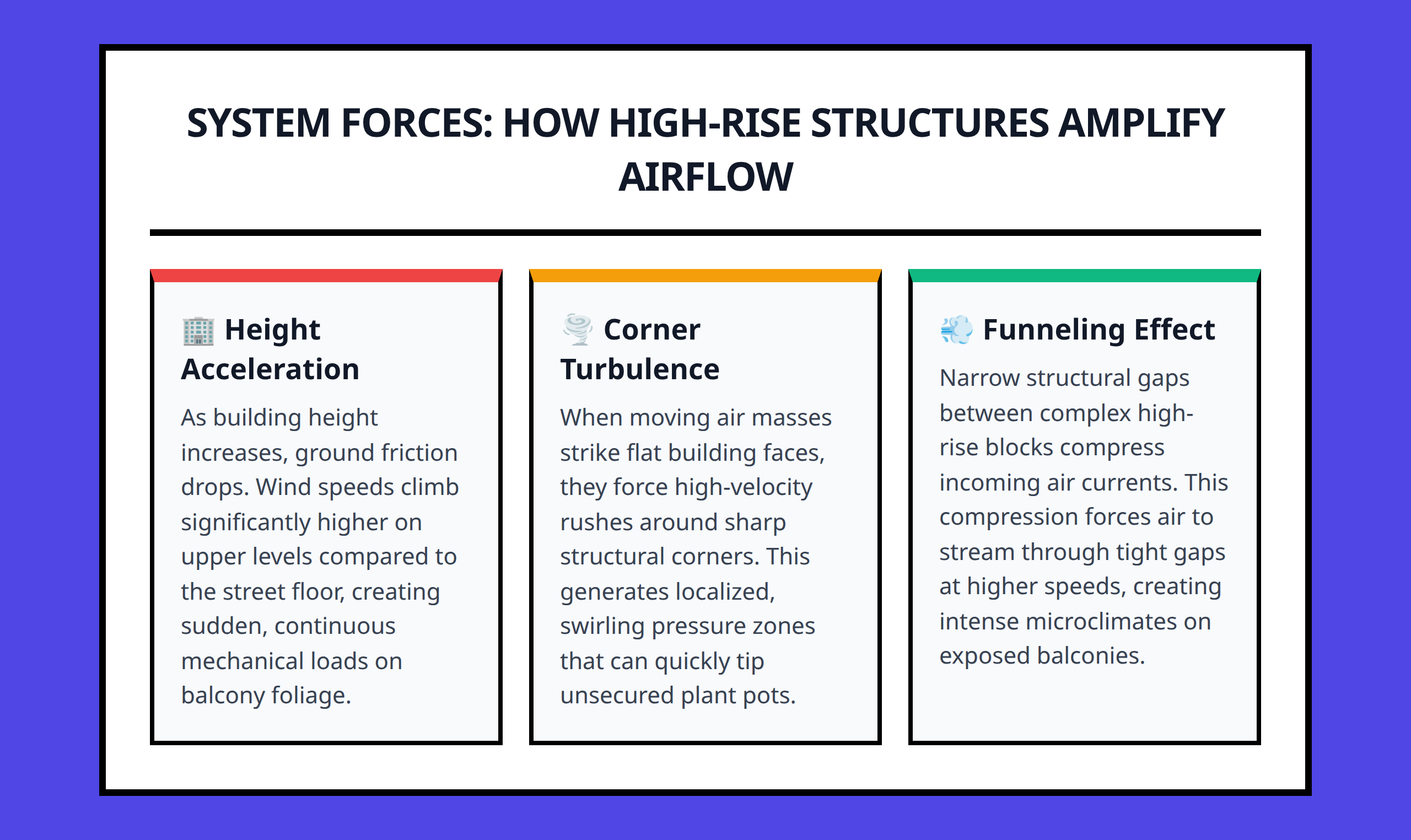
Wind around apartment buildings rarely moves in smooth, predictable patterns.
Buildings redirect air upward, sideways, and around corners. Open balcony edges create acceleration zones where gusts suddenly become stronger. Narrow spaces between buildings can funnel airflow into concentrated streams.
I wouldn’t assume a balcony experiences “normal outdoor wind” just because weather reports mention mild conditions.
On higher floors especially, the balcony itself becomes part of a larger airflow system created by surrounding architecture.
That’s why two balconies in the same building may behave completely differently. One may stay relatively sheltered while another gets hammered every afternoon by redirected wind moving around the building corner.
Even within a single balcony, conditions change by location. One side may remain calm near the wall while the outer edge experiences constant movement.
I think many gardening frustrations start because people treat the balcony as one consistent environment when it’s actually made up of several smaller wind zones.
Wind Changes How Plants Use Water
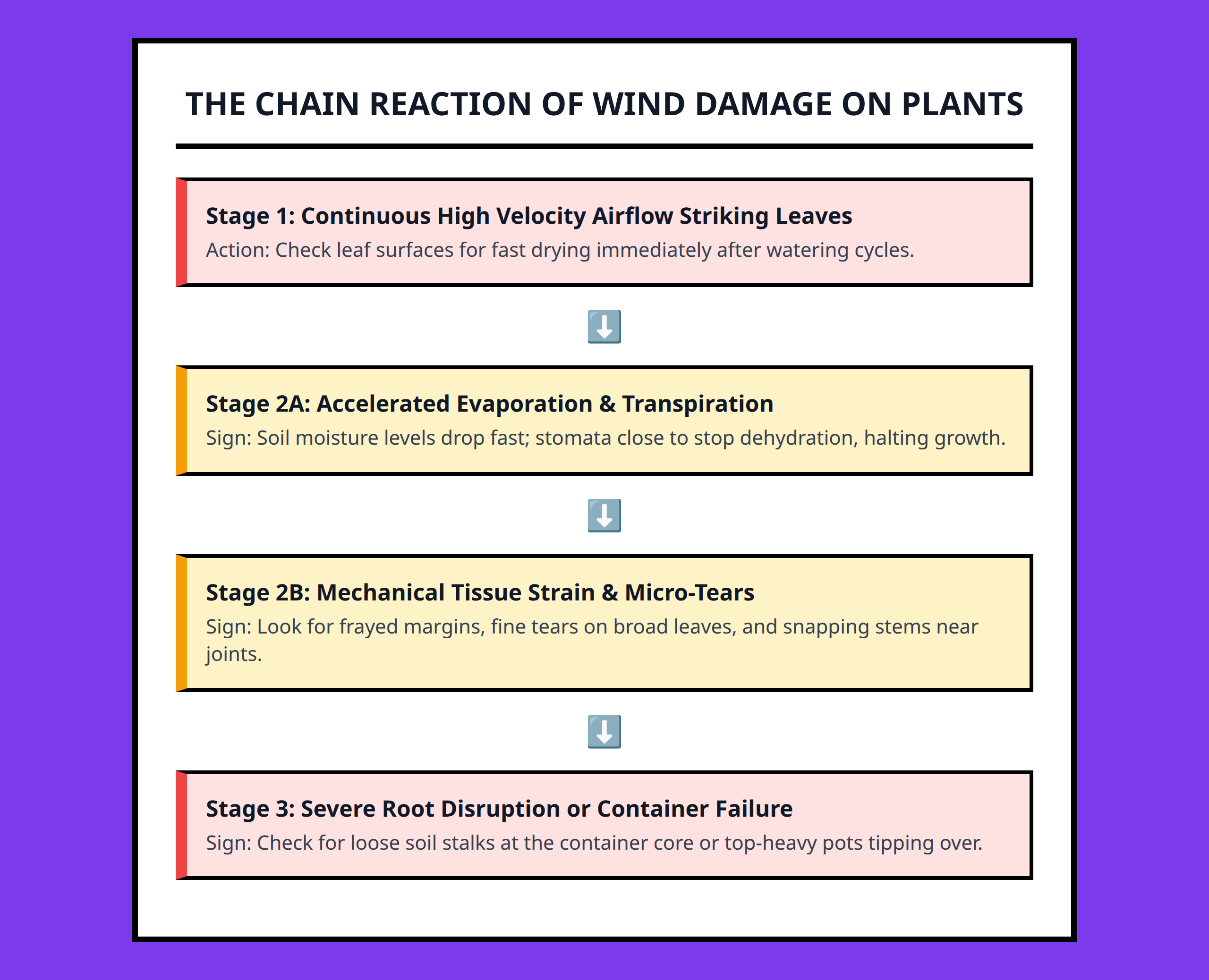
One of the biggest hidden effects of wind is moisture loss.
Plants naturally release water through their leaves during normal growth. Wind speeds up that process because moving air removes humidity surrounding the leaf surface.
At the same time, containers themselves dry faster.
That combination creates stress quickly, especially during warm weather.
A balcony gardener may water thoroughly in the morning and still find plants drooping by late afternoon. The assumption is often that the weather is unusually hot. In reality, constant airflow may be pulling moisture away from both soil and leaves all day long.
I’d pay close attention to how quickly containers dry in exposed areas compared to protected corners.
The difference can be dramatic even within a few feet.
Wind exposure also changes watering consistency. Containers facing stronger airflow may need water significantly sooner than nearby containers holding the same type of plant.
That’s one reason balcony gardens often feel unpredictable to beginners.
Wind Damages Plants Gradually, Not Just During Storms
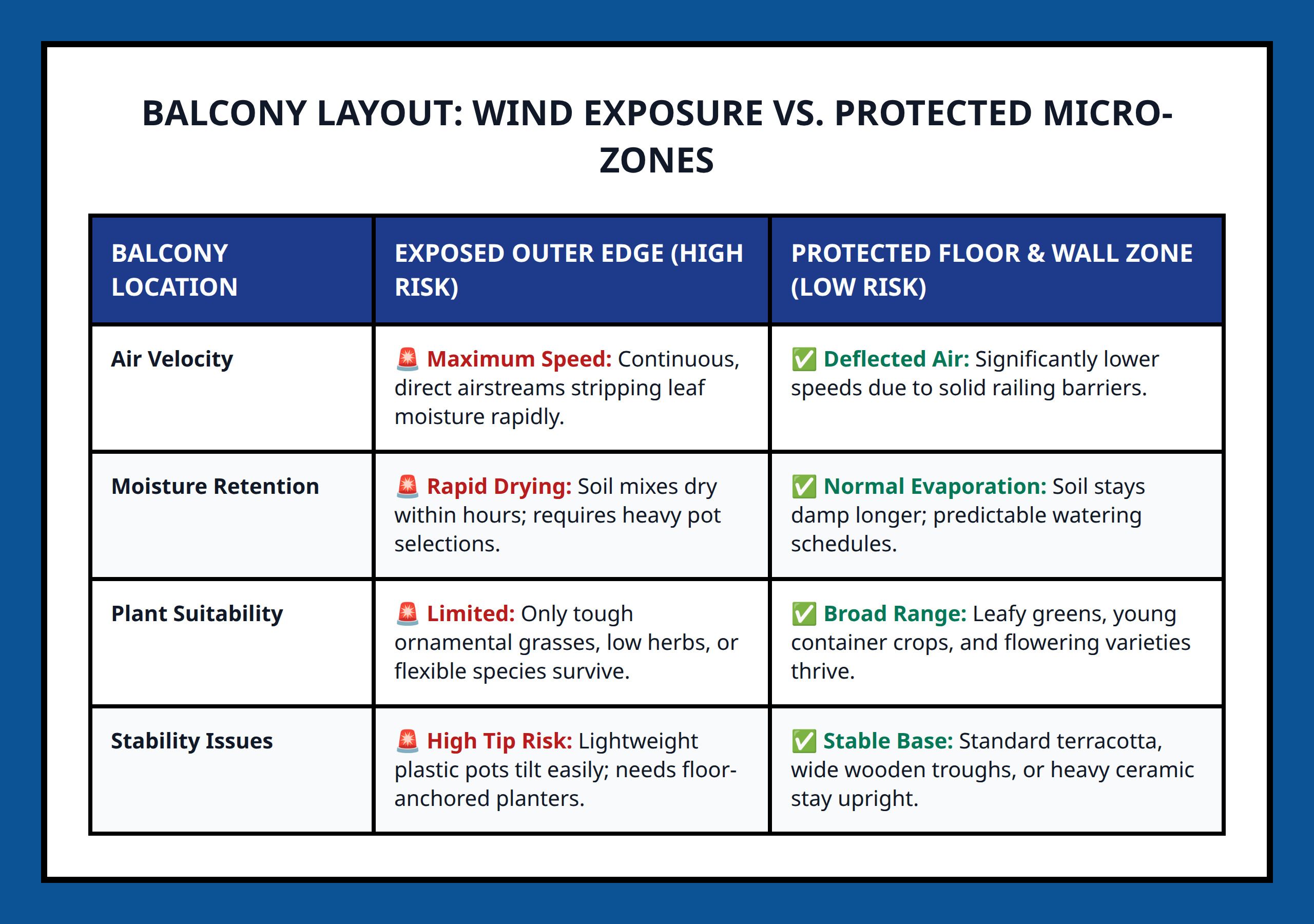
Most people imagine wind damage as dramatic breakage after severe weather.
But balcony plants often struggle from continuous low-level stress instead.
Leaves bend repeatedly. Stems flex constantly. Tender growth dries at the edges. Plants spend energy recovering from exposure instead of growing productively.
I think this kind of damage gets underestimated because it develops slowly.
A gardener notices weaker growth or rough-looking leaves but may not connect those symptoms directly to airflow.
Young plants are especially vulnerable because their stems and roots have not fully strengthened yet. Climbing plants can also become unstable when gusts repeatedly pull against supports.
Then there’s container stability itself.
Large leafy plants create more wind resistance than many people expect. A top-heavy container on an exposed balcony can become physically unsafe during strong gusts, especially after rain loosens the soil.
That’s why I’d think about balance and weight distribution early instead of treating it as an afterthought.
Some Airflow Helps Plants Too
Wind is not entirely negative.
Plants need some air circulation to stay healthy. Gentle airflow reduces stagnant humidity around leaves and can strengthen stems over time.
Some crops also benefit from movement during pollination.
The problem starts when airflow becomes constant, turbulent, or forceful enough to create ongoing stress.
I think balcony gardening becomes easier once you stop treating wind as either “good” or “bad.” The more useful question is whether the airflow level matches what the plants can reasonably tolerate.
A lightly breezy balcony may actually support healthier growth than a completely enclosed, stagnant one. An exposed high-rise corner unit is a different situation entirely.
Balcony Wind Creates Small Climate Zones
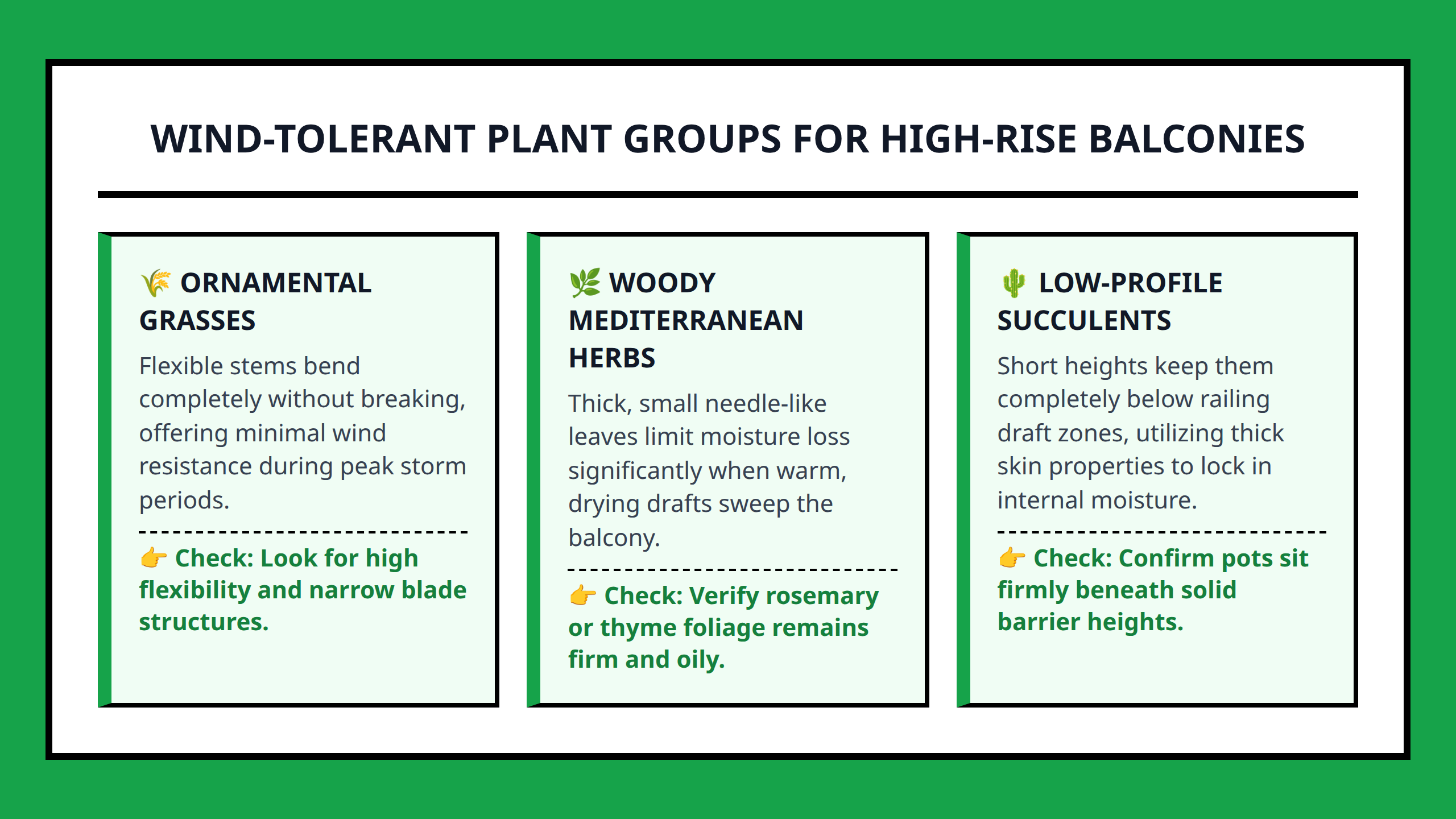
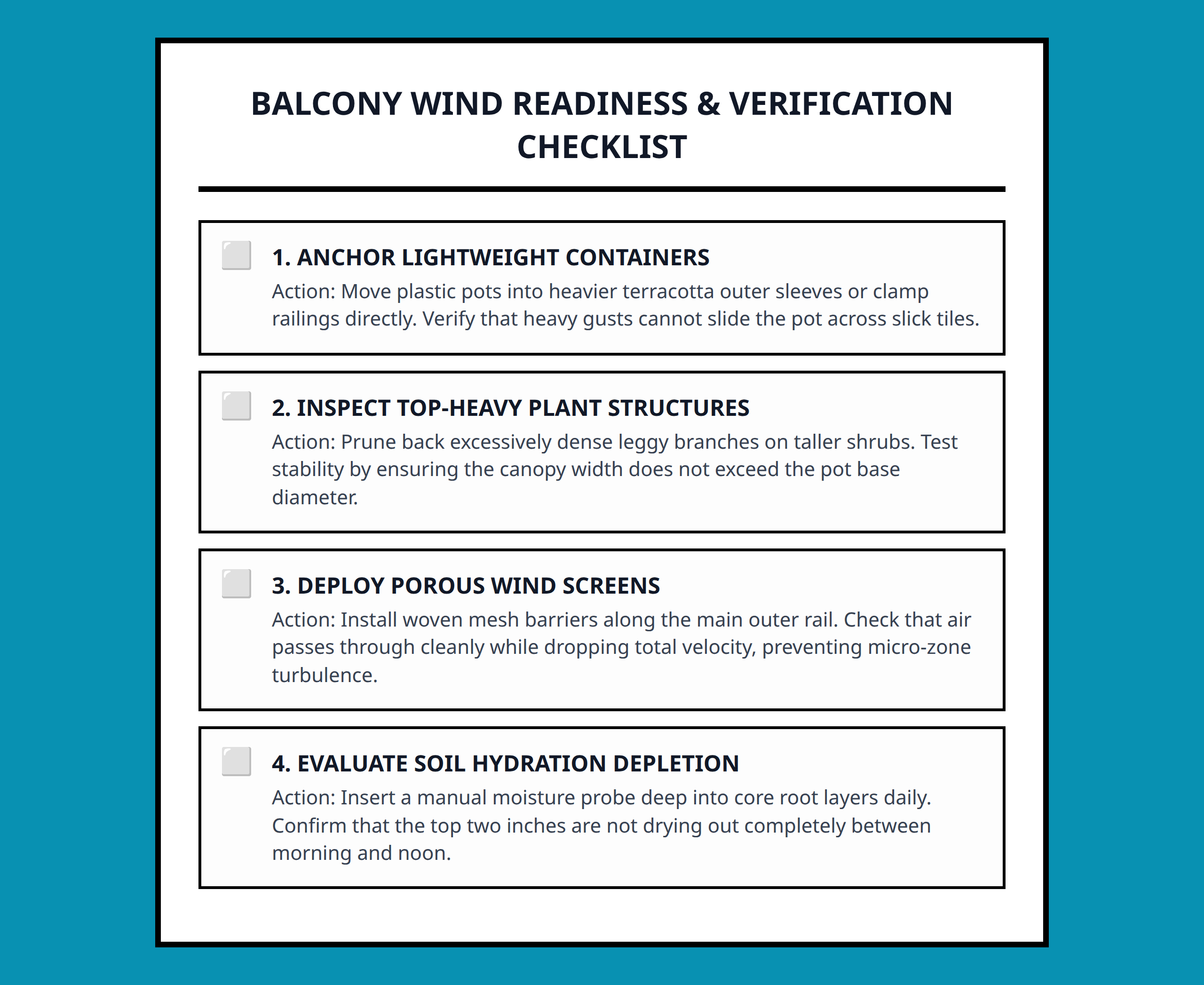
One practical thing I’d do on any windy balcony is identify protected micro-zones before arranging containers.
Balcony walls, railings, furniture, and corners all influence airflow patterns. Some areas naturally block or soften gusts.
That means plant placement becomes part of wind management.
More delicate plants usually perform better in protected sections closer to walls or corners. Stronger plants may tolerate outer edges more successfully.
A simple observation session during a windy afternoon can reveal a lot.
I’d watch:
- Which plants move constantly
- Where leaves dry first
- Which containers lose moisture fastest
- Where gusts feel strongest while standing on the balcony
- Which corners remain relatively calm
Those observations often explain plant behavior more clearly than fertilizer schedules or watering routines.
Why Repositioning Plants Often Works Better Than Buying More Equipment
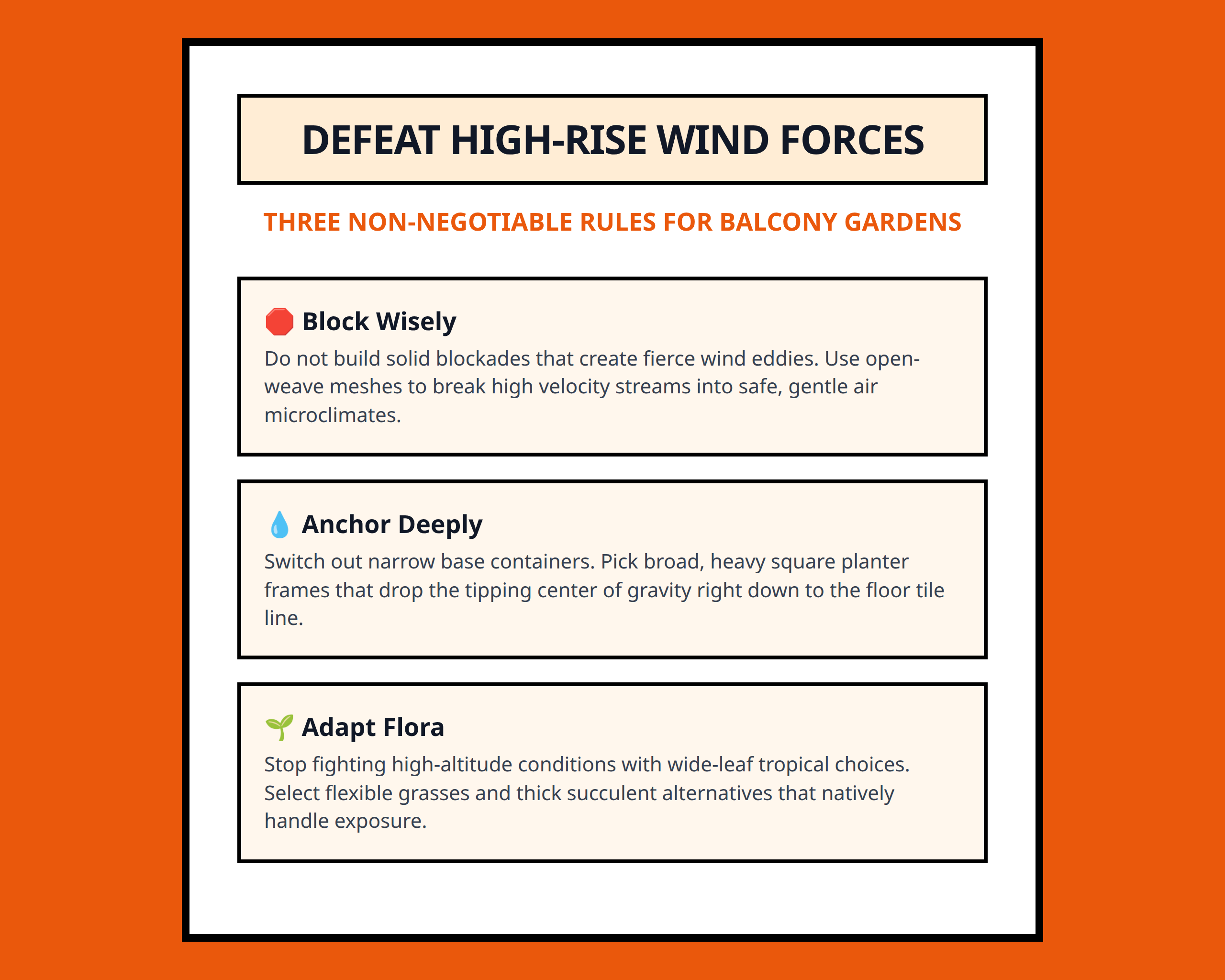
When plants struggle, many beginners immediately search for products or treatments.
Sometimes the smarter solution is simpler: move the plant.
Repositioning containers can reduce wind exposure, improve moisture retention, and stabilize growth without changing anything else.
I’d especially reconsider placement after seasonal weather shifts. A balcony that feels manageable in spring can become far harsher during summer storms or strong seasonal winds.
Some gardeners also use temporary barriers or small greenhouse-style covers to soften exposure. Those solutions can help in specific situations, but I think understanding the balcony’s natural airflow patterns matters more than trying to seal everything off completely.
A balcony garden usually works best when the layout cooperates with the environment instead of fighting every gust directly.
The Balcony Itself Often Explains the Problem
I think this is the biggest mindset shift for windy balcony gardening.
When plants struggle, people often focus immediately on nutrients, watering schedules, or gardening skill. Sometimes the real issue is simply that the balcony environment is constantly exhausting the plants.
Once wind becomes part of the diagnosis, a lot of confusing problems start making sense.
Fast soil drying. Weak stems. Rough leaves. Uneven growth. Constant stress.
The balcony itself is shaping all of those outcomes.
That’s why I’d treat airflow as one of the core planning factors from the beginning instead of waiting until plants already look damaged.
- Micro-zone: A small area within a balcony that has its own unique wind, temperature, or sunlight conditions.
- Air circulation: The movement of air around plants, which affects moisture, temperature, and plant health.
- Pollination: The process that allows flowers to produce fruit or seeds, sometimes helped by wind or insects.
- Container gardening: Growing plants in pots or planters instead of directly in the ground.
- Wind exposure: The amount of airflow and gust pressure a plant or container experiences.
- Greenhouse cover: A protective structure or covering used to reduce exposure to wind and temperature changes.
References:
- https://www.youtube.com/watch?v=tDmkl4RS3nw
- https://www.youtube.com/watch?v=4j7DS-cGLSw
- https://www.youtube.com/watch?v=Lx8kHbJv0wY
- https://www.youtube.com/watch?v=0ZNWaeju3hM
- https://medium.com/@tubieArt/strong-winds-the-enemy-of-balcony-plants-1291a0736e0a
- https://www.reddit.com/r/gardening/comments/37cfky/crazy_winds_on_my_balcony_bad_for_potted/
- https://www.reddit.com/r/gardening/comments/12muvbu/growing_on_windy_balcony/
- https://www.reddit.com/r/Edmonton/comments/1kw2lvv/does_anyone_plant_things_on_a_windy_balcony/
- https://www.sgaonline.org.au/gardening-on-balconies-ways-to-thrive-in-small-spaces/
- https://www.thebalconygarden.com.au/blogs/news/plants-and-pots-suitable-for-windy-balconies
- https://www.homeleisure.com.au/spring-kickoff-best-plants-for-hot-windy-balconies-and-how-to-keep-them-thriving/
- https://www.rhs.org.uk/garden-inspiration/garden-types/balconies-roof-gardens
- https://verticalveg.com/blog/91254-growing-in-the-wind
- https://www.amazon.com/SUNNY-GUARD-3x10Balcony-Apartments-Windscreen/dp/B086W7SH1G
