Balcony gardens often become less productive when too many plants compete for the same sunlight and space. Careful layout planning usually grows healthier plants than trying to squeeze every possible container onto a small balcony.
One of the most common balcony gardening mistakes starts with good intentions. A person sees extra floor space, adds another pot, then another, and eventually turns a manageable balcony into a crowded wall of leaves and containers.
I understand why this happens. Small-space gardeners naturally want to maximize production. When space feels limited, the instinct is to grow more. But balconies punish overcrowding faster than many beginners expect.
On a balcony, every inch of sunlight matters. Once plants begin shading each other, the whole growing system weakens.
Takeaways
- Overcrowded balconies reduce sunlight access and weaken plant growth.
- Plants should be planned around mature size, not starter size.
- A simple balcony sketch can prevent major layout mistakes.
- Sunny areas should be reserved for plants that need the most direct light.
- A smaller number of healthy plants usually produces better results than a packed balcony.
Why Balcony Gardens Become Crowded So Easily
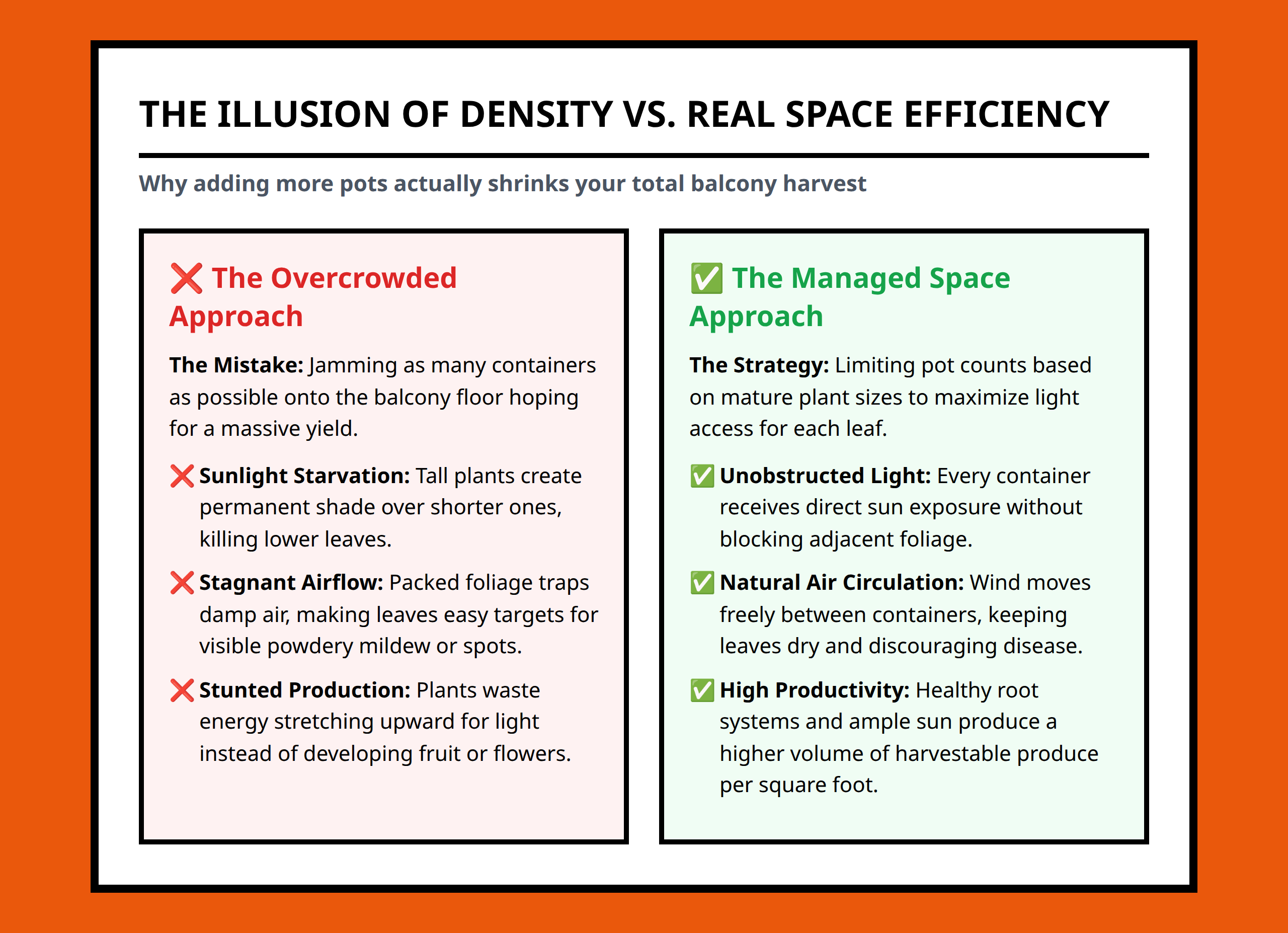
Balcony gardens usually look organized early in the season because young plants stay compact.
That temporary neatness creates a false sense of available space.
A tomato seedling in spring may look harmless sitting beside herbs and peppers. A few weeks later, the tomato expands outward, blocks sunlight, and changes airflow across the balcony. Suddenly smaller plants start stretching toward brighter areas or producing weak growth.
I think beginners often underestimate how aggressively healthy plants spread once warm weather arrives.
That problem becomes more serious in balconies because containers are forced into fixed positions. Plants cannot naturally spread outward into open ground the way they would in a yard garden.
Instead, every plant competes inside the same limited light zone.
More Plants Do Not Automatically Mean More Food
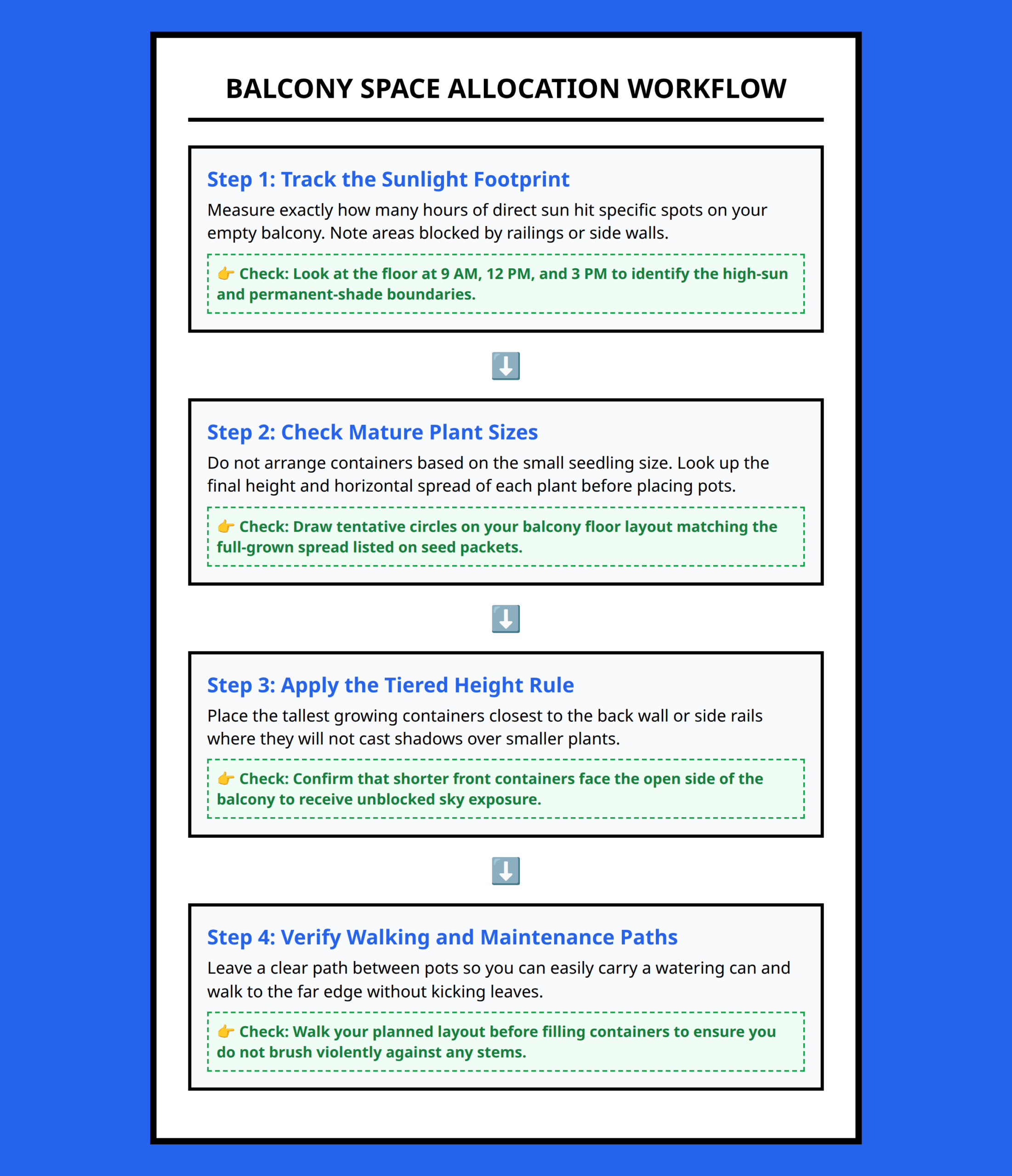
This is probably the most important planning shift for small-space gardening.
People often assume productivity scales with the number of containers. In reality, overcrowding usually reduces the performance of the entire balcony.
Plants compete for:
- Direct sunlight
- Air circulation
- Physical growing space
- Access to the best balcony positions
Once larger plants start casting shade, weaker plants stop receiving enough light to grow properly.
I’d rather grow one healthy tomato plant with consistent sunlight than three crowded tomato plants fighting each other for exposure.
The same thing happens with herbs and greens placed underneath taller vegetables. They may survive, but survival is not the same as productive growth.
A crowded balcony can look lush while quietly becoming less productive overall.
Sunlight Should Control the Entire Layout
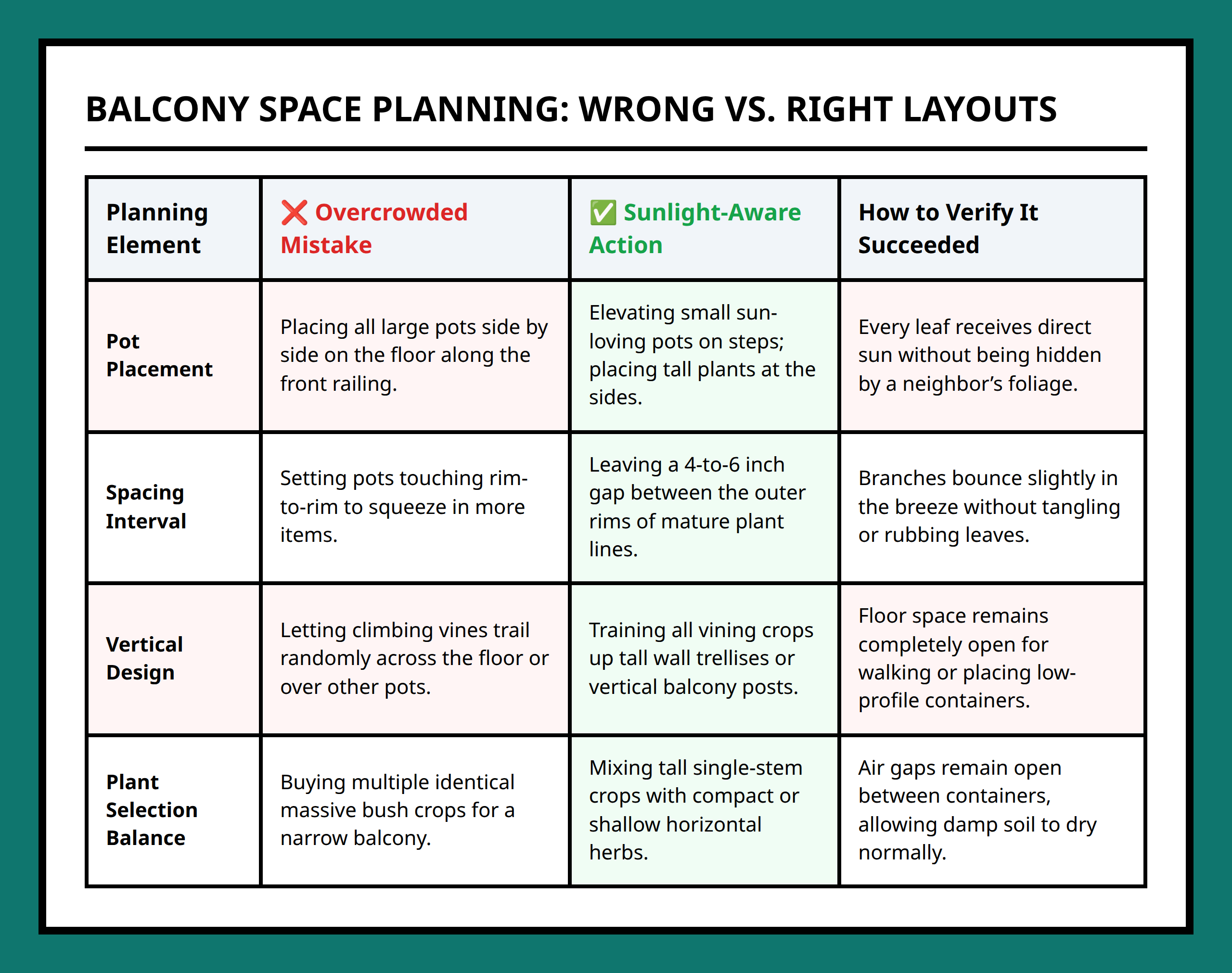
When I think about balcony planning, I don’t start with decoration or symmetry. I start with sunlight patterns.
That changes the entire layout process.
Some parts of a balcony receive stronger direct light than others because walls, railings, and overhangs interrupt exposure differently throughout the day. Once you understand those patterns, plant placement becomes easier to prioritize.
Fruit-producing vegetables usually deserve the strongest light positions.
Less demanding plants can tolerate weaker areas more successfully.
A common mistake is arranging containers based on appearance instead of environmental conditions. Someone places tall plants along the outer edge because it looks balanced, then accidentally shades the rest of the balcony for half the afternoon.
I’d pay close attention to how shadows move across the floor and walls during the day before deciding where large containers belong.
Plan Around Mature Plant Size, Not Seedlings
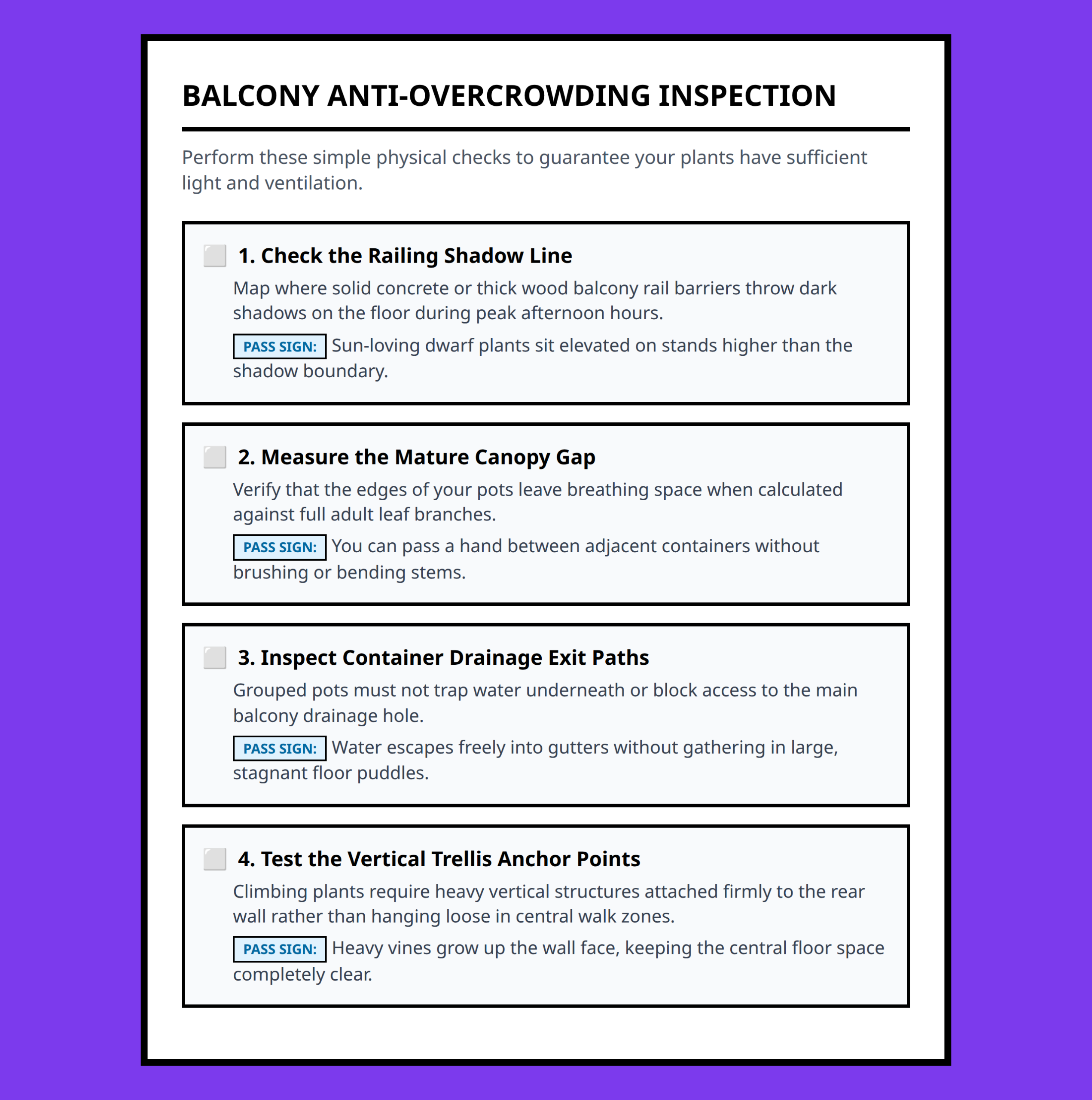
Seedlings are deceptive.
At planting time, nearly everything looks small enough to fit comfortably. That illusion disappears once summer growth accelerates.
I think this is where balcony planning often breaks down. People visualize containers instead of mature plants.
A balcony may physically hold ten containers, but the mature plants growing from those containers may overlap heavily by midsummer.
Tomatoes spread outward. Peppers widen. Climbing plants extend vertically and sideways. Herbs become dense. Leaves begin competing for the same air and light.
That’s why I’d always leave extra open space around plants that are expected to become large or bushy.
It feels wasteful at first. Later in the season, it usually feels necessary.
A Simple Balcony Sketch Solves More Problems Than People Expect
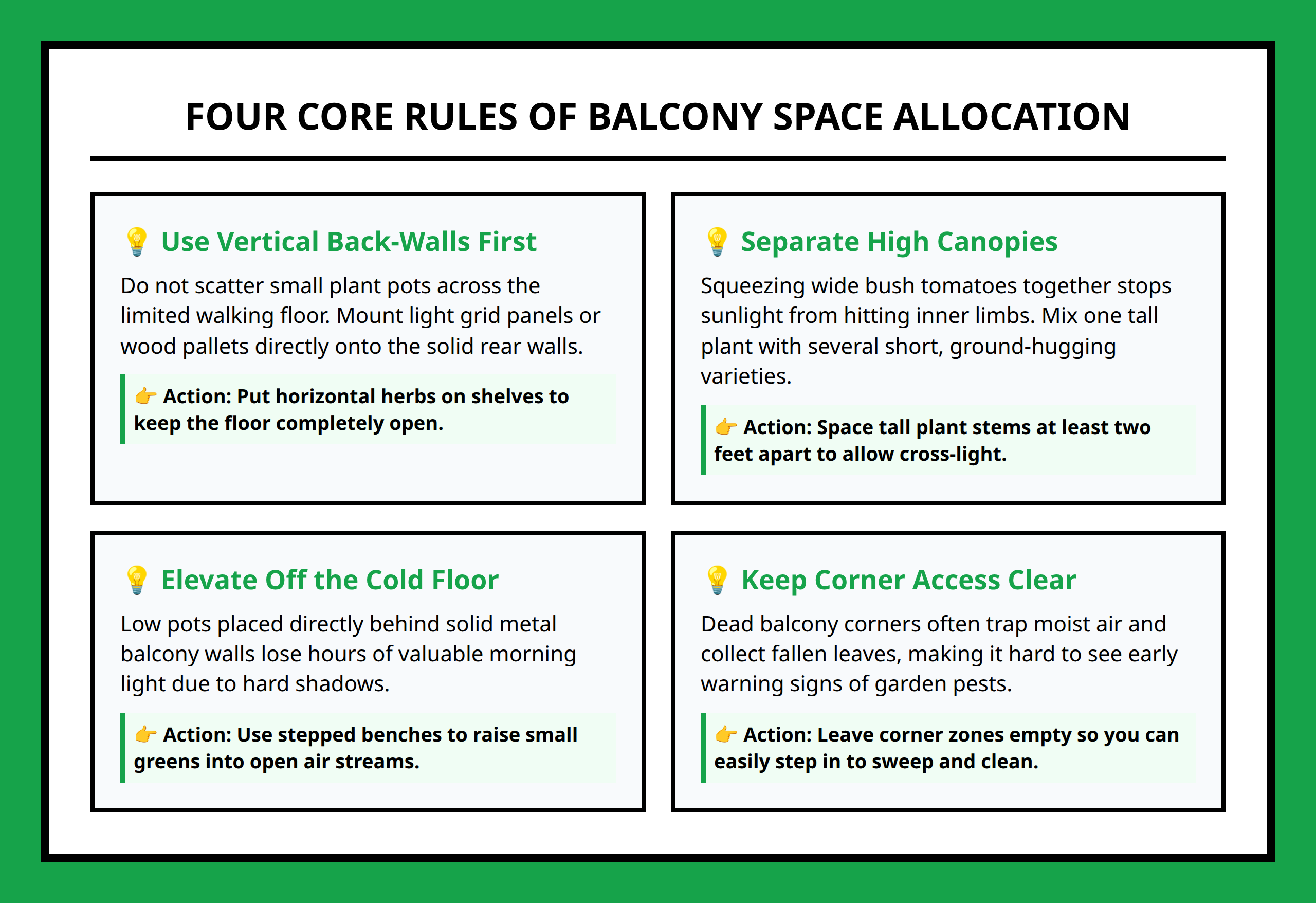
I don’t think balcony planning needs complicated software or detailed landscape drawings.
A rough sketch is often enough.
One practical approach is measuring the balcony floor space and sketching container positions before planting season begins. Even a basic drawing helps reveal problems that are easy to miss mentally.
For example, a person may realize:
- Tall plants block sunlight from lower containers
- Walking space disappears too quickly
- Certain corners never receive strong light
- Large containers dominate the usable growing area
- Plants expected to spread outward will collide later
I’d especially pay attention to plant height during planning.
Height matters almost as much as floor space because balconies create layered shade. A tall plant placed in the wrong spot can reduce light across multiple containers behind it.
Even a quick hand-drawn layout can prevent a season-long frustration.
Why Pruning and Removing Plants Sometimes Improves the Garden
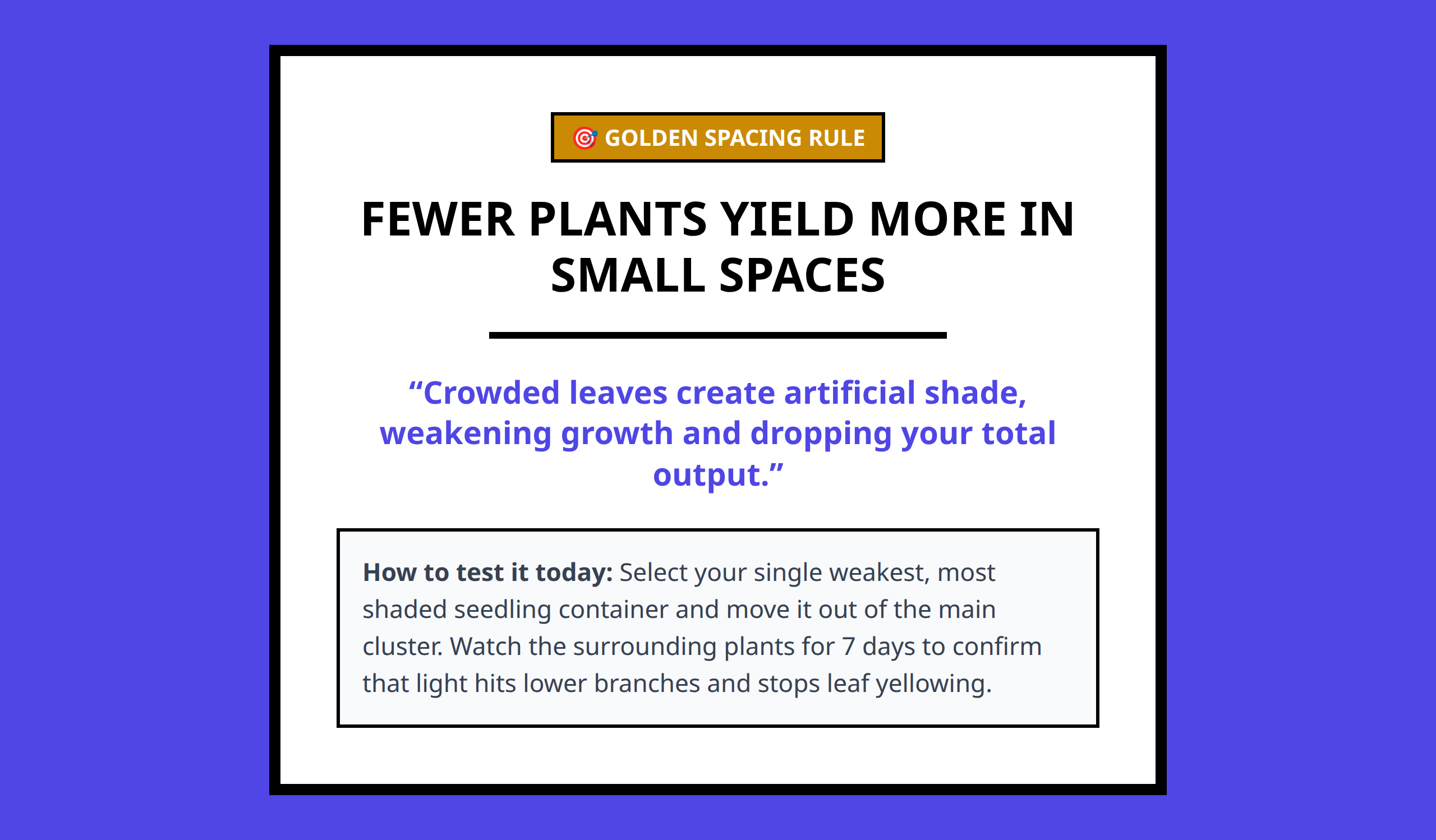
One detail that surprised me when thinking through small balcony gardens is how often the best solution is simply removing growth.
Many gardeners hesitate to prune aggressively because it feels counterproductive. But on balconies, selective removal often improves the entire environment.
Overgrown plants block sunlight, trap humidity, and reduce airflow. A quick pruning session can reopen light access for multiple containers at once.
Sometimes the smarter choice is even more direct: remove a struggling plant entirely.
That sounds harsh, but crowded balconies force tradeoffs. Keeping one weak, oversized plant may reduce the productivity of several healthier plants around it.
I’d rather preserve the overall balance of the balcony than protect every container equally.
The Best Balcony Gardens Usually Feel Slightly Underfilled
This is the visual cue I trust most.
Healthy balcony gardens often look like they have a little extra room. There’s visible airflow between containers. Sunlight still reaches lower leaves. Walking space remains usable. Plants have space to mature without immediately colliding.
At the beginning of the season, that layout can feel too sparse.
By midsummer, it usually feels intentional.
I think small-space gardeners benefit from treating open space as productive space rather than wasted space. On balconies, sunlight access and airflow are part of the harvest system itself.
Once overcrowding starts reducing those environmental advantages, adding more plants often becomes self-defeating.
- Overcrowding: When too many plants compete for the same sunlight, airflow, and growing space.
- Direct sunlight: Sunlight that reaches plants without being blocked by walls, buildings, or other plants.
- Air circulation: The movement of air around plants, which helps reduce heat stress and moisture buildup.
- Container gardening: Growing plants in pots, buckets, or planters instead of directly in the ground.
- Pruning: Removing parts of a plant, such as stems or leaves, to improve growth, airflow, or sunlight access.
- Mature plant size: The full size a plant reaches after growing through the season, not the small size it has as a seedling.
References:
- https://www.youtube.com/watch?v=YnCTNF_s4vY
- https://www.youtube.com/watch?v=u17RjMcCe7I
- https://www.youtube.com/watch?v=uEJ5WahSnFM
- https://www.reddit.com/r/gardening/comments/1aq5bbw/what_advice_would_you_give_to_an_absolute/
- https://www.reddit.com/r/gardening/comments/1aq5bbw/what_advice_would_you_give_to_an_absolute/kqaryjo/
- https://www.reddit.com/r/gardening/comments/1aq5bbw/what_advice_would_you_give_to_an_absolute/kqb7dnz/
- https://www.lovethegarden.com/au-en/article/growing-fruit-vegetable-garden-balcony
- https://gingerwithroots.com/design-guide-for-a-small-apartment-balcony-garden/
- https://www.reddit.com/r/Permaculture/comments/u95qbg/seeking_advice_on_how_to_maximize_the_growing/
- https://www.reddit.com/r/UrbanGardening/comments/1ata5ms/how_to_start_with_urban_gardening_on_a_balcony/
- https://www.arthousesf.com/blogs/news/how-to-grow-vegetable-garden-on-balcony
- https://homegrown-garden.com/blogs/blog/apartment-balcony-garden-ideas
- https://www.epicgardening.com/maximize-balcony-garden-space/
- https://www.reddit.com/r/gardening/comments/1aq5bbw/what_advice_would_you_give_to_an_absolute/kqan662/
- https://www.lowes.com/n/ideas-inspiration/small-space-balcony-garden
- https://www.eplanters.com/blog/10-ways-decorate-a-small-balcony-with-plants/
- https://www.urbanplant.in/a/blog/urban-balcony-gardening-tips-and-questions-answered-for-small-spaces-india
