Most balcony gardening problems start long before the first seed is planted. The real issue is usually sunlight. A balcony may look bright during the day and still fail to provide enough direct light for vegetables once shadows, walls, railings, and seasonal sun angles are taken into account.
When I look at a balcony for gardening potential, I don’t start by thinking about tomatoes, peppers, or herbs. I start by watching the light. That sounds simple, but many balconies that seem sunny at first glance are surprisingly poor environments for vegetables once you pay attention to how the sun actually moves through the space.
A lot of beginner frustration comes from treating balcony direction as the whole story. People hear that south-facing balconies are ideal or west-facing balconies get afternoon sun, then assume the problem is solved. In practice, the structure around the balcony often matters more than the compass direction.
Takeaways
- Vegetables usually need more than 6 hours of direct sunlight to grow well.
- Balcony walls, overhangs, and neighboring buildings can reduce sunlight far more than people expect.
- A balcony can feel bright to a person while still being too shaded for fruit-producing plants.
- Watching sunlight patterns across an entire day is more useful than relying on balcony orientation alone.
Why Balcony Sunlight Is Harder to Judge Than People Expect
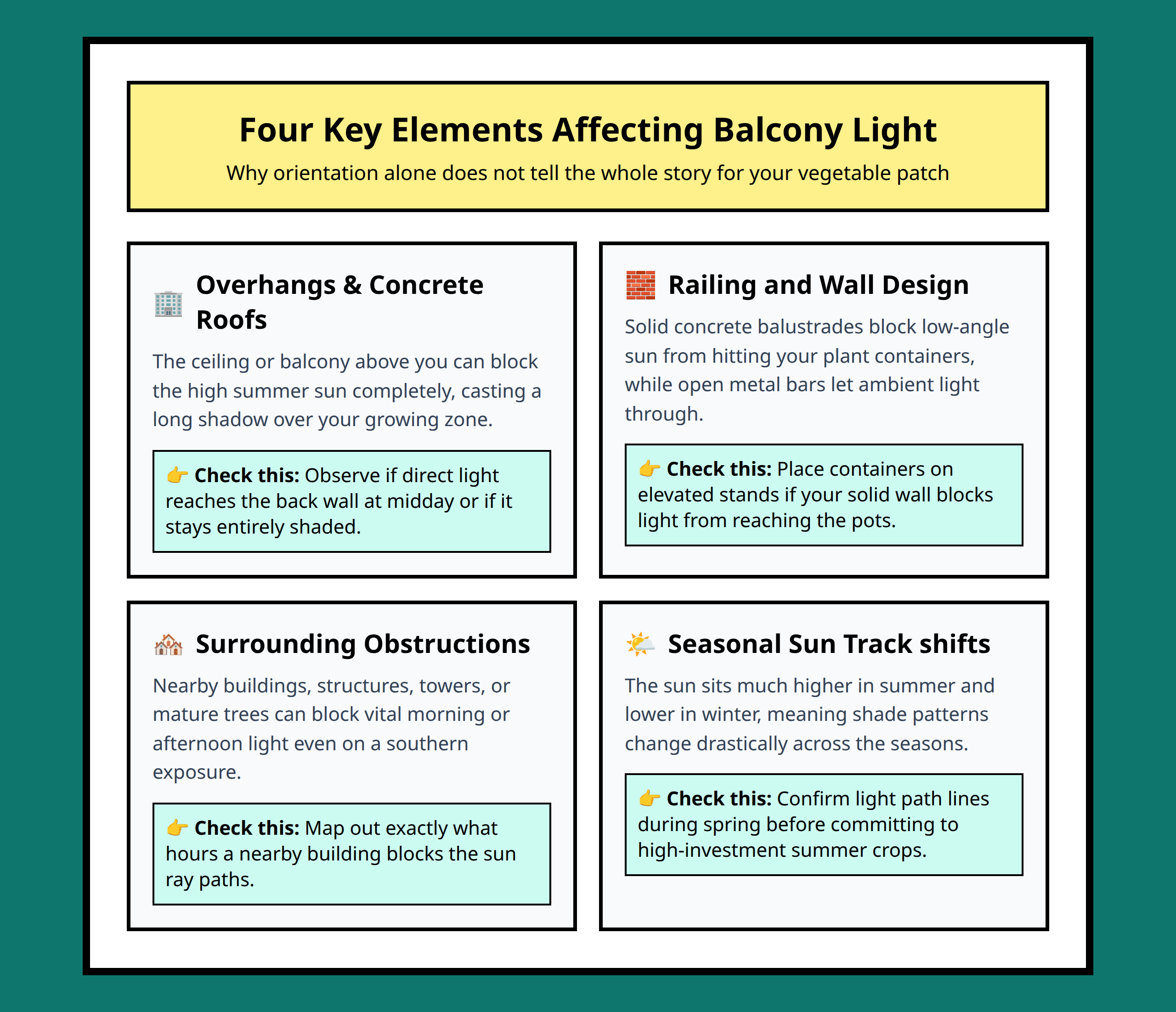
One of the easiest mistakes to make is confusing brightness with direct sunlight.
A balcony can feel open and well-lit while still receiving only a few hours of usable sun for vegetables. Reflected daylight helps people see comfortably, but most edible plants care about direct exposure. Tomatoes, peppers, beans, and many herbs become weak, slow, or unproductive when direct sunlight drops too low.
I’d pay attention to how long sunlight physically lands on the growing area itself, not just how bright the balcony feels overall.
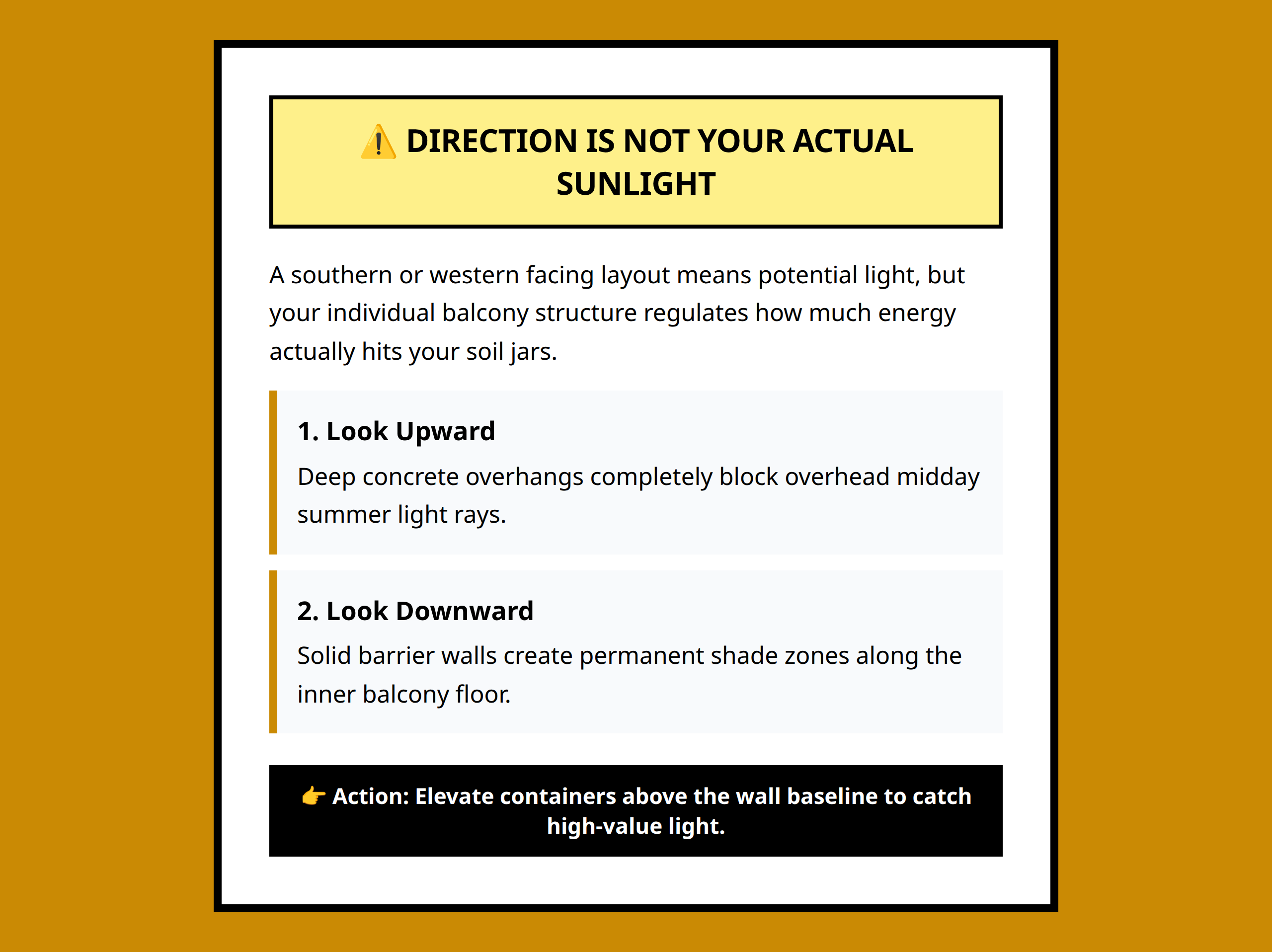
That distinction becomes important in apartment buildings because balconies create layers of shade. Overhangs block overhead light. Side walls interrupt morning or afternoon exposure. Nearby towers can remove entire sections of the day’s sunlight without it being obvious until you actually observe the space over time.
A common situation looks like this: someone stands on their balcony at noon, sees strong daylight, and assumes vegetables will thrive there. Then summer arrives, the plants stretch toward the light, flowering slows down, and fruit production becomes disappointing. In many cases, the balcony never had enough direct sun in the first place.
The Three Sunlight Levels That Actually Matter
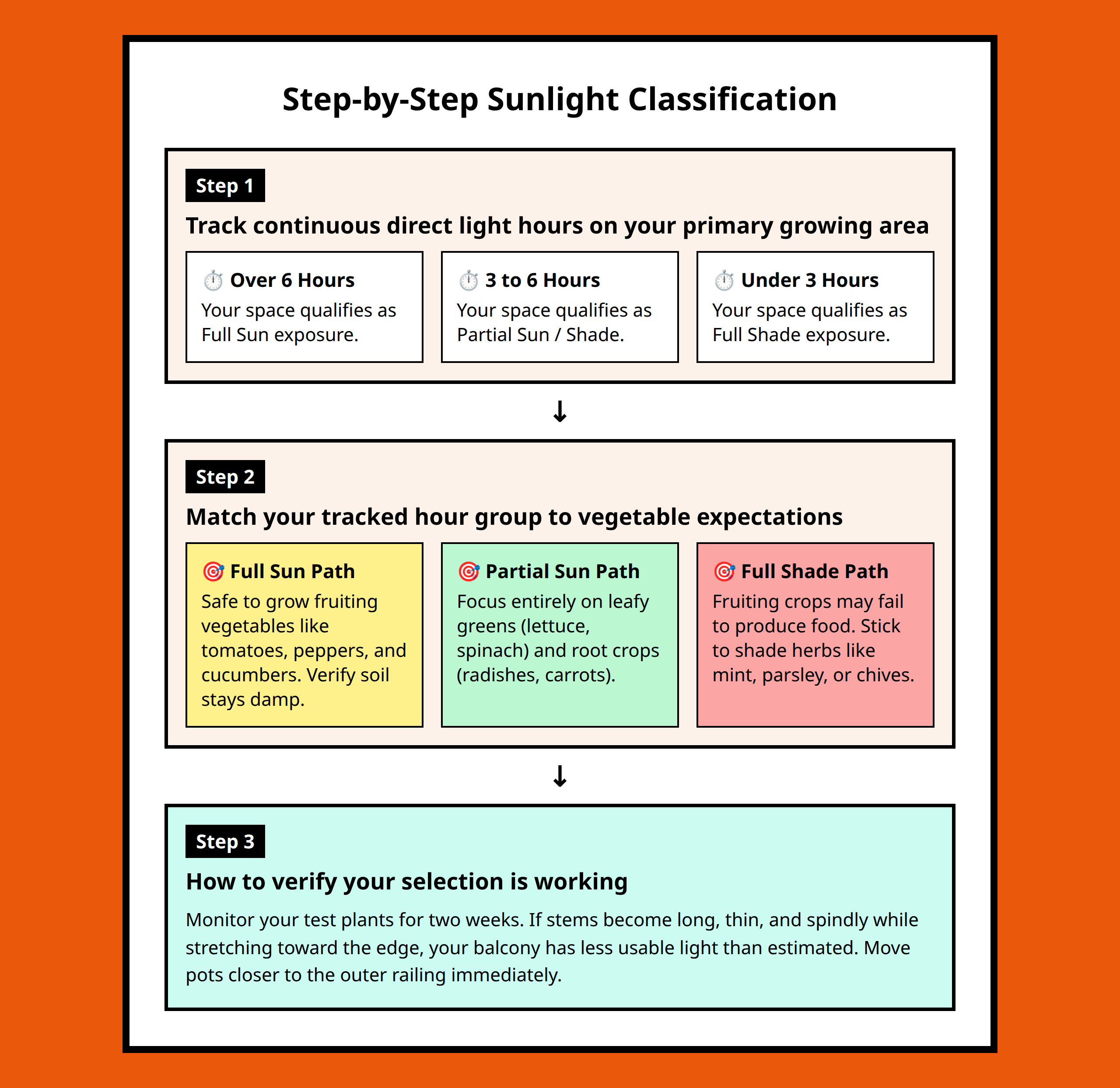
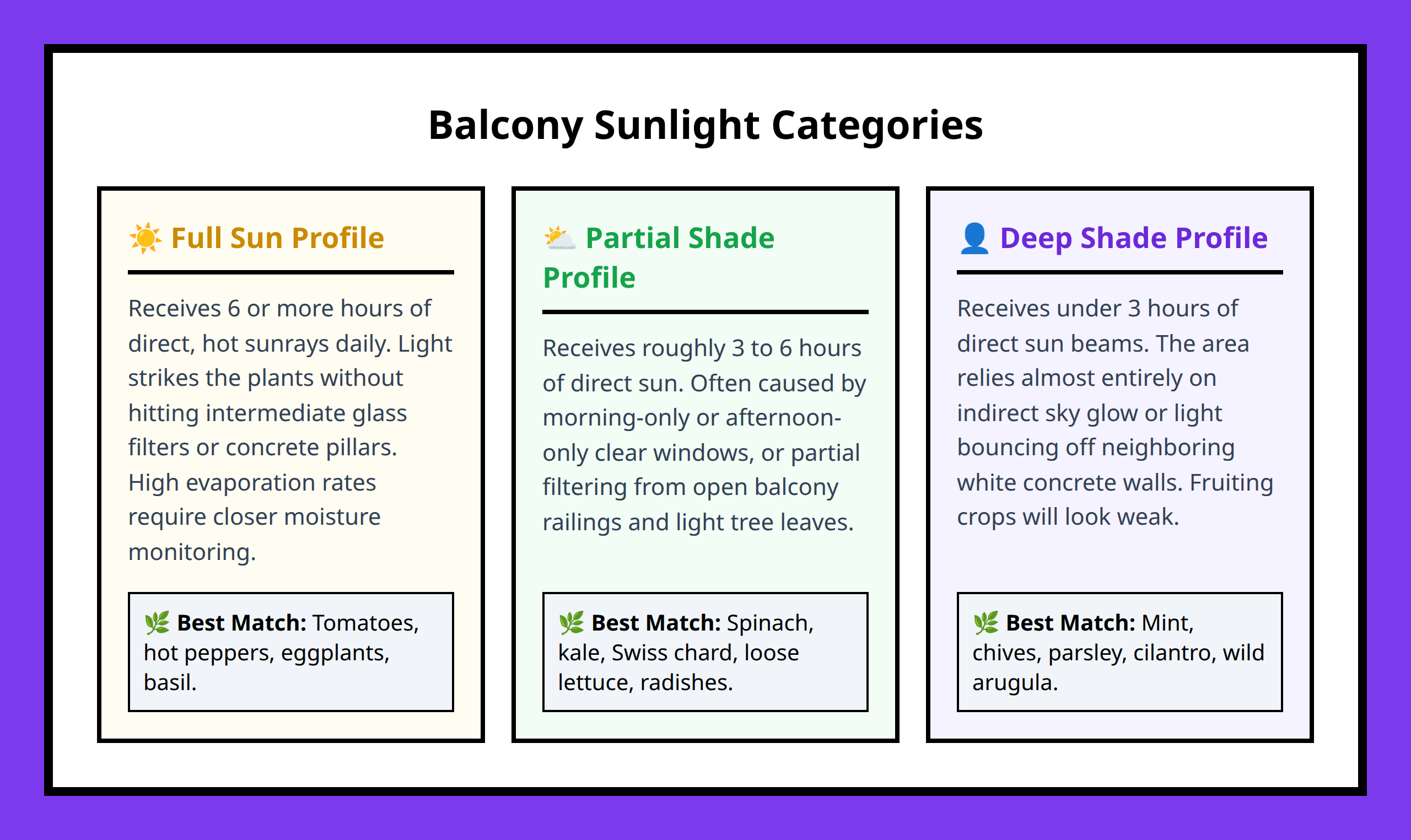
Before evaluating a balcony, I’d separate sunlight into three practical categories.
Full Sun
Full sun means more than six hours of unobstructed direct sunlight each day. This is the condition most vegetables prefer.
Fruit-producing plants especially depend on it. Tomatoes, peppers, and melons become far more reliable when they receive long periods of direct light.
Partial Sun or Partial Shade
This usually means around three to six hours of direct sunlight daily.
There’s an important difference inside this middle category. A balcony getting close to six hours behaves very differently from one barely reaching three hours. Some herbs and leafy greens may still perform reasonably well here, but fruiting crops often become inconsistent.
I’d treat this category carefully because it’s where many balconies fall. People often overestimate what partial sun can support.
Full Shade
Full shade means less than a few hours of direct sunlight.
At that point, vegetables become difficult to grow successfully. Decorative plants may still do fine, but edible crops that need energy for flowering and fruit production usually struggle.
This is where expectations matter. I wouldn’t try to force a productive vegetable garden into a deeply shaded balcony just because the space exists.
Why Balcony Direction Alone Doesn’t Tell You Much
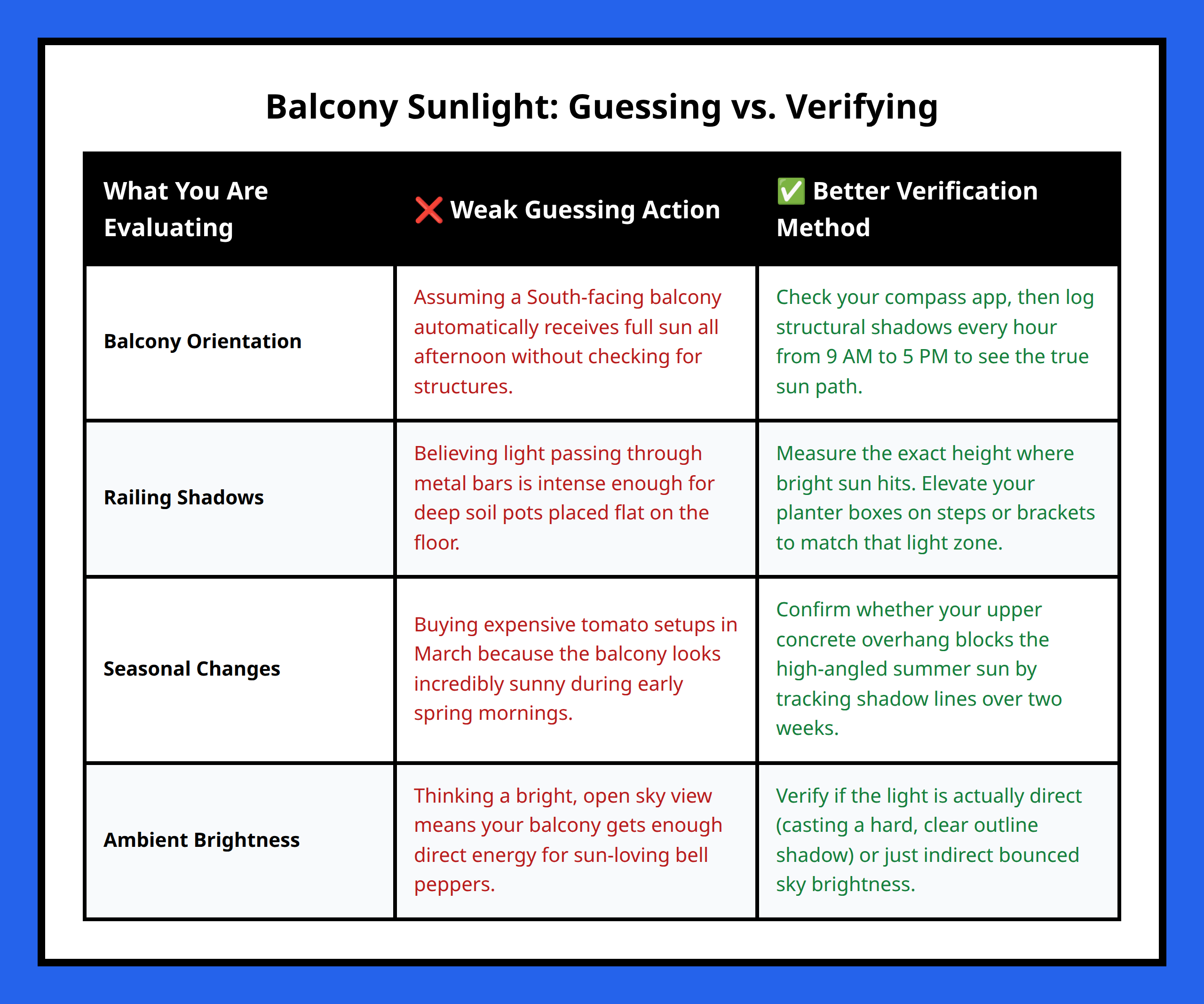
People often reduce balcony gardening advice to compass direction. South-facing gets recommended. North-facing gets discouraged. But real balconies are more complicated than that.
I’ve seen balconies with good orientation perform poorly because the structure itself blocked too much light.
A recessed balcony is a good example. If the balcony sits deep inside the building facade, sunlight may only reach part of the growing area for short periods each day. Large overhangs create the same problem.
Even the railing design matters.
Solid half walls block sunlight from reaching containers placed near the floor. Glass walls allow much more light through. Open metal railings can improve lower-level exposure while also giving climbing plants a place to attach.
That detail gets overlooked constantly. Someone may place containers against a solid balcony wall because it feels organized and tidy, while the plants spend most of the day trapped in shade.
I’d also look carefully at neighboring buildings. A nearby tower may remove either morning or afternoon sunlight completely depending on its position.
How to Observe Sunlight Instead of Guessing
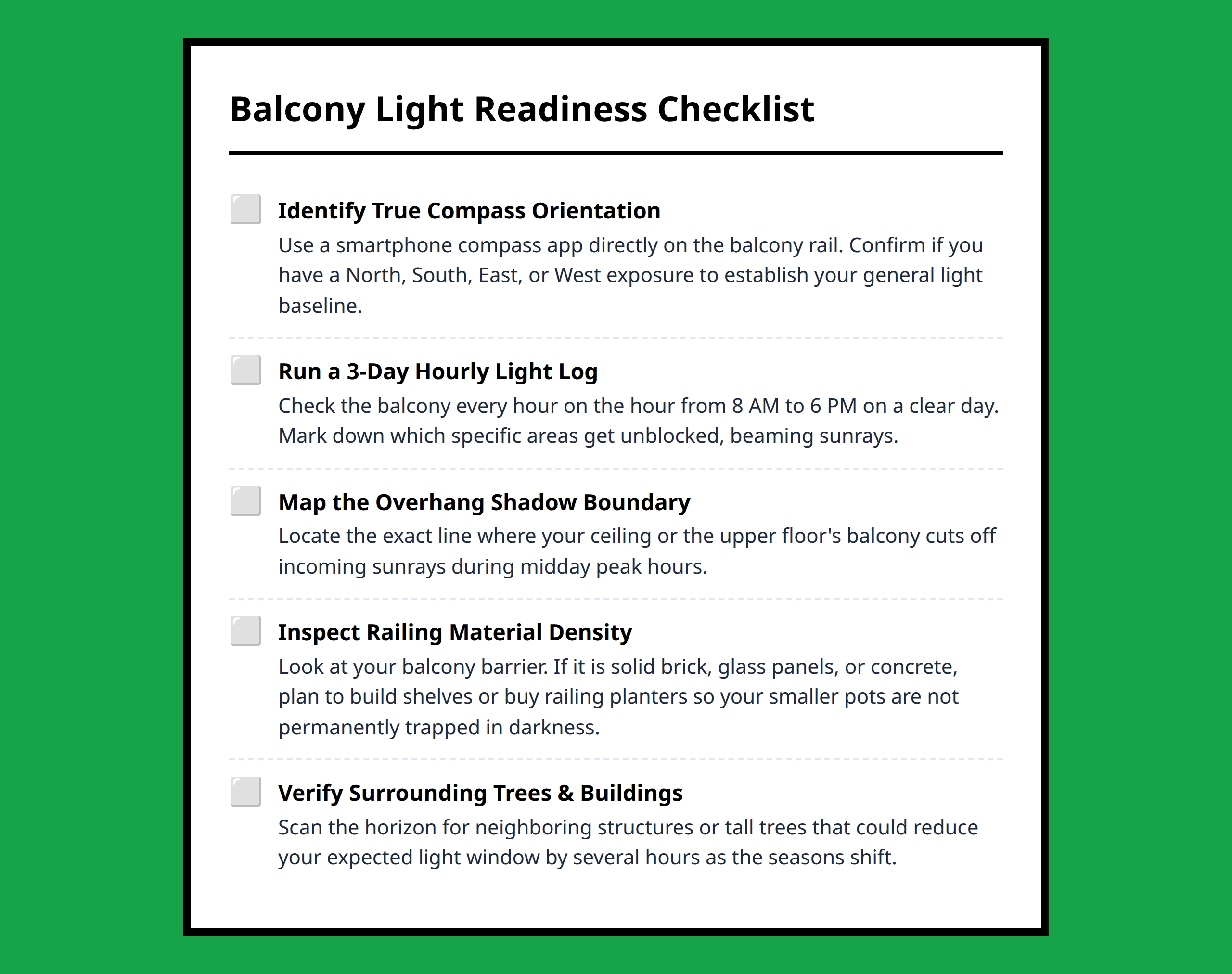
If I were evaluating a balcony from scratch, I’d spend several days simply observing it before buying plants or containers.
I’d check:
- When direct sunlight first appears
- Which sections receive the strongest light
- When shadows move across the balcony
- Whether sunlight reaches the floor or only upper areas
- How nearby walls and railings change the light pattern
A quick morning glance is not enough. Neither is a single sunny afternoon.
Sunlight moves differently across balconies than people expect because buildings create strange shadow patterns. One corner may receive excellent afternoon light while another remains shaded nearly all day.
I’d also pay attention to seasonal changes.
The sun sits higher in summer and lower during cooler months. A balcony that looks acceptable in one season may lose major sunlight hours later in the year. Overhangs become especially important here because they block low-angle sunlight differently across seasons.
Even small changes matter in tight spaces.
Why Crowded Balconies Make Sunlight Problems Worse
Once plants begin growing, they create new shade problems themselves.
This becomes a serious issue on small balconies because overcrowding compounds weak sunlight conditions. Tall plants block smaller plants. Dense leaves reduce airflow and light penetration. Containers compete for the same limited sunny spots.
I’ve noticed that beginners often try to maximize production by squeezing in more containers. The result is usually the opposite.
A crowded balcony may look lush for a while, but many plants end up losing access to the direct light they originally had. Growth becomes uneven. Some plants stretch awkwardly toward brighter areas while others stop producing well altogether.
That’s why sunlight evaluation should include mature plant size, not just empty-space planning.
What I’d Decide Before Spending Money on a Balcony Garden
After evaluating the sunlight honestly, I’d make one important decision early: should the balcony support vegetables at all, or should expectations shift toward herbs and decorative plants?
That question saves a lot of frustration.
Some balconies are genuinely excellent growing spaces. Others can support only limited crops. And some simply do not receive enough usable sunlight for productive vegetables.
I wouldn’t treat that as failure. It’s just environmental reality.
One of the most practical lessons in balcony gardening is that adaptation matters more than ambition. A small sunny balcony can outperform a large shaded one because the environmental conditions align better with what vegetables actually need.
The people who usually enjoy balcony gardening long term are the ones who learn to work with their light conditions instead of fighting them.
- Direct sunlight: Sunlight that reaches a surface without being blocked by walls, buildings, overhangs, or other obstacles.
- Full sun: More than six hours of direct sunlight each day. Most vegetables prefer these conditions.
- Partial shade: A growing condition where plants receive around three to six hours of direct sunlight daily.
- Overhang: A structure above a balcony that extends outward and creates shade below.
- Recessed balcony: A balcony built inward into the building structure instead of extending outward, often reducing sunlight exposure.
- Container gardening: Growing plants in pots, buckets, or planters instead of directly in the ground.
References:
- https://www.youtube.com/watch?v=UjgRK9yTWuo
- https://www.youtube.com/shorts/n1Uks1AoRAo
- https://www.youtube.com/watch?v=OyPNizanGbc
- https://www.reddit.com/r/gardening/comments/4jdnl9/is_there_a_way_to_determine_how_much_sunlight_an/
- https://www.reddit.com/r/askTO/comments/1hwtxmo/to_balcony_gardens_what_vegetables_do_you_grow/
- https://www.reddit.com/r/gardening/comments/ui520m/starting_now_to_plant_a_garden_on_balcony/
- https://www.lovethegarden.com/au-en/article/growing-fruit-vegetable-garden-balcony
- https://www.weedemandreap.com/planning-your-garden-vegetables/
- https://www.youtube.com/watch?v=qDB5VOy7q1A
- https://www.gardeningaustraliamag.com.au/create-a-balcony-garden/
- https://www.upontherooftop.com.au/blogs/whats-going-on-up-on-the-rooftop/know-your-balcony-garden-growing-zone
- https://balconygardener.com.au/sunlight-guide-for-balcony-gardens-in-australia/
- https://coffeeinthesun.app/blog/balcony-sun-exposure-tips/
- https://nurserylive.com/blogs/kitchen-gardening/can-you-grow-vegetables-in-the-shade-yes-here-are-32-veggies
