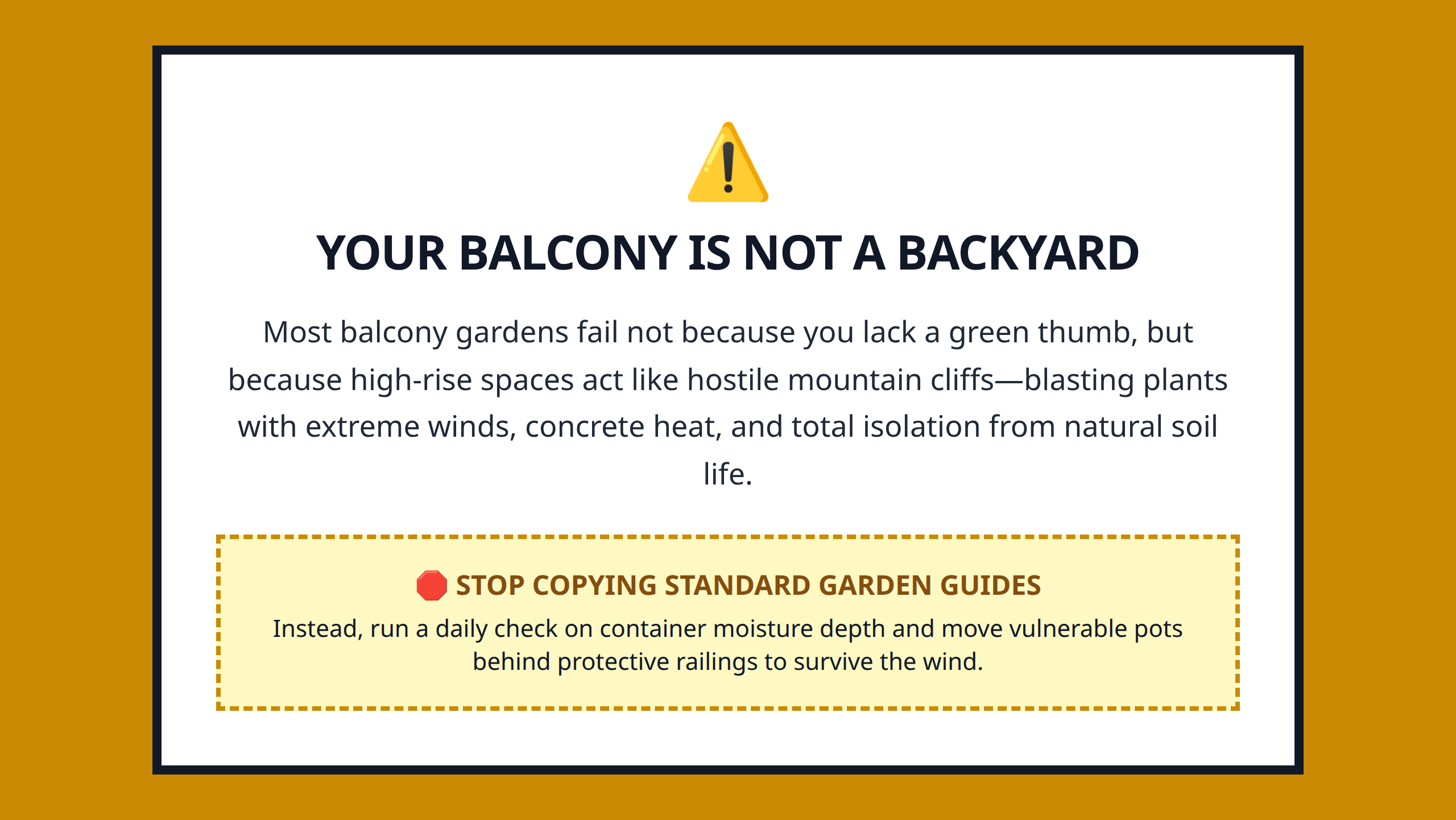
Balcony gardens usually struggle because balconies create difficult growing environments. Wind, reflected heat, weak sunlight, fast-drying containers, and structural limits often damage plants long before beginner mistakes become the real problem.
When people start balcony gardening, they often blame themselves too quickly. The tomatoes look weak, herbs stop growing, leaves wilt in the afternoon, or flowers never turn into fruit. The first reaction is usually: “I must be bad at gardening.”
I don’t think that’s the right starting point.
A balcony is not a small backyard garden floating in the air. It’s a strange artificial environment with its own weather patterns, light problems, heat traps, airflow issues, and space limitations. Once I started looking at balconies that way, a lot of common gardening failures made more sense.
Takeaways
- Many balconies receive less usable sunlight than people assume.
- Containers dry out much faster on balconies than in ground gardens.
- Wind changes how plants grow, use water, and survive heat.
- Balcony pests can become persistent because natural predators are limited.
- Structural constraints affect what can realistically grow in small spaces.
A Balcony Creates a Different Climate Than Ground-Level Gardening
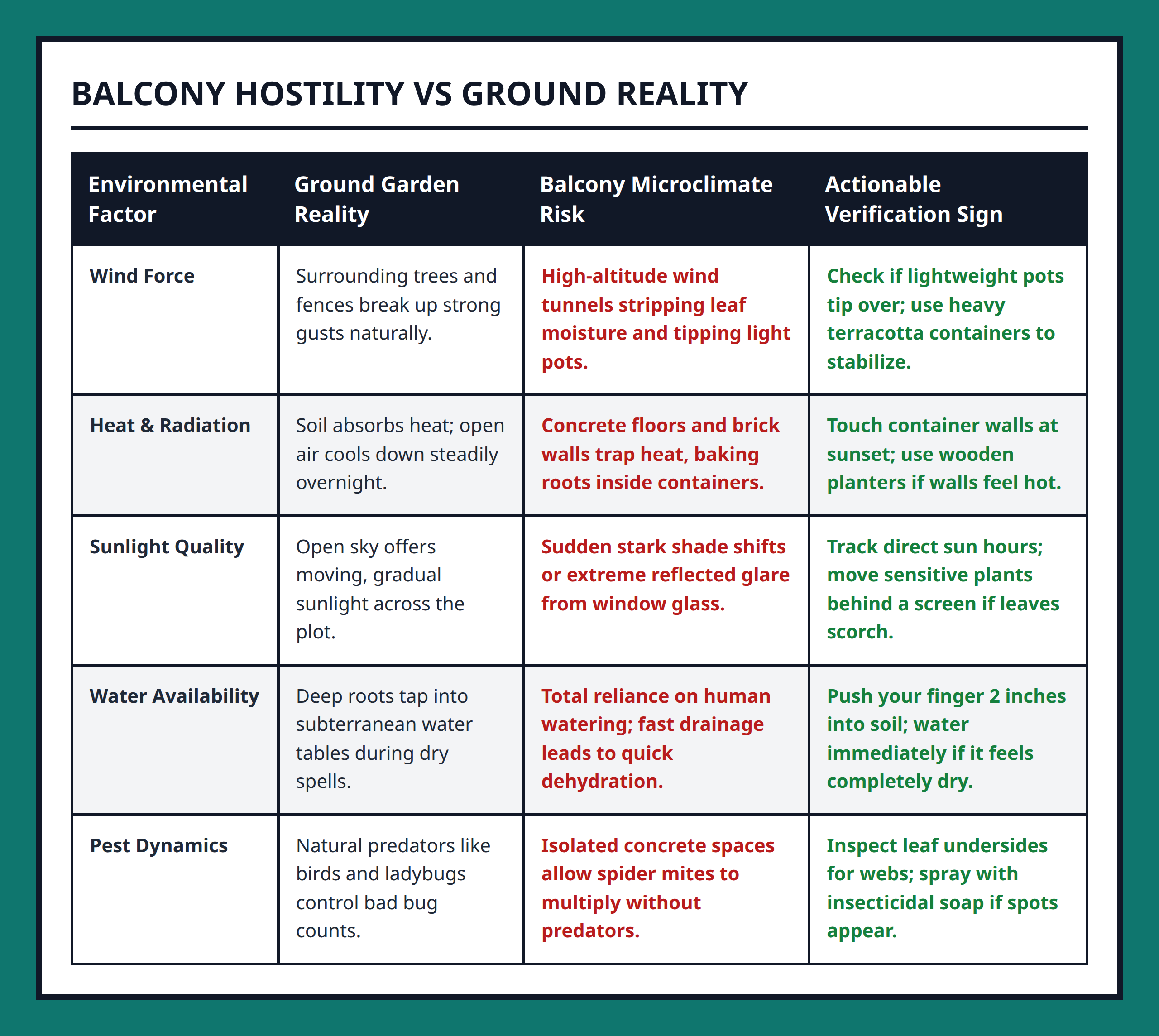
The biggest mistake beginners make is assuming plant advice from backyard gardening applies directly to balconies.
It often doesn’t.
Balconies create what gardeners sometimes call a micro-environment. Conditions change because plants are surrounded by concrete, walls, railings, reflected heat, moving air, and containers instead of open soil.
I’d treat a balcony less like a miniature yard and more like a controlled but unstable growing space.
That difference matters because plants lose many of the advantages they normally have in the ground. Their roots can’t spread freely. Moisture disappears faster. Wind exposure becomes harsher. Shade patterns become more extreme because buildings interrupt sunlight in unnatural ways.
A person might carefully water their plants, buy quality seedlings, and still struggle because the balcony itself is creating stress all day long.
The Sunlight Problem Usually Starts Before Plants Arrive
Many balconies simply do not receive enough direct sunlight for vegetables.
This catches people off guard because balconies often feel bright during the day. But brightness and direct sunlight are not the same thing.
Fruit-producing plants like tomatoes and peppers usually need long periods of unobstructed sun. Once walls, overhangs, neighboring towers, and railings interrupt that exposure, productivity drops quickly.
I’d pay attention to how sunlight physically moves across the growing area over an entire day.
A west-facing balcony may sound ideal on paper, but a nearby building can remove most afternoon light. A south-facing balcony can still become heavily shaded if the balcony is recessed deep into the structure.
One detail beginners rarely expect is how much solid balcony walls matter. A solid half wall can block sunlight from reaching containers placed near the floor for most of the day. Glass railings or open railings behave very differently because they allow more light through.
This is why some balconies support healthy vegetables while others struggle despite having similar orientations.
Containers Dry Out Faster Than Most Beginners Expect
Water stress becomes one of the most exhausting parts of balcony gardening.
Plants growing in the ground can extend their roots deep into surrounding soil to search for moisture. Balcony plants cannot. They are trapped inside containers that heat up quickly and lose moisture constantly.
Add summer heat and moving air, and the soil can dry surprisingly fast.
I think this is one of the reasons balcony gardening feels more demanding than people expect. During hot weather, watering can become a daily routine instead of an occasional task.
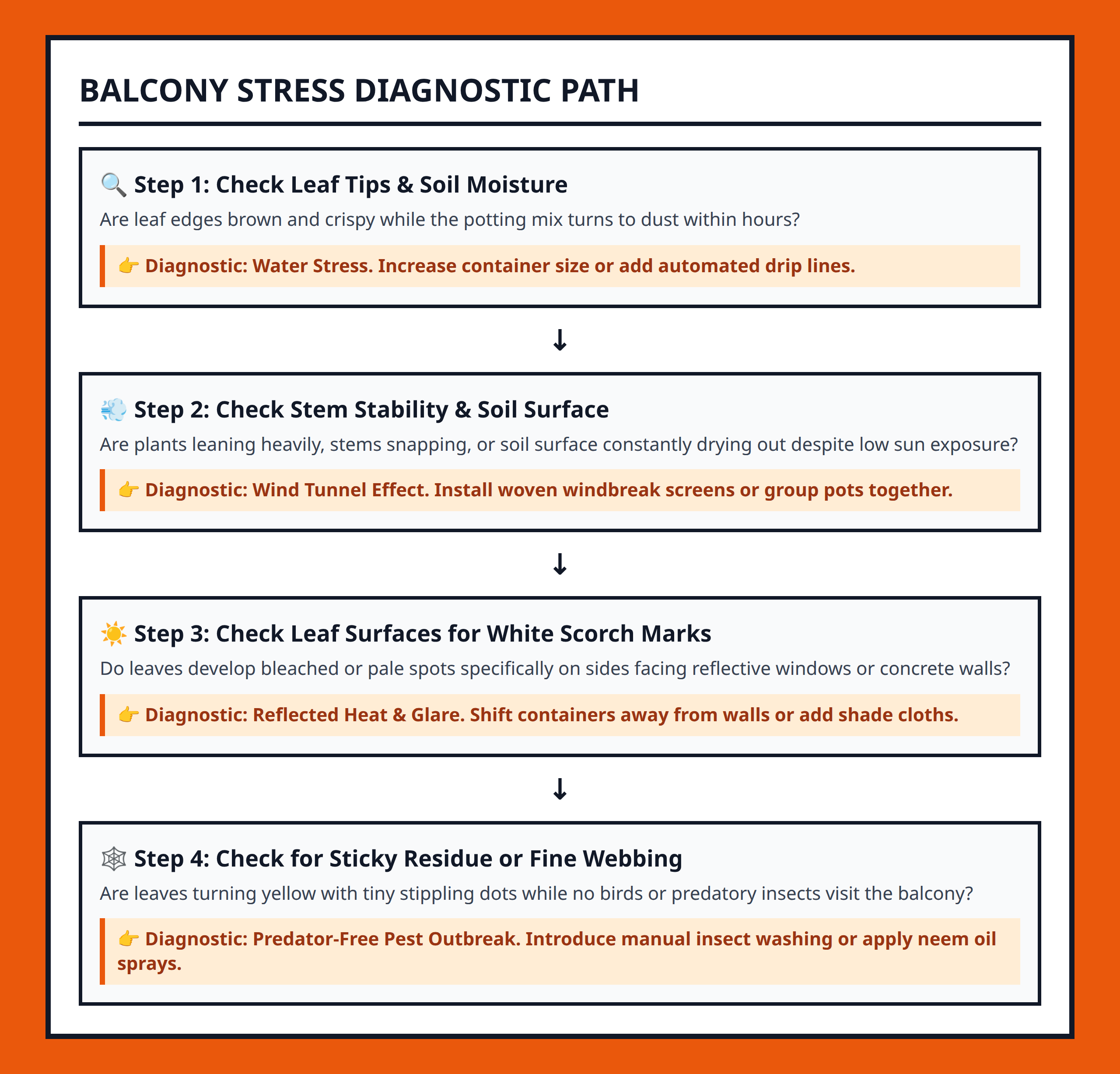
A common beginner experience goes something like this: the plants look healthy in the morning, temperatures rise during the afternoon, then suddenly leaves droop dramatically by evening. The gardener assumes disease or nutrient problems when the real issue is simply environmental stress.
Some balconies even require watering twice a day during peak summer heat.
The problem becomes worse because containers exposed to wind and direct sun lose moisture from all sides, not just the surface.
Wind Is More Damaging Than Most People Realize
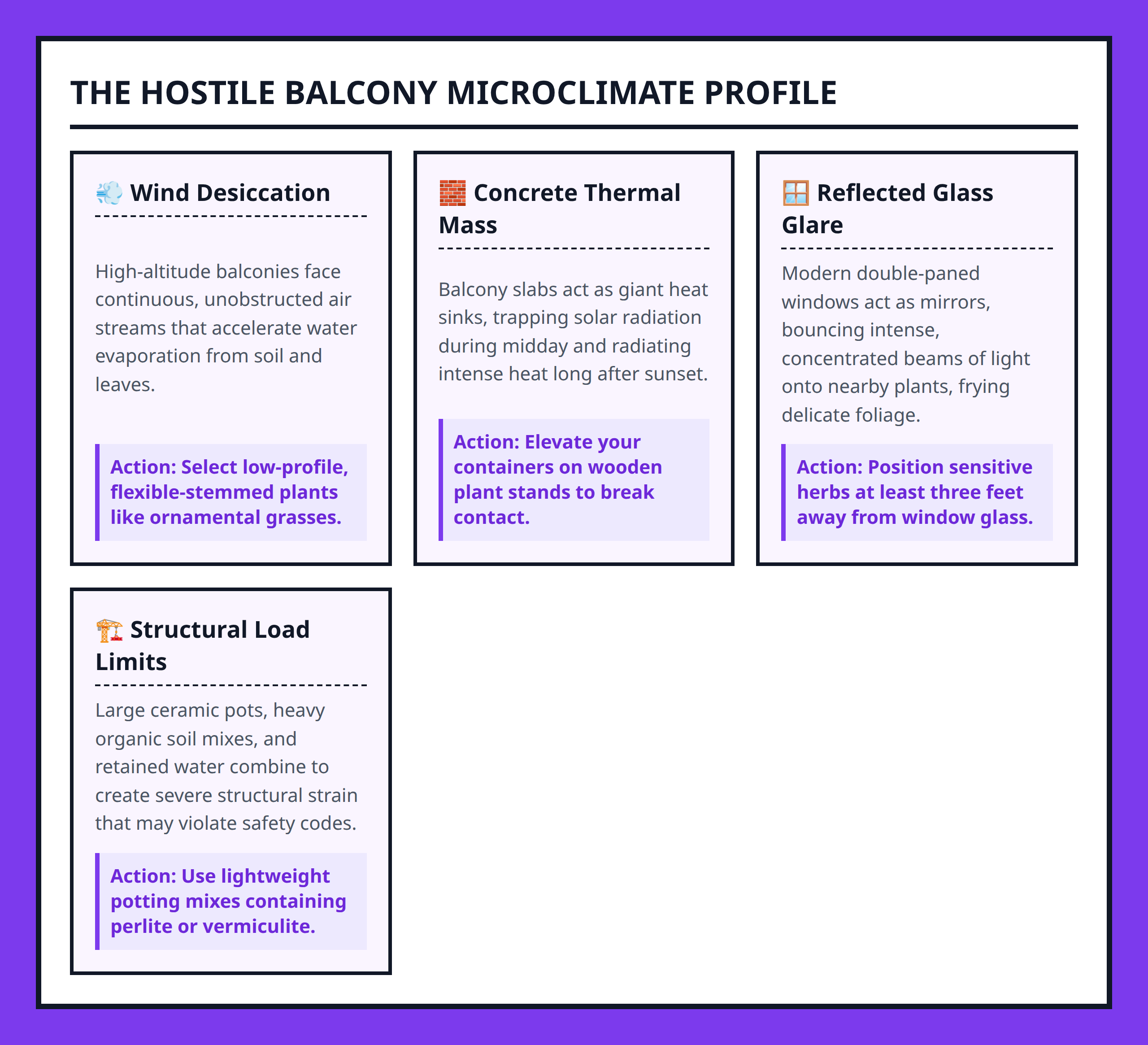
High-rise balconies and rooftop spaces often experience stronger wind than ground-level gardens.
Buildings redirect airflow in strange ways. Wind speeds increase around corners and open edges. Air bounces off walls and creates turbulent gusts that hit plants unevenly.
I’d never assume all parts of a balcony experience the same conditions.
One section may stay relatively protected while another gets hammered by redirected wind every afternoon.
Strong wind creates several problems at once:
- Leaves lose moisture faster
- Containers dry more quickly
- Weak stems bend or break
- Heat stress becomes worse
- Plants struggle to maintain stable growth
At the same time, some airflow is beneficial because plants need air circulation and some crops depend on moving air for pollination.
That balance matters. A completely sheltered balcony behaves differently from an exposed upper-floor corner unit.
I also think wind damage gets underestimated because it rarely looks dramatic at first. Plants simply stop thriving. Growth slows. Leaves become stressed. Fruit production weakens.
Balconies Have Fewer Helpful Insects Than People Expect
One surprising balcony problem is isolation from normal garden ecosystems.
Many balconies receive very few pollinators and beneficial insects compared to ground-level gardens.
That matters more than beginners expect.
Plants like melons and squash may struggle with pollination when bees rarely visit the balcony. At the same time, harmful insects such as aphids, spider mites, and whiteflies can still appear because they often arrive on purchased plants.
The frustrating part is that their natural predators may never show up in meaningful numbers.
I’d pay close attention to new plants brought onto a balcony because pest problems can persist season after season once established in a confined space.
A small spider mite outbreak in a backyard garden may eventually balance itself naturally. On a balcony, the infestation may simply keep cycling because the ecosystem is incomplete.
Weight and Building Rules Quietly Shape What You Can Grow
Some balcony limitations are structural rather than biological.
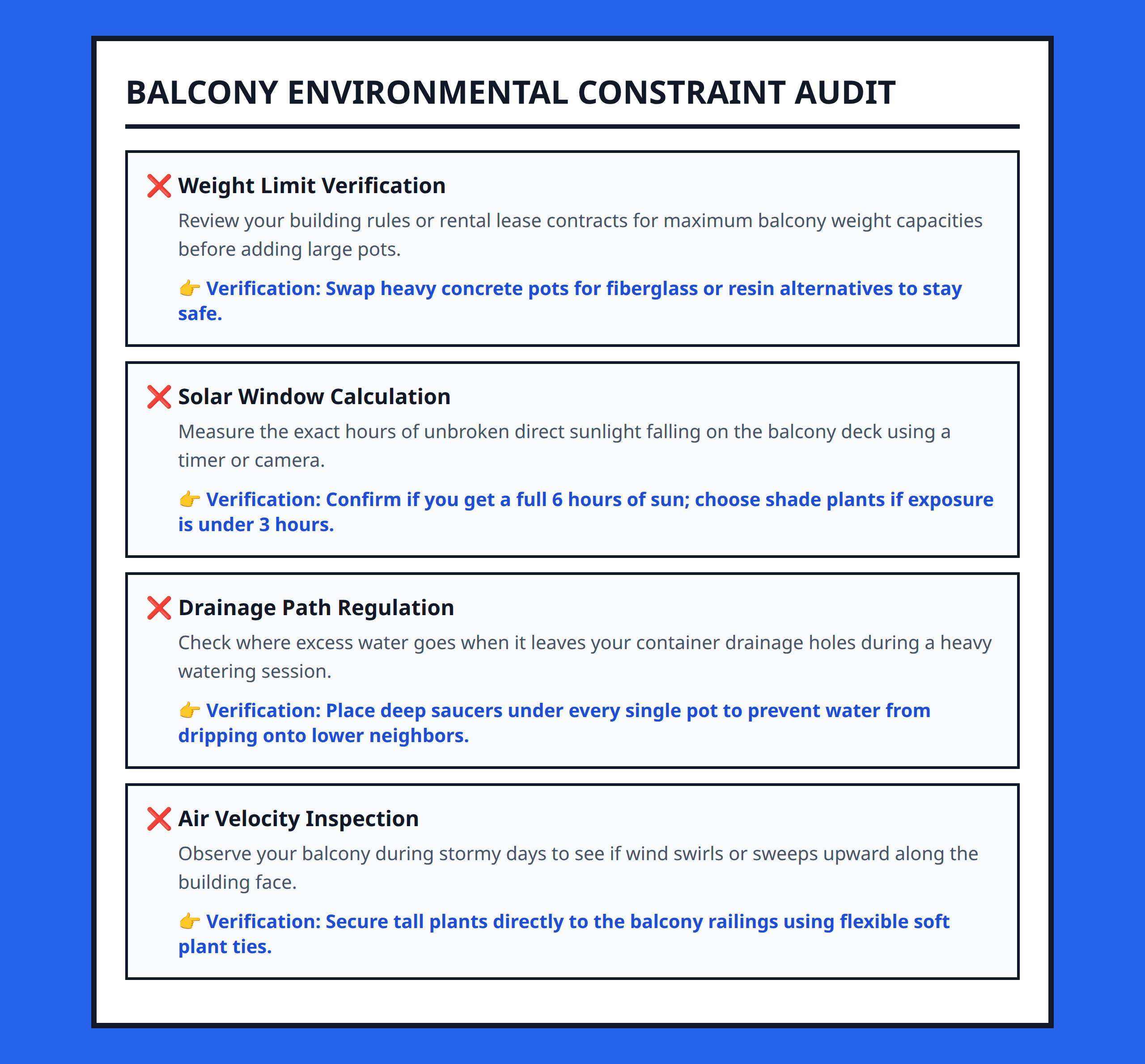
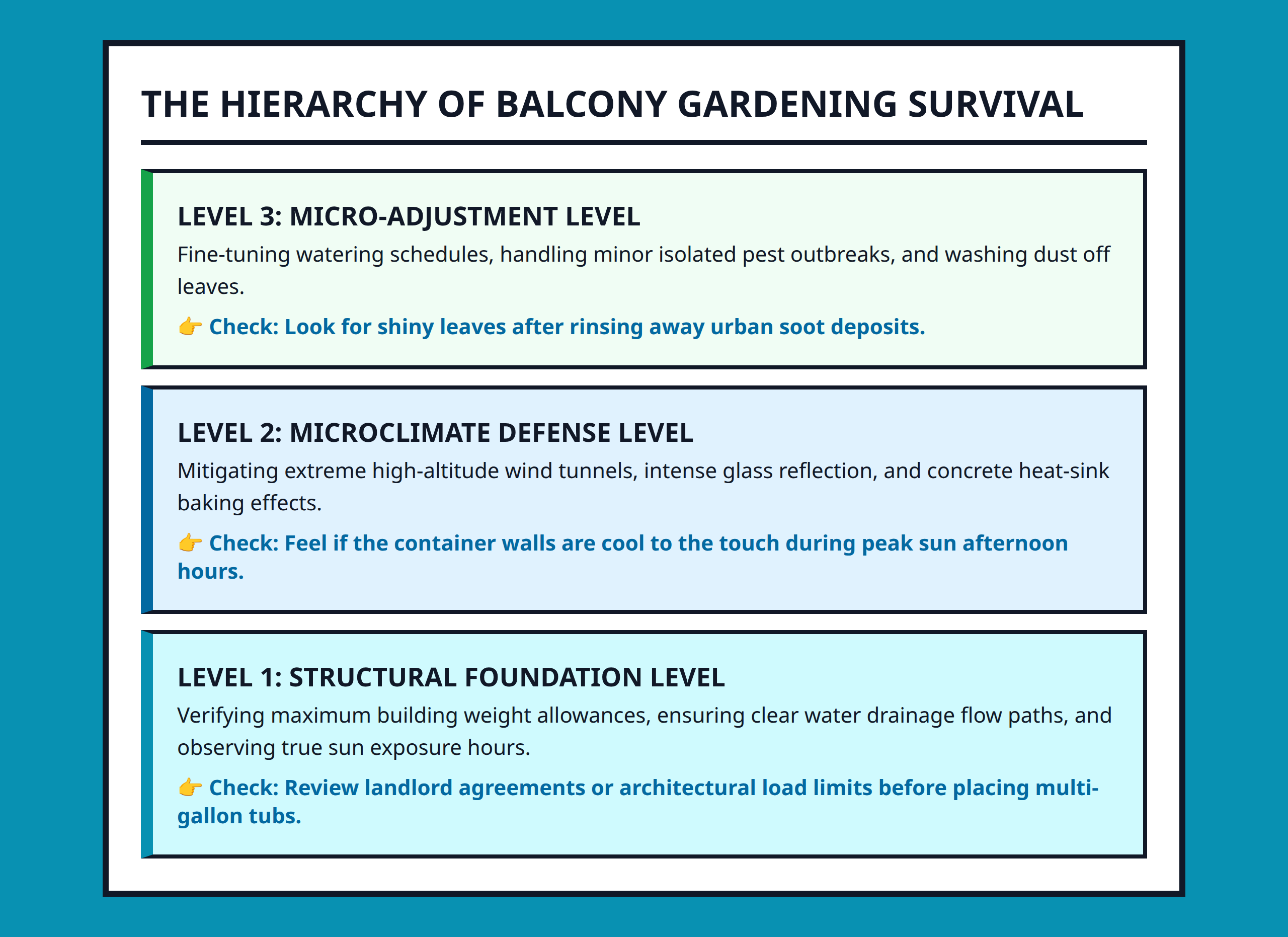
Large containers filled with wet soil become extremely heavy. A few mature vegetable containers can collectively weigh hundreds of pounds after watering.
That reality changes how practical certain gardening setups become.
I’d also consider mobility. Heavy containers are difficult to reposition when weather conditions change or sunlight shifts across the season.
Then there are building restrictions.
Many apartment and condo buildings limit what residents can place on balconies. Height restrictions, visibility rules, drainage concerns, and complaints from neighbors all affect what kind of garden can realistically exist there.
Even water runoff becomes an issue in shared buildings. A person may enthusiastically water containers without realizing it drips directly onto another resident’s balcony below.
These sound like small details until they start limiting how the garden functions day to day.
The Most Successful Balcony Gardeners Adapt to the Balcony Instead of Fighting It
The gardeners who usually enjoy balcony growing long term are not necessarily the most skilled gardeners overall.
They are often the people who stop trying to force backyard expectations into an urban structure that behaves differently.
I’d rather grow fewer healthy plants that match the balcony conditions than overcrowd the space with vegetables that constantly struggle.
That shift in thinking changes almost everything.
Once the balcony itself becomes the starting point, problems become easier to diagnose. Weak sunlight explains poor fruiting. Fast-drying containers explain afternoon wilting. Wind exposure explains damaged leaves. Structural shade explains uneven growth.
The environment starts telling a coherent story instead of making gardening feel random.
That’s the point I’d want beginners to understand early: balcony gardening is less about copying traditional gardening advice and more about learning how your specific balcony behaves as a growing environment.
- Micro-environment: A small area with its own unique environmental conditions, such as temperature, airflow, moisture, and sunlight patterns.
- Direct sunlight: Sunlight that reaches plants without being blocked by walls, buildings, railings, or overhangs.
- Container gardening: Growing plants in pots, buckets, or planters instead of directly in the ground.
- Pollination: The process that allows flowers to produce fruit or seeds, often helped by insects like bees.
- Spider mites: Tiny plant pests that damage leaves by feeding on plant tissue, especially in hot and dry environments.
- Overhang: A structure above a balcony that creates shade below it.
References:
- https://www.urbanplant.in/a/blog/how-to-fix-balcony-gardening-mistakes
- https://www.reddit.com/r/gardening/comments/1aq5bbw/what_advice_would_you_give_to_an_absolute/
- https://www.reddit.com/r/gardening/comments/1aq5bbw/what_advice_would_you_give_to_an_absolute/kqaryjo/
- https://www.reddit.com/r/sustainability/comments/12bjllf/are_backyard_food_gardens_better_or_worse_for_the/
- https://www.reddit.com/r/japanlife/comments/127p8y0/why_dont_i_ever_see_anyone_on_their/
- https://yardveggie.com/balcony-gardening-mistakes/
- https://www.youtube.com/watch?v=891z2U1FV_Q
- https://www.unsw.edu.au/newsroom/news/2020/04/why-you-need-a-balcony-garden
- https://www.pollinator.org/blog/balcony-gardens
- https://www.linkedin.com/posts/reneepmurphy_organicgardening-plantnative-ecosystem-activity-7413437651904552960-4klw
- https://www.flowerpower.com.au/garden-advice/gardening/privacy-plants-balconies/
- https://www.plantsandflowersfoundationholland.org/en/how-create-green-balcony/
