Community Supported Agriculture (CSA) and share farming offer practical alternatives for growers who want to access land, share risk, and build stronger community connections without relying entirely on traditional independent farming models.
Many new growers assume they must secure land, equipment, customers, and financing on their own before starting a market garden. What stands out to me is that some of the most practical solutions come from sharing resources, responsibilities, and rewards with others.
CSA projects and share farming arrangements take a different approach. Instead of carrying all the financial and operational pressure alone, growers work with communities, landowners, or other farmers to create a more resilient business structure.
Takeaways
- CSA members help support a farm financially before crops are harvested.
- Share farming can provide access to land and infrastructure without full ownership.
- Community involvement can reduce labor pressure through volunteer participation.
- Organizations such as land trusts can help growers gain access to suitable farmland.
- These models offer benefits, but they also require collaboration and shared decision-making.
Why Cooperative Growing Models Appeal to New Market Gardeners
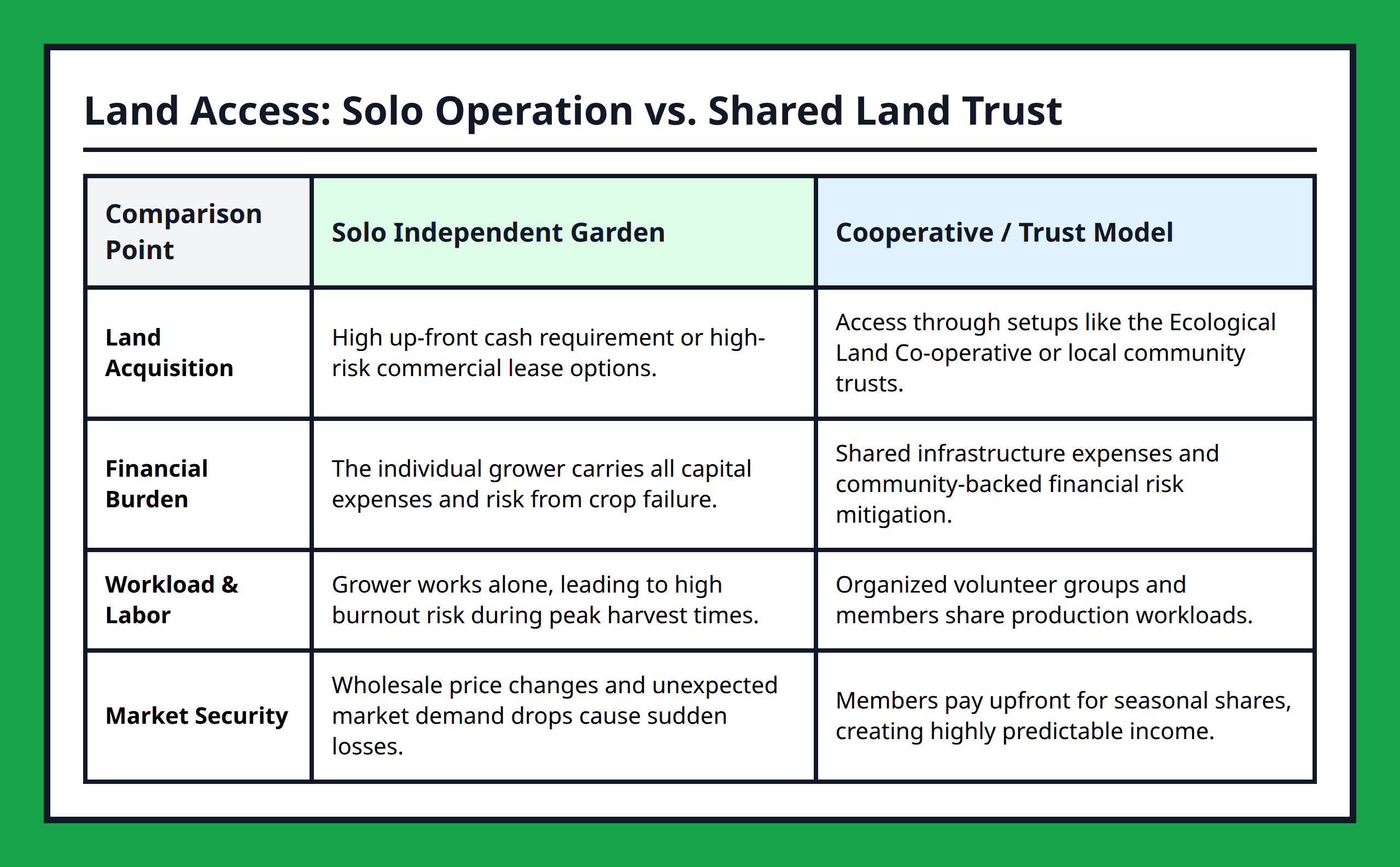
One challenge that repeatedly appears in small-scale farming is the gap between enthusiasm and available resources. A grower may have skills and motivation but lack affordable land, equipment, or startup capital.
This is where cooperative models become attractive. Rather than solving every problem independently, they spread responsibilities across a wider network. I would view this as a practical business decision rather than simply a community-minded one.
Imagine a grower who has access to customers but not enough land. Another person may have unused land but no interest in managing a vegetable operation. A cooperative arrangement allows both parties to benefit from assets that would otherwise sit unused.
How Community Supported Agriculture Works
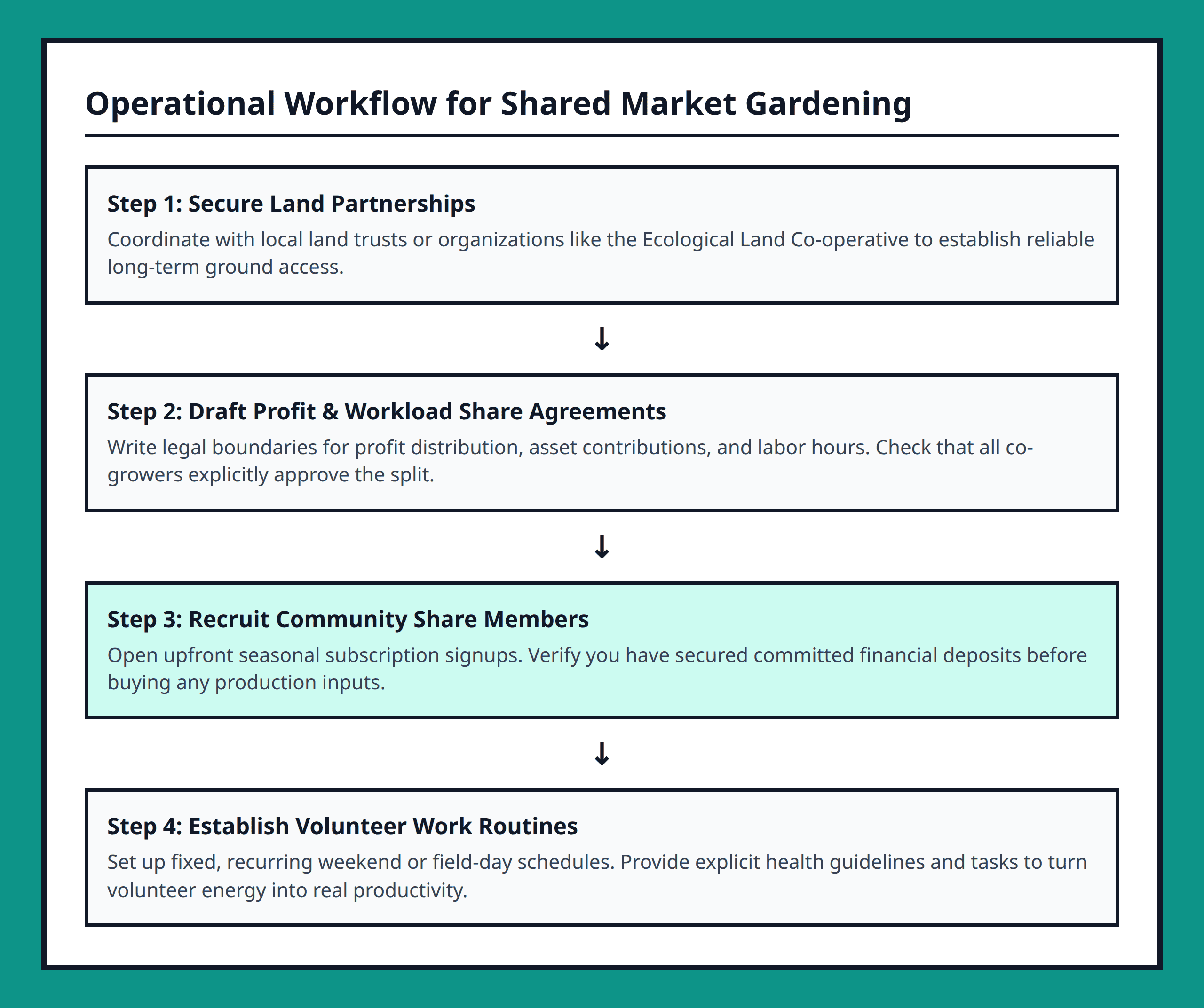
Community Supported Agriculture is built around a simple idea: customers become supporters before the growing season begins. Instead of purchasing vegetables one week at a time, members commit to the farm in advance and receive a share of the harvest during the season.
This changes the financial picture significantly. The grower receives income before harvest, helping cover seeds, materials, and operating costs. Members, in return, receive fresh produce and become directly connected to local food production.
I see the most important feature as risk sharing. If weather conditions reduce yields, the burden does not fall entirely on the grower. Members understand that farming involves uncertainty and participate in both the rewards and challenges of the season.
A typical example might involve local families signing up for weekly vegetable boxes. Instead of wondering whether enough produce will sell at market each week, the grower begins the season knowing a portion of production already has committed buyers.
What Share Farming Brings to the Table
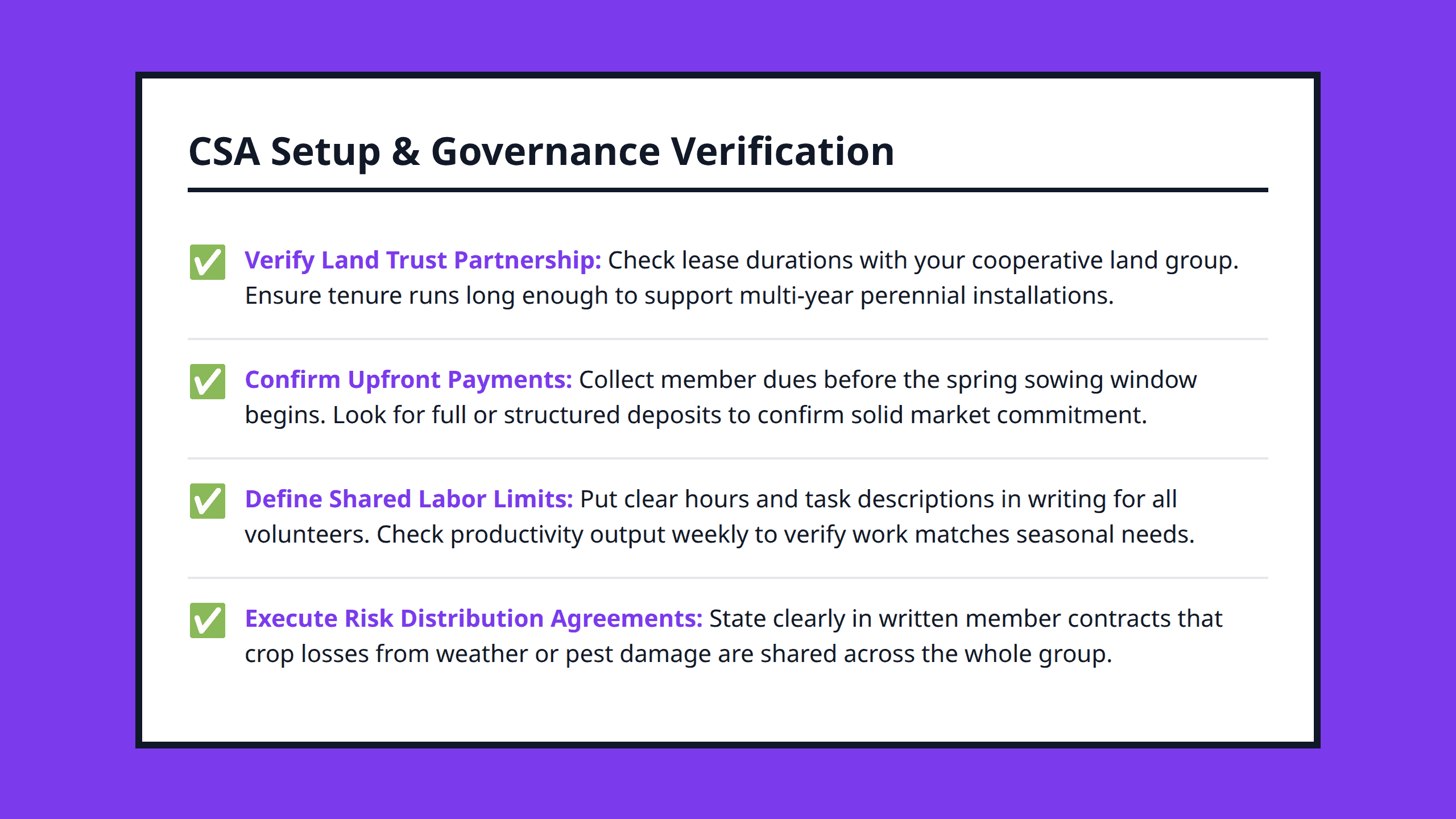
While CSA focuses on the relationship between growers and consumers, share farming focuses on cooperation between growers and landholders or existing farms.
In a share farming arrangement, different parties contribute resources and share the benefits. One partner may provide land while another contributes labor, expertise, or equipment.
I would pay close attention to what each party contributes and how responsibilities are divided. Clear expectations are important because misunderstandings can quickly undermine a promising partnership.
The practical advantages can be substantial:
- Reduced startup costs.
- Access to existing infrastructure.
- Shared maintenance responsibilities.
- Lower financial risk.
- Opportunities to learn from experienced farmers.
For many new growers, gaining access to productive land may be more valuable than immediate ownership.
The Role of Land Trusts and Community Projects

Some growers find opportunities through organizations that actively support access to farmland. Land trusts and cooperative land initiatives help protect agricultural land while making it available to people who want to farm.
Examples such as land-based cooperative projects demonstrate that farmland access does not always require purchasing property outright. Instead, growers can participate in structured arrangements designed to support sustainable food production and long-term stewardship.
When evaluating these opportunities, I would look beyond the land itself. Some projects provide additional benefits such as mentoring, shared facilities, or a network of experienced growers. Those resources can be just as valuable as the acreage.
Volunteers Can Strengthen a Community-Based Garden

One feature that often distinguishes community-supported projects is volunteer involvement. People who care about local food production frequently want to contribute time as well as money.
A realistic example might be a weekend workday where members help with harvesting, bed preparation, or general maintenance. These activities reduce labor pressure while strengthening the connection between the farm and the people it serves.
I would still treat volunteers as a supplement rather than a replacement for dependable labor. Community support is valuable, but essential farm operations should not rely entirely on unpredictable attendance.
The Trade-Offs Are Just as Important as the Benefits

Every cooperative model requires compromise.
Independent growers enjoy complete control over decisions, schedules, and priorities. CSA projects and share farming arrangements often involve consultation, communication, and shared expectations.
That trade-off is not necessarily a disadvantage. The key question I would ask is whether the benefits of shared resources, reduced risk, and community support outweigh the loss of complete independence.
For many small-scale growers, the answer is yes. Access to land, committed customers, volunteer support, and collaborative partnerships can make a market garden viable much sooner than a fully independent approach.
- CSA (Community Supported Agriculture): A farming model where members financially support a farm before harvest and receive a share of the produce during the season.
- Share Farming: A partnership where different parties contribute resources such as land, labor, or equipment and share the benefits.
- Land Trust: An organization that helps protect and manage land, often supporting agricultural use and long-term stewardship.
- Volunteer Labor: Work provided by community members who contribute time to support a project without standard employment arrangements.
- Community Project: A collaborative initiative involving local people who support, participate in, or benefit from a shared activity such as food production.
References:
- https://civileats.com/2018/10/03/co-op-farming-models-might-help-save-americas-small-farms/
- https://www.sharedassets.org.uk/resources/community-models-for-farm-ownership-2023-24
- https://farmlandaccess.org/collaborative-farming/
- https://www.linkedin.com/pulse/cooperative-farming-together-baljeet-singh
- https://www.youtube.com/watch?v=xypMUcuJhVw
- https://about.openfoodnetwork.org.au/project/multi-farm-cooperative-csa/
- https://medium.com/@Spore_Magazine_54746/new-generation-cooperatives-4160c92ad1dc
- https://ncbaclusa.coop/resources/co-op-sectors/agriculture-co-ops/
- https://www.chsinc.com/
- https://cooperativesfirst.com/types-of-cooperatives/
