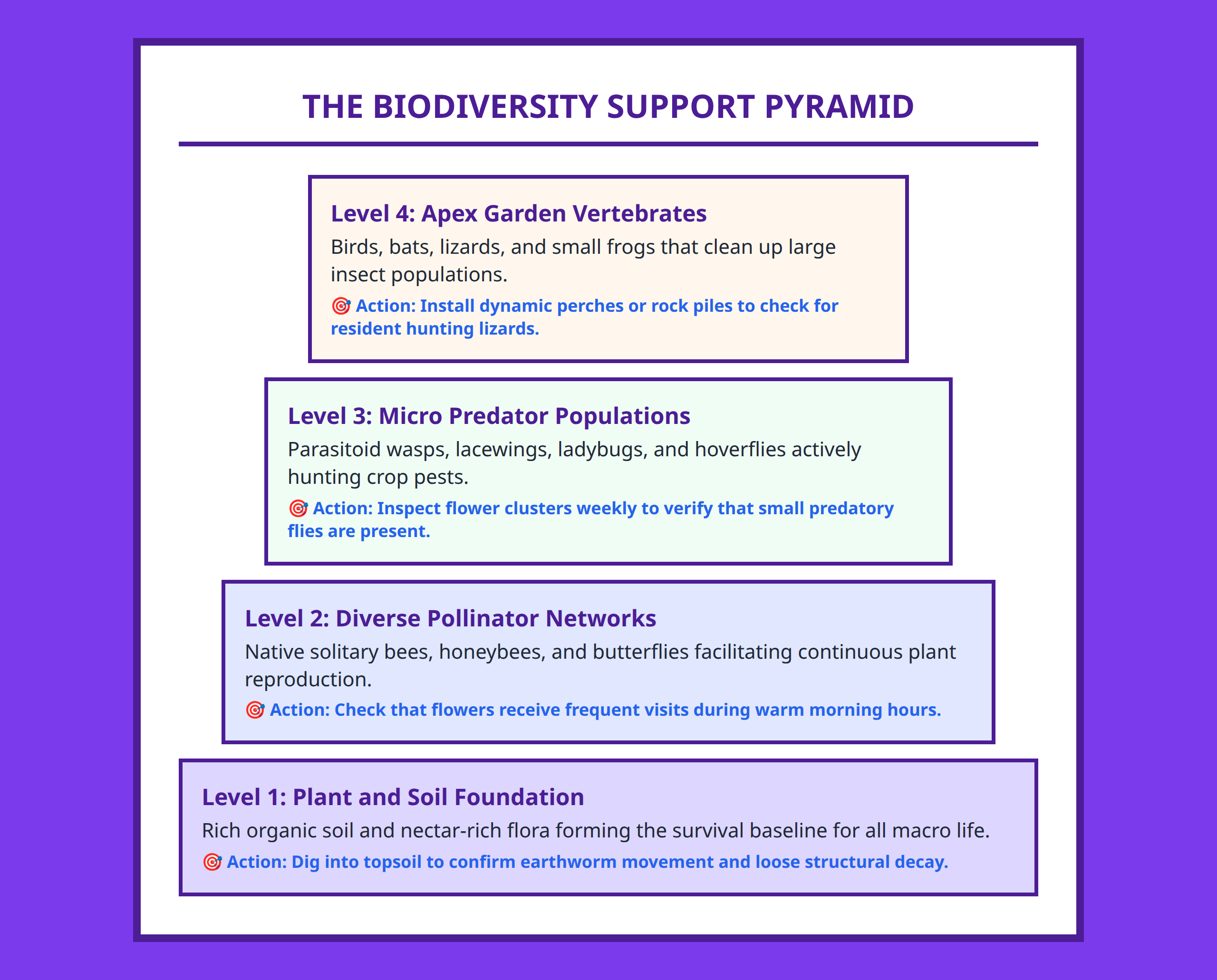
Beneficial insects matter because gardens function more reliably when pollinators, predator insects, birds, reptiles, water access, and plant diversity work together. A biologically active garden often needs fewer interventions because many pest and pollination problems begin balancing themselves naturally.
I think many gardeners still look at insects one species at a time. If something chews leaves, it becomes a pest. If something pollinates flowers, it becomes helpful. But gardens usually behave more like connected ecosystems than isolated problems.
What changed the way I think about gardening was noticing how often struggling gardens lacked diversity. The plants might still be alive, but the system around them felt empty. Few insects moved through the space. Birds rarely visited. Pollination stayed inconsistent. Pest outbreaks spread quickly because little biological resistance existed.
Once biodiversity improves, the garden often starts regulating itself more effectively.
Takeaways
- Pollinators support fruiting and seed production across many edible plants.
- Predator insects help regulate pest populations before outbreaks grow severe.
- Birds and small reptiles contribute to broader ecological balance.
- Flower diversity attracts a wider range of beneficial species.
- Water, shelter, and layered planting help beneficial wildlife remain active in the garden.
Diverse Gardens Usually Handle Stress Better
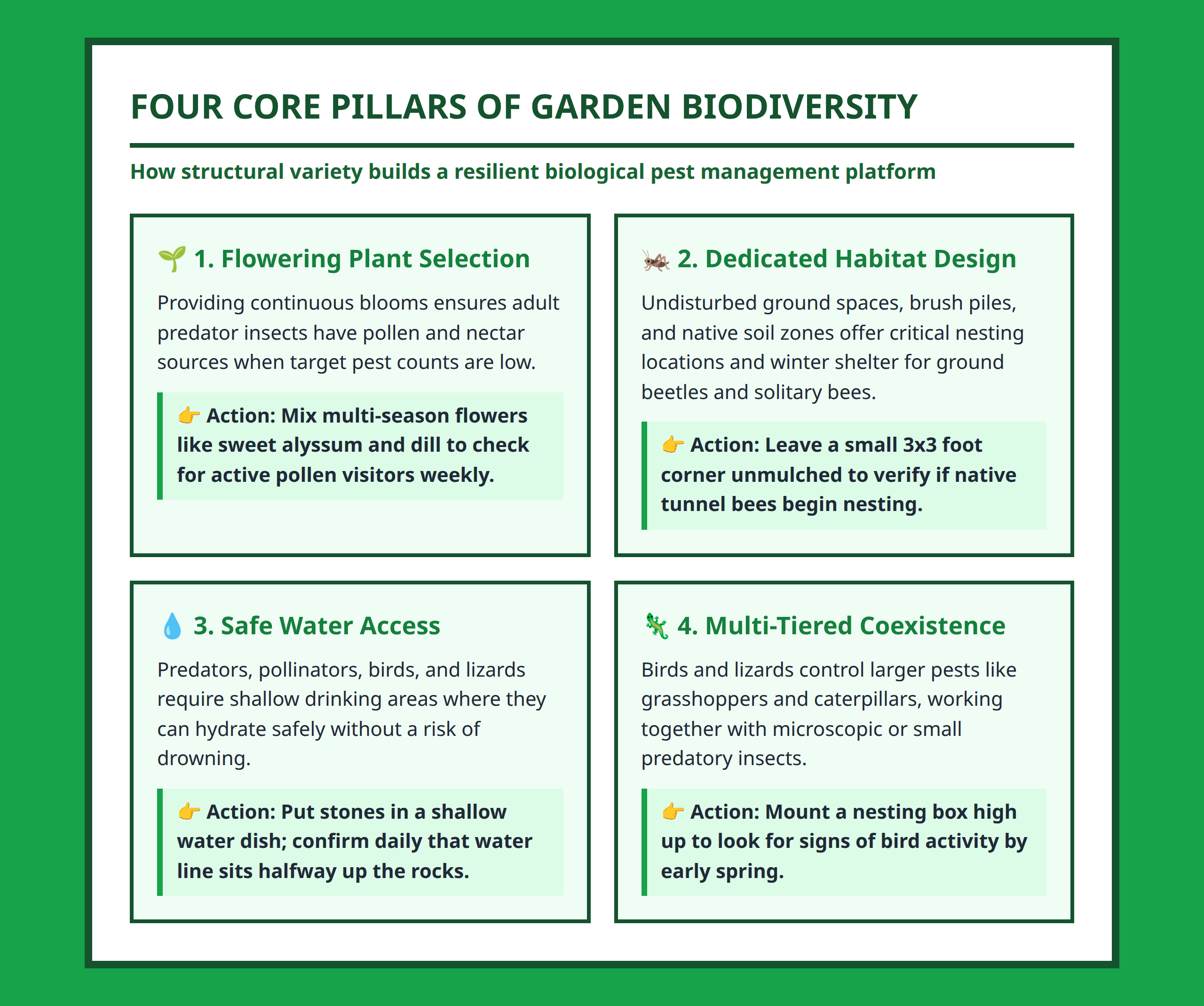
One thing I would pay attention to immediately is how plant diversity changes garden stability.
Gardens built around only one or two plant types often become easier for pests to exploit. Once a pest species finds a concentrated food source, the spread can happen quickly.
Diverse gardens interrupt that pattern.
Mixed planting creates more habitat variation, more flowering cycles, and more food sources for insects and wildlife that contribute to ecological balance.
I do not think this means every garden should become chaotic or overgrown. The useful point is that biological variety creates more interaction between species.
A small backyard with flowering herbs, vegetables, shrubs, and layered planting usually supports far more activity than a flat section of lawn with isolated decorative plants.
That activity matters because beneficial organisms rarely survive long in simplified environments with little shelter or food continuity.
Pollinators Quietly Influence Food Production
People often think about bees only when discussing honey or environmental campaigns. In practical gardening terms, pollinators directly affect how many plants successfully flower, fruit, and reproduce.
Bees, butterflies, and other pollinating insects transfer pollen between flowers, allowing many crops to develop properly.
I think this becomes easiest to notice in edible gardens.
A tomato plant may still grow leaves without strong pollinator activity, but many flowering crops produce more reliably when pollinators move consistently through the garden.
What I find important is that pollinators need more than the crop itself.
Continuous flowering matters.
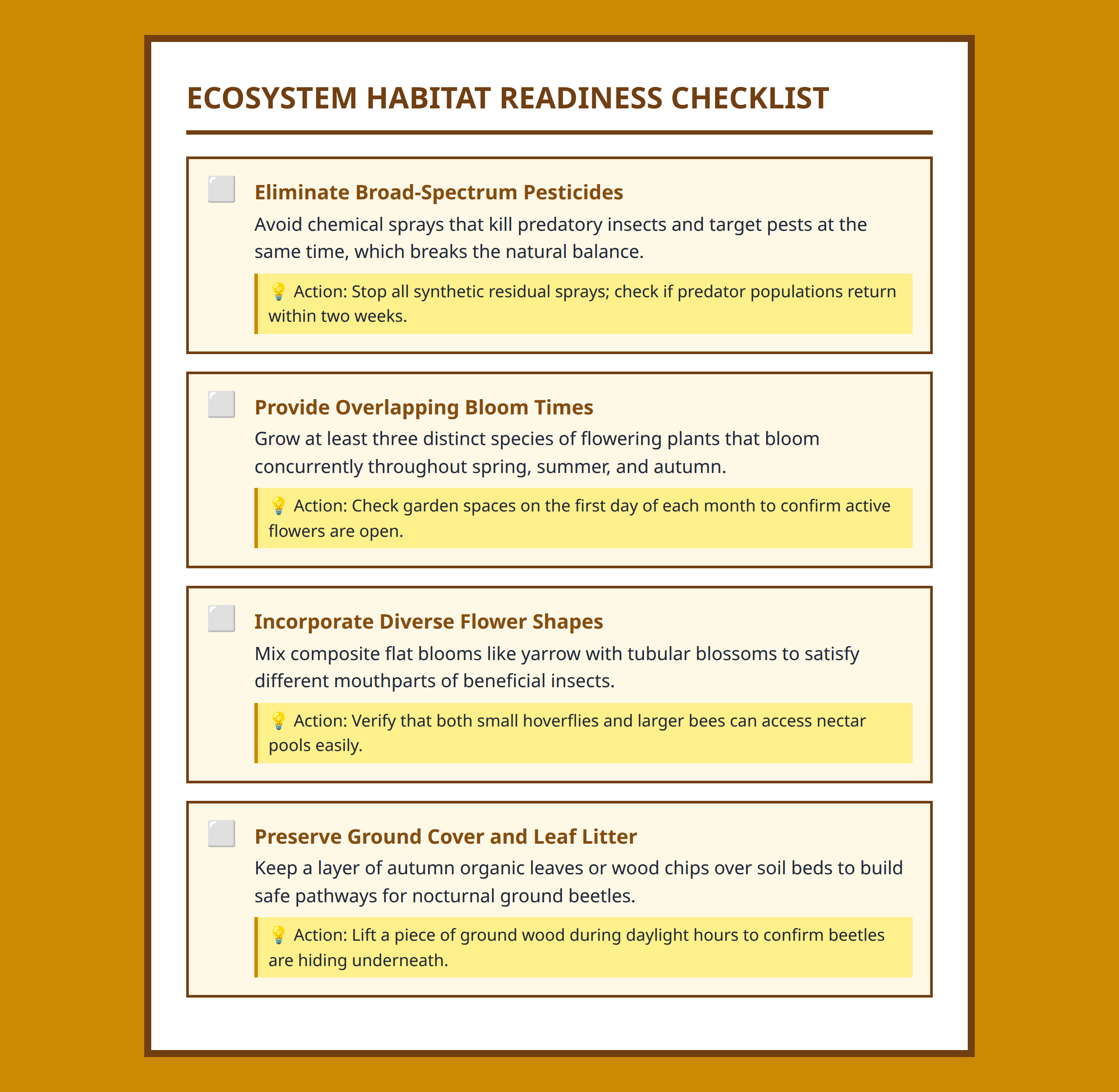
If a garden provides nectar only during one short period, pollinator activity often declines afterward. Gardens with mixed flowering plants across different seasons create steadier support systems.
A realistic example is a vegetable patch that flowers heavily for a few weeks while the rest of the yard contains little else for insects. Pollinator visits may stay inconsistent because the environment does not support them beyond that brief window.
Predator Insects Reduce Imbalance Before It Spreads
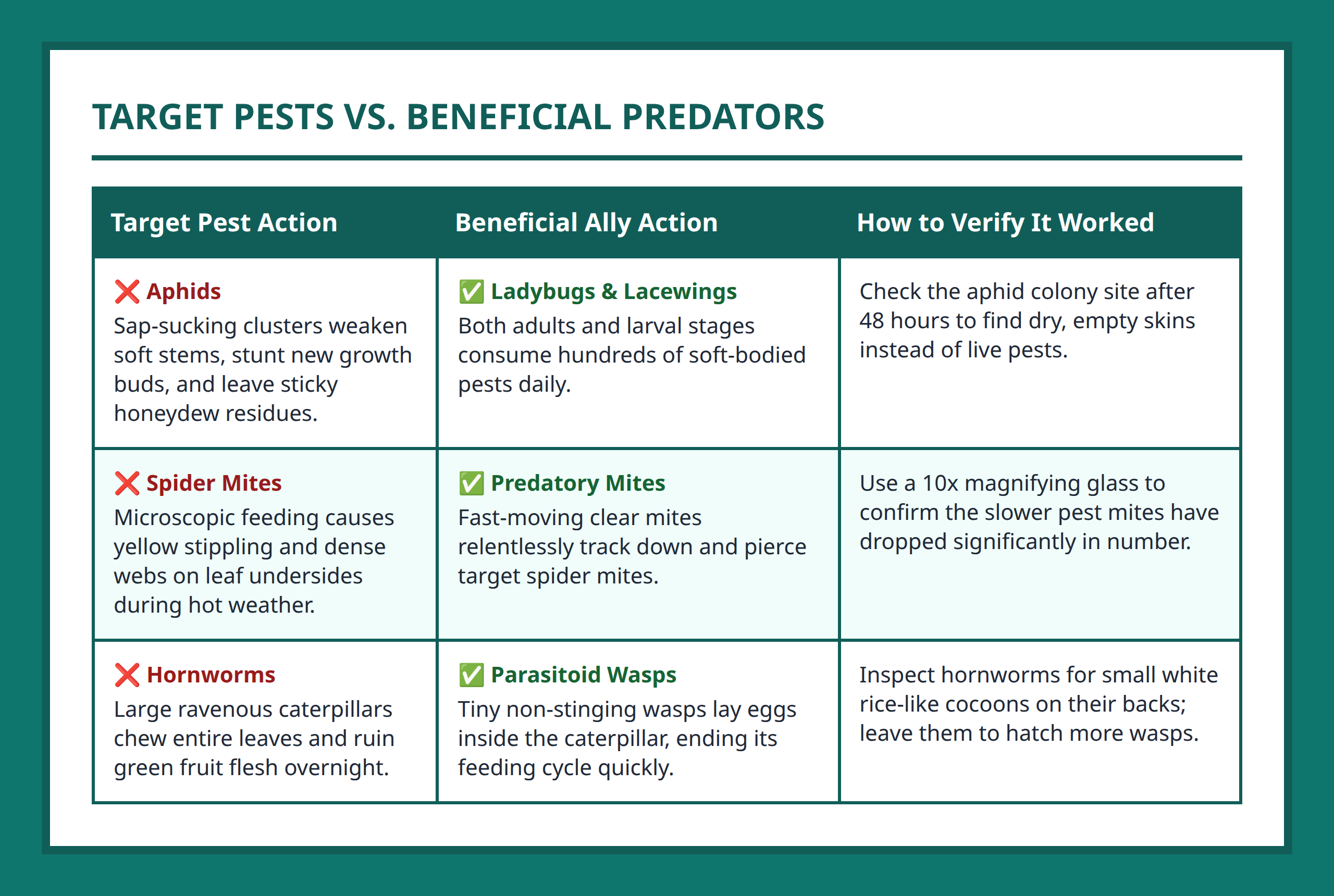
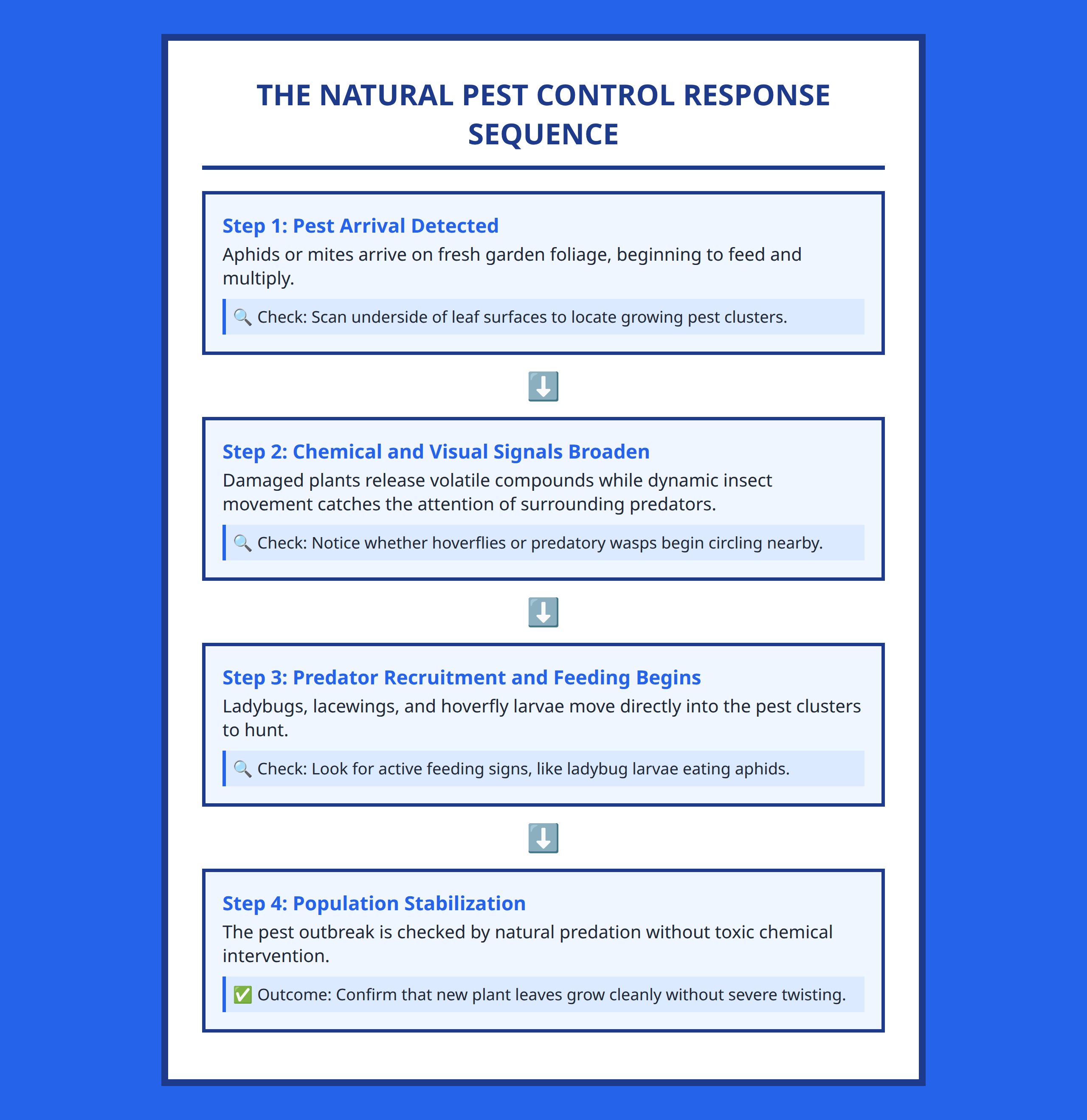
One reason beneficial insects matter so much is that pest control often begins before gardeners even notice a problem.
Predator insects such as ladybugs, lacewings, praying mantises, and predatory wasps feed on insects that would otherwise multiply rapidly.
I would think of them less as emergency pest removers and more as ongoing population regulators.
That distinction matters because ecological balance depends on small corrections happening continuously.
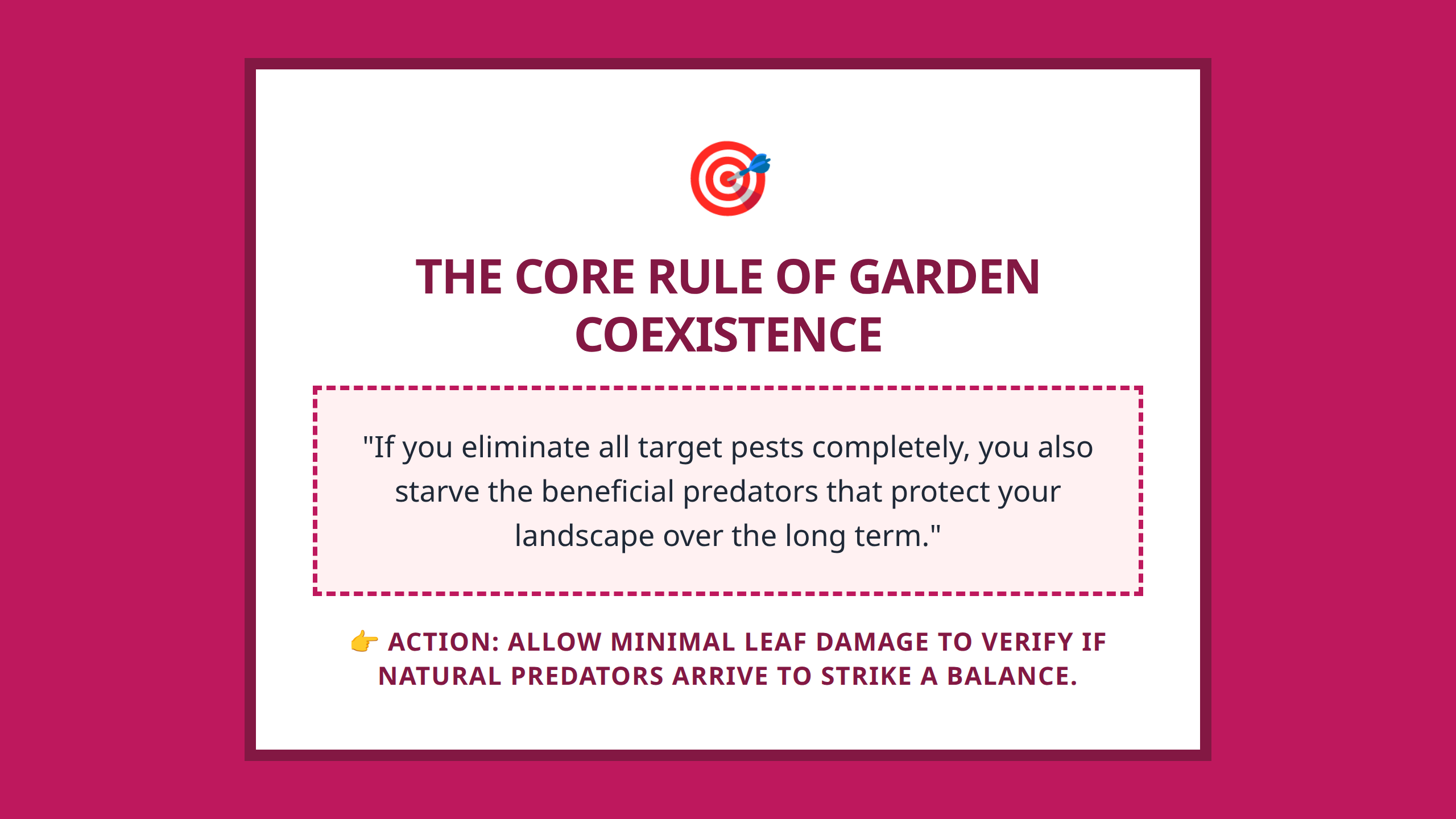
In gardens where beneficial predators disappear, pests often expand faster because nothing slows their growth early enough.
I also notice that broad chemical spraying tends to interrupt this balance badly.
A gardener may remove one visible pest outbreak temporarily while also removing predator insects that were helping regulate future outbreaks. The result is often a cycle of repeated intervention.
That is why I would rather support stable predator populations than rely entirely on reaction-based spraying.
Birds and Lizards Contribute More Than People Expect
Insects are not the only species helping regulate garden ecosystems.
Birds and small reptiles often contribute quietly to pest management and biological diversity.
Many birds feed on insects, larvae, and small garden pests while also helping move seeds and interact with surrounding habitat.
Lizards matter too.
I think gardeners sometimes overlook reptiles because they are less visible than bees or butterflies, but insect-eating lizards can become valuable parts of a balanced garden system.
The practical issue is habitat.
Completely stripped-back gardens with no shelter, layered planting, or protected spaces rarely support much wildlife activity.
A yard filled only with open paving and short lawn may look neat, but it often provides very little ecological function.
Flower Selection Changes Which Species Stay
Not all flowering plants support biodiversity equally.
I would pay attention to flower shape, flowering duration, and plant variety instead of focusing only on appearance.
Different insects prefer different flower structures and feeding conditions.
Some species rely on open flowers that are easy to access. Others prefer clustered flowering plants or seasonal bloom cycles that provide food at specific times of year.
That is one reason mixed flowering systems tend to support more insect diversity overall.
I also think gardeners underestimate how strongly color and scent affect insect behavior.
A garden with repeated flowering layers and varied bloom timing creates more reliable movement patterns for pollinators and beneficial insects than a garden where everything flowers briefly at the same time.
Water Access Helps Stabilize Garden Activity
One detail I used to overlook was how important water becomes for maintaining biodiversity.
Birds, insects, and small reptiles all depend on reliable access to water, especially during hotter periods.
This does not require large ponds or complicated installations.
Simple shallow water sources, damp shaded areas, and moisture-retaining planting zones can help beneficial species remain active longer.
The important part is safety and accessibility.
I would avoid deep exposed containers where insects struggle to land safely. Shallow water dishes with stones or textured surfaces tend to work better because smaller creatures can access water without becoming trapped.
Once wildlife begins returning regularly for water, the garden often becomes noticeably more active overall.
Ecological Balance Usually Looks Less Dramatic Than People Expect
I think many people expect healthy ecological gardening to produce obvious visible results immediately.
Most of the time, the signs are subtle.
You notice more insect movement between flowers. Birds begin visiting more often. Pest outbreaks stop escalating as aggressively. Flowering becomes more reliable. The garden starts feeling biologically active instead of visually planted.
That difference matters because healthy gardens are usually supported by many small interactions happening continuously.
When I look at resilient gardens now, I pay less attention to whether insects exist at all and more attention to whether enough different species are interacting to keep the system balanced over time.
- Pollinators: Insects or animals that transfer pollen between flowers, helping plants reproduce and produce fruit or seeds.
- Biodiversity: A variety of living species interacting within the same environment.
- Predator insects: Insects that feed on pest species and help regulate their populations naturally.
- Layered planting: A planting approach that combines groundcovers, shrubs, flowers, and taller plants to create varied habitat and structure.
- Ecological balance: A stable relationship between organisms in an environment where no single species dominates excessively.
- Nectar: A sweet liquid produced by flowers that attracts pollinators and other insects.
- Habitat diversity: A mix of shelter, food sources, moisture, and plant structures that supports different species in the garden.
References:
- https://www.youtube.com/watch?v=ot2CGLQ8puQ
- https://www.youtube.com/watch?v=BfePKgW1PNE
- https://www.youtube.com/watch?v=o_JIw74fQbA
- https://joegardener.com/podcast/predatory-beneficial-insects/
- https://extension.oregonstate.edu/catalog/pnw-550-encouraging-beneficial-insects-garden
- https://minimalistgardener.com.au/blogs/news/insects-that-are-a-sign-of-a-thriving-garden
- https://www.rhs.org.uk/wildlife/beneficial-insects-and-bugs
- https://www.missouribotanicalgarden.org/Portals/0/Gardening/GardeningHelp/Factsheets/Beneficials.pdf
- https://www.learningwithexperts.com/blogs/articles/how-to-encourage-beneficial-insects-in-your-garden
- https://prairieecologist.com/2021/10/04/why-do-insects-have-to-be-either-beneficial-or-pests/
- https://www.greenadelaide.sa.gov.au/news/2022-beneficial-garden-bugs
- https://www.pastortedwilson.org/does-exterminating-mice-and-insects-break-the-commandment-not-to-kill/
- https://www.huck.psu.edu/institutes-and-centers/insect-biodiversity-center/why-we-need-insects
