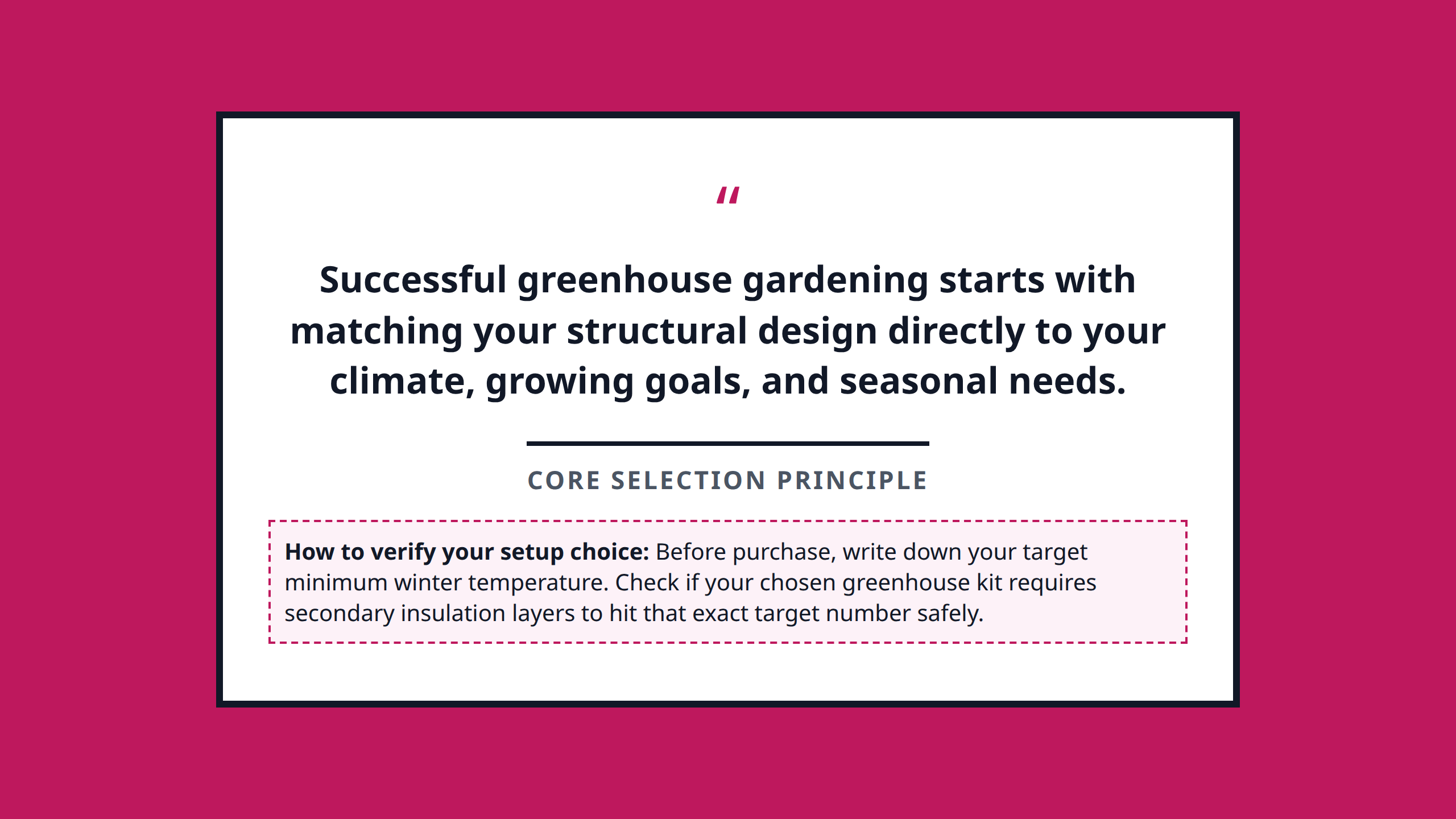
Greenhouse gardening becomes much easier when you understand that not all greenhouses serve the same purpose. The right choice depends on what you want to grow, how long you want to grow it, and how much time and money you are willing to invest in managing temperature, light, and ventilation.
Many people imagine that any greenhouse automatically creates a year-round growing paradise. I think this is one of the most common misunderstandings new gardeners have. A greenhouse can dramatically extend your growing season, but its actual capabilities depend on how it is built and how it is used.
Before buying materials, ordering a kit, or drawing construction plans, it helps to understand the major greenhouse types and the tradeoffs that come with each one. A simple structure that works perfectly for starting vegetable seedlings may be completely unsuitable for growing plants through winter.
Takeaways
- Choose a greenhouse based on your gardening goals, not just your budget.
- Freestanding greenhouses are excellent for extending the growing season but usually provide limited winter growing without additional heat.
- Attached greenhouses retain heat more effectively and can support year-round use.
- Ventilation is often a bigger challenge than cold weather because greenhouses can overheat surprisingly fast.
- Knowing what you want to grow will help determine the greenhouse design that makes the most sense.
Understanding the Main Types of Greenhouses
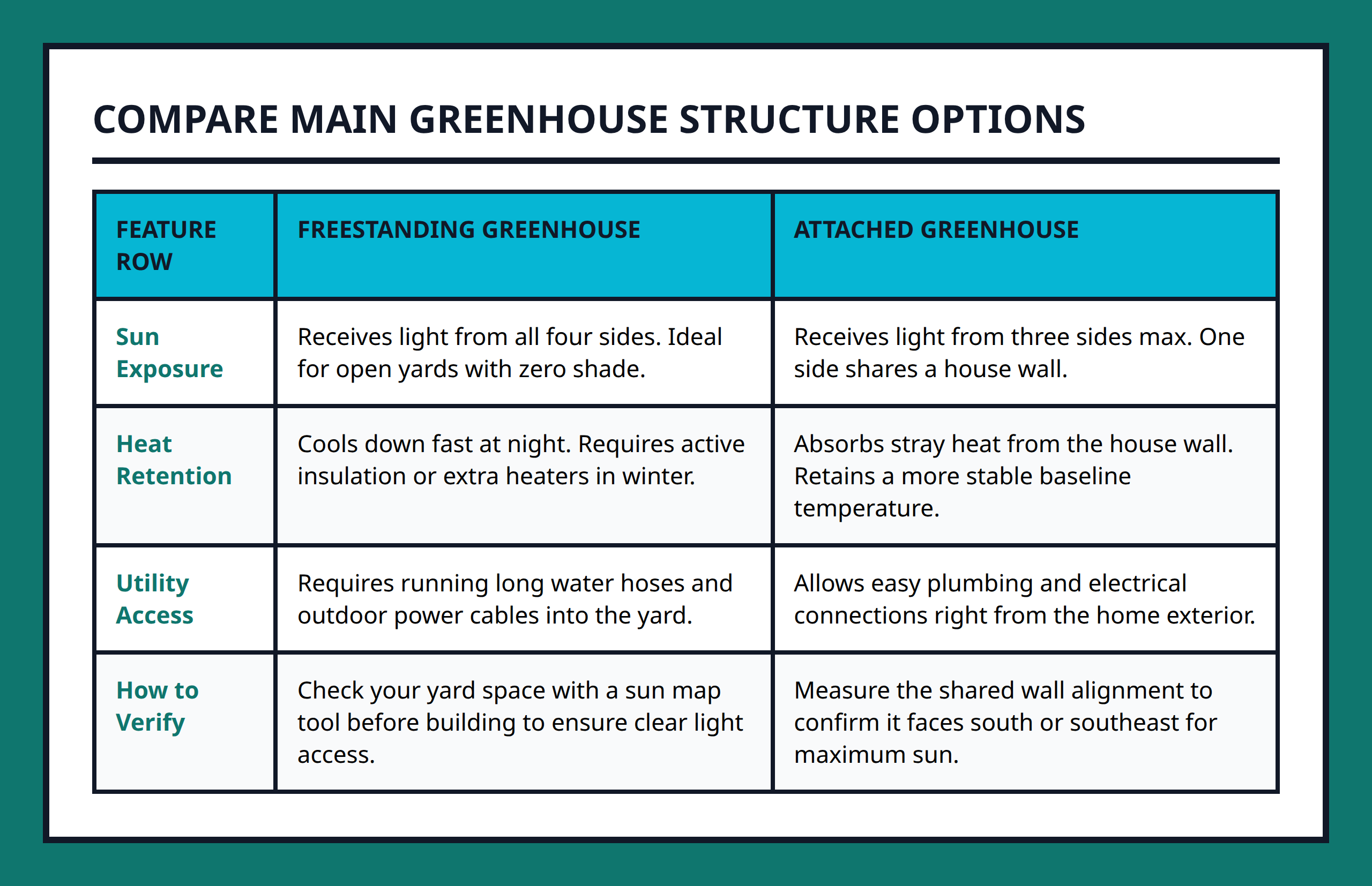
The most important greenhouse decision is choosing between a freestanding greenhouse and an attached greenhouse. Everything else flows from that choice.
Freestanding greenhouses stand alone and are usually located near a garden. They are often built with relatively inexpensive materials and are commonly used for seed starting, transplant production, and extending the growing season in spring and fall.
A freestanding greenhouse can provide a valuable head start for gardeners. Seedlings can be started earlier, plants can be protected from late frosts, and cool-weather crops can continue growing beyond the normal outdoor season. However, without substantial heating and lighting, nighttime temperatures inside remain only slightly warmer than outdoor temperatures.
Attached greenhouses are built as part of a home or connected directly to it. Traditional sunrooms and conservatories are examples of attached greenhouses. Because they share a wall with the house, they benefit from additional heat retention and are often designed for year-round use.
Many attached greenhouses include features such as insulation, double-pane glazing, water access, electricity, and thermal mass materials that help store heat during the day and release it gradually at night.
There is also a middle ground sometimes called a modified freestanding greenhouse. These structures may be partially built into the earth or backed against a wall or embankment to take advantage of natural insulation. Their goal is to retain more warmth without relying heavily on artificial heating.
How to Match a Greenhouse to Your Gardening Goals
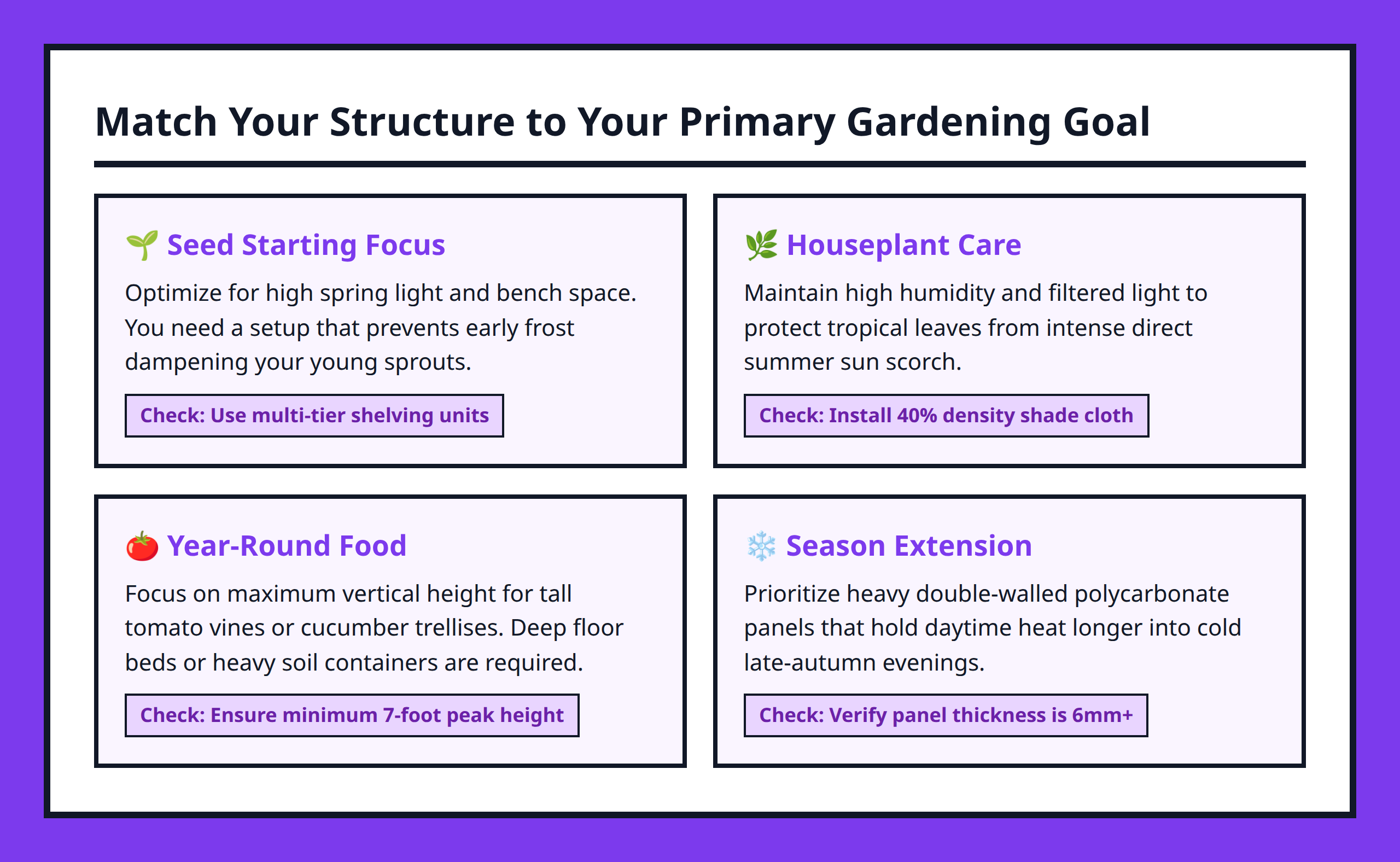
The best greenhouse is not necessarily the largest or most expensive one. It is the greenhouse that supports what you actually want to do.
| Gardening Goal | Suitable Greenhouse Type | Main Benefit |
|---|---|---|
| Starting vegetable seedlings | Freestanding | Extends spring growing season |
| Growing houseplants year-round | Attached | More stable temperatures |
| Season extension | Freestanding or modified freestanding | Protection from frost |
| Year-round plant growing | Attached | Better heat retention |
If your primary goal is to start tomatoes, peppers, flowers, or other garden transplants before outdoor conditions improve, a simple freestanding greenhouse may be all you need.
If you want to maintain houseplants through winter, keep tender plants alive year-round, or spend time inside the greenhouse during colder months, an attached greenhouse is usually a better fit.
Consider an illustrative example. One gardener may simply want stronger vegetable seedlings each spring. Another may want a warm room filled with plants throughout the year. Both need a greenhouse, but they need very different greenhouse designs.
This is why greenhouse planning should begin with a simple question: What do I want this greenhouse to do most of the time?
Heat Retention and Seasonal Growing Possibilities
The amount of heat a greenhouse can retain largely determines what can be grown and when.
Freestanding greenhouses excel at extending the growing season by several weeks or even months. They can protect plants from frost and provide favorable conditions during cool weather. Some cold-tolerant crops can continue growing surprisingly late into the year.
Attached greenhouses generally offer greater flexibility because they can draw warmth from the home while also capturing solar energy. Many designs incorporate materials such as water, stone, brick, sand, or masonry that absorb heat during sunny periods and release it slowly later.
The practical lesson is simple: extending a growing season requires much less energy than maintaining summer-like conditions throughout winter.
Many beginners underestimate this distinction. A greenhouse may successfully keep lettuce growing into cold weather while still being unsuitable for warm-season crops during the darkest parts of winter.
Common Greenhouse Planning Mistakes
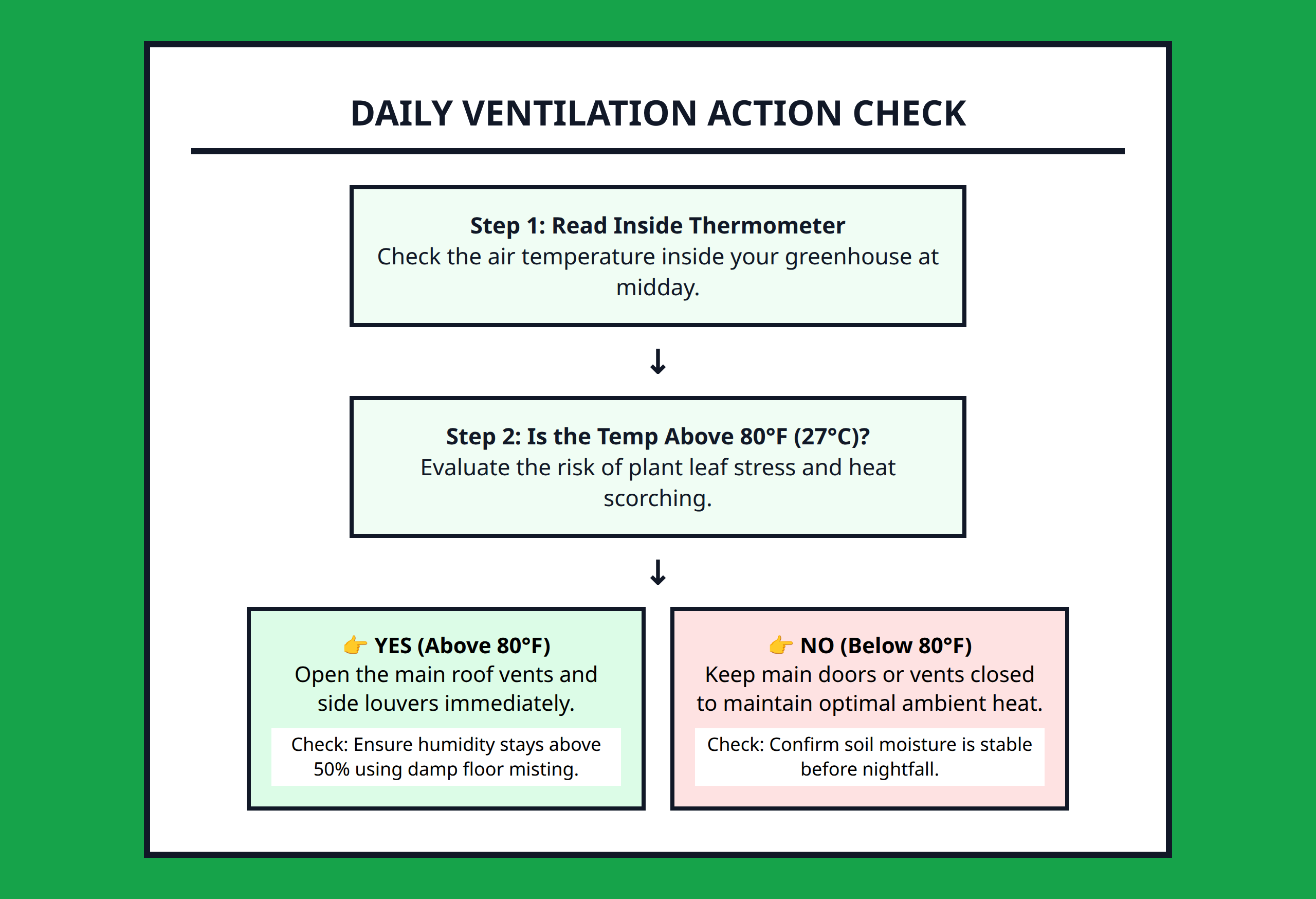
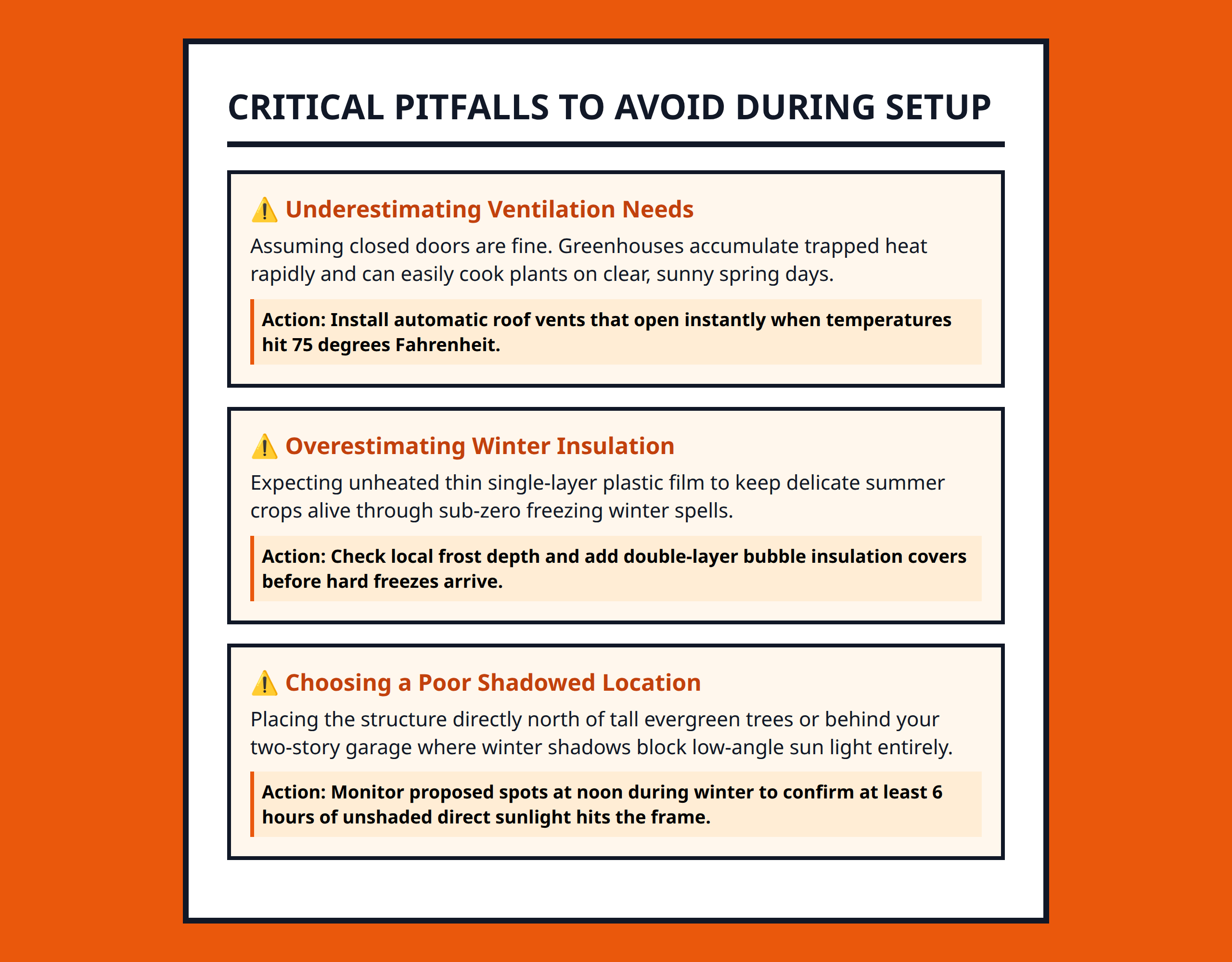
The biggest greenhouse mistake is often not cold—it’s heat.
Many gardeners carefully prepare for frost but overlook how quickly temperatures can rise inside a greenhouse. Even on a cool spring day, strong sunlight can create extreme heat if ventilation is inadequate.
Good ventilation is essential. Roll-up sides, vents, windows, or other airflow systems help prevent damaging temperature spikes.
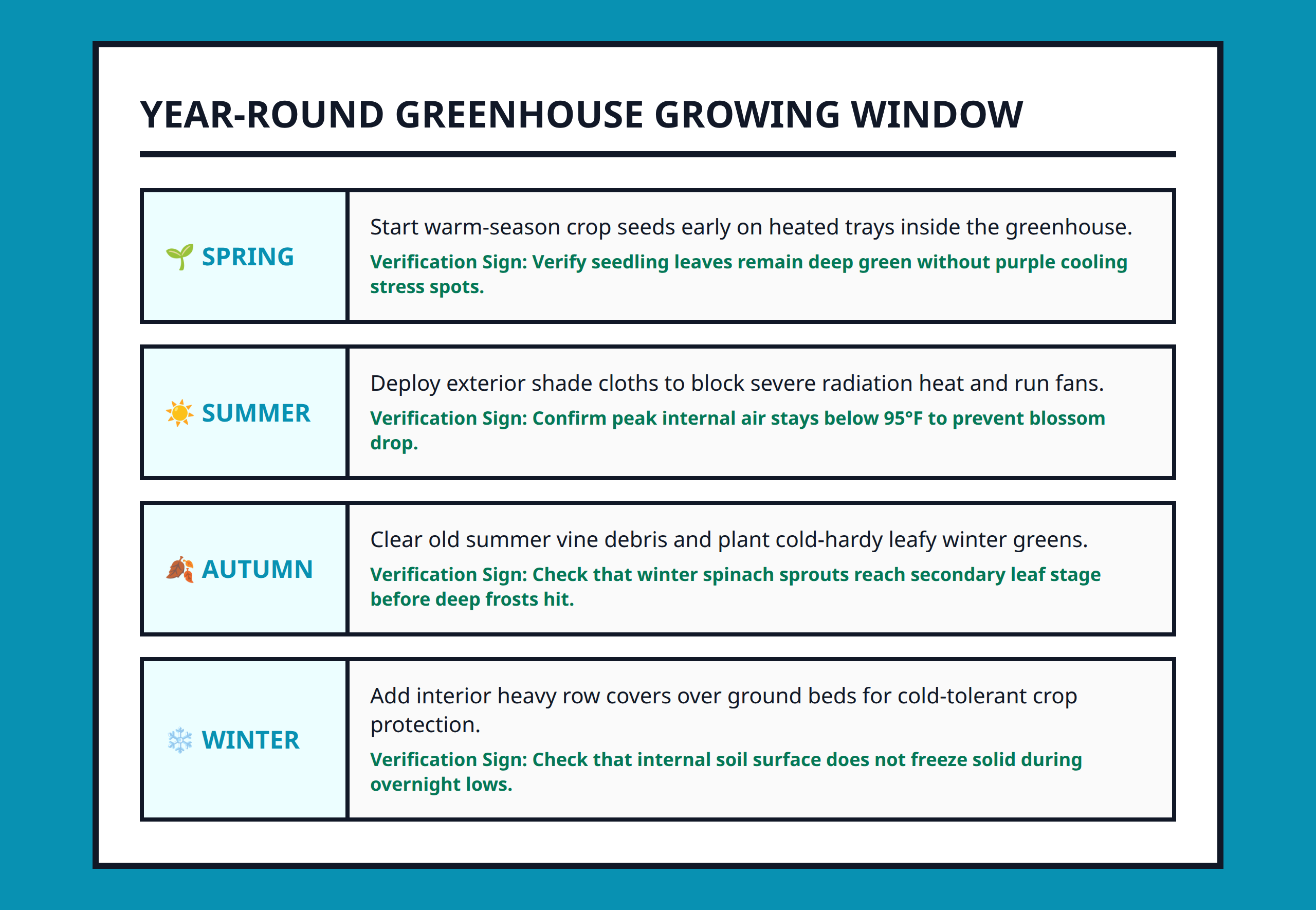
Another common mistake is assuming every greenhouse supports year-round food production. The reality is that growing through winter depends on factors such as greenhouse design, insulation, sunlight availability, and heat retention.
Poor placement can also reduce greenhouse performance. A location that blocks sunlight during critical periods may limit growth regardless of greenhouse quality.
Before construction begins, it helps to think about sunlight exposure, airflow, seasonal goals, and how often the greenhouse will actually be used.
FAQ
- Attached Greenhouse: A greenhouse connected directly to a house or other structure, allowing it to benefit from shared heat and protection.
- Freestanding Greenhouse: A greenhouse that stands independently and is usually located near a garden.
- Heat Sink: A material such as water, brick, or stone that absorbs heat and releases it slowly over time.
- Season Extension: Using a greenhouse to lengthen the growing period beyond normal outdoor conditions.
- Ventilation: The movement of air through a greenhouse to control temperature and reduce overheating.
Greenhouse gardening works best when the structure matches the job. Before comparing materials, prices, or designs, spend a few minutes defining exactly what you want to grow and when you want to grow it. That single decision will guide almost every other choice you make.
