A productive vegetable garden does not need a large backyard. Small spaces can grow surprising amounts of food when you use vertical growing, smart container choices, raised beds, and careful plant placement instead of spreading everything outward.
I think one reason small-space gardening feels frustrating at first is that many beginners try to copy full-size garden layouts in places that simply do not behave like full-size gardens. A balcony, courtyard, patio, or narrow side yard has different limits.
Those limits matter, but they also force better decisions. Once space becomes tight, every pot location, climbing structure, and patch of sunlight starts carrying more value.
That shift in thinking changes the entire garden.
Takeaways
- Sunlight matters more than total garden size.
- Vertical growing can double usable growing space.
- Raised boxes and pots improve control in difficult spaces.
- Crop combinations help maximize limited room.
- Small gardens become more productive when empty space is reduced.
Start With Sunlight Before You Buy Anything
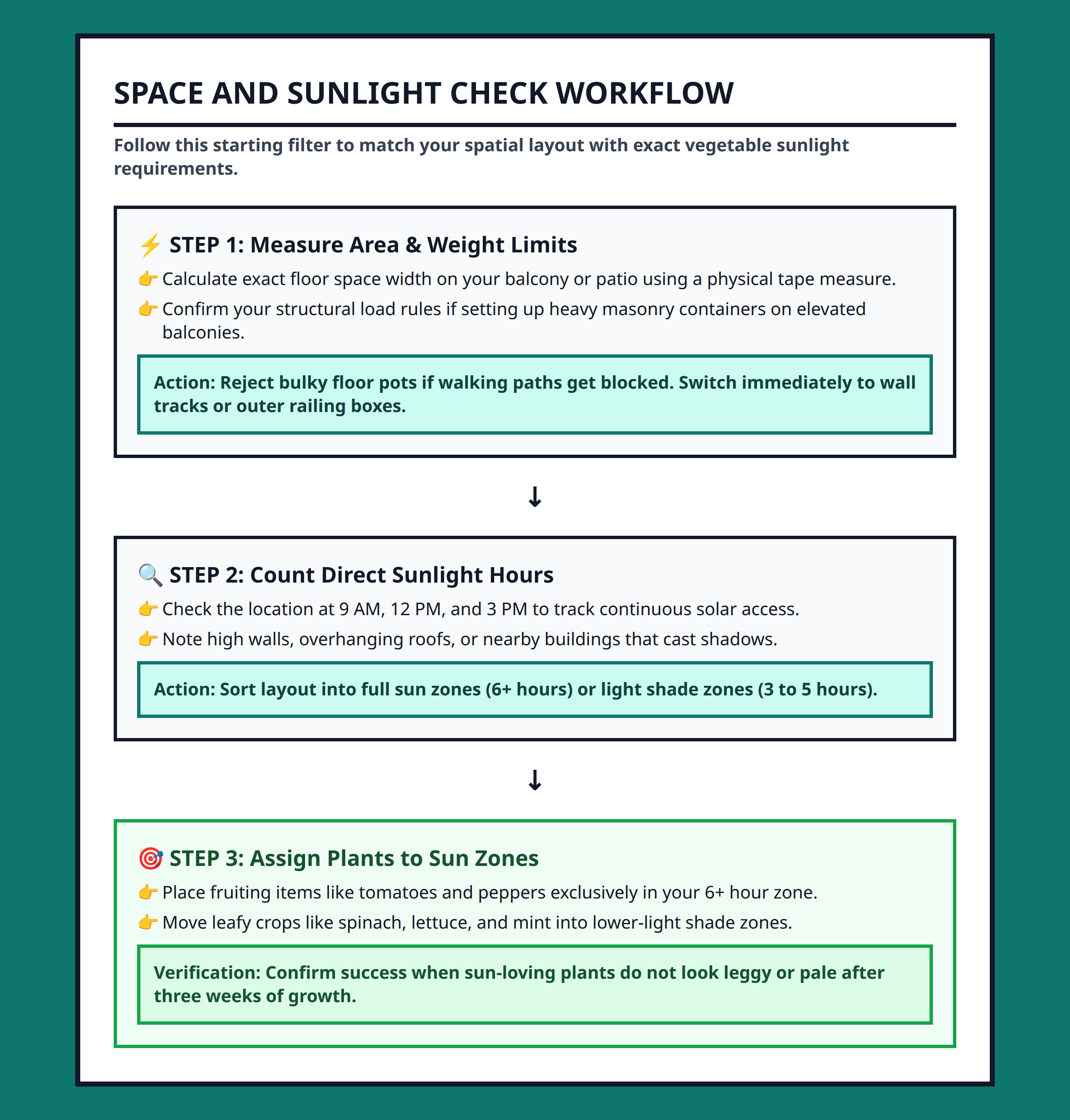
When people plan small vegetable gardens, they often start with containers, seeds, or garden beds. I would start with sunlight instead.
Even a tiny growing area can become productive if it receives enough direct light.
A narrow balcony with six good hours of sunlight often outperforms a larger shaded backyard corner.
That is why I would watch the space across an entire day before deciding what to grow or where to place anything. Morning sun, afternoon heat, reflected wall light, and seasonal shade shifts all affect productivity.
This becomes especially important in apartments and courtyards where nearby buildings can block sunlight unexpectedly.
A practical example is a small patio where one corner receives reliable morning light while another becomes shaded after 11 a.m. Leafy greens may still work in the shadier section, but fruiting crops like tomatoes usually need the brighter area.
Once you identify the strongest light zones, the rest of the garden design becomes easier.
Vertical Growing Changes the Math of Small Gardens
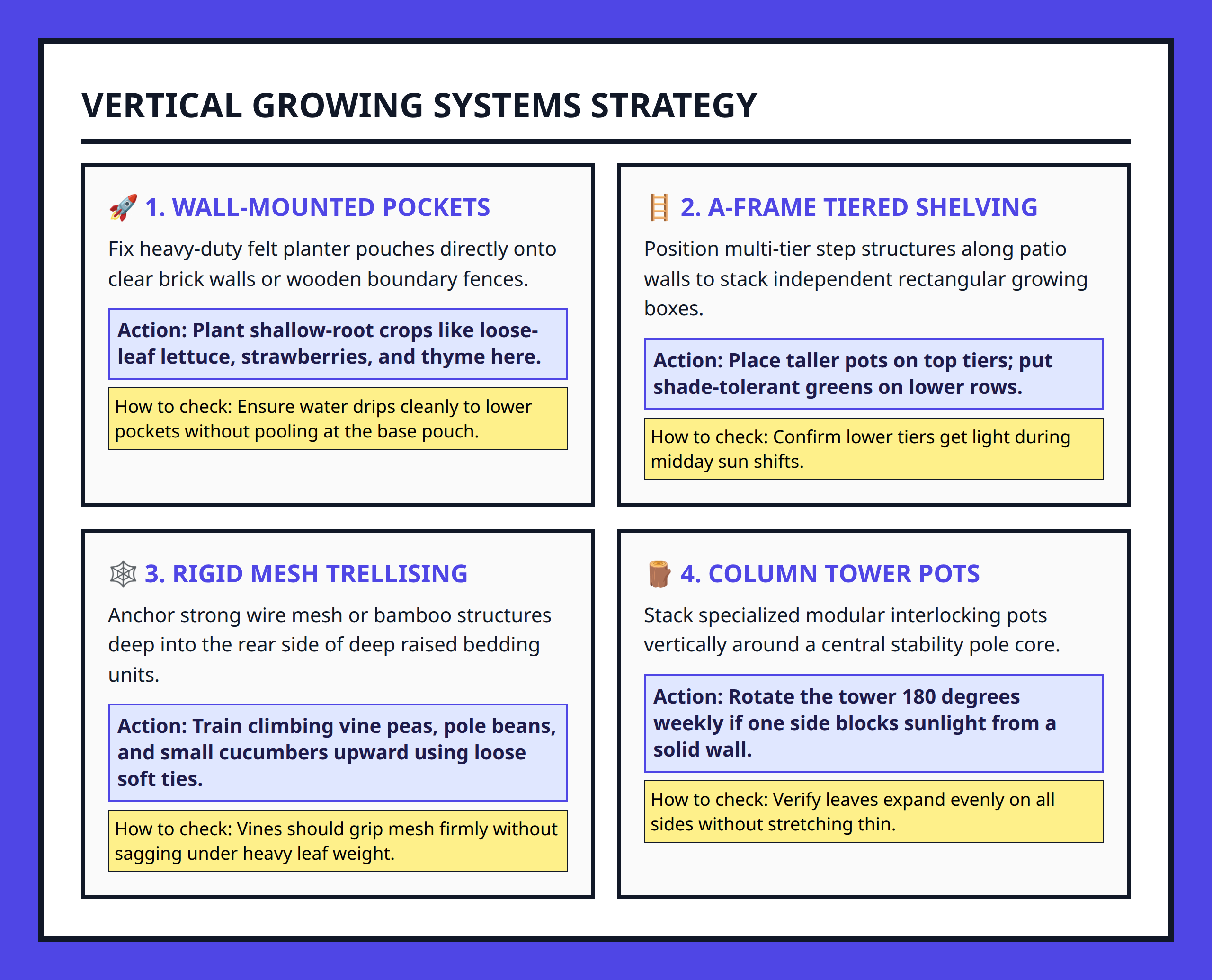
The biggest mistake I see in small vegetable gardens is using the ground as the only growing surface.
Small gardens become much more productive when plants grow upward.
Climbing frames, trellises, mesh panels, hanging systems, and wall supports allow crops to use vertical space that would otherwise stay empty.
I would especially use vertical growing for:
- beans
- peas
- cucumbers
- small melons
- tomatoes
- passionfruit
This matters because climbing plants stop competing so aggressively for floor space.
Vertical systems also improve airflow and make harvesting easier.
One useful detail is that lightweight vertical frames often work better in small spaces than heavy permanent structures. Apartment balconies and compact courtyards may have weight limitations or limited anchoring options.
I also think espaliering deserves more attention in edible gardens.
Espaliering trains fruit trees flat against fences or walls instead of allowing them to spread naturally. In a tight courtyard, that can turn a narrow unused wall into productive growing space.
Pots Work Best When You Match Them to the Plant
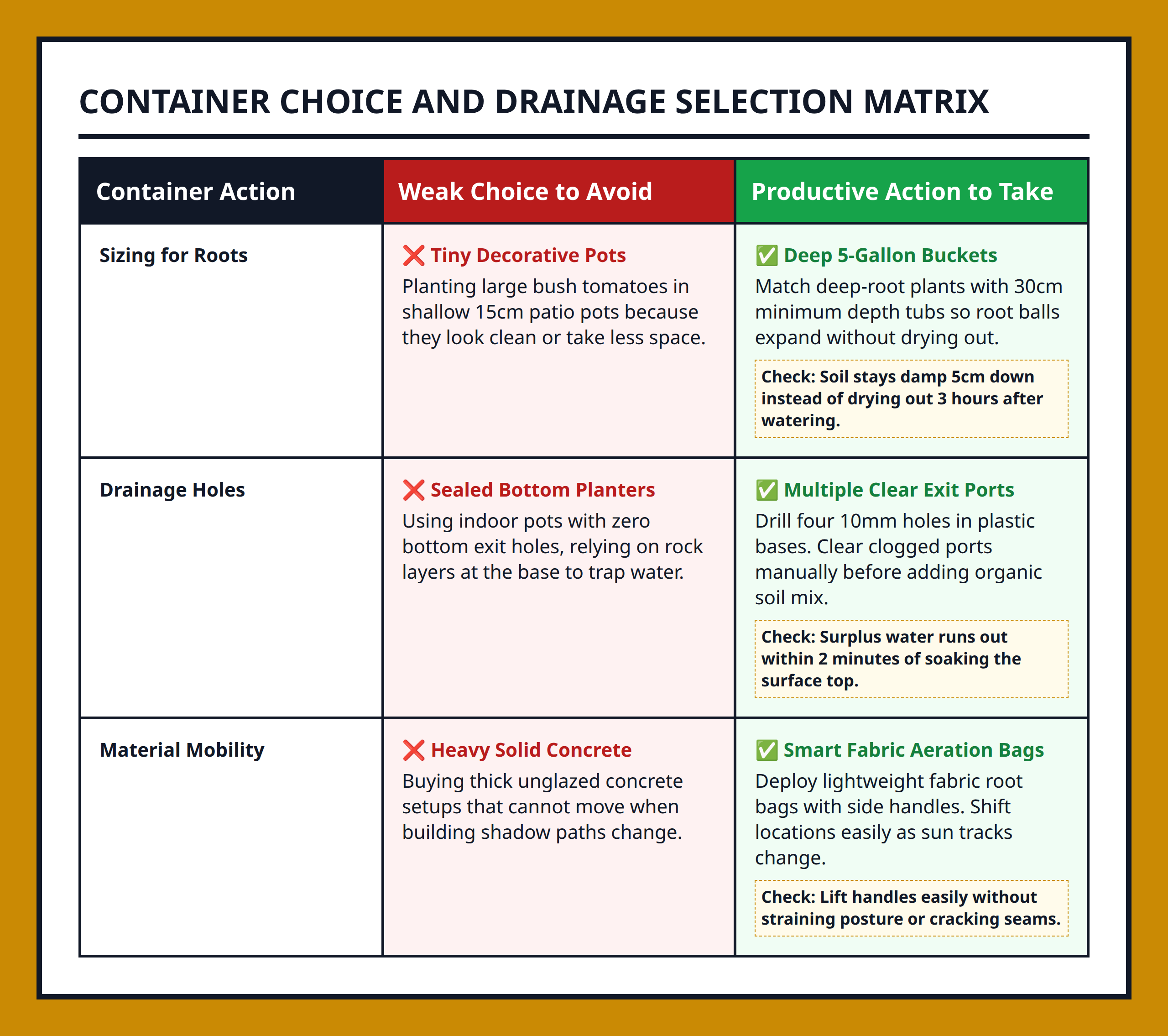
Container gardening is not just about fitting plants into available pots. The container itself affects root growth, water retention, drainage, and plant stability.
I would not grow every vegetable in the same generic pot.
Deep-rooted plants need deeper containers. Fast-drying pots need more watering attention. Heavy pots may become impractical on balconies.
One common problem in small gardens is underestimating container weight after watering. Large ceramic pots filled with wet soil can become surprisingly heavy.
That is why lightweight containers often make more sense in upper-floor spaces.
Drainage matters too.
Poor drainage turns many container gardens into root-rot systems. Waterlogged potting mix reduces oxygen around roots and slows plant growth quickly.
I would always check whether water escapes freely before planting anything.
Potting mix also behaves differently from garden soil. Once dry, some mixes become hydrophobic and start repelling water instead of absorbing it.
When that happens, water may run down the sides of the container while the root zone stays dry underneath.
Slow soaking usually works better than quick surface watering in that situation.
Raised Vegetable Boxes Solve Several Problems at Once
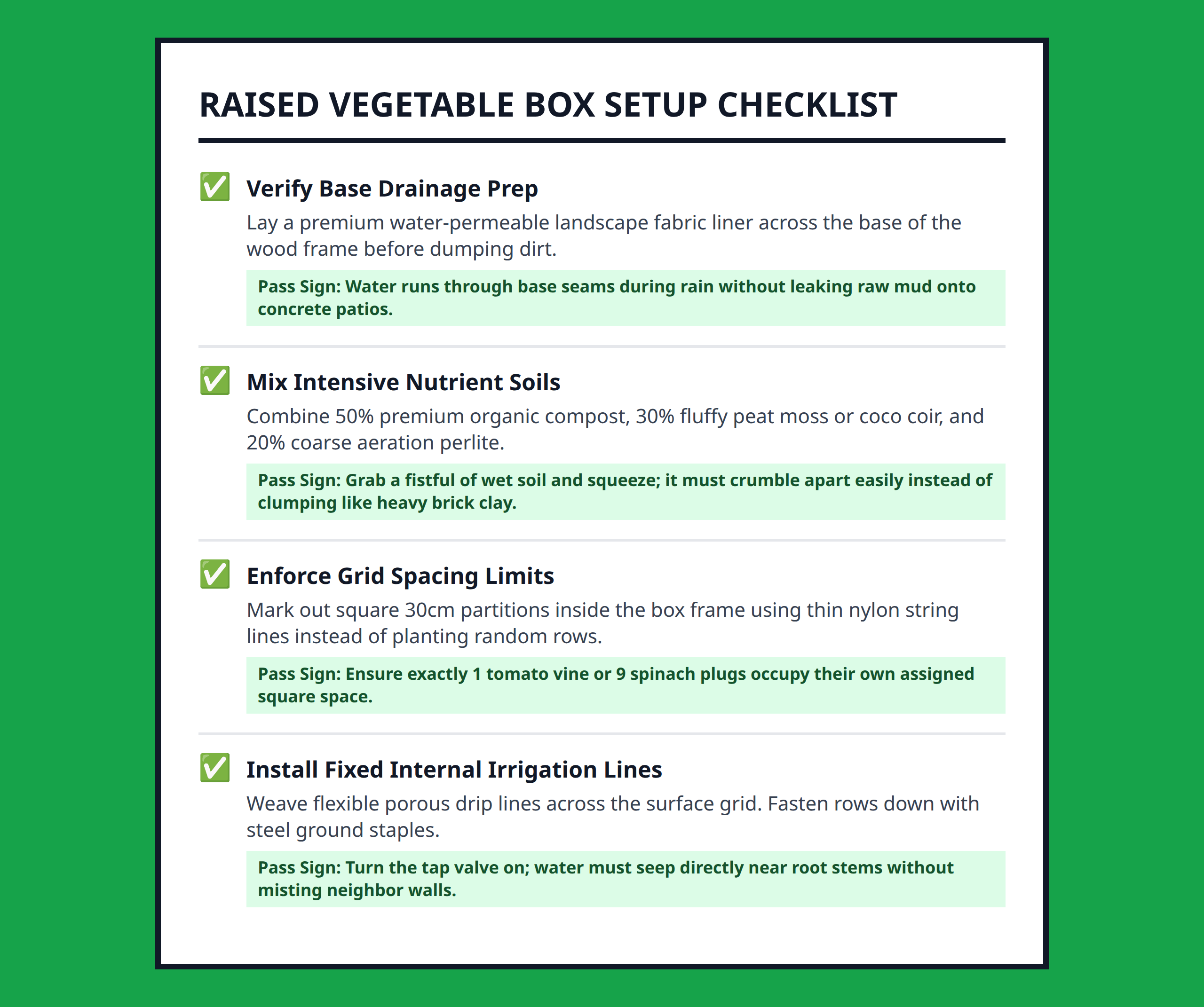
Raised growing boxes become useful when space is awkward, paved, compacted, or difficult to manage.
I like them because they create control.
Instead of fighting poor ground soil, drainage problems, or uneven surfaces, raised boxes allow you to build a contained growing environment.
They also help small gardens stay organized.
In cramped spaces, scattered pots can start feeling chaotic quickly. A well-positioned raised box creates a cleaner growing zone and makes crop planning easier.
Raised beds also reduce wasted pathways.
That matters more than many beginners realize. In very small gardens, walking space can quietly consume a large percentage of usable growing area.
Narrow, reachable beds often produce more efficiently because less space gets sacrificed to movement.
Crop Pairing Helps Small Gardens Produce More Food
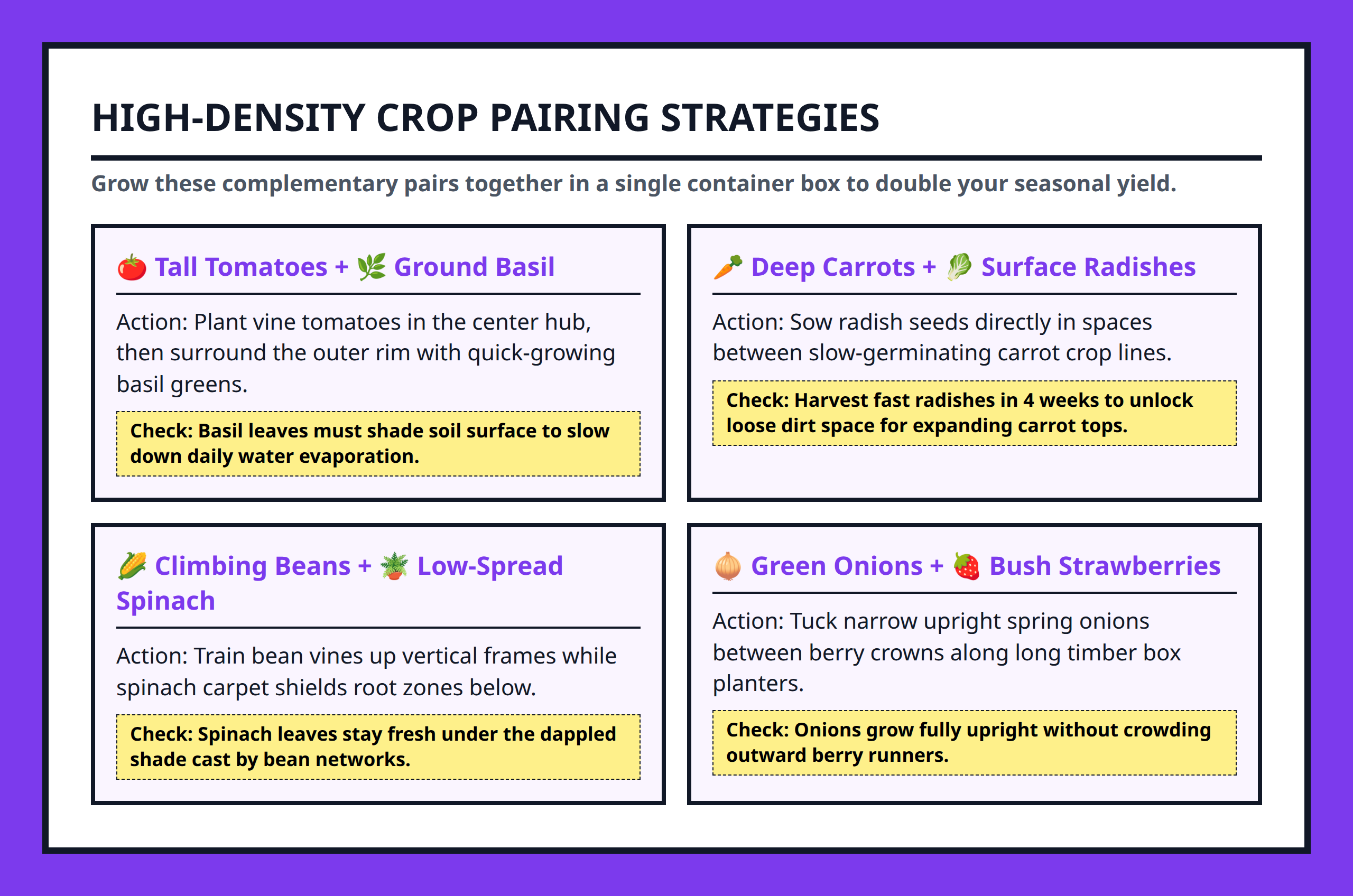
Small gardens become more efficient when plants are chosen to share space well instead of competing aggressively.
I would think about plant shape and timing almost as much as plant type.
Fast-growing crops can occupy space while slower crops establish themselves. Tall plants can provide partial shelter for smaller ones during intense heat.
Some combinations also simply fit together physically.
For example:
- leafy greens beneath climbing frames
- herbs around taller vegetables
- quick crops between slower-growing plants
The important point is that productive small gardens rarely leave space unused for long.
One small courtyard might only fit a few major containers, but if climbing beans rise vertically while herbs occupy edges and lettuce fills lower gaps, the same footprint starts producing much more food.
Small Gardens Need Better Layout Decisions, Not More Plants
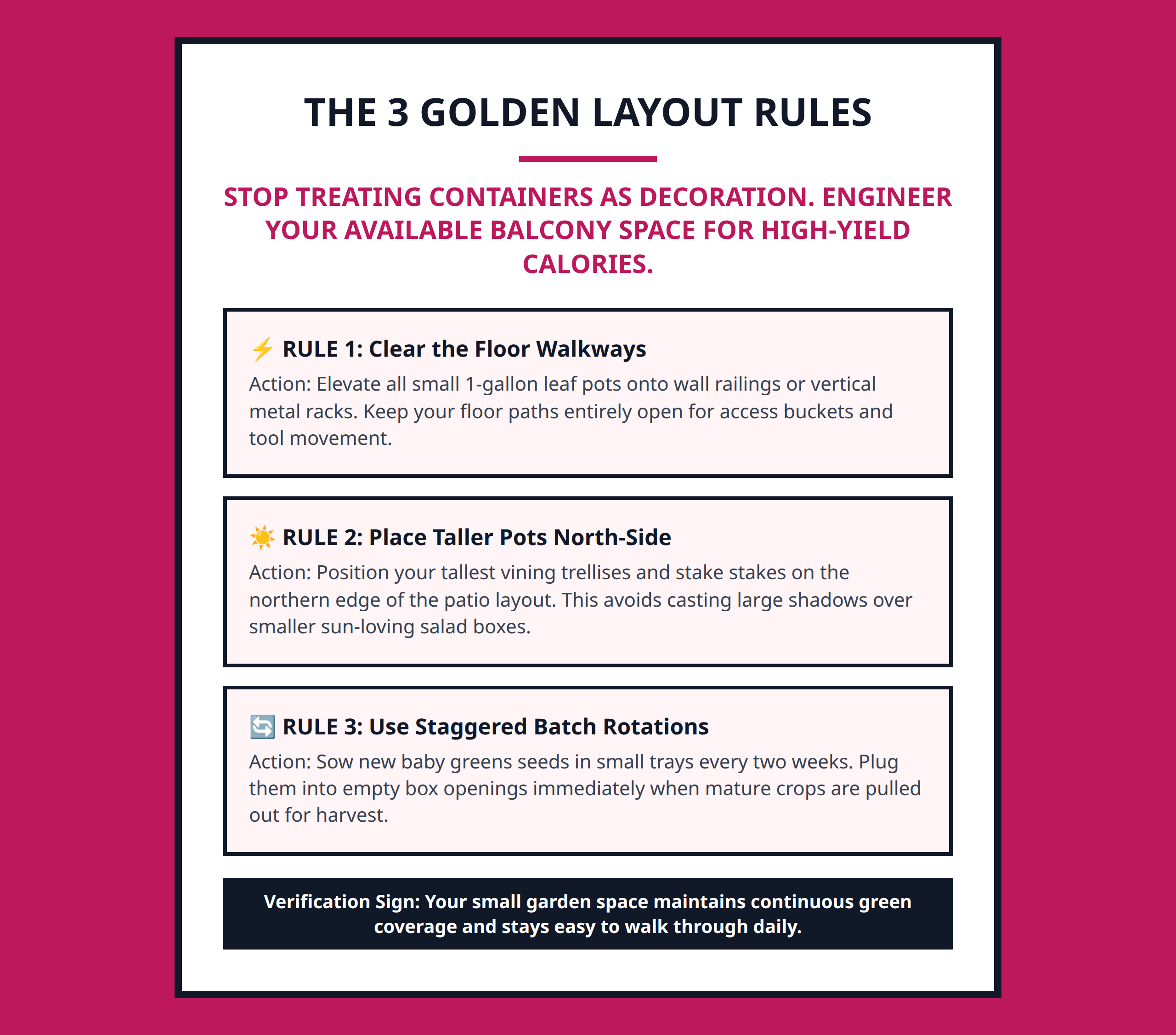
When space feels limited, beginners often react by squeezing in more plants.
I would usually do the opposite.
Overcrowded gardens create weaker airflow, higher disease pressure, harder harvesting, and more competition for water and nutrients.
A compact garden still needs structure.
That is why I pay attention to:
- walking access
- sunlight paths
- watering access
- vertical placement
- container spacing
- harvesting reach
A practical example is a balcony where tall pots get placed along the outer edge and immediately block sunlight from everything behind them. The space technically contains many plants, but productivity drops because the layout works against the light.
Small-space gardening becomes easier once every section has a clear purpose.
The Most Productive Small Gardens Keep Adapting
I think the best small vegetable gardens behave less like permanent layouts and more like flexible systems.
Containers move. Seasonal crops rotate. Climbing structures shift. Empty gaps get reused quickly.
That flexibility matters because small spaces do not have much room for wasted decisions.
What surprises many beginners is that compact edible gardens often become more intentional than large ones. Limited space forces better observation.
After a while, you stop asking, “How much room do I have?” and start asking, “How efficiently is this space actually working?”
- Espalier: A method of training trees or plants to grow flat against a wall or frame to save space.
- Raised bed: A contained planting area built above ground level for better soil and drainage control.
- Hydrophobic soil: Potting mix or soil that repels water after becoming extremely dry.
- Vertical gardening: Growing plants upward using supports, trellises, or hanging systems instead of spreading across the ground.
- Potting mix: A lightweight growing medium used in containers instead of regular garden soil.
- Trellis: A structure that supports climbing plants and helps save garden space.
- Crop pairing: Growing compatible plants together to improve space use and garden productivity.
References:
- https://www.youtube.com/watch?v=ioJ0C2J1_Os
- https://www.youtube.com/watch?v=-D4ZW6p61M4
- https://www.youtube.com/watch?v=MKEkVPOvcMY
- https://joegardener.com/podcast/small-space-vegetable-gardening-mark-ridsdill-smith/
- https://www.gardening4joy.com/how-to-create-a-productive-small-vegetable-garden/
- https://www.finegardening.com/project-guides/fruits-and-vegetables/getting-big-vegetable-production-from-a-small-space
- https://www.theseedcollection.com.au/blog/Small-Space-Gardening
- https://northerngardener.org/small-space-vegetable-gardens/
- https://www.gardendesign.com/vegetables/small.html
- https://www.peteandgerrys.com/blogs/field-notes/small-space-gardening
- https://ucanr.edu/site/uc-master-gardener-program-alameda-county/growing-vegetables-small-space-6-tips-you-can-use
