If your compost pile smells bad, stays soggy, attracts pests, or never breaks down properly, the problem is usually not the compost bin itself. Most failed compost piles come from an imbalance between nitrogen, carbon, water, and oxygen.
I used to think composting was simple: throw organic waste into a pile and wait. That works sometimes, but many home compost systems quietly fail because the pile never reaches the conditions needed for decomposition.
The frustrating part is that people often react by buying additives, powders, or bigger bins when the real issue is usually much smaller. A compost pile behaves more like a living process than a garbage container.
Once I started looking at compost as a balance problem instead of a waste problem, troubleshooting became much easier.
Takeaways
- Good compost depends on balancing nitrogen, carbon, water, and oxygen.
- Bad smells usually point to excess moisture or poor airflow.
- Dry compost piles often lack enough water or green material.
- Turning compost regularly speeds up decomposition by adding oxygen.
- Small material pieces break down faster than large scraps and branches.
The Four Things Every Compost Pile Needs
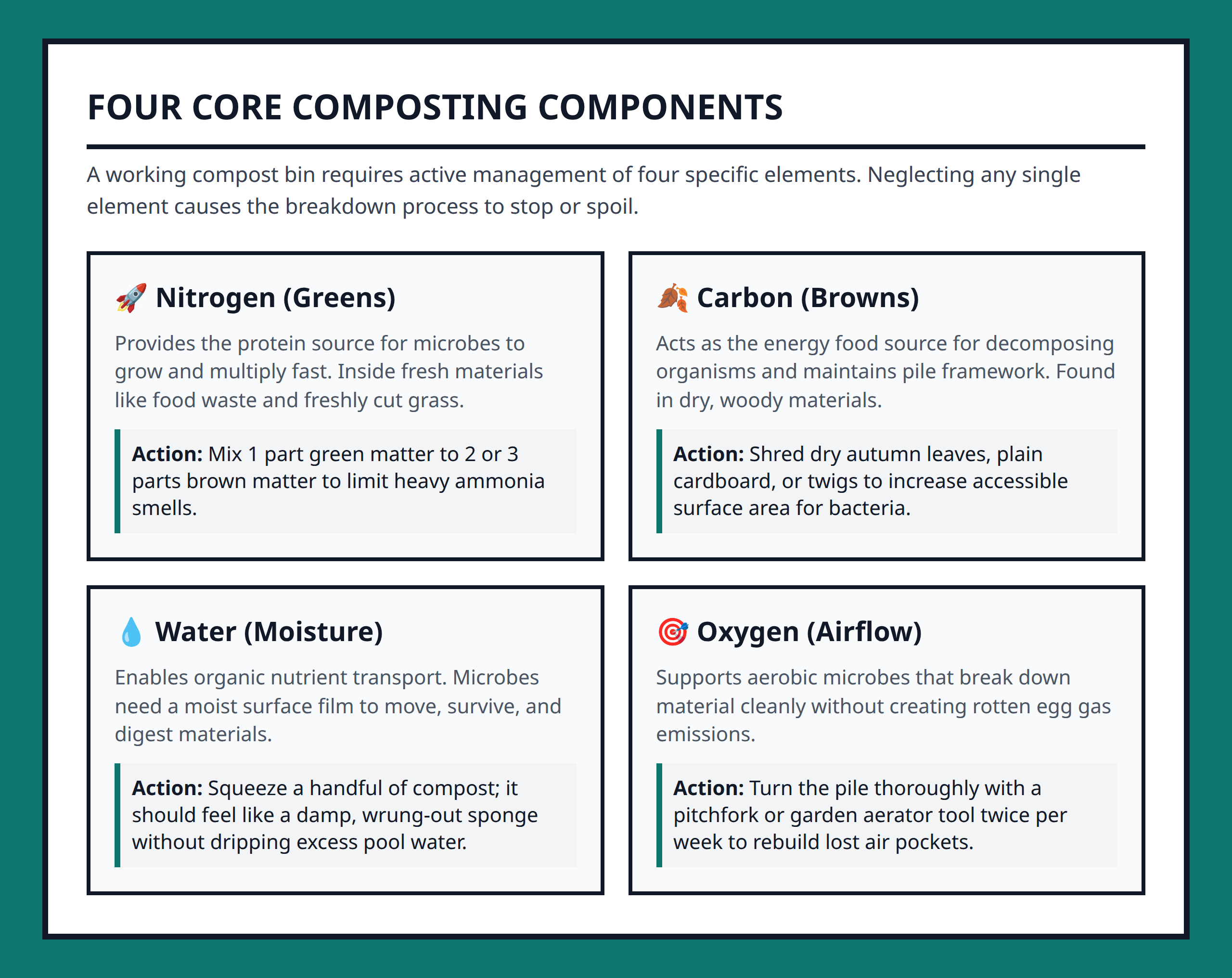
A healthy compost pile depends on four connected components:
- nitrogen
- carbon
- water
- oxygen
Once one of those gets badly out of balance, the pile usually starts showing problems.
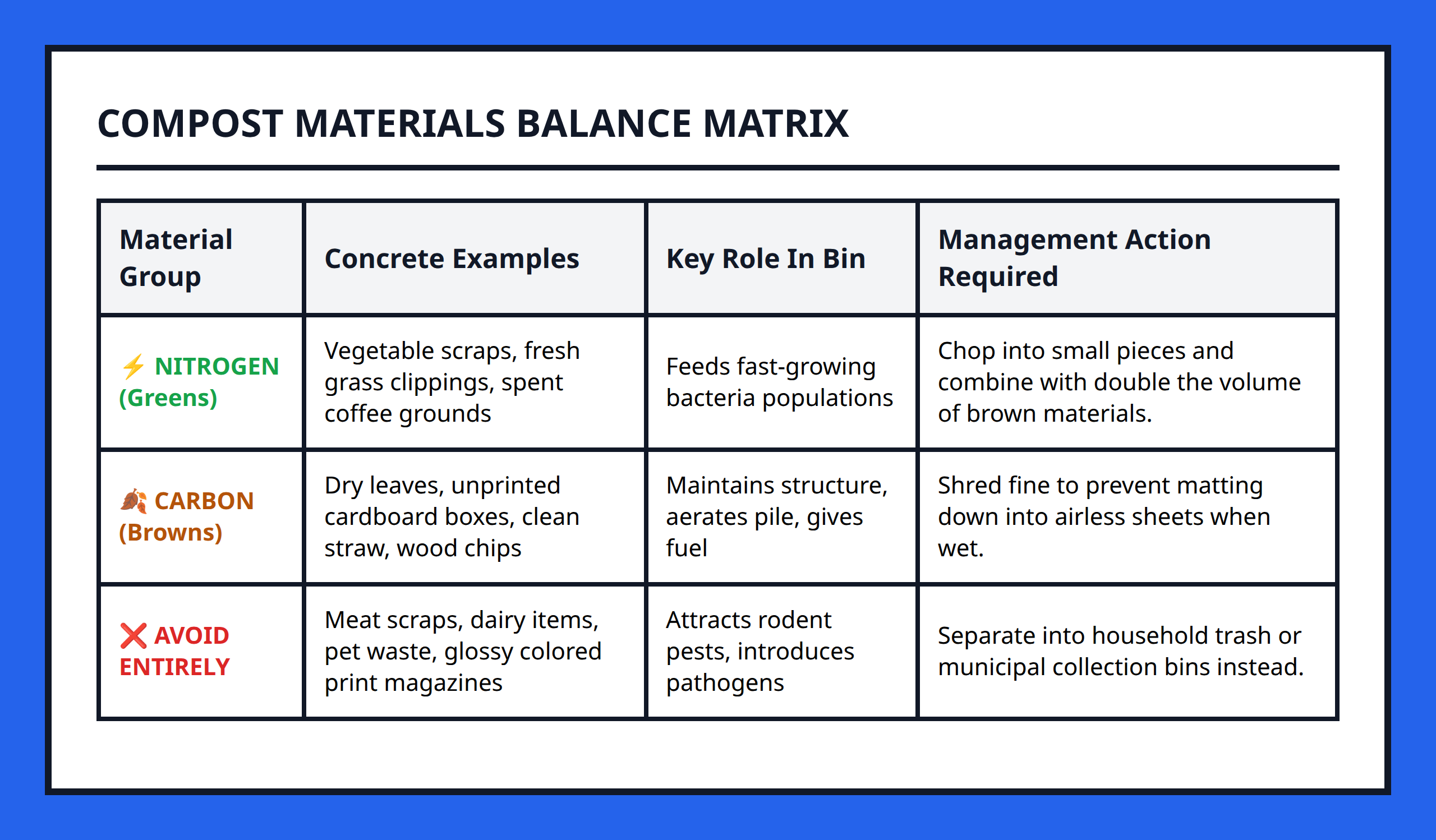
Green material provides nitrogen. This includes:
- vegetable scraps
- fruit scraps
- fresh leaves
- grass clippings
- animal manure from herbivores
Brown material provides carbon. This includes:
- dried leaves
- paper
- cardboard
- straw
- dry twigs
- used potting mix
What I find useful is that compost problems become easier to diagnose once you stop thinking about waste and start thinking about ratios.
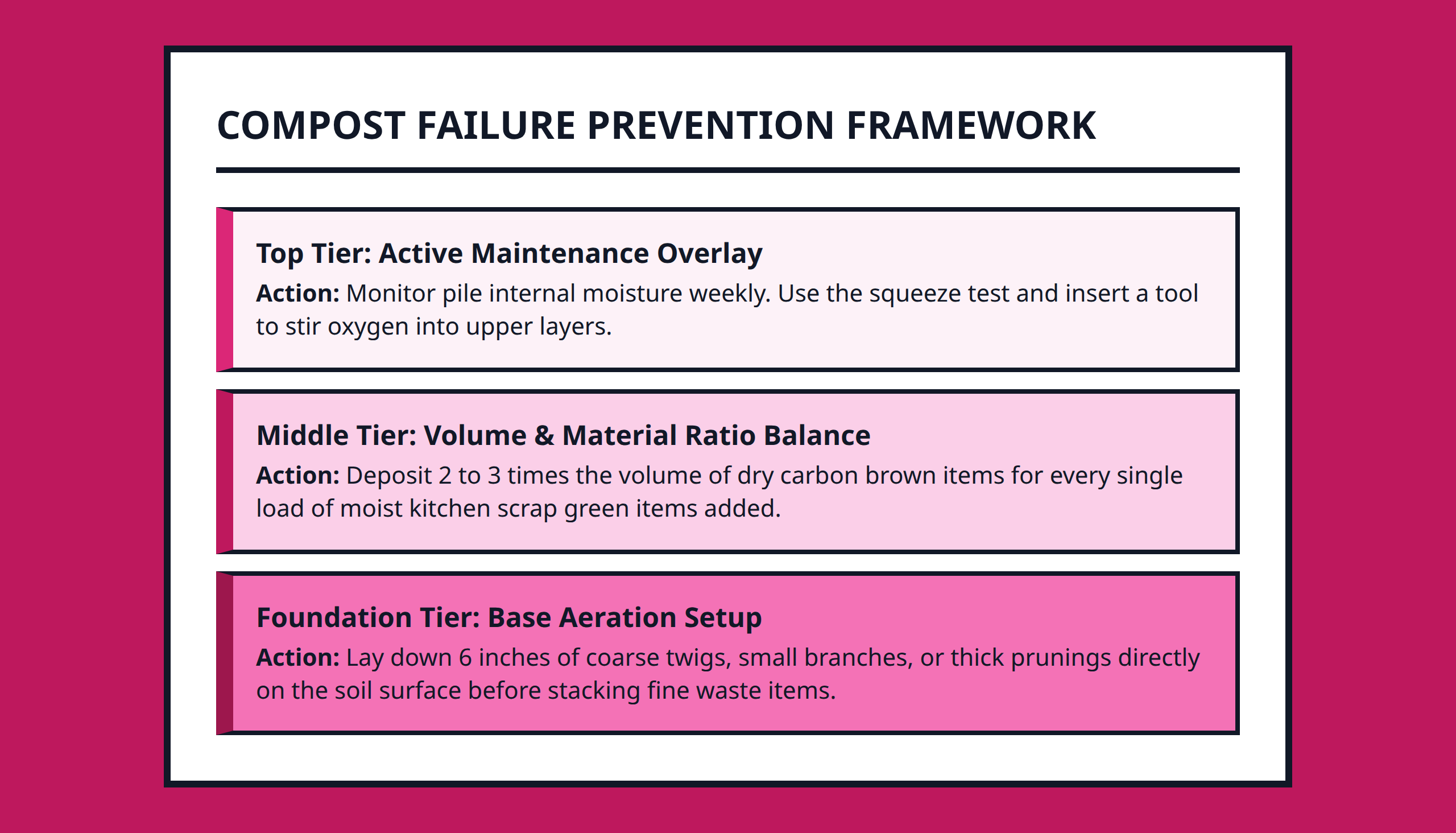
A compost pile full of wet kitchen scraps without enough dry material will usually collapse into a soggy, smelly mass. A pile full of dry leaves without enough moisture or nitrogen often just sits there doing almost nothing.
Why Compost Starts Smelling Bad
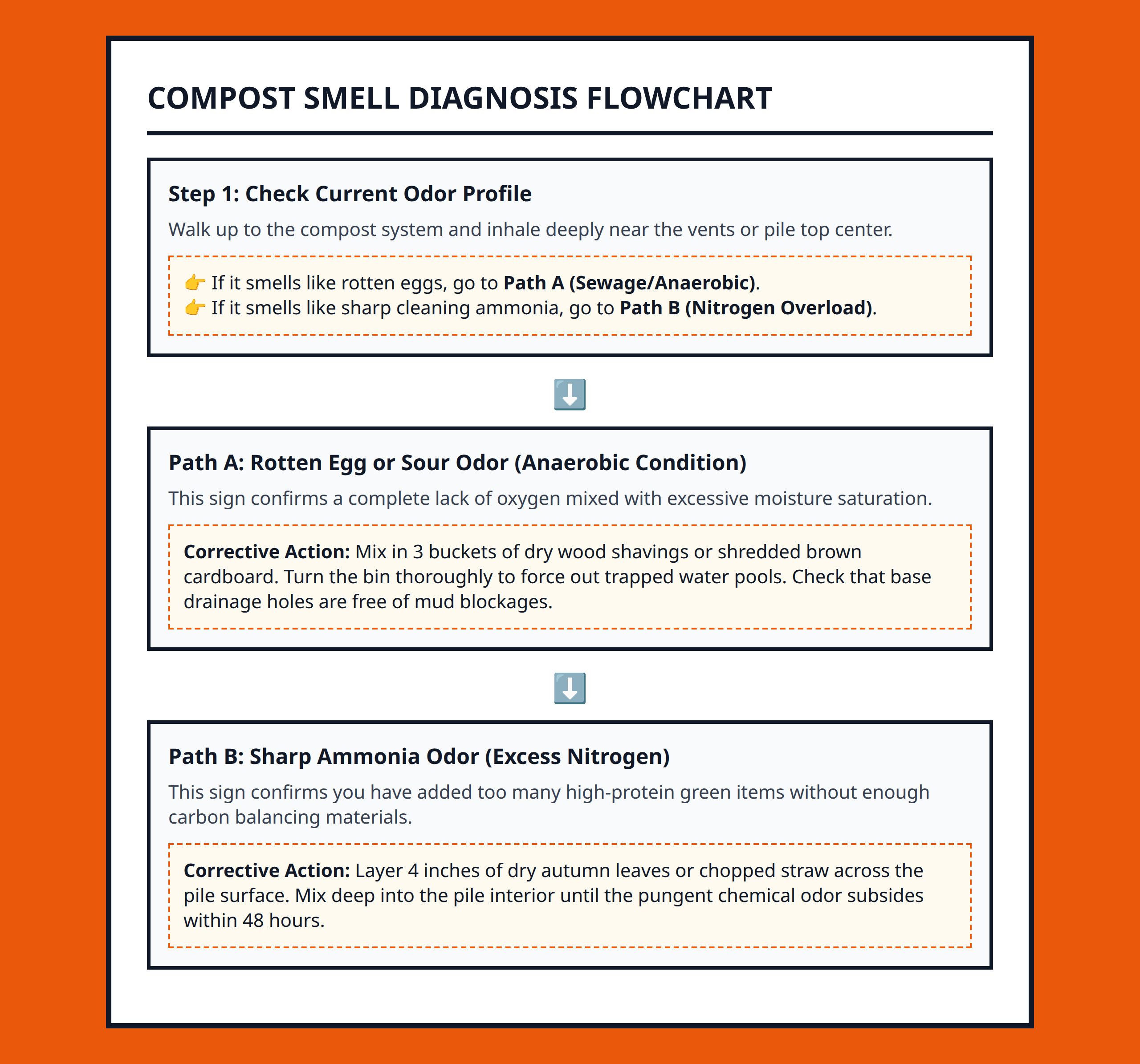
One of the clearest warning signs of imbalance is smell.
A healthy compost pile should smell earthy and slightly sweet. If it smells sour, rotten, or strongly unpleasant, the pile is usually too wet or poorly aerated.
This often happens when people add large amounts of food scraps but very little dry carbon material.
I picture a common backyard situation like this: someone empties kitchen scraps into the compost every evening but rarely adds cardboard, dried leaves, or straw. Rainwater collects, airflow disappears, and the pile turns heavy and compacted.
Once oxygen drops, decomposition changes. Instead of healthy aerobic breakdown, the pile begins producing unpleasant odors.
The practical fix is usually simple:
- add more brown material
- turn the pile to introduce oxygen
- protect the pile from excess rain
- avoid packing wet scraps tightly together
Sometimes the fastest improvement comes from adding shredded paper or dry leaves and mixing the pile thoroughly.
Slow Compost Usually Means the Pile Is Too Dry or Too Cold
Not every compost problem is dramatic. Some piles simply refuse to break down.
In many cases, slow compost happens because the pile lacks enough moisture or nitrogen-rich material.
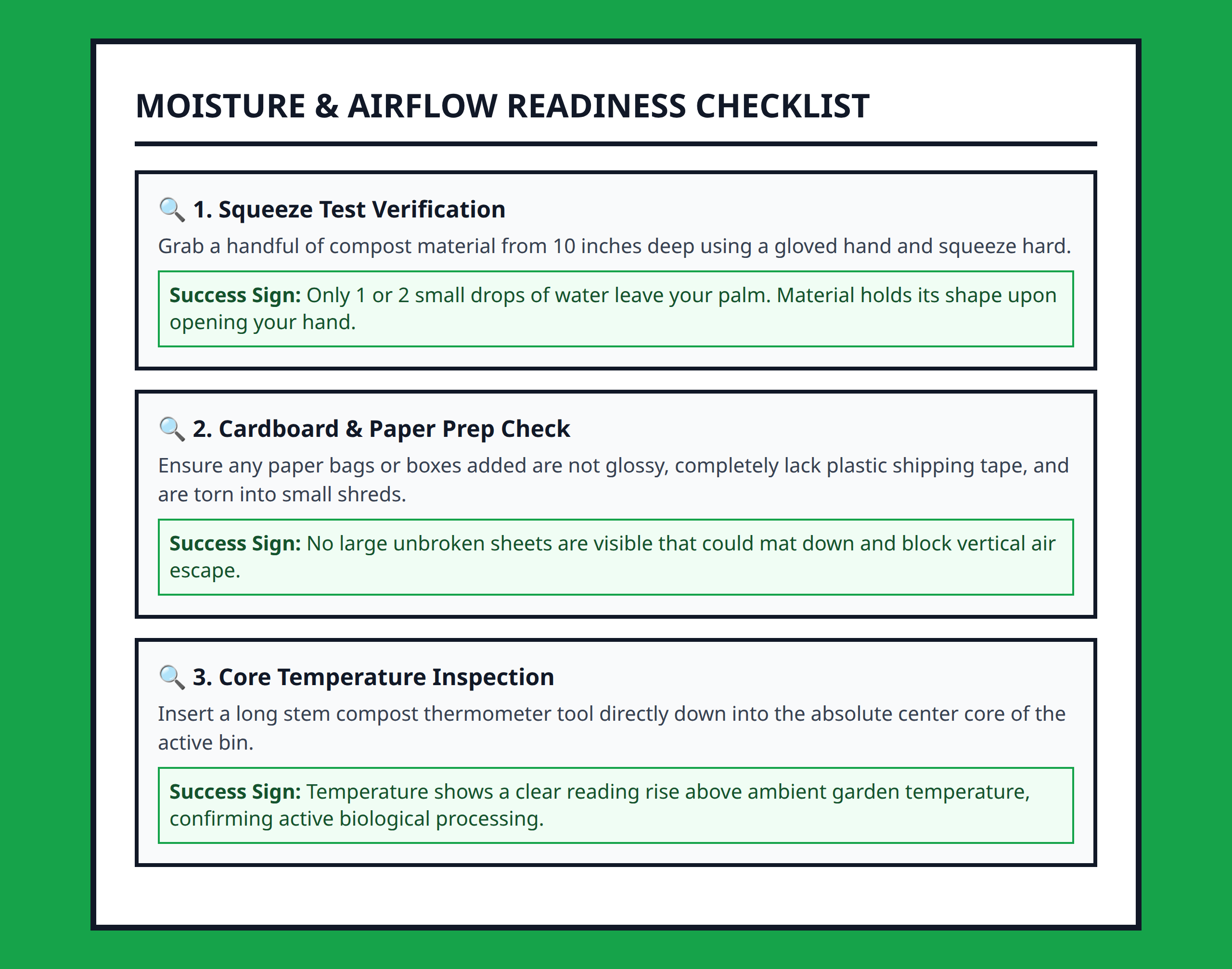
Microorganisms need moisture to stay active. If the compost dries out completely, decomposition slows sharply.
I would especially watch for this during hot weather or when using a lot of dry carbon-heavy material like straw or paper.
The pile should feel damp rather than soaked. A compost pile does not need constant watering, but it should not become dusty and dry either.
Cold weather also slows decomposition naturally. That does not mean the compost has failed. Biological activity simply moves slower in colder conditions.
This is one reason tumbling compost bins can help. They make turning and aerating easier, which helps microorganisms stay active.
Airflow Matters More Than Many Beginners Realize
One thing I underestimated when I first learned about composting was oxygen.
People often focus on ingredients while ignoring airflow, but oxygen affects how efficiently microorganisms can break material down.
That is why turning the compost pile matters.
Regular mixing:
- adds oxygen
- prevents compacted wet zones
- spreads moisture more evenly
- helps decomposition happen faster
Even chopping material into smaller pieces makes a difference because it increases surface area for microorganisms.
I would not throw thick branches, whole vegetables, or large chunks of cardboard into a pile and expect fast results. Composting speeds up when materials are broken down before they enter the bin.
Some Compost Ingredients Cause Problems Faster Than Others
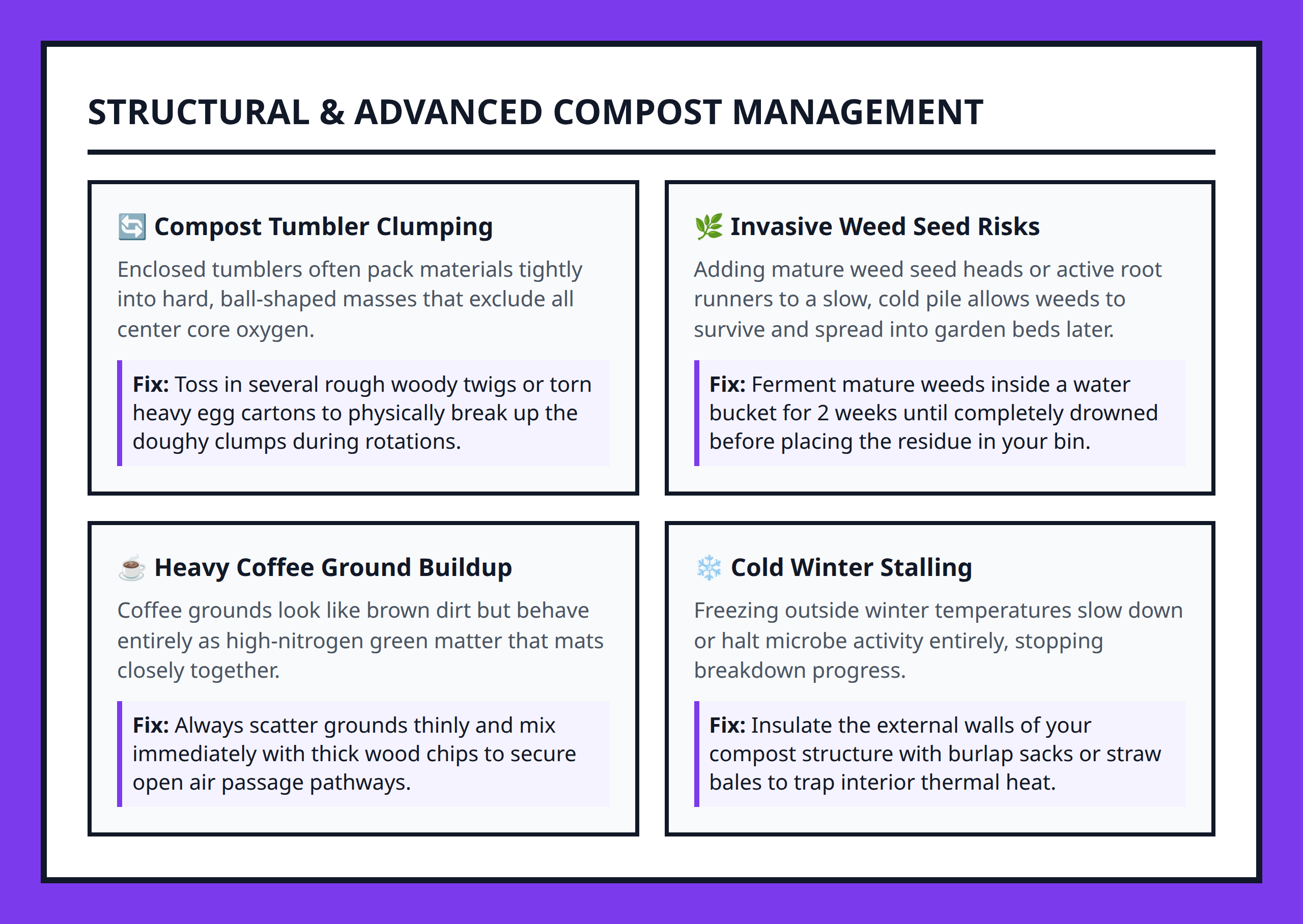
Not every organic material behaves the same way inside compost.
Large amounts of citrus peel or onion can upset compost balance. Small amounts are usually manageable, but heavy amounts can slow the system and create imbalance.
Fresh grass clippings can also become a problem when added directly to garden beds or dumped into piles in thick wet layers.
As green grass breaks down, it can temporarily reduce available nitrogen and create dense, slimy patches that block airflow.
I also pay attention to coffee grounds.
Coffee grounds can become useful compost material, but they work better after drying and partial decomposition. Wet coffee grounds packed tightly together tend to compact easily.
One practical detail I like is drying used coffee grounds in egg cartons before adding them to compost or mulch. The cardboard absorbs moisture and helps prevent mold buildup.
Weeds Can Quietly Ruin Compost If You Rush the Process
A lot of gardeners assume weeds automatically belong in the compost pile. Sometimes they do. Sometimes they become tomorrow’s problem.
If weeds go into compost before they fully die off, seeds can survive and spread back into garden beds later.
I think this catches beginners off guard because the pile may look decomposed while still carrying viable weed seeds.
A practical workaround is surprisingly simple. Store pulled weeds inside sealed plastic bags and leave them in the sun for several months before composting them.
The trapped heat helps “cook” the weeds and reduces the chance of recycling them back into the garden.
The same logic works for lawn clippings that may contain weed seeds.
Worm Farms Help Stabilize Kitchen Waste
For people struggling with wet kitchen scraps, worm farms can make composting easier to manage.
Worms process vegetable scraps, coffee grounds, tea leaves, damp paper, and egg cartons into nutrient-rich castings.
What I like about worm systems is that they create faster feedback. If the farm smells bad, overheats, or becomes too wet, the worms react quickly.
That forces better balance.
There are limits, though. Worm farms should not receive:
- citrus
- garlic
- onion skins
- dairy
- meat
- fish
Too much food at once can also overwhelm the system.
I would rather feed worms smaller amounts consistently than overload the farm and create odor problems.
Good Compost Looks More Ordinary Than People Expect
I think many people expect composting to feel dramatic or fast. In reality, healthy compost often looks fairly uneventful.
The pile gradually warms, shrinks, darkens, and softens over time.
Finished compost should feel crumbly and loose instead of wet and slimy. The smell should resemble damp soil rather than garbage.
That slow transformation matters because healthy compost depends on living biological processes, not quick breakdown tricks.
When a compost pile repeatedly fails, I would not immediately buy more products or equipment. I would first check the balance between green material, brown material, moisture, and airflow. Most compost problems begin there, and most solutions do too.
- Carbon material: Dry organic material such as leaves, cardboard, straw, and paper that helps balance compost.
- Nitrogen material: Fresh organic material like vegetable scraps, grass clippings, and manure that helps microorganisms grow.
- Aerobic decomposition: Breakdown that happens with oxygen present. This creates healthier compost with less odor.
- Compost tumbler: A rotating compost bin designed to make mixing and aeration easier.
- Worm castings: Nutrient-rich waste produced by composting worms that improves soil health.
- Organic matter: Natural material from plants or animals that breaks down and improves soil structure.
- Microorganisms: Tiny living organisms that help break down compost material into usable organic matter.
References:
- https://www.youtube.com/watch?v=ZtMsEylZvqw
- https://www.youtube.com/watch?v=iDiF_5VT_IE
- https://www.youtube.com/watch?v=AoUbcaeDAbo
- https://www.youtube.com/watch?v=Td19f6zR4k0
- https://www.youtube.com/watch?v=zVAbji0qNlw
- https://www.growveg.com/guides/how-to-fix-common-compost-problems/
- https://www.reddit.com/r/composting/comments/1en55tk/is_it_okay_to_have_more_brown_material_than_green/
- https://www.reddit.com/r/composting/comments/1en55tk/is_it_okay_to_have_more_brown_material_than_green/lh3pcop/
- https://www.reddit.com/r/composting/comments/186s454/help_a_newbie_out_too_many_greens_start_over/
- https://www.reddit.com/r/composting/comments/13i5s8s/for_those_who_want_to_be_more_exact_with_their/
- https://www.sgaonline.org.au/the-science-of-composting/
- https://food2soil.com.au/blogs/news/common-composting-mistakes-and-how-to-fix-them
- https://banish.com.au/blogs/how-to/how-to-fix-common-composting-problems-australia-guide
- https://eartheasy.com/blogs/yard-garden/7-signs-your-compost-is-struggling-and-what-you-can-do-about-it
- https://www.co.calumet.wi.us/635/Green-Brown-Compost
- https://www.carryoncomposting.com/443725785.html
- https://www.dunkinathome.com/articles/compost-coffee-grounds
