A low-water garden does not have to look empty or harsh. The most practical low-maintenance gardens usually become more attractive when they rely less on large lawns and more on thoughtful structure, gravel areas, layered planting, shade planning, and smarter use of space.
I think many people assume reducing maintenance automatically means giving up visual appeal. That idea creates a lot of disappointing gardens because homeowners either overdesign complicated spaces they cannot maintain or strip everything back until the yard feels lifeless.
What changed the way I think about garden design was realizing that good structure often matters more than having more plants. A garden becomes easier to manage when sunlight, pathways, privacy, shade, and planting zones work together instead of competing with each other.
Once the layout starts making practical sense, the garden usually begins looking calmer and more attractive too.
Takeaways
- Site assessment matters more than buying plants early.
- Reducing lawn space lowers both water use and maintenance.
- Gravel, pavers, and layered planting help stabilize garden structure.
- Color placement changes how spacious and balanced a garden feels.
- Privacy hedges can reduce maintenance when chosen carefully.
Start by Watching the Site Before Changing Anything
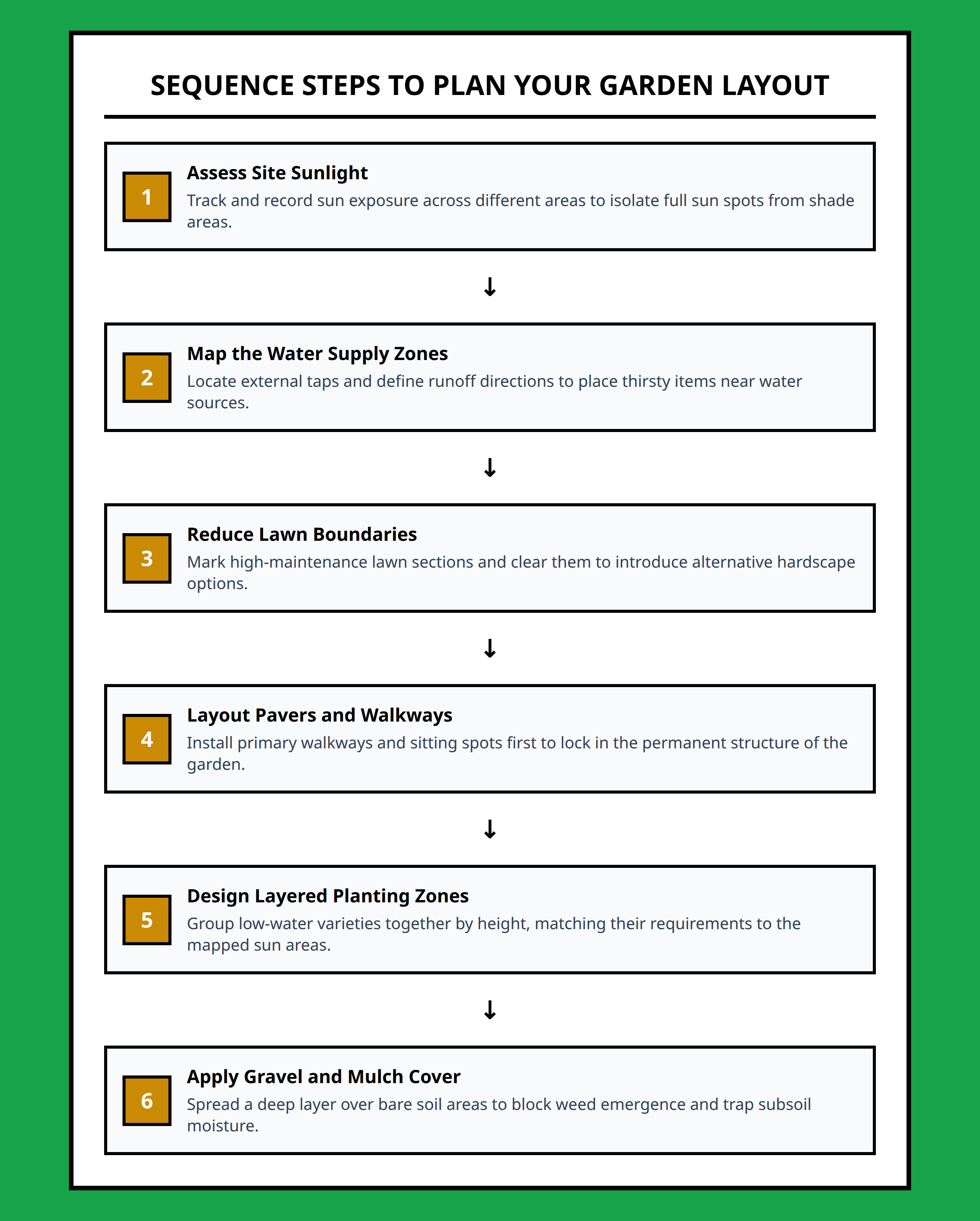
The first thing I would do with any garden is spend time observing it.
Sunlight patterns, shade movement, drainage, wind exposure, and difficult dry areas usually determine which parts of the garden will become easy to maintain and which parts will constantly struggle.
I think many expensive landscaping mistakes happen because people design first and observe later.
A backyard corner that looks perfect for lawn may receive intense afternoon heat and require constant watering. Another section may stay shaded for most of the day and struggle with grass growth no matter how much money gets spent on seed or fertilizer.
That is why I would map sunlight first before making layout decisions.
Even small observations matter. A narrow side yard might become more useful as a gravel walkway with layered shade planting instead of another patch of thirsty lawn.
Large Lawns Usually Create the Most Work
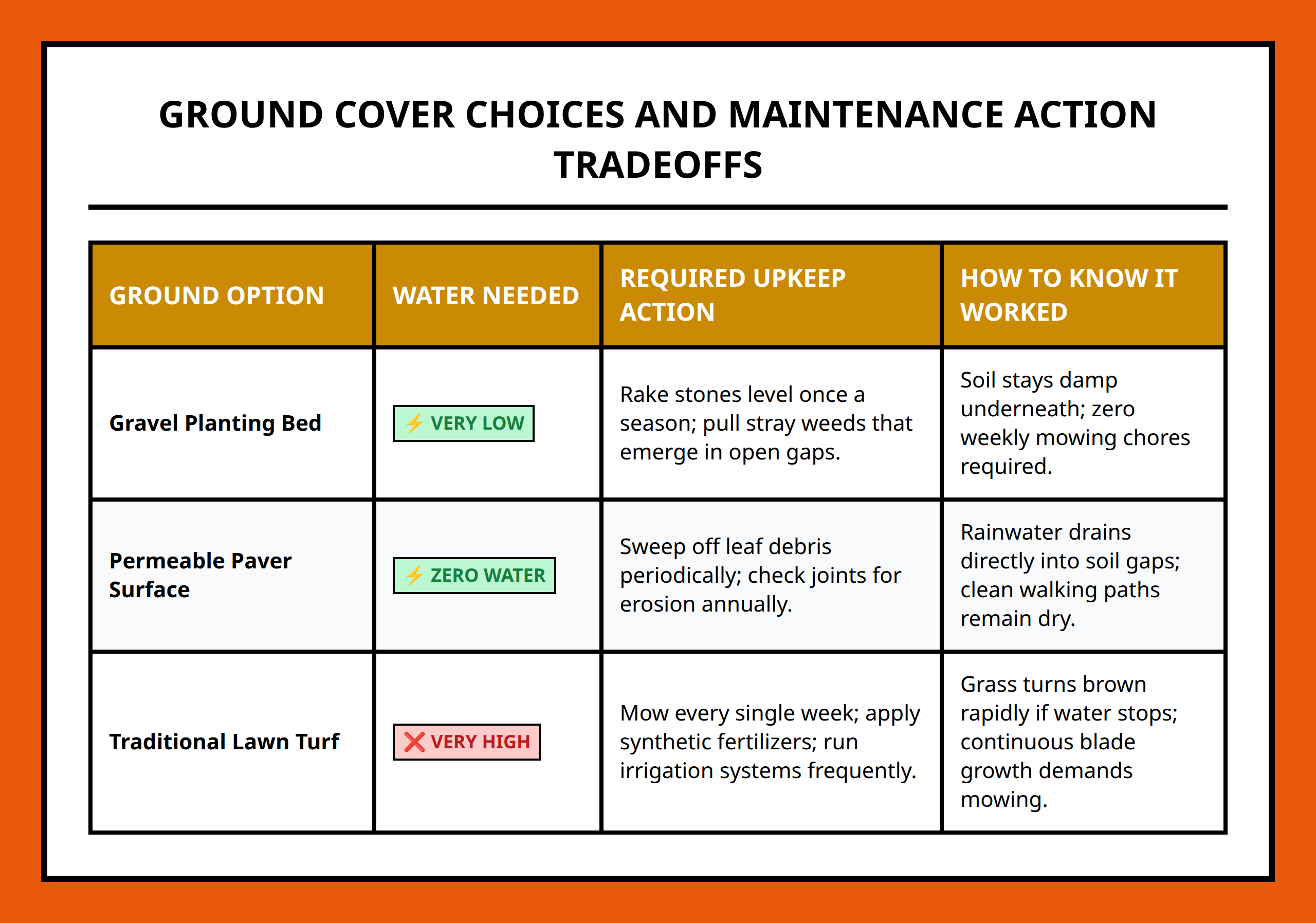
One idea I keep coming back to is how much maintenance lawns quietly demand.
Large grass areas often require:
- frequent watering
- regular mowing
- fertilizing
- edge trimming
- weed management
That does not mean lawns are always bad. I just think many gardens contain far more lawn than they practically need.
Reducing lawn size often creates immediate savings in both maintenance time and water use.
I would rather see a smaller well-used lawn connected to functional spaces than a large decorative grass area that constantly struggles through dry weather.
Gravel, pavers, stepping stones, and planted sections can replace unused lawn areas while still keeping the garden visually balanced.
One realistic example is a backyard where people only walk across the same narrow section repeatedly while the remaining grass stays mostly unused. Converting the low-use area into gravel planting beds and pathways often reduces maintenance immediately without making the garden feel smaller.
Gravel and Pavers Work Best When They Support Planting
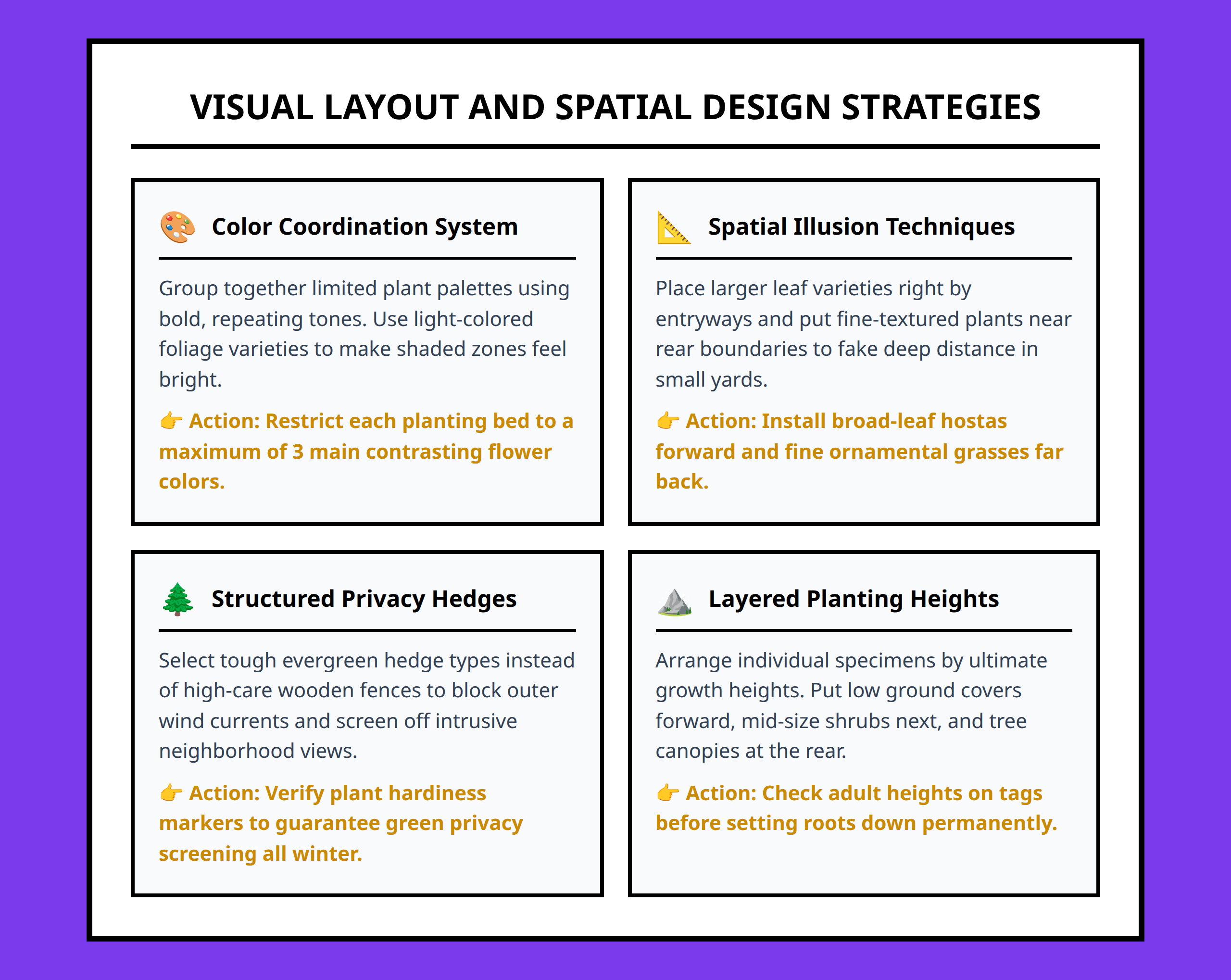
I think gravel gardens sometimes fail because people treat gravel as decoration instead of structure.
Used well, gravel reduces exposed soil, improves drainage control, lowers weed pressure, and visually organizes the garden.
What matters is balance.
Too much hard surface can make a space feel hot and empty. Too little structure often creates visual clutter and maintenance problems.
I would use gravel and pavers to support planting areas rather than replace them completely.
This becomes especially useful in dry climates or awkward spaces where lawn performs poorly.
Gravel pathways combined with layered shrubs, hardy plants, and drought-tolerant species often create gardens that look more intentional while requiring less watering overall.
Layered Planting Makes Gardens Feel Fuller With Less Work
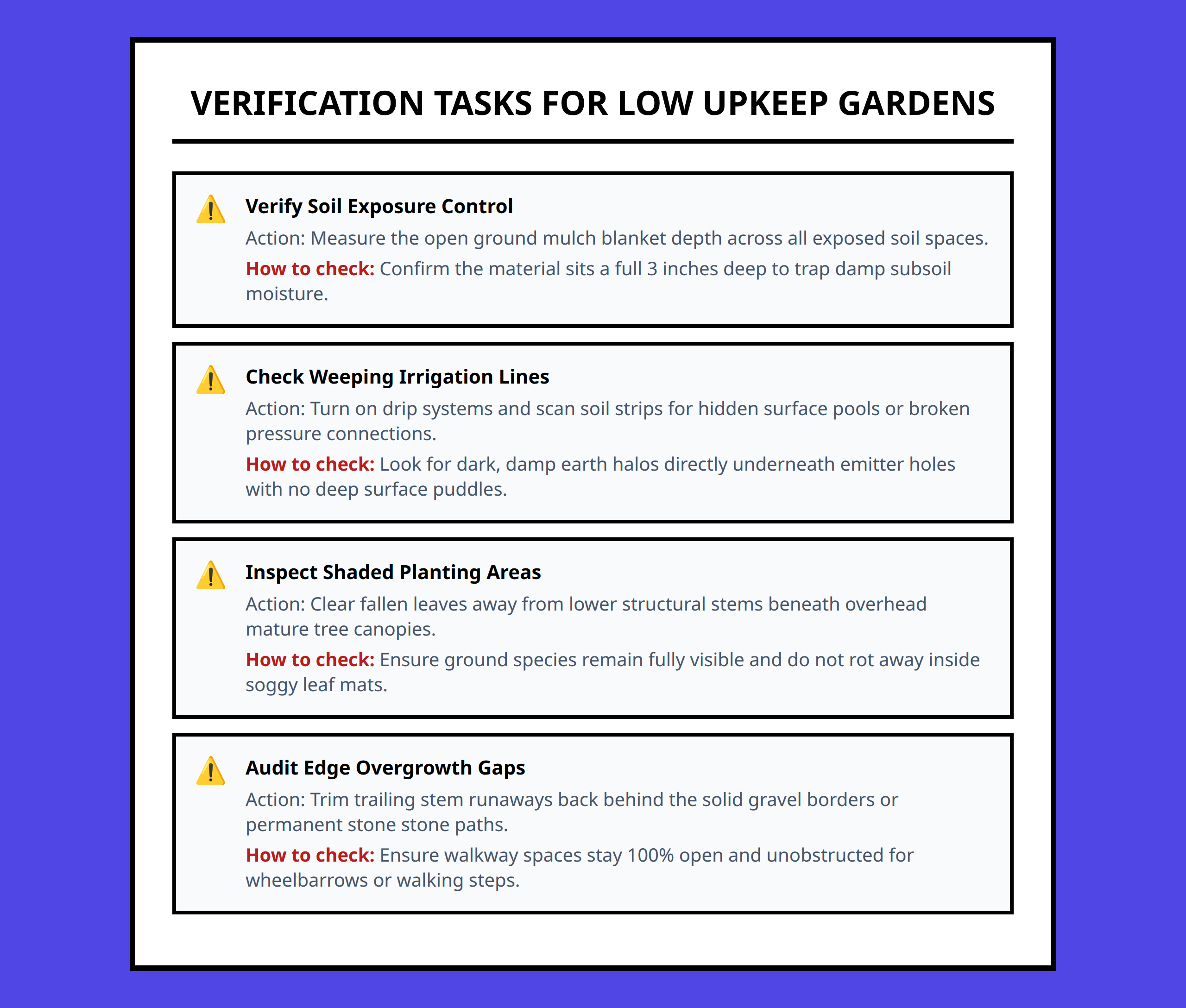
One detail I notice in attractive low-maintenance gardens is plant layering.
Instead of isolated individual plants surrounded by exposed mulch or lawn, layered gardens use different heights and textures together.
This usually includes combinations of:
- groundcovers
- medium shrubs
- larger structural plants
- trees for shade or screening
Layering matters because it shades soil naturally, reduces moisture loss, and softens empty spaces.
It also changes how large the garden feels.
A small yard with carefully layered planting often appears deeper and calmer than a flat open lawn with scattered plants placed far apart.
I would pay attention to plant spacing too. Overcrowding may look full initially, but it usually creates pruning and airflow problems later.
Color Placement Quietly Changes How the Garden Feels
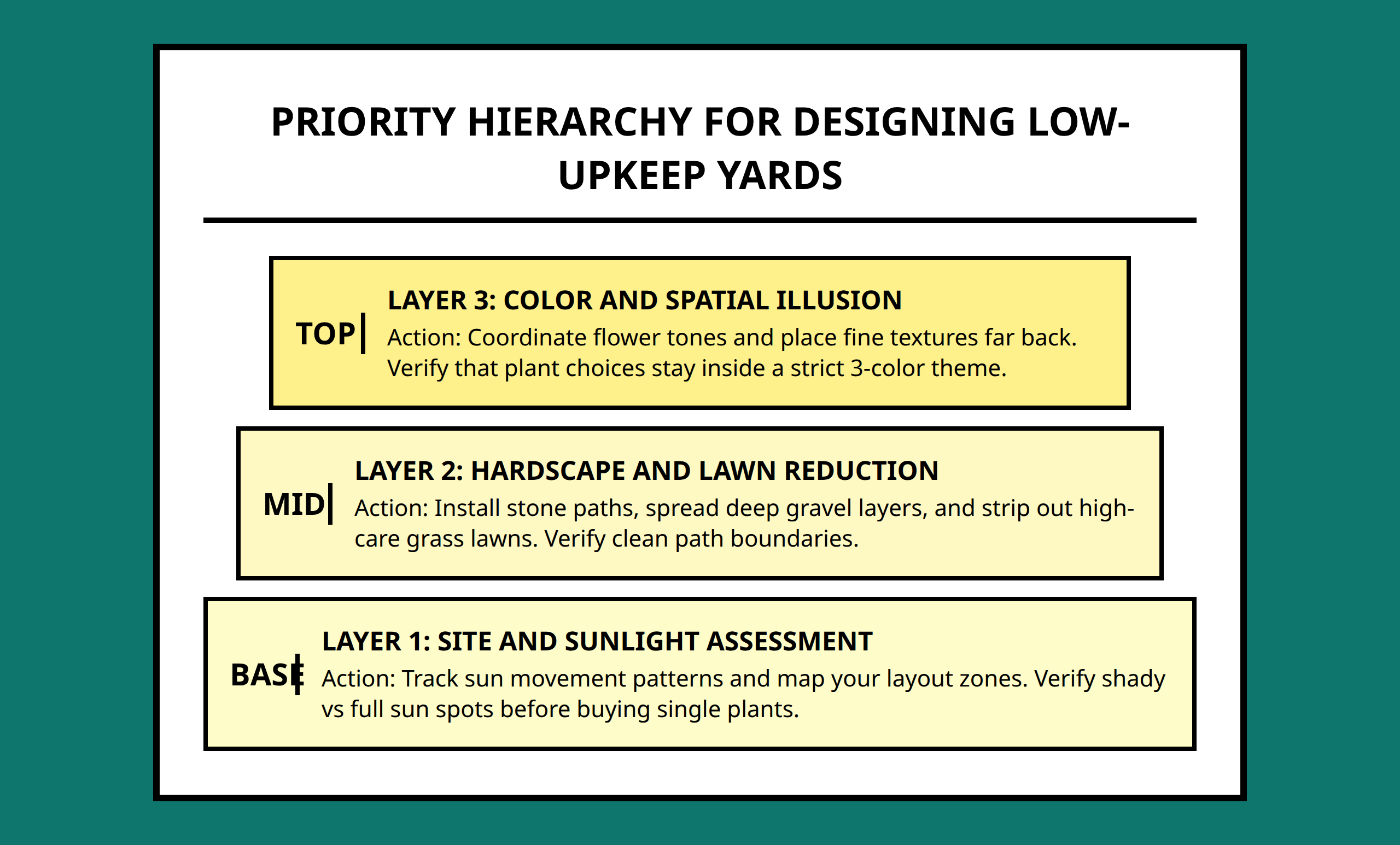
Color affects garden perception more than many people realize.
I think this becomes especially important in smaller spaces where visual balance matters more.
Cooler colors and softer foliage tones often make spaces feel calmer and more open. Bright flowers attract attention quickly and can help direct the eye toward focal areas.
I would avoid scattering too many competing colors randomly across a small garden because the result often feels visually busy.
Repeating a few coordinated colors usually creates a more organized appearance with less effort.
One useful trick in narrow spaces is placing lighter colors deeper into the garden to help extend the sense of distance.
That small visual adjustment can make compact gardens feel less boxed in.
Privacy Hedges Need Long-Term Thinking
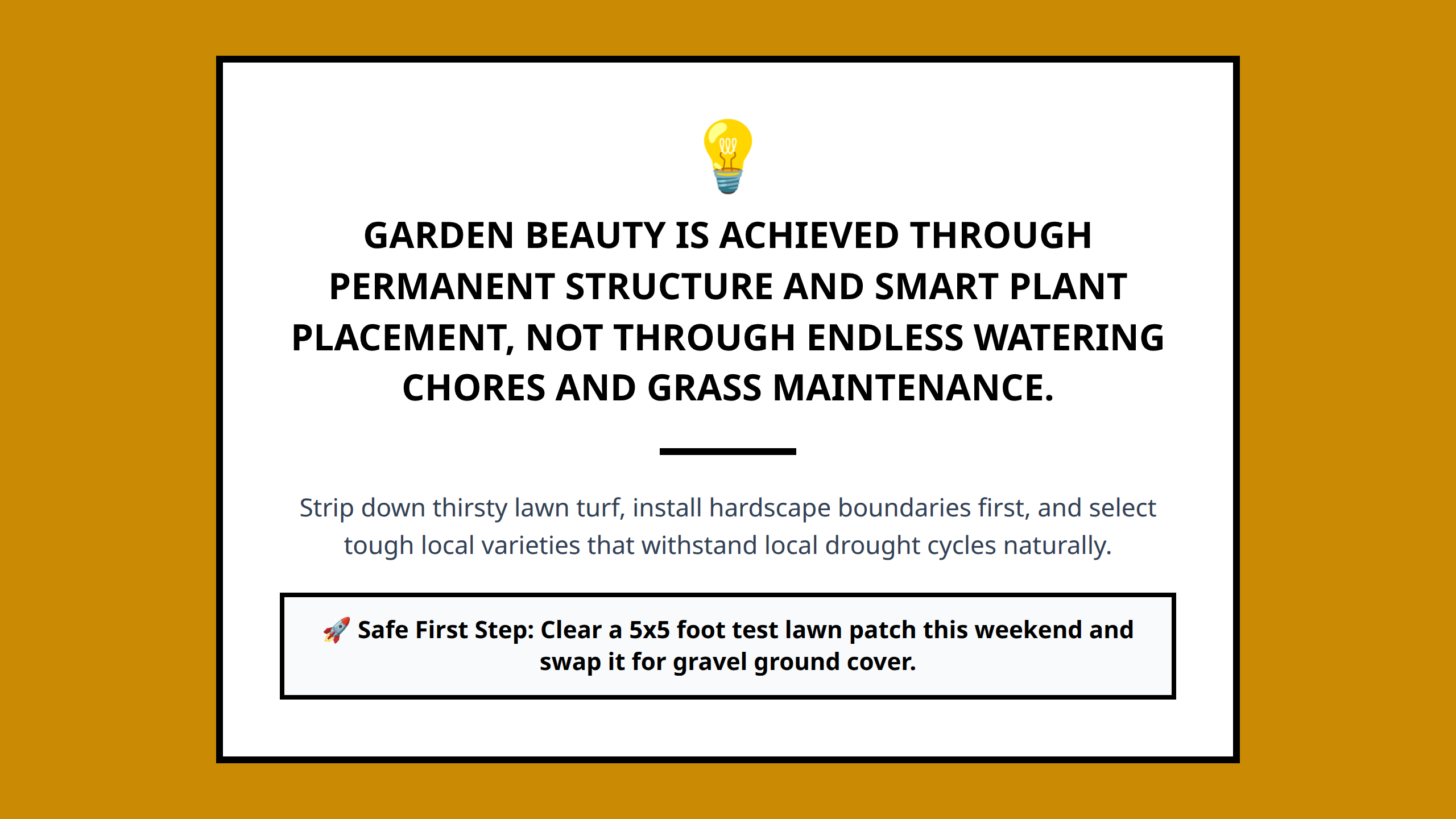
Privacy planting often becomes a maintenance problem because people choose hedges based only on fast growth.
Fast-growing hedges can quickly become oversized, thirsty, and difficult to control.
I would think carefully about mature size before planting privacy screens near fences, pathways, or windows.
Dense hedges also affect airflow and shade patterns, which changes how nearby plants perform.
What I find more practical is choosing hedge plants that naturally fit the available space instead of relying on constant heavy pruning later.
A hedge that requires aggressive trimming every few weeks rarely stays low-maintenance for long.
Good Low-Water Gardens Usually Feel Intentional
I think the most successful low-maintenance gardens share one common quality: they look designed on purpose rather than reduced out of compromise.
The pathways make sense. Shade areas feel usable. Gravel supports planting instead of replacing it. Plant choices match the climate and sunlight conditions.
That intentional structure changes how the garden functions every day.
When I look at water-wise gardens now, I pay less attention to how many plants they contain and more attention to whether the layout reduces unnecessary work while still making the space feel comfortable to spend time in.
- Layered planting: A garden design approach that combines plants of different heights and sizes to create fuller, more natural-looking spaces.
- Groundcover: Low-growing plants that spread across soil to reduce weeds and moisture loss.
- Gravel garden: A garden style that uses gravel surfaces alongside drought-tolerant planting to reduce maintenance and watering needs.
- Drought-tolerant plants: Plants adapted to survive with lower water levels once established.
- Privacy hedge: A row of shrubs or plants used to create screening and separation in outdoor spaces.
- Pavers: Flat stones or blocks used for pathways, patios, or structured garden surfaces.
- Site assessment: Observing sunlight, drainage, wind, and layout conditions before designing or planting a garden.
References:
- https://www.youtube.com/watch?v=2et1bWT75Rg
- https://www.youtube.com/watch?v=Cy9dHniTVts
- https://www.youtube.com/watch?v=8tYpJd60rJQ
- https://www.finegardening.com/article/creating-a-low-maintenance-garden
- https://www.rhs.org.uk/garden-inspiration/get-gardening/10-ways-to-a-low-maintenance-garden
- https://www.youtube.com/watch?v=2GPHsd1FiQ0
- https://www.woodies.ie/community/low-maintenance-garden-ideas
- https://costafarms.com/blogs/get-growing/low-maintenance-garden-design
- https://www.gardenia.net/guide/drought-tolerant-gardens-plants-designs-care-guide
- https://www.thenurso.au/blogs/helpfulhints/how-to-design-a-low-maintenance-garden-that-still-looks-high-end
- https://scotlandgrowsmagazine.com/2024/01/12/design-a-low-maintenance-garden/
- https://www.housebeautiful.com/lifestyle/gardening/a71004399/5-4-3-2-1-gardening-method-nicole-burke/
- https://www.thrive.org.uk/get-gardening/gardening-to-support-adhd
- https://themicrogardener.com/ten-tips-for-creating-beautiful-gardens/
