Most home gardens become easier to protect when pest control shifts from constant spraying to ecological balance. Beneficial insects, habitat diversity, physical barriers, and simple low-cost deterrents often reduce pest problems more effectively over time than repeated chemical reactions.
I used to think pest control mostly meant removing insects as fast as possible. A lot of beginner gardeners still approach it that way. The first sign of holes in leaves or chewed seedlings often triggers immediate spraying.
What changed my thinking was realizing that many healthy gardens still contain insects, snails, and small pest populations. The difference is that balanced gardens also contain predators, pollinators, shelter, and enough biodiversity to stop problems from exploding out of control.
Once I started paying attention to what was attracting helpful insects instead of only reacting to harmful ones, pest management began looking much less like a war and much more like system maintenance.
Takeaways
- Observation usually works better than immediate spraying.
- Beneficial insects naturally reduce many common garden pests.
- Diverse planting creates more stable pest control systems.
- Simple physical barriers can prevent major plant damage cheaply.
- Healthy gardens support predators as well as pollinators.
Observation Comes Before Treatment
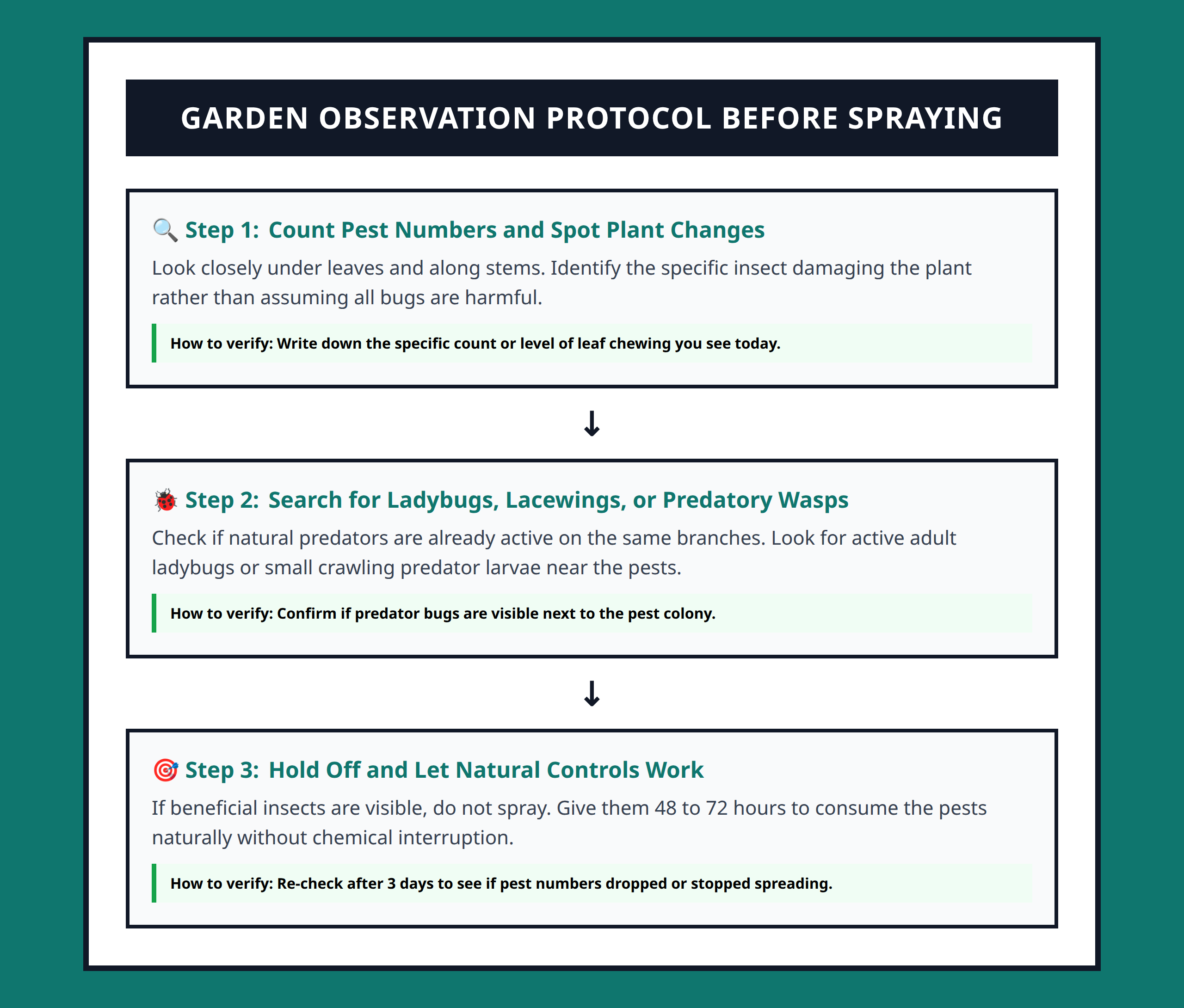
The first thing I would avoid is reacting too quickly.
Not every insect in the garden is harmful, and not every damaged leaf means the garden is under attack.
I think beginners often create bigger problems by spraying first and identifying later. A broad chemical treatment may kill the pest temporarily, but it can also remove predators that were already helping control the situation naturally.
A common example is a gardener noticing aphids on vegetable stems and spraying everything immediately. The aphids disappear for a short time, but ladybugs and other predator insects disappear too. A few weeks later, the aphids return faster because the natural controls are gone.
That is why I would spend time observing before deciding whether intervention is even necessary.
Small pest populations are often part of a functioning garden ecosystem. The real question is whether the system still has balance.
Beneficial Insects Quietly Do Most of the Work
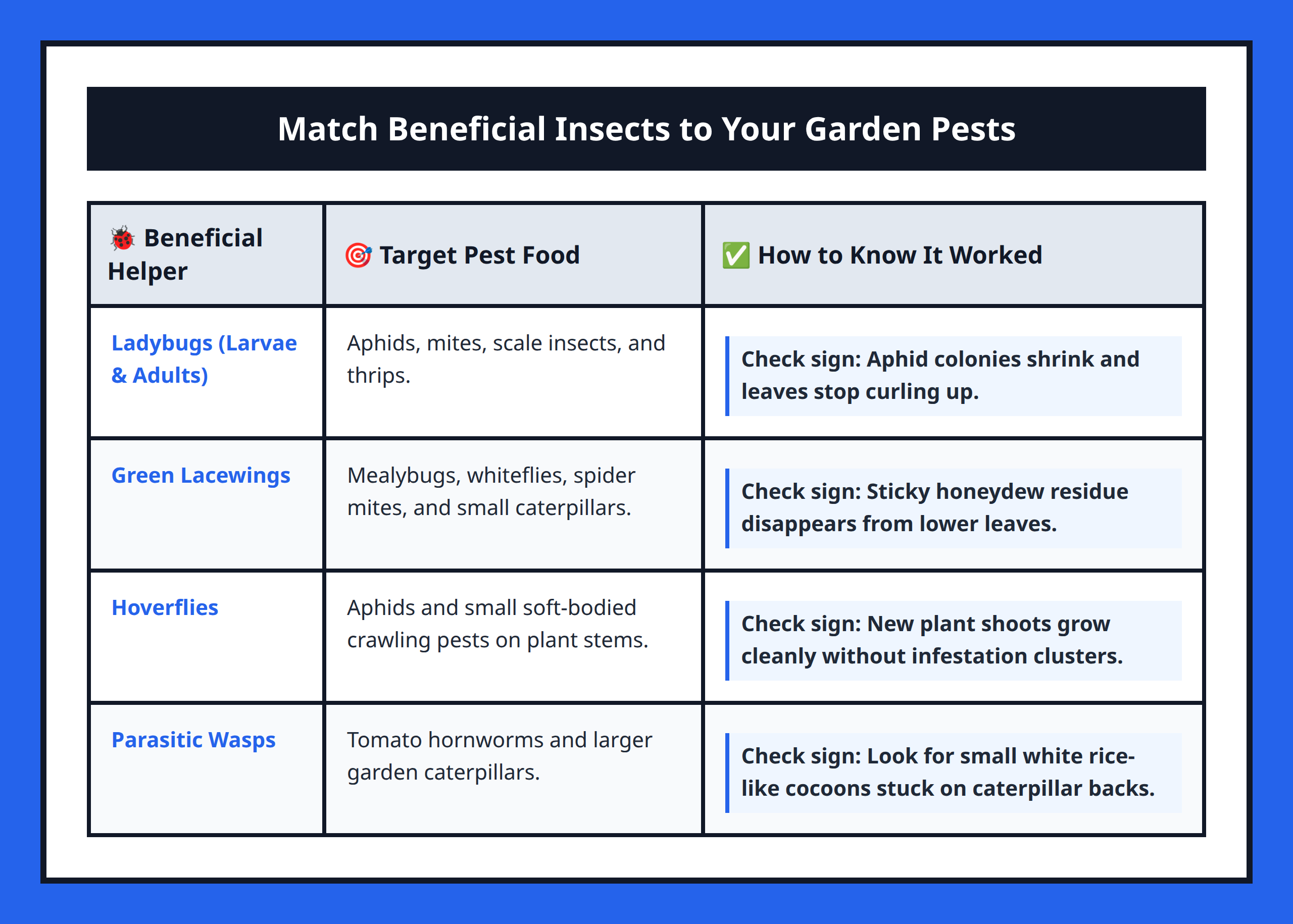
Once I started paying attention to beneficial insects, the garden looked completely different.
Ladybugs, lacewings, praying mantises, spiders, and predatory wasps all help reduce pest pressure naturally.
These insects work continuously without requiring sprays, mixing chemicals, or repeated treatments.
What matters is giving them a reason to stay.
I would focus on creating conditions where predator insects can survive long enough to establish themselves.
That usually means:
- keeping some flowering plants nearby
- reducing unnecessary spraying
- maintaining plant diversity
- providing small shelter areas
One detail I find important is that beneficial insects rarely appear instantly after a pest problem starts. Ecological balance develops gradually.
A garden stripped down to bare soil and isolated rows often struggles more because it lacks habitat complexity.
Pollinators and Pest Control Support Each Other
People often separate pollinators from pest management, but healthy pollinator activity usually signals a healthier garden ecosystem overall.
Bees, butterflies, birds, and small reptiles contribute to broader biological stability.
I would think about pollinator support as part of pest prevention, not a separate gardening goal.
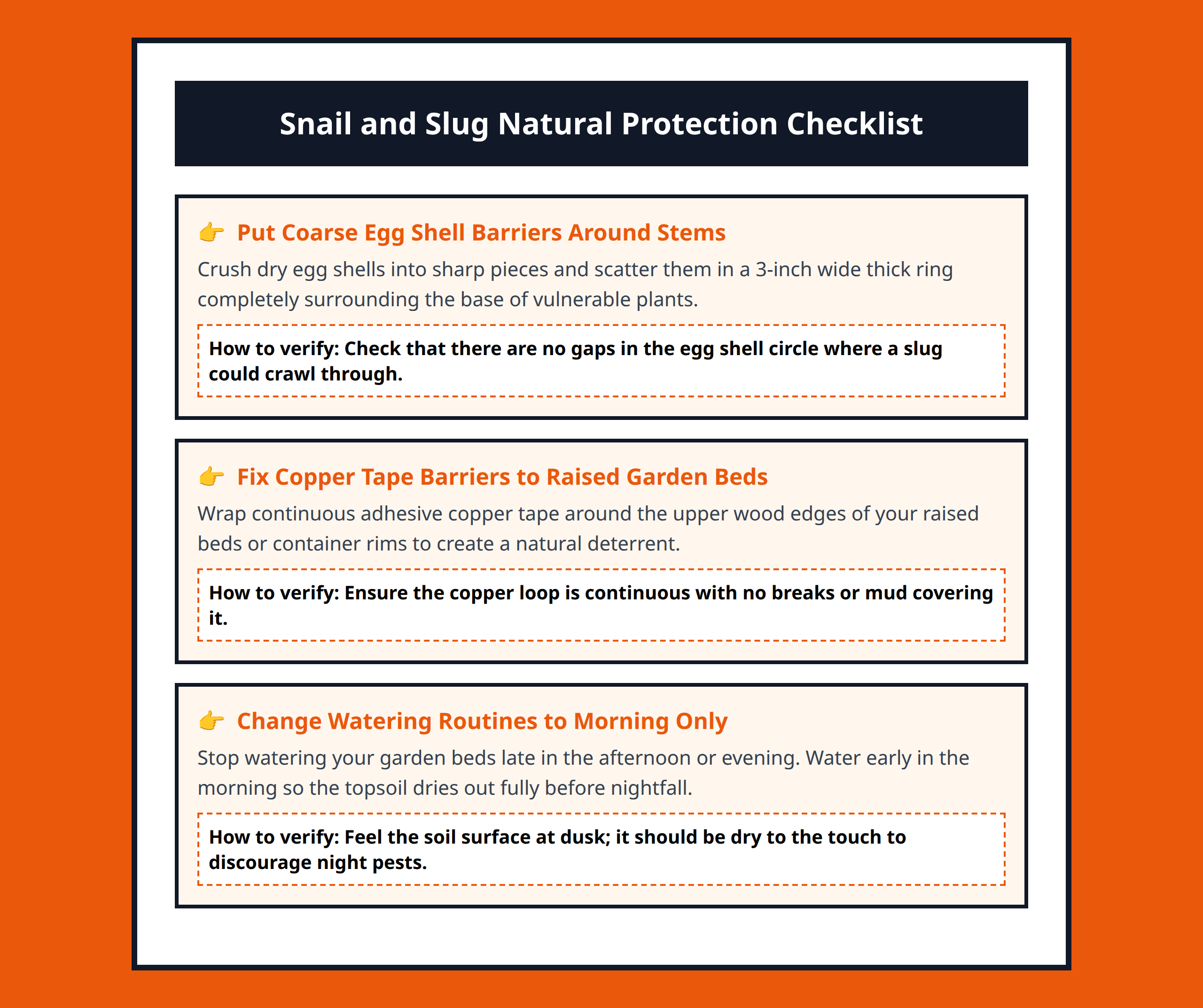
Flowering plants become important here because they attract both pollinators and predator insects.
A small vegetable garden with scattered flowering herbs and companion plants usually supports more insect diversity than a garden made entirely of one crop.
That diversity matters because pest outbreaks spread faster in simplified environments where few natural predators exist.
I also notice that gardens with water access, shade pockets, and varied plant height tend to support more wildlife activity overall.
Physical Deterrents Often Solve Problems Cheaply
Some pest problems do not require complicated solutions at all.
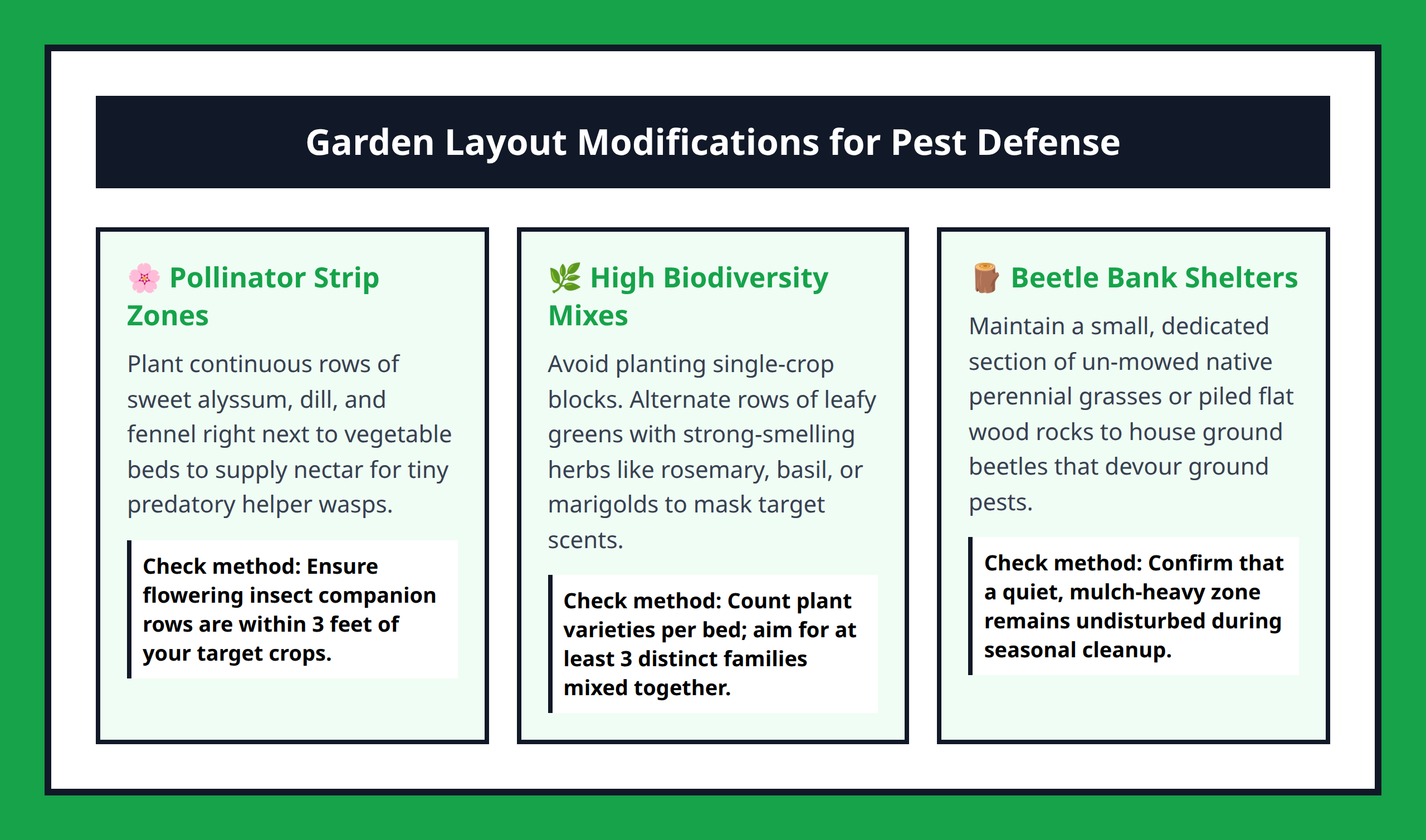
Snails and slugs, for example, can often be reduced through simple physical deterrents and better garden habits.
I would pay attention to:
- excess moisture
- dense hiding spots
- mulch piled too heavily
- watering late in the evening
Physical barriers also help.
Eggshell fragments scattered around vulnerable plants create rough surfaces that discourage snails and slugs from crossing easily.
The point is not that eggshells magically eliminate pests. The point is that small environmental changes can reduce pest pressure without turning immediately to chemicals.
A realistic backyard situation might involve seedlings repeatedly disappearing overnight after evening watering. Once watering shifts earlier in the day and hiding spots around the bed get reduced, the slug problem often drops noticeably even before other controls are added.
Monoculture Gardens Invite Bigger Pest Problems
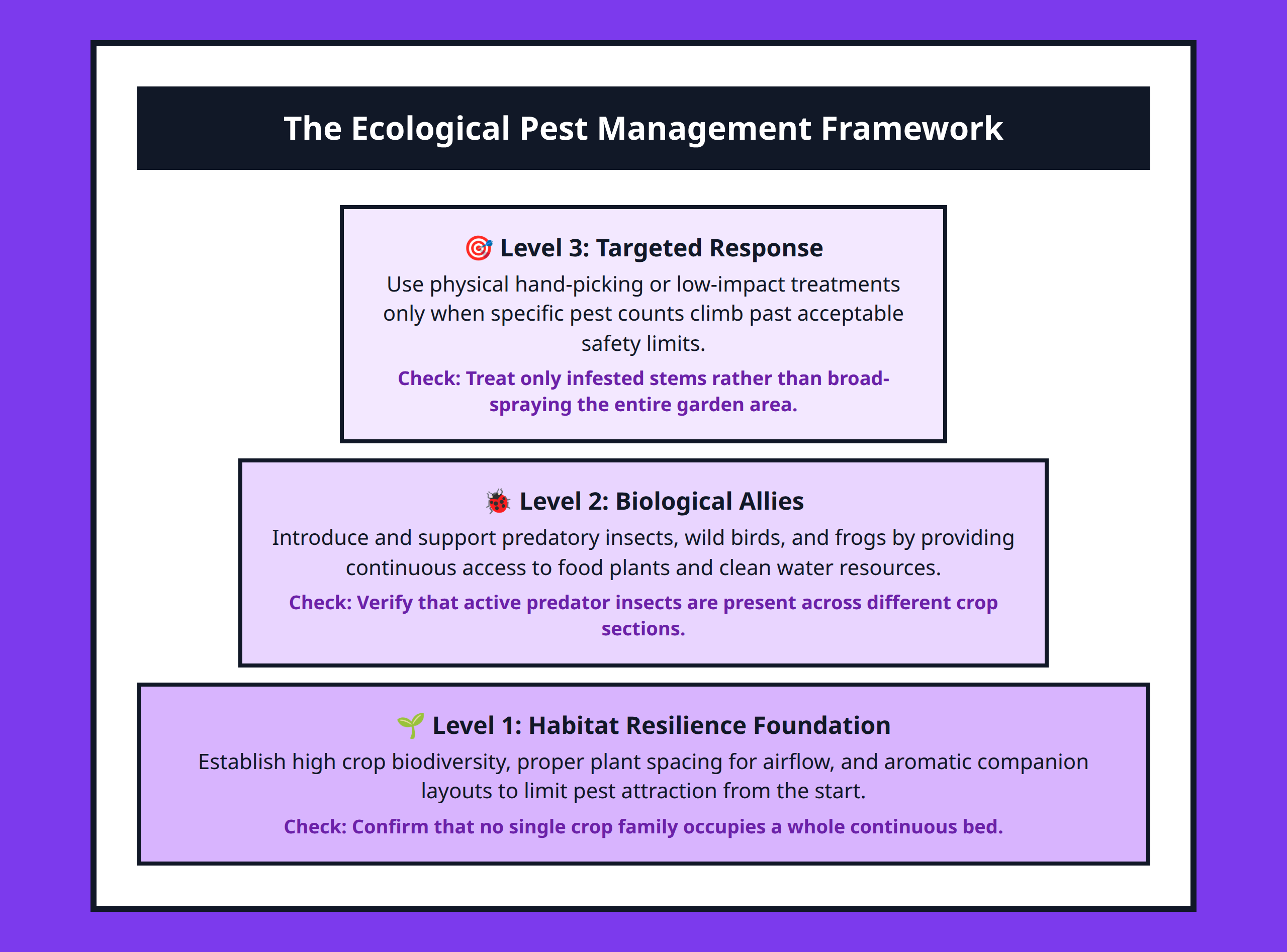
One idea I keep coming back to is how strongly pests respond to concentration.
Large areas planted with only one crop become easier for pests to locate and exploit.
I would avoid creating long uninterrupted sections of the same plant whenever possible in a home garden.
Mixed planting helps interrupt pest movement and increases biodiversity.
That does not mean randomly scattering plants everywhere. The goal is to create a more varied environment where no single pest species can dominate too easily.
Herbs, flowering plants, vegetables, and insect-attracting species can all contribute to that balance.
This also changes how I think about “messiness” in gardens. Completely stripped-back gardens may look tidy, but they often remove shelter and food sources that helpful insects depend on.
Low-Toxicity Gardening Requires Patience
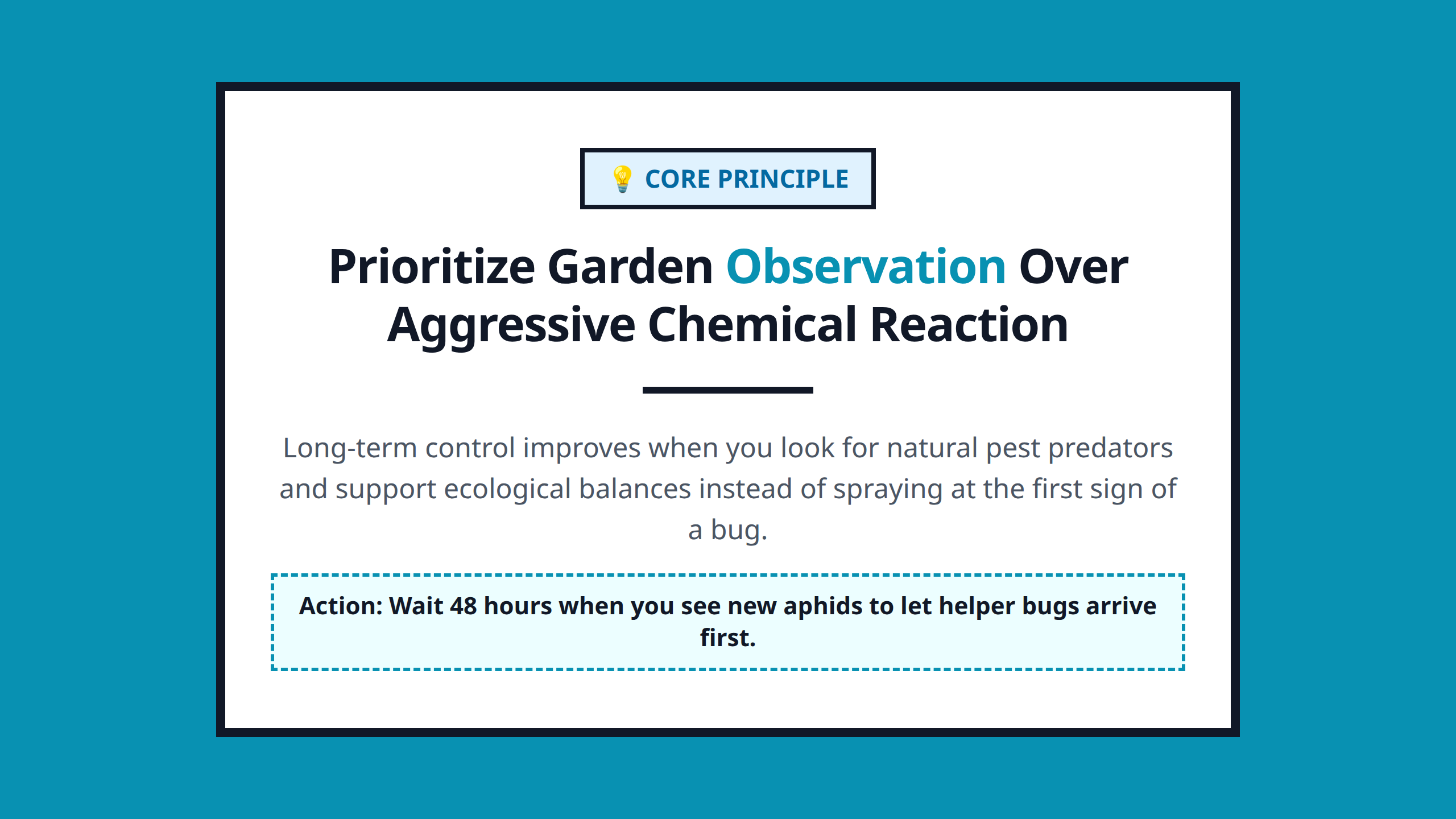
I think this is the part many people underestimate.
Chemical sprays often create visible short-term results. Ecological pest control usually works more slowly because it depends on building stability rather than forcing instant removal.
That slower pace can feel uncomfortable at first.
A gardener may still see insects in the garden even while the overall balance is improving. The goal is not complete elimination of all insect activity. The goal is reducing destructive outbreaks while keeping the garden biologically active.
That difference matters because sterile-looking gardens are not always healthy gardens.
I would rather support a garden where predator insects, pollinators, birds, and soil life all remain active than create a cycle where every new pest requires another round of spraying.
The Cheapest Pest Control Often Starts Before Pests Arrive
What I find most practical about natural pest control is that many of the best strategies happen before major problems appear.
Diverse planting, flowering herbs, habitat support, airflow, watering habits, and observation all reduce the chance of severe outbreaks later.
That changes pest control from constant reaction into prevention.
When I look at struggling gardens now, I usually pay less attention to the specific pest and more attention to whether the garden has enough biological support systems to regulate itself over time.
- Beneficial insects: Insects that help gardens by pollinating plants or reducing harmful pest populations.
- Pollinators: Animals or insects such as bees and butterflies that help plants reproduce by moving pollen between flowers.
- Biodiversity: A mix of different plant and animal life that helps create a more stable garden ecosystem.
- Monoculture: Growing large areas of only one type of plant, which can increase pest vulnerability.
- Predator insects: Insects that feed on pests such as aphids, mites, or caterpillars.
- Habitat diversity: A garden structure that includes different plant types, shelter areas, and growing conditions to support more living organisms.
- Low-toxicity gardening: Gardening methods that reduce reliance on chemical pesticides and other harsh treatments.
References:
- https://www.youtube.com/watch?v=hXlSicZE9jI
- https://www.youtube.com/watch?v=h8pXcu2f-Wc
- https://www.youtube.com/watch?v=JXEtmKRnMZk
- https://www.reddit.com/r/Permaculture/comments/s8tkm1/pesticide_free_pestcontrol_strategies_for_your/
- https://www.reddit.com/r/Permaculture/comments/s8tkm1/pesticide_free_pestcontrol_strategies_for_your/htiiemy/
- https://www.reddit.com/r/Permaculture/comments/s8tkm1/pesticide_free_pestcontrol_strategies_for_your/htiljmv/
- https://www.quora.com/What-are-some-effective-organic-methods-for-controlling-pests-in-a-garden-without-using-chemicals
- https://www.reddit.com/r/AustinGardening/comments/1jyppyg/natural_pest_control_options/
- https://rootsandrefuge.com/organic-garden-pest-control/
- https://www.mrfothergills.com.au/blogs/all/garden-pest-control-natural-organic-ways-to-protect-your-plants
- https://www.rhs.org.uk/prevention-protection/controlling-pests-and-diseases-without-chemicals
- https://journeywithjill.net/gardening/2019/08/27/pest-control-without-pesticides-for-a-healthy-organic-garden/
- https://jeffries.com.au/8-natural-pest-control-methods-for-your-garden/
- https://backyardbuddies.org.au/habitats/chemical-free-garden/
- https://cdn.environment.sa.gov.au/landscape/docs/hf/responsible-chemical-use-alternatives-to-chemicals-fact.pdf
- https://nre.tas.gov.au/Documents/Organics_pestmanagementfororganicfarms.pdf
- https://www.peacecorps.gov/educators-and-students/educators/resources/making-natural-pest-controls/
- https://onlineentomology.ifas.ufl.edu/eco-friendly-pest-control-3-natural-solutions-that-really-work/
- https://www.reddit.com/r/Permaculture/comments/s8tkm1/pesticide_free_pestcontrol_strategies_for_your/htio1b7/
